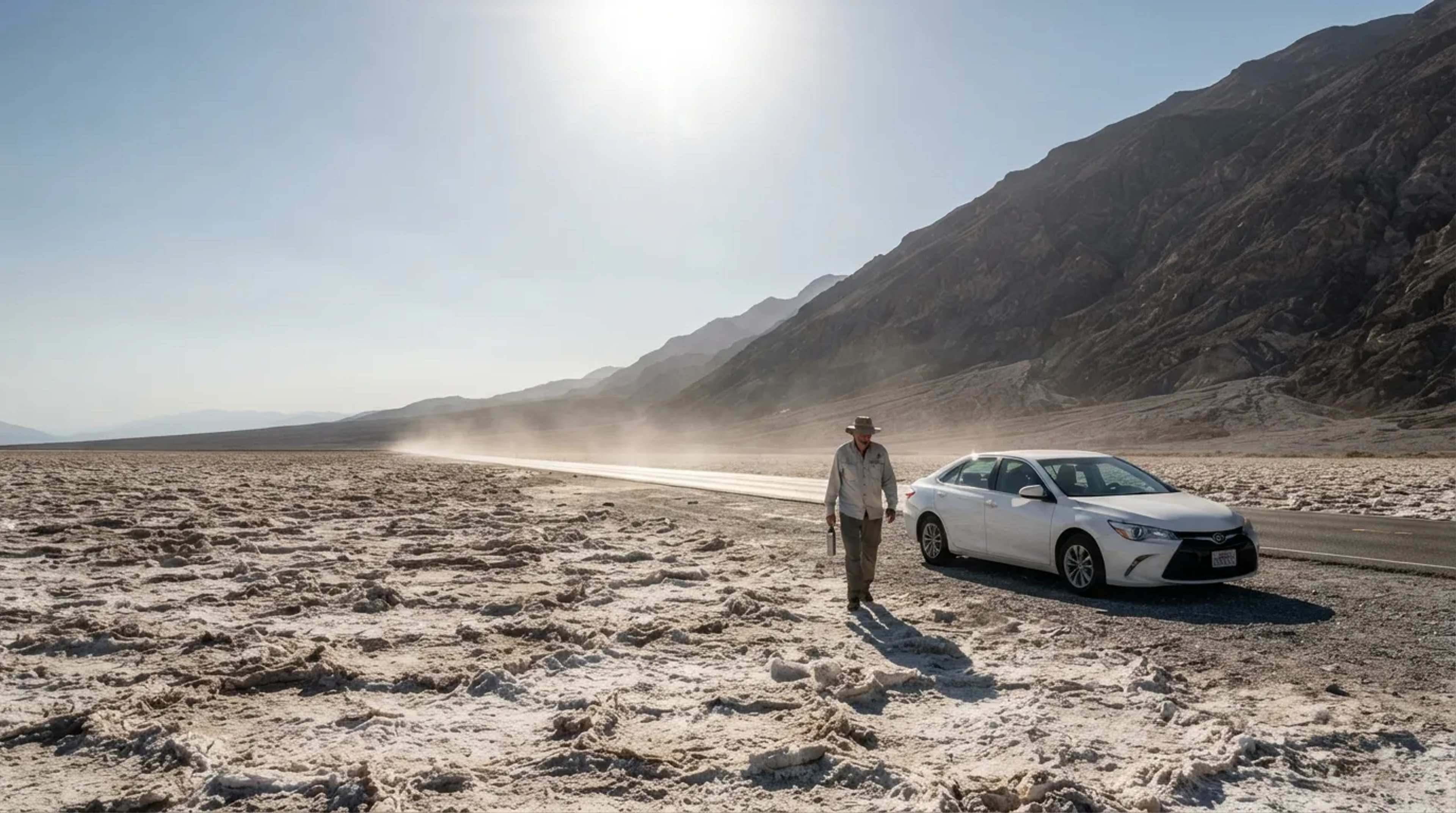
Most travelers assume winter flight delays are just “bad weather” doing its thing, an unavoidable inconvenience nobody controls. But ground crews who spend their winters covered in glycol will tell you the truth is far more calculated than that – a mix of chemistry, physics, and split-second math happening right outside your window while you scroll your phone.
What actually determines whether your flight leaves on time isn’t the snow falling outside – it’s a countdown clock most passengers never even know exists. Here’s what de-icing teams actually wish every passenger understood before they roll their eyes at another delay.
#28 – The Orange Spray Isn’t Paint – It’s a Sword Against Ice
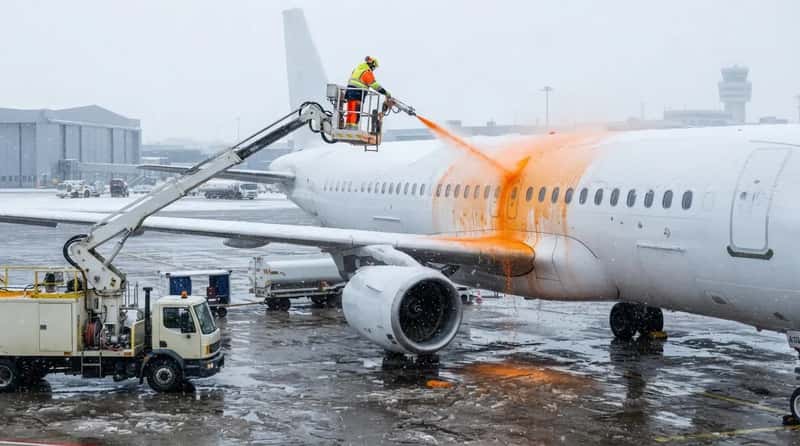
That bright orange liquid coating the fuselage isn’t cosmetic, and it definitely isn’t random. The orange stuff is de-icing fluid, and its job is to strip away anything that shouldn’t be there, including frost, snow, slush, and thin ice. Crews call it Type I, and it’s the workhorse of every winter operation.
Type I fluids are glycol-based Newtonian fluids that flow regardless of the forces acting on them, are used primarily for de-icing, and are dyed orange when colored. It’s thin on purpose – thin enough to strip ice fast, but not thick enough to linger. That’s exactly why a second fluid has to follow right behind it.
#27 – The Green Coat Is the Real Shield, Not the Orange
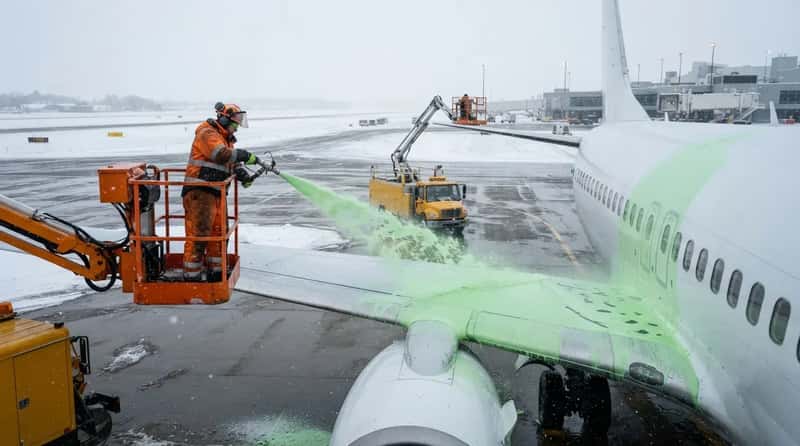
If orange is the sword, green is the armor – and passengers almost never realize the two liquids do opposite jobs. Once the orange stuff does its job, it’s time for the green stuff – the green fluid is a shield, whereas the orange is a sword, and it’s designed to stick around.
This green fluid is officially called Type IV, and it’s built to be thick and stubborn. The type IV fluids are tinted a light green. It’s the layer that’s supposed to survive the wait between the gate and the runway – the part passengers actually care about, even if they’ve never noticed the color change.
#26 – Every De-Icing Job Comes With an Invisible Countdown Clock
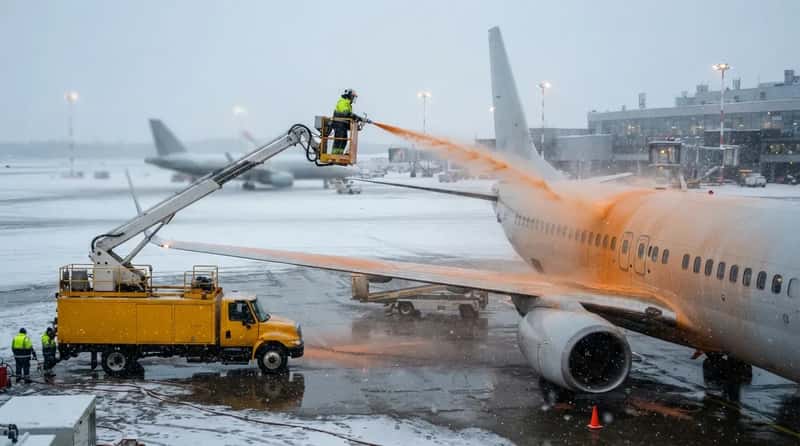
What passengers see as “the plane got sprayed” is really the start of a ticking timer nobody in the cabin can see. Holdover time means the estimated time de-icing or anti-icing fluid will prevent the formation of frost or ice on the protected surfaces of an aircraft, beginning when the final application commences and expiring when the fluid loses effectiveness.
Ground crews live and die by this number. It’s not a rough guess – it’s calculated using published charts tied to temperature and precipitation type. The scary part is that this clock keeps running whether or not the plane has actually moved yet, which is exactly why some flights get sprayed a second or even third time.
#25 – In Brutal Cold, That Clock Can Expire in Under 5 Minutes
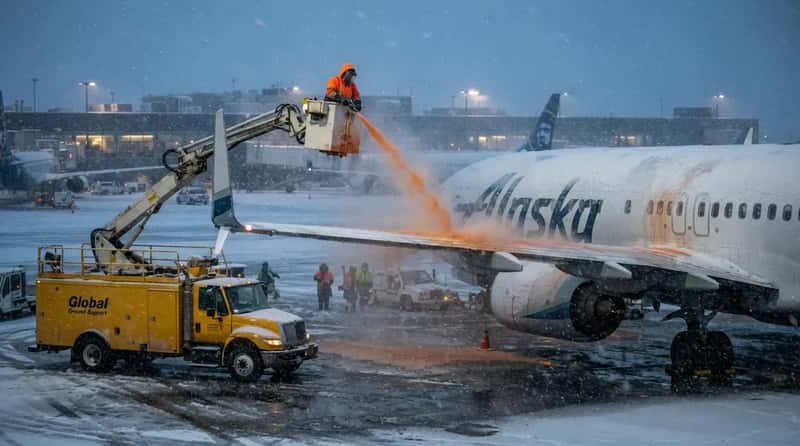
Most passengers picture de-icing as buying an hour of safety. In reality, that window can be brutally short. Holdover times for Type I fluid are often less than 20 minutes depending on weather conditions, and these times can shrink to less than five minutes for snow if the outside air temperature drops below 14°F.
That’s not a typo – five minutes. In a hard freeze with heavy snow falling, the protection from a single spray can be gone before the plane even leaves the gate area. It’s one of the biggest reasons flights get re-sprayed at the last possible second before takeoff clearance.
Fast Facts
- Type I fluid protection often lasts less than 20 minutes in ordinary winter conditions.
- In heavy snow below 14°F, that window can shrink to under 5 minutes.
- Holdover charts are built around exact temperature and precipitation type, not guesswork.
- The countdown starts the moment the final fluid application finishes, not when the plane starts moving.
#24 – Crews Actually Spray Your Plane Twice, With Two Different Jobs
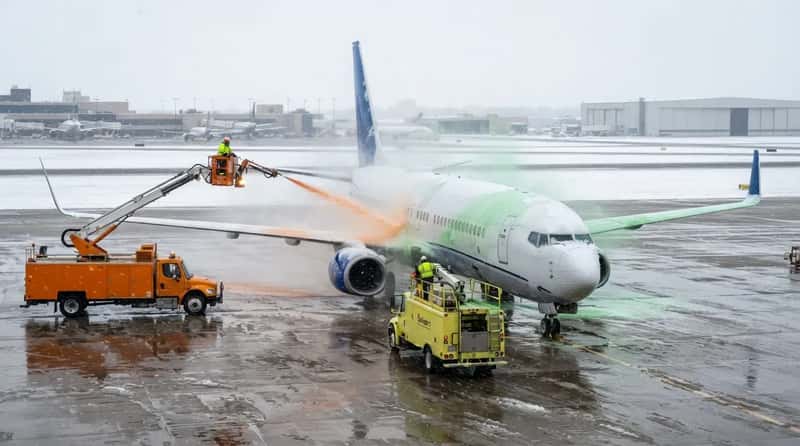
Passengers usually assume “de-icing” is one event. It’s actually a two-stage process with two separate fluids doing two separate jobs. In the United States, airlines typically use a two-step process before flying, first performing de-icing using either a heated Type I fluid or a heated solution of Type I fluid and water.
The second pass is where the anti-icing fluid comes in. Next, ground crews will typically apply an anti-icing fluid to the aircraft – often Type II or Type IV – used to help prevent the future accumulation of snow and ice on the wings. Skip step two, and step one’s work is wasted the moment it starts snowing again.
#23 – That Fluid Is Hotter Than Your Shower – On Purpose
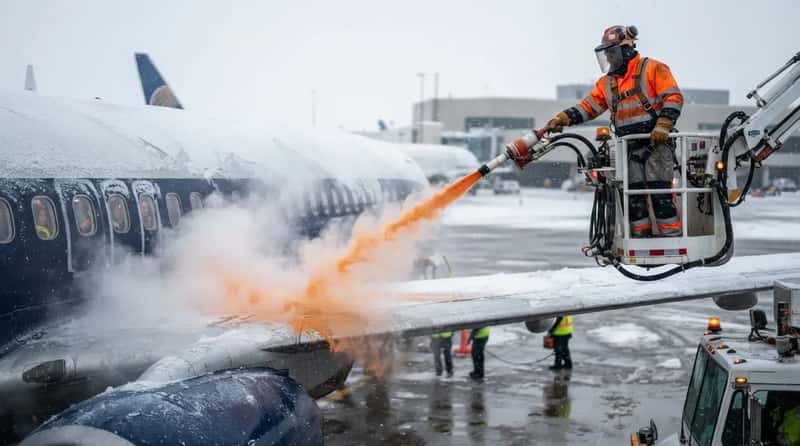
The de-icing fluid isn’t just cold liquid dumped on a wing – it’s blasted on at near-boiling temperatures for a reason. De-icing removes existing ice and snow from the wings of the plane, which is why airlines often heat the de-icing fluid to around 140 to 150 degrees Fahrenheit before application.
That heat does double duty: it melts what’s already stuck, and it warms the metal skin of the aircraft just enough to buy a few extra minutes before new ice can form. Most passengers have no idea the “spray” hitting their window is roughly the temperature of a fresh cup of coffee. It cools fast once it hits freezing metal.
#22 – Taxiing to the Runway Doesn’t Stop the Clock From Running Out
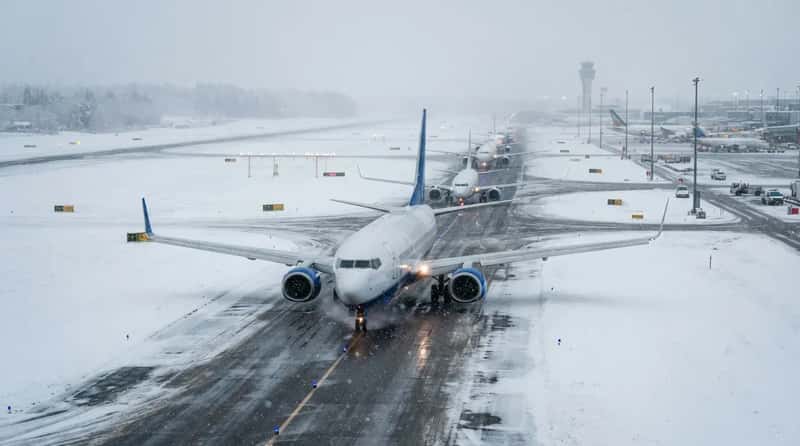
Here’s the part that catches frequent flyers off guard: once holdover time expires, taxiing doesn’t save you. If the holdover window closes, the aircraft must be de-iced again, and any existing fluid must be removed first – you can’t spray new fluid over “failed” old fluid.
That single rule explains almost every mysterious “we’re going back to get sprayed again” announcement. It’s not indecision from the crew – it’s a hard operational line nobody is allowed to cross. Planes that sit too long in a queue for takeoff sometimes have to return to the pad entirely, starting the whole process over.
#21 – Ice Can Form on a Wing When It’s 60 Degrees Outside
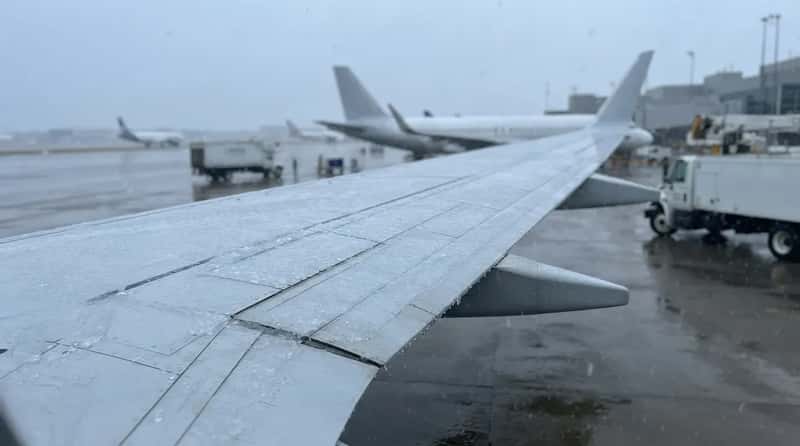
This is the fact that breaks most passengers’ brains: de-icing sometimes happens on days that don’t feel remotely icy. Whenever precipitation falls onto a cold-soaked aeroplane on the ground, clear icing may occur – even in ambient temperatures between -2C and +15C, ice or frost can form if the aeroplane structure remains at 0C or below.
That upper number is nearly 59°F. The cause isn’t the air – it’s the fuel. Cold-soaking depends on the temperature and quantity of fuel in the tanks and how long the aircraft spent at high altitude, and this ice can form even when the outside air temperature is well above 32°F. Crews call it “cold soaking,” and it’s the reason a sunny 55-degree afternoon can still trigger a de-icing call.
#20 – Some Ice Is Invisible, So Crews Check It By Hand
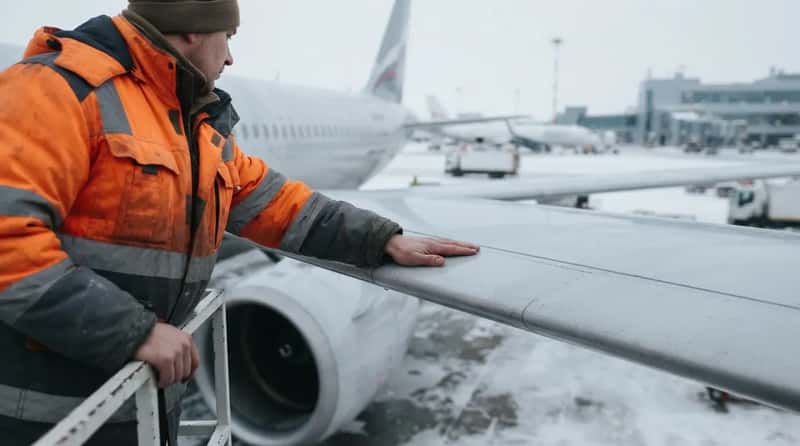
The most unsettling type of contamination isn’t the white frost passengers can spot from the window – it’s the kind you can’t see at all. Cold soaking can cause clear ice to form on wing areas above the fuel tanks, and such ice is difficult to see and, in many instances, cannot be detected other than by touch with the bare hand or a special-purpose ice detector.
Think about that the next time someone in a reflective vest presses a bare palm flat against a wing before boarding starts. They’re literally feeling for ice that a camera or your own eyes would never catch. It’s low-tech, but it’s still one of the most reliable checks in the entire process.
#19 – Those Colors Aren’t for Show – They’re a Coverage Map
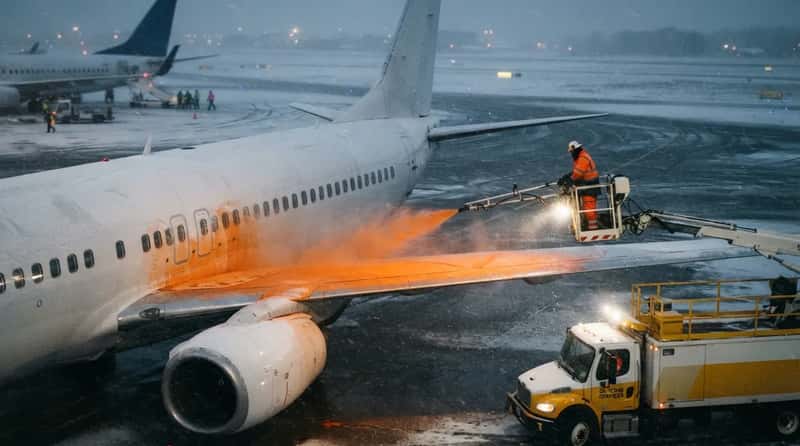
Passengers often assume the orange and green dyes exist purely for visibility on a snowy runway or as a branding quirk. It’s actually a functional tool for the crew doing the spraying. The color of the fluid helps the ground crew see which parts of the plane have been coated and which parts still need the fluid applied.
Without color, a fast-moving crew working in low light and blowing snow could easily miss a patch on a wing or tail. The dye turns a huge, curved metal surface into something they can visually track section by section – no guesswork, no missed spots, no relying on memory in freezing wind.
#18 – The Yellow Fluid Is Built Just for Regional Jets
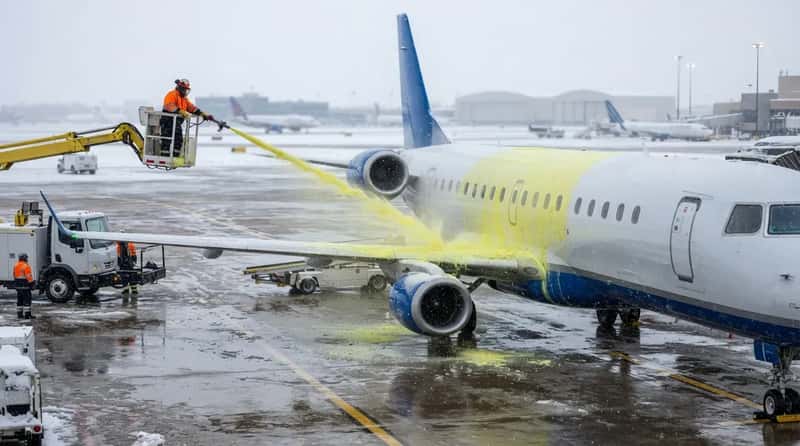
Most passengers only ever hear about “orange and green,” but there’s a third color quietly doing work on smaller aircraft. Type III fluids are relatively new and have properties in between Type I and Type II/IV fluids, offering longer holdover than Type I while shearing off at lower speeds – they’re designed specifically for small commuter-type aircraft.
That’s a controversial point among some ground crews: many argue Type III doesn’t get nearly enough attention in public explanations of de-icing, even though it’s the fluid protecting a huge share of regional flights every winter. If you’ve ever flown a small prop or regional jet in the snow, there’s a decent chance yellow fluid – not green – was the last thing sprayed on your wings.
#17 – One Fluid Needs 100 MPH of Wind Just to Let Go
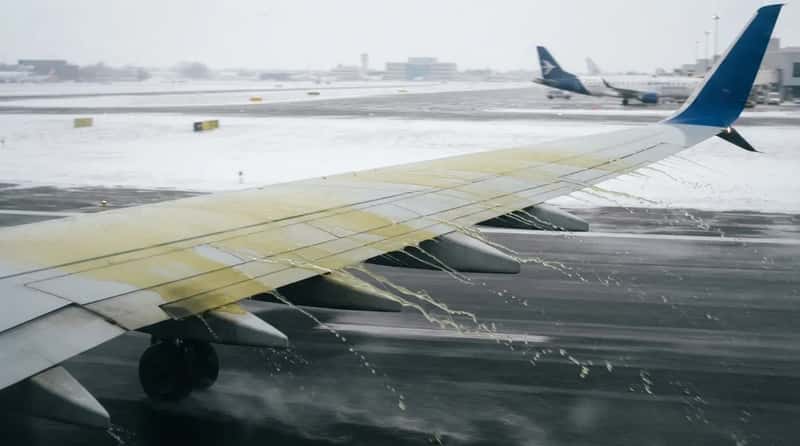
The thick, jelly-like anti-icing fluid that protects a plane the longest also comes with a strict requirement most passengers never think about. Type II fluids provide better protection against refreezing than Type I fluids, but require a minimum 100 knot rotation speed.
That’s not a suggestion – it’s physics. If the plane doesn’t reach that speed on takeoff roll, the fluid simply won’t shear cleanly off the wing surface the way it’s designed to. It’s a big reason why fluid choice isn’t just about the weather outside – it’s about the specific aircraft type sitting on the tarmac.
#16 – Not Every De-Icing Fluid Is Legal for Every Aircraft
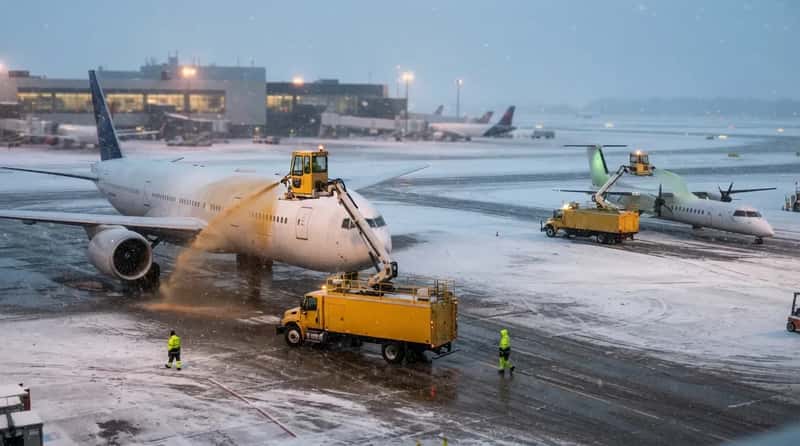
Passengers tend to assume all de-icing fluid is interchangeable – spray whatever’s on the truck and move on. Airlines and regulators disagree completely. It is the airplane operator’s responsibility to consult the aircraft operations manual, maintenance manual, and manufacturer service letters to determine any limitations or restrictions on which de-icing and anti-icing fluids can be used for that specific airplane type.
Smaller aircraft with lower takeoff speeds simply can’t use fluids designed to shear off at higher velocities – the fluid would stay stuck to the wing straight through rotation. That mismatch is exactly why regional aircraft, business jets, and wide-body airliners often end up with different fluid types parked at the same gate on the same snowy morning.
Quick Compare
- Type I (orange): thin, fast-acting de-icer; shears off around 60 knots; shortest holdover time.
- Type II: thicker anti-icer; needs about 100 knots of rotation speed to shear cleanly.
- Type III (yellow): built for regional and commuter aircraft; shears off at lower speeds than Type II.
- Type IV (green): thickest and longest-lasting; the standard anti-icing shield on most airliners.
#15 – The Fluid Is a Cousin of the Stuff in Your Car’s Radiator
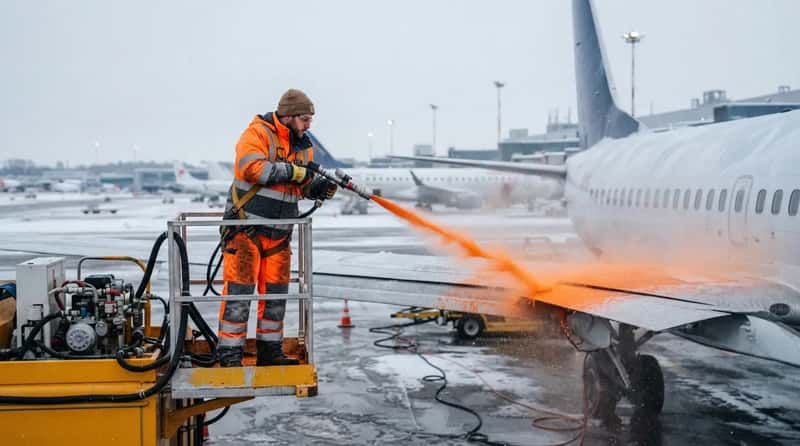
The chemistry behind those colorful sprays is more familiar than most flyers realize. De-icing fluid is made from a mix of propylene glycol or ethylene glycol and water, and the orange color allows ground crews to easily spot what areas have been covered.
Propylene glycol in particular shows up in everyday life far more than people expect. Propylene glycol is a synthetic liquid typically used to absorb water and make polyester compounds, and it’s even found in certain foods, with the FDA deeming it generally recognized as safe. Same chemical family as antifreeze, just formulated and diluted for a very different job.
#14 – A Few Airports Skip the Spray Entirely and Use Heat Lamps
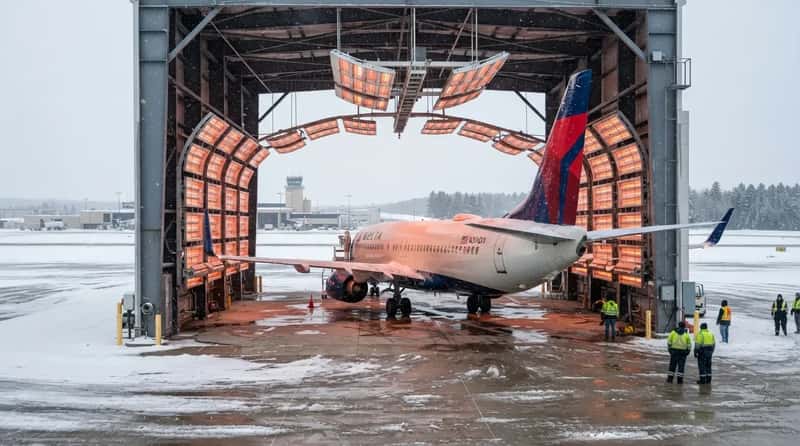
Not every airport relies purely on glycol trucks. A handful use a genuinely different approach that most travelers have never heard of. Infrared de-icing, available at select airports including JFK and Wisconsin’s Rhinelander-Oneida County Airport, reduces glycol usage by up to 90%.
Instead of drenching the plane in fluid, infrared panels heat the aircraft’s skin directly, melting frost and light ice without chemicals doing all the work. It’s faster in some conditions and dramatically greener, but it’s still rare – most U.S. airports haven’t built the infrastructure, so glycol trucks remain the default almost everywhere else.
#13 – Some Airports Built Entire “De-Icing Cities” Away From the Gate
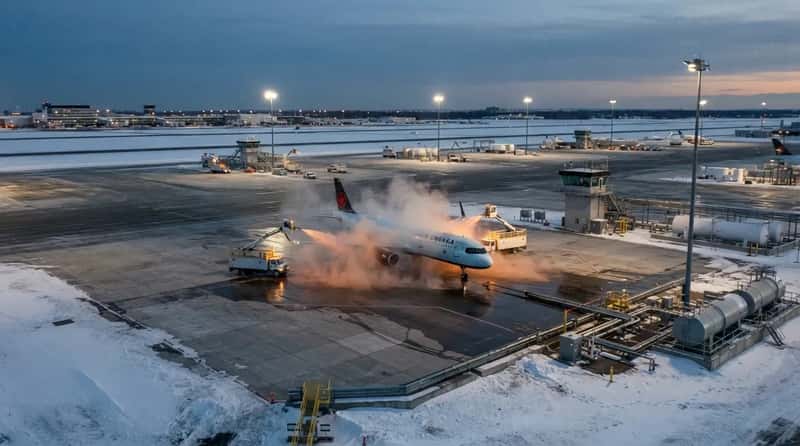
Big hub airports learned the hard way that spraying planes right at the gate creates chaos, congestion, and environmental headaches. So some rebuilt the entire system from scratch. Montreal’s Trudeau International Airport spent two decades honing its de-icing operations into a centrally located eight-pad facility, with roughly $61 million invested since 1997 to improve safety, efficiency, and environmental sustainability.
Before that overhaul, things were genuinely messy. Prior to 1997, eight separate agents provided de-icing services at the airport’s gates, creating vehicle and aircraft congestion as well as environmental hazards from glycol and water runoff entering streams on airport property. Centralizing everything onto dedicated pads solved problems passengers never even knew existed.
#12 – Everything Sprayed on the Plane Has to Go Somewhere Else
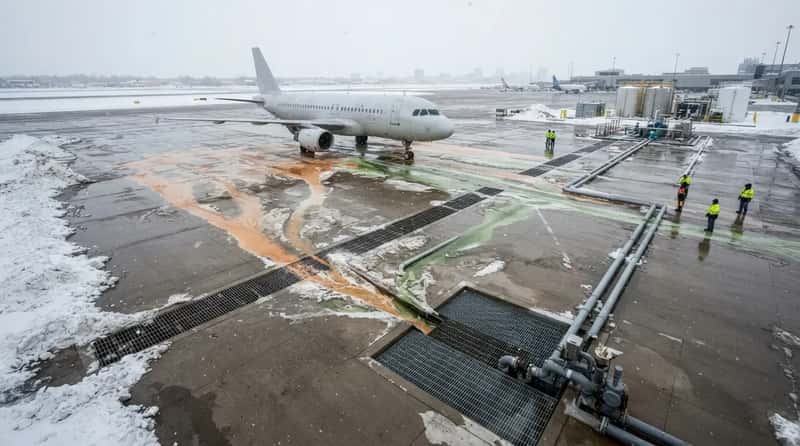
Passengers watch the fluid run off the wings and never think about it again. Airports think about almost nothing else all winter. The most critical issues are how to collect the contaminated runoff, how to treat and dispose of it, and how to ensure flight operations aren’t restricted in the process, with disposal options ranging from off-site treatment to on-site facilities to full glycol recovery.
That runoff doesn’t just vanish into a storm drain – at a busy hub, it becomes a full-scale logistics and engineering problem, one that runs in the background of every winter storm while passengers focus entirely on their own delay.
#11 – Airports Are Spending Millions Just to Clean Up the Runoff
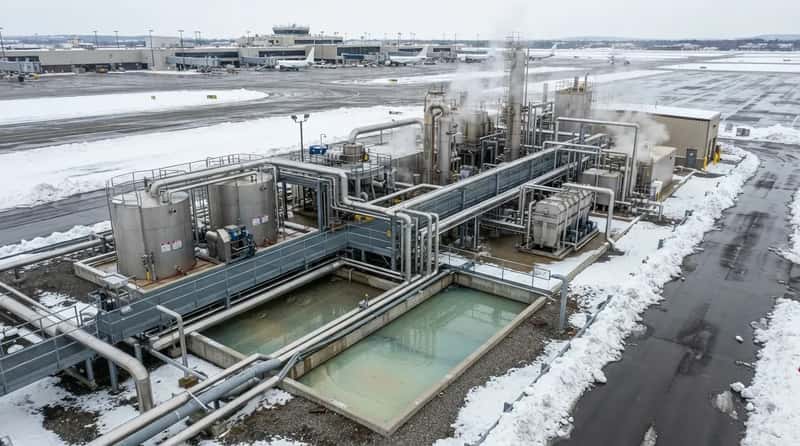
The financial scale of managing spent glycol genuinely surprises most people who’ve never worked airside in winter. A new $19.4 million glycol recycling system at Syracuse Hancock International not only recovers and recycles glycol from de-icing operations but also produces glycol for reuse at the airfield.
The payoff is real, though. The facility has the potential to save 5.5 million to 7 million gallons of water and reduce CO2 output by 3 million to 6 million kilograms per year, and it’s described as the world’s largest aircraft de-icing propylene glycol recycling facility. One airport, one system – millions of dollars, entirely invisible to the people boarding flights above it.
At a Glance
- Montreal’s Trudeau Airport invested roughly $61 million since 1997 to centralize de-icing onto eight pads.
- Syracuse Hancock’s new glycol recycling system cost $19.4 million to build.
- That Syracuse system can save up to 7 million gallons of water every year.
- It’s described as the world’s largest aircraft de-icing propylene glycol recycling facility.
#10 – One Gallon of Fluid Can Actually Cost Over $20
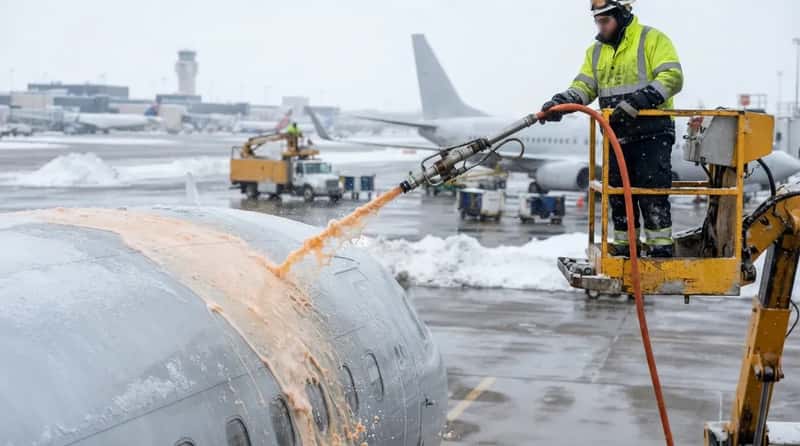
Passengers assume the fluid itself is cheap and the delay is the only real cost. Industry estimates suggest otherwise. One deicing expert estimates the total life cycle cost of a gallon of glycol-based de-icer at $17 to $21 once purchase, handling, and disposal are all factored in.
Multiply that by the thousands of gallons a single storm event can require across dozens of aircraft, and the winter operations budget at a major hub airport becomes staggering fast. It’s a strong argument for why airlines push so hard on the infrared and recycling technology mentioned earlier – every gallon saved is real money.
#9 – Winter Creates an Ocean of Leftover Fluid Every Single Year
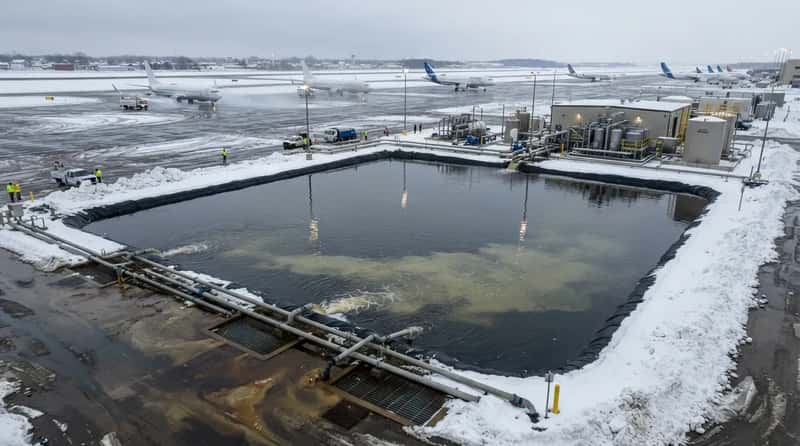
The scale of this problem nationally is bigger than almost any passenger would guess sitting on a delayed plane. Roughly seven billion gallons of aircraft de-icing fluid stormwater are generally generated per year, and the capital costs of building a glycol recovery system can be significant for a single airport.
And it’s not chemically harmless once it hits the water supply. Glycols can consume oxygen and lead to non-optimal oxygen levels in aquatic systems, with corrosion inhibitors and surfactants in the fluid also creating a poor environment for fish and other aquatic organisms. That’s the unglamorous environmental side of every “quick spray” nobody talks about at the gate.
#8 – The Pilot Can Overrule the Ground Crew – and Sometimes Does
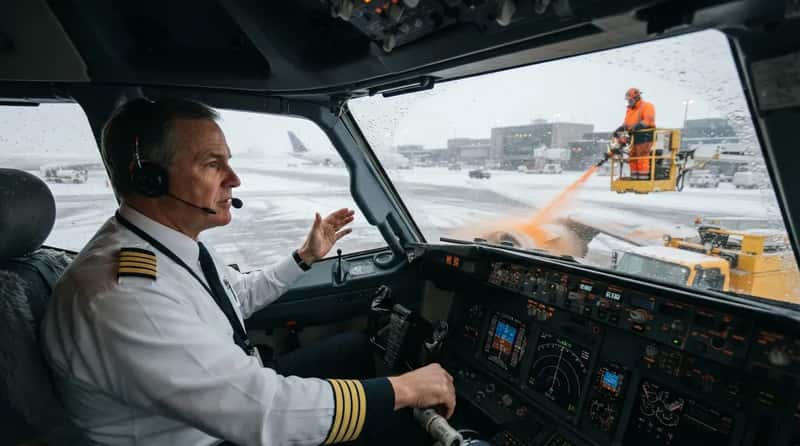
Passengers often assume de-icing decisions are purely up to the ground team standing next to the truck. That’s not how the authority actually works. The pilot-in-command makes the final decision based on visual inspection and prevailing conditions – ground crew may recommend de-icing, but the captain is responsible for ensuring the aircraft is free from contamination before departure.
This is one of the more controversial points among frequent flyers who assume the process is fully automated or purely rule-based. In reality, it comes down to human judgment in the cockpit every single time, layered on top of every chart, code, and fluid choice made on the ground below.
#7 – Blue Skies Don’t Mean the Plane Is Actually Safe to Fly
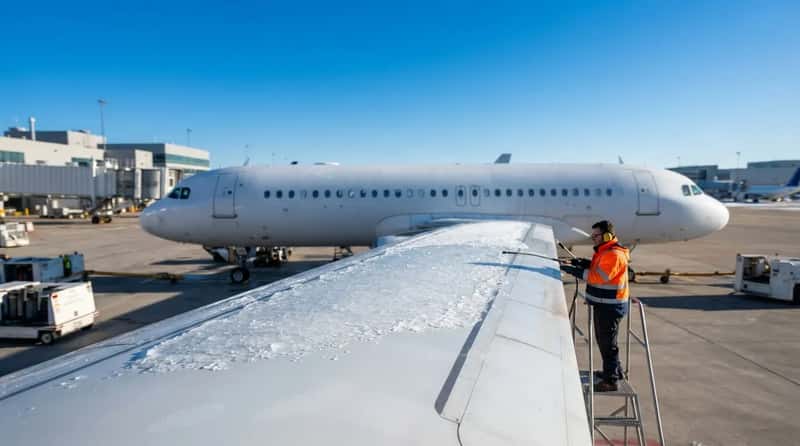
This is where most passengers get genuinely fooled: a clear, sunny departure doesn’t rule out ice. Ground icing can occur even when the ambient temperature is above freezing, via cold soaking – ice forms because the fuel in the wing tanks is below freezing, causing condensation on the wings which subsequently freezes.
So the visual scene outside your window – dry pavement, no clouds, no snow falling – can be completely irrelevant to what’s happening on the wing’s upper surface. Ground crews say this is the single hardest thing to explain to frustrated passengers who assume a sunny day automatically means no de-icing should be needed.
#6 – Temperature Barely Matters in the Decision to De-Ice
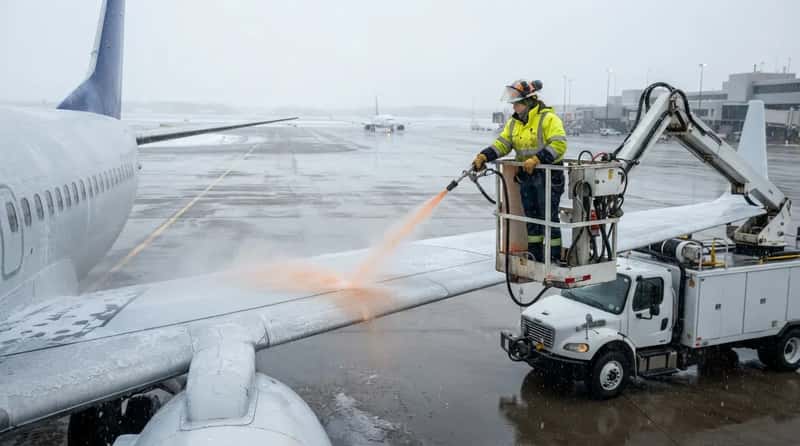
It seems logical that de-icing decisions revolve around a specific temperature cutoff. Ground teams say that’s simply not how it works. Planes need de-icing whenever frozen contaminants appear on aircraft surfaces, regardless of air temperature – it’s not about a specific temperature, it’s about visible ice, snow, frost, or freezing rain.
That means a 40-degree day with freezing rain can require de-icing, while a 25-degree day with dry, clear skies might not. Most passengers assume there’s a magic number on a thermometer that triggers the trucks – there isn’t. The real trigger is what’s physically stuck to the surfaces of the plane.
#5 – Slower Fluids Aren’t Allowed on Every Jet, and Here’s Why
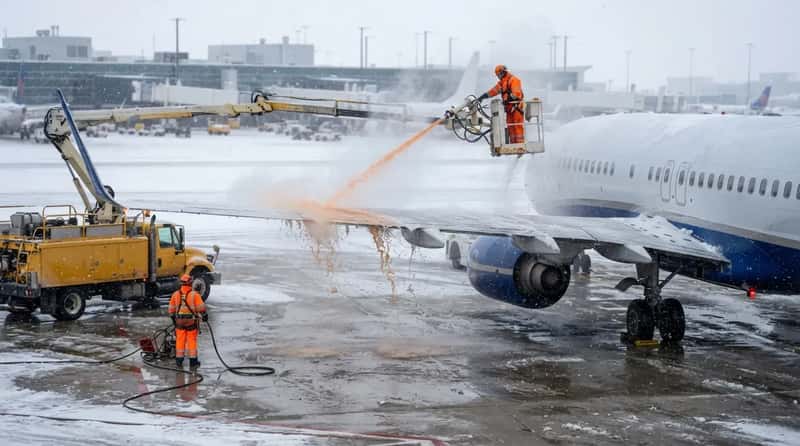
Type I fluid gets used more than any other type, largely because of one flexible property most passengers never consider. Type I fluids are essentially de-icing fluids that can also be used for anti-icing, and because they aren’t thickened, they shear or blow off the airplane at relatively low airspeeds around 60 knots.
That low-speed shear-off is exactly why it’s the universal starting point – nearly every aircraft type can safely use it. But that same thinness is its weakness. However, its low viscosity results in the shortest set of holdover times of any of the four fluid types. Universal usability comes at the cost of protection time – a genuine trade-off, not a design flaw.
#4 – A Secret Code Gets Radioed to the Cockpit Before Takeoff
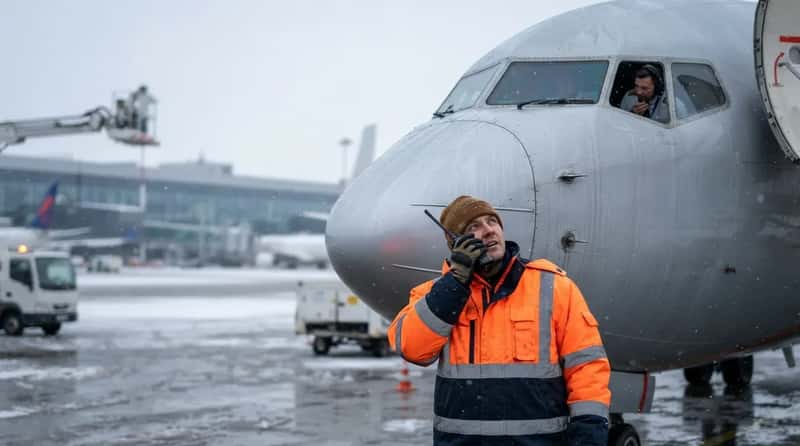
There’s a small ritual happening between ground crew and cockpit that most passengers have never heard mentioned once. Prior to departure, an “anti-icing code” must be passed to the flight crew to allow them to calculate the holdover time, confirming to the crew that the aircraft has been adequately treated.
That code isn’t small talk – it’s precise, standardized, and treated as one of the last critical safety checks before pushback. It tells the pilots exactly which fluid was used, when, and at what concentration, letting them calculate down to the minute how much protection is actually left by the time wheels leave the ground.
#3 – One De-Icing Job Can Cost Anywhere From $800 to $15,000
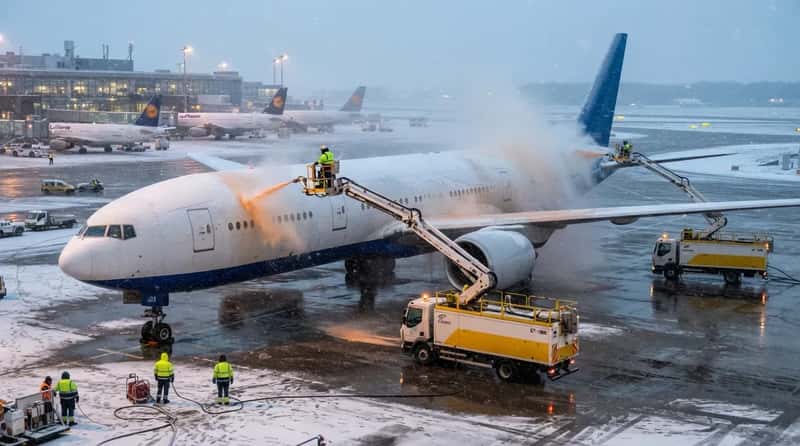
The price tag behind a single “we’re just waiting for de-icing” announcement is far wider than passengers assume. Typical costs for aircraft de-icing range from roughly €800 to €15,000-plus, depending largely on aircraft size.
A small private jet needs a fraction of the fluid a wide-body airliner requires, and the price scales dramatically with wingspan and surface area. It’s a genuinely controversial cost center in aviation – some industry voices argue airlines should be far more transparent with passengers about exactly why fees and delays spike so hard during winter storms.
Worth Knowing
- A single de-icing job can cost anywhere from about $800 to $15,000 or more.
- Price scales heavily with aircraft size, wingspan, and surface area.
- The total lifecycle cost of just one gallon of fluid can run $17 to $21.
- A single storm can require thousands of gallons across dozens of aircraft at once.
#2 – A Handful of Pads Can Freeze an Entire Airport’s Schedule
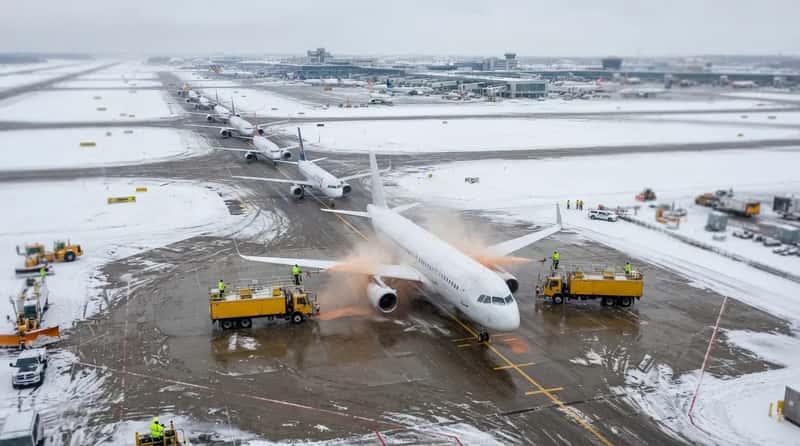
This is the part that turns one snowy morning into a full day of cascading delays across an entire hub. Building deicing pads and dedicated pond systems comes at a great cost, and the impact isn’t just capital costs – it can impact flight operations when many aircraft are being funneled into a small set of pads that are quickly overwhelmed.
Every plane, regardless of airline, has to funnel through the same limited number of spray positions. One backed-up pad can ripple into hundreds of delayed departures across the entire airport, long after the snow itself has stopped falling. It’s rarely the storm causing the worst delays – it’s the bottleneck built to fix it.
#1 – The Scariest Ice on a Plane Is the Kind No One Can See
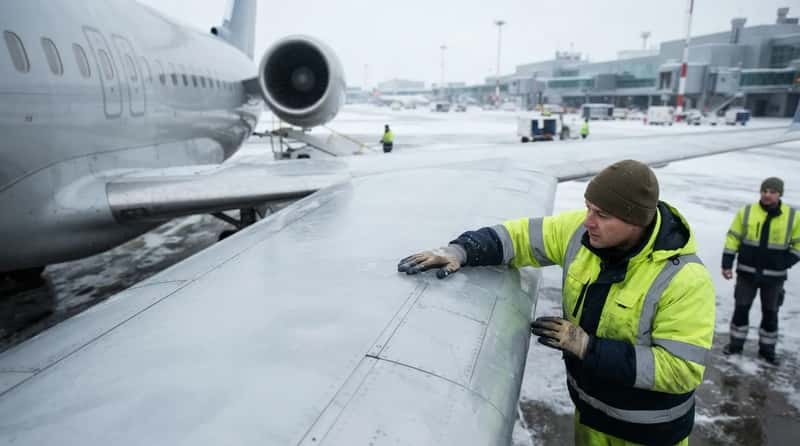
Ground crews save their most serious warnings for this one, and it’s exactly why cold-soaked fuel frost checks are treated with total seriousness. This ice forms when fuel within wing fuel tanks has been cold soaked to below freezing, causing the wing surface temperature to stay below freezing until the fuel warms, with accumulations of clear ice up to one inch thick recorded in real incidents.
The consequences of missing it are severe. Attempts to take off with clear ice accumulation on the wings can lead to disastrous foreign object damage, as the ice layer breaks free during rotation and gets ingested by rear-mounted engines. It’s colorless, it’s easy to miss visually, and it’s the single biggest reason ground crews insist on hands-on checks even when a plane looks perfectly clean from the jet bridge.
None of this is random. Every color, every degree, every minute of holdover time is the product of decades of hard lessons, expensive equipment, and split-second math that most passengers will never see happen. The next time a flight sits at the gate a little longer than expected, it isn’t bureaucracy slowing things down – it’s a countdown clock, a hand pressed against a wing, and a captain making the final call.
What’s the most surprising fact here for you – the invisible ice, the $21-a-gallon fluid, or the sunny-day de-icing myth? Drop your reaction in the comments.