If you grew up in a 1960s American suburb, your backyard was basically an open-air experiment nobody had fully thought through. There were metal contraptions sharp enough to draw blood, open fires burning actual household garbage, and lawn games involving weighted metal spikes – all in the same yard where the kids ran around barefoot. Nobody called it dangerous. Nobody questioned it. It was just Tuesday afternoon.
The wildest part? Some of it was genuinely brilliant. The sixties backyard was also the birthplace of outdoor entertaining as an American art form, and a surprising number of those “crazy” features are quietly making real comebacks right now. So before you judge – or before you get too deep in the nostalgia – here are 29 features from the 1960s backyard that everyone just accepted like they made complete sense.
#29 – The Backyard Burn Barrel Nobody Questioned
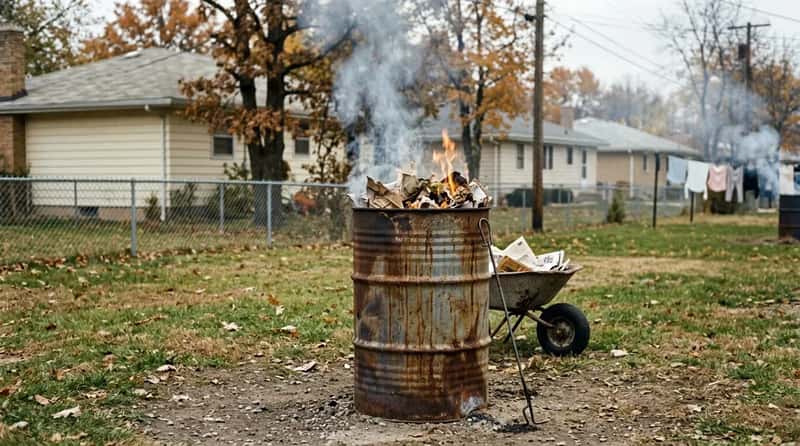
Before curbside recycling, before green bins, before anyone used the word “sustainability” in casual conversation, most American households solved the garbage problem with a rusted metal barrel and a match. The backyard burn barrel was a standard fixture in suburban yards well into the late 1960s. You burned paper, cardboard, food scraps, and whatever else built up during the week. The smoke rose, the neighbors watched, and no one said a word.
Cities and counties began banning open residential burning in the late 1960s and early 1970s as air quality regulations tightened – a wave of awareness that crested with the first Earth Day in April 1970. The burn barrel didn’t survive that moment. But for a solid decade before it, lighting the barrel on a Thursday evening was just part of the weekly routine, as ordinary as taking out the trash – because it literally was taking out the trash.
Fast Facts
- The first Earth Day was held on April 22, 1970 – the same year many cities began banning residential open burning.
- Burn barrels were standard issue in rural and suburban yards alike – not just a rural habit.
- Common fuel: paper, cardboard, food packaging, and anything else that built up through the week.
- The barrel itself was usually a repurposed 55-gallon steel drum with holes punched in the sides for airflow.
#28 – Lawn Darts Left Out for Anyone to Step On
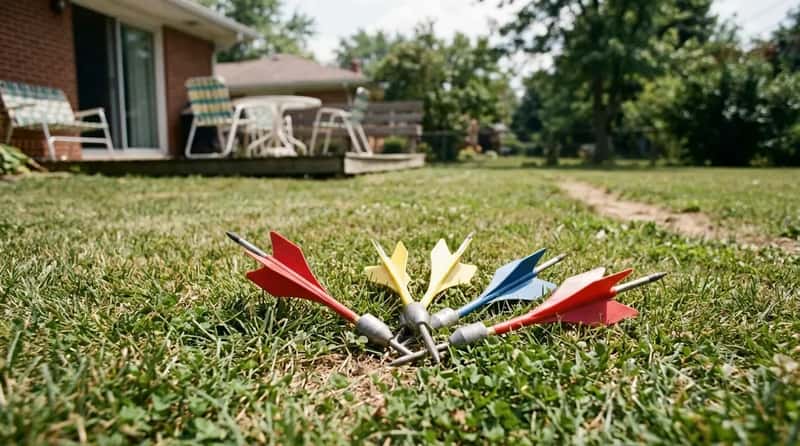
Lawn darts – sold under brand names like Jarts – were a fixture of the 1960s backyard, and they were exactly as alarming as they sound. Each dart ran about 12 inches long with a weighted metal tip on one end and plastic fins on the other, meant to be tossed underhand toward a ground target. In theory: a calm, skill-based game for adults. In practice: sharp metal projectiles scattered across the lawn at every neighborhood cookout, right where the kids were running barefoot.
Between 1978 and 1986 alone, more than 6,000 Americans visited emergency rooms due to lawn dart injuries – and 81 percent of those victims were children under the age of 15, with half of those cases involving kids under 10. The product was finally banned in the U.S. in 1988. But for the entire decade of the sixties, they were a Sears bestseller. Parents set them up next to the potato salad table. Nobody blinked. Looking back, it’s one of those things that seems genuinely impossible – until you remember that this was also the era of the burn barrel.
#27 – The Aluminum Folding Chair That Branded the Back of Your Legs
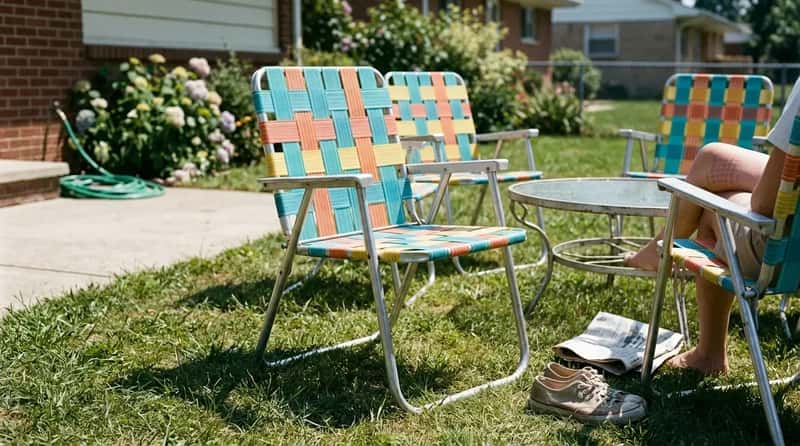
Every 1960s backyard had at least four of these – aluminum frames strung with vinyl or plastic webbing in colors like turquoise, yellow, and coral. They were lightweight and cheap, which made them perfect. They were also sun-absorbing torture devices that left grid marks on the backs of your thighs after ten minutes in direct sunlight. The webbing would eventually dry out and snap mid-sit, usually during a family gathering. Nobody considered this a design flaw.
Manufacturers offered full patio sets in bold mid-century colors, and with more Americans moving to the suburbs, the backyard became the centerpiece of entertaining culture. The aluminum folding chair was the affordable entry point into that world. They were stackable, they were $3 each at the hardware store, and they were quietly responsible for more summer afternoon suffering than anyone ever officially documented.
#26 – The Rotary Clothesline Planted Permanently in the Lawn
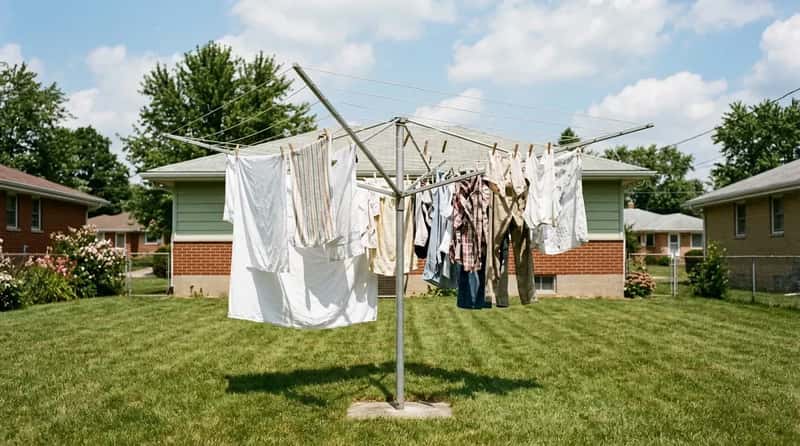
The rotary clothesline – that spinning metal umbrella sunk into a concrete anchor in the middle of the yard – was a defining feature of postwar suburban life. It wasn’t hidden behind hedges. It wasn’t considered an eyesore. It stood right in the center of the lawn, in full view of every neighbor, slowly spinning in the breeze with the whole family’s laundry on display. Sheets, work clothes, underwear – all of it, out there for the whole block to see, and nobody found that strange.
The dryer existed in the sixties, but running one cost money, and the rotary line was free once you’d poured the concrete. Many families used both, saving the dryer for rainy days and running the clothesline from April through October. It made practical sense – but it also meant your backyard featured a giant metal structure for seven months of the year, and everyone just designed the lawn around it like it was a fountain.
#25 – The Concrete Birdbath That Stood There for Forty Years

The cast concrete birdbath was as standard in a 1960s yard as a front door. Usually a shallow dish on a pedestal – gray, speckled, slightly lopsided – it sat in roughly the same spot from the year it was installed until the house changed hands decades later. It collected green water every few weeks, attracted mosquitoes in the summer, cracked from frost every winter, and got filled right back up again in spring like nothing had happened.
Nobody moved it. Nobody replaced it. When it cracked enough to stop holding water, people sometimes just left it in place as a garden ornament anyway. The birdbath was a holdover from formal Victorian garden design that somehow survived every trend and every decade, carried forward entirely on the logic that birds used it – which gave everyone just enough justification to leave it exactly where it was, green water and all, indefinitely.
#24 – The Charcoal Kettle Grill Sitting Out All Year
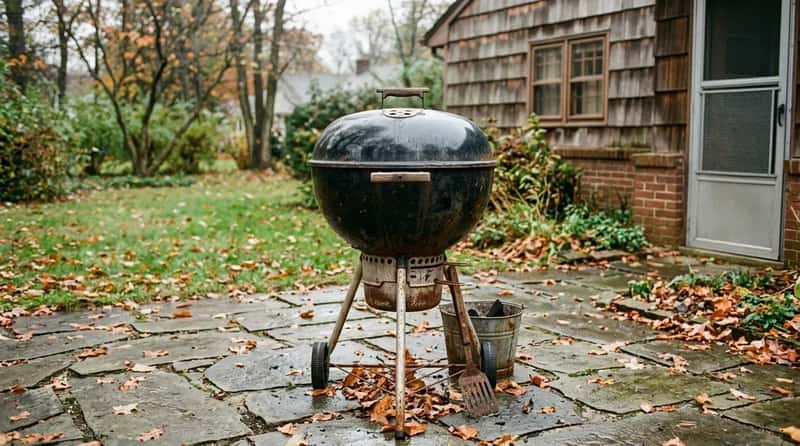
The Weber kettle grill was introduced in 1952, but it became a true American backyard institution through the 1960s. It lived outside, year-round, in all weather. Nobody brought it in for winter. It sat on the patio through the rain, rusted slightly on the bottom, and got fired up again every April like a seasonal tradition. The backyard had become an essential extension of the home – a gathering spot for everything from Sunday barbecues to evening cocktail parties – and the kettle grill was the anchor of all of it.
Lighting it was its own production: newspaper, lighter fluid, a long match, then standing back. Getting the coals right was a matter of family pride, and every dad had his own very specific method that he considered objectively superior to everyone else’s. The charcoal grill didn’t just cook food. It was the reason people came outside in the first place – and once it was going, nobody went back in until dark.
At a Glance
- Weber kettle introduced: 1952 – a backyard staple by the early 1960s.
- Lighter fluid of choice: Kingsford or Ronsonol – applied generously, sometimes recklessly.
- Coal-readiness test: gray ash coating on the outside, glowing orange underneath.
- Typical cook time: 30-45 minutes of prep before the first burger hit the grate.
- Winter storage: The patio. Always the patio. Year-round.
#23 – The Aboveground Pool You Had to Vacuum by Hand
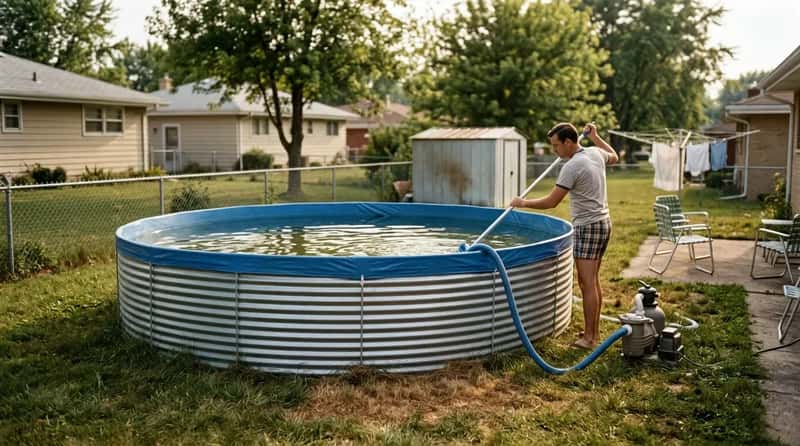
Not everyone could afford an in-ground pool in the sixties, but the aboveground pool – a round metal-framed structure with a vinyl liner – put swimming within reach of millions of middle-class families. It went up in a weekend, held a few thousand gallons of water, and became the social hub of the entire neighborhood from June through August. Every kid in a two-block radius showed up uninvited, and parents let them in anyway, because that was just how it worked.
Nobody questioned the fact that the pool turned the entire lawn brown underneath it after a single summer. The dead grass circle that remained when the pool came down in September was just a fact of life. And every Memorial Day weekend, the pool went back up in the same exact spot – same dead patch, same vinyl liner with the same small patch kit holding together a two-year-old tear – and the whole thing started over. It was the most democratic version of the American dream that ever ruined a lawn.
#22 – Wrought Iron Patio Furniture That Weighed as Much as a Car
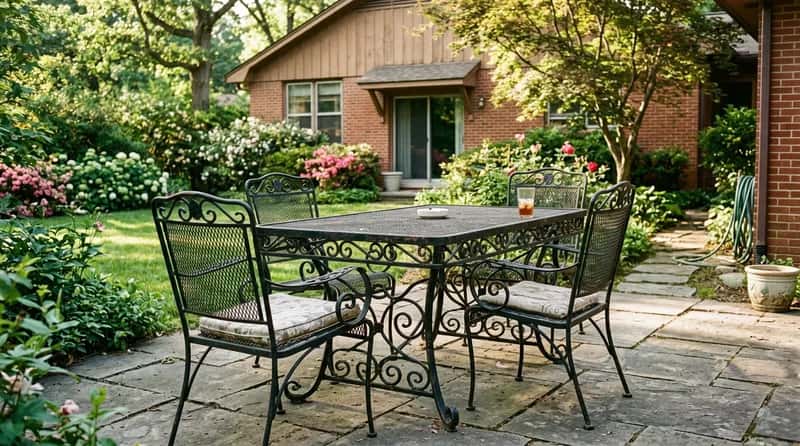
Before lightweight aluminum became the go-to material, wrought iron patio furniture was the premium choice for backyard dining sets in the early-to-mid sixties. The sets were heavy enough that once you placed them, they basically stayed there permanently. Moving a wrought iron table across a patio for a different seating arrangement was a two-person job that usually ended in someone’s shin getting hit and the table going back where it started.
They were cold in the morning, scalding in the afternoon, and developed rust spots if you looked at them wrong in a humid climate. But they looked serious. They communicated investment. And in the sixties, that mattered – because the patio had become a statement about how you lived, not just where you sat. The wrought iron set said you’d thought about your outdoor space, even if thinking about it had resulted in furniture that required a dolly to relocate.
#21 – The Badminton Net That Never Came Down All Summer
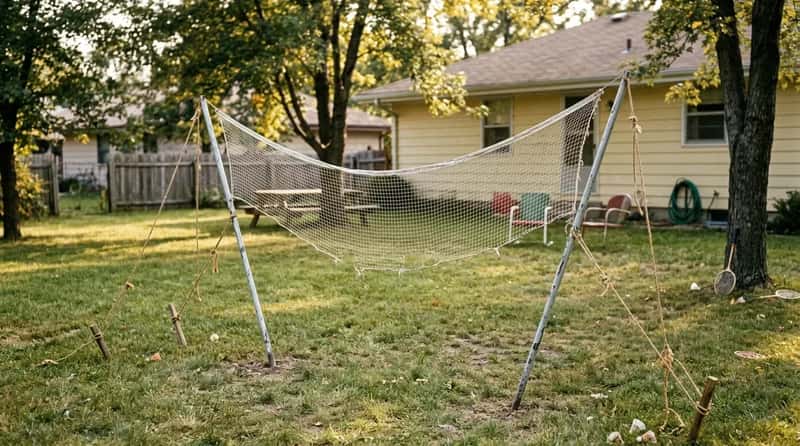
In the 1960s, badminton was as much a backyard fixture as grass itself. Families installed full-service game areas in their yards, with badminton courts sitting alongside horseshoes and shuffleboard as standard equipment. The net went up at the start of summer and didn’t come down until fall. It sagged by July. The poles leaned at ten-degree angles by August. The shuttlecocks ended up on the roof at least once per season, and nobody retrieved them until the first frost.
The court dimensions weren’t measured. The lines weren’t marked. None of that mattered, because backyard badminton in 1963 wasn’t about sport – it was about having something to do between dinner and dark. It was a reason to stay outside. And in the sixties backyard, there was always a reason to stay outside, because that was where the actual life was happening, loud and barely organized and completely unscheduled.
#20 – Tiki Torches Ringing the Whole Patio
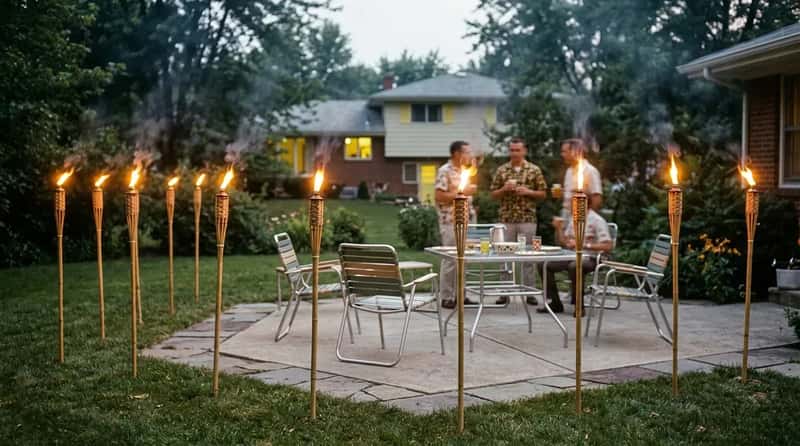
The tiki torch became an American backyard staple through the late fifties and into the sixties, riding a wave of Polynesian and Hawaiian cultural obsession that had swept the country. Pink plastic flamingos, Hawaiian-inspired cookware, pupu platters – and around the perimeter of the patio, a ring of bamboo torches filled with citronella oil and planted at even intervals. They made the whole outdoor-entertaining fantasy feel immersive and slightly tropical, even in Ohio.
The citronella was supposed to repel mosquitoes. It mostly didn’t, but people believed it did, which was enough. The torches themselves were a genuine fire hazard – filled with flammable oil, staked into dry summer grass, left unattended while adults wandered around with cocktails. One good wind gust and the whole party became an incident. But the mood they created was undeniable. In the sixties backyard, mood was everything. You weren’t just hosting a cookout – you were building an atmosphere, and the tiki torch was what made the yard feel like a destination.
#19 – The Metal Swing Set Anchored Into Bare Dirt
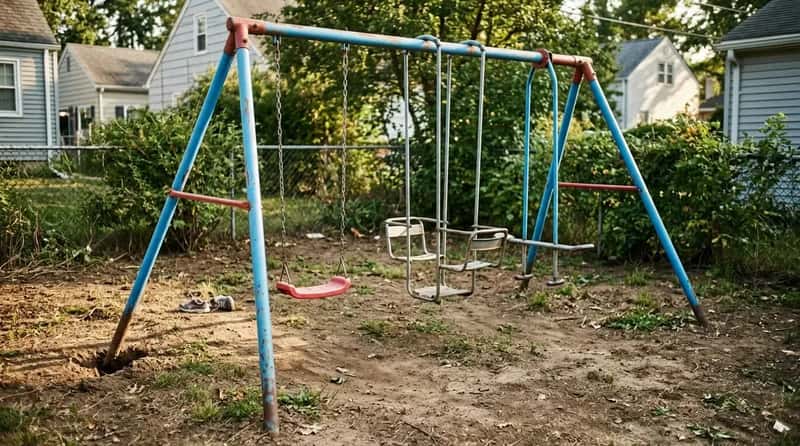
Before smartphones and scheduled playdates, there was the backyard swing set – tubular metal, painted in bright primary colors, sold by Sears and JCPenney in A-frame kits that bolted together over a single afternoon. For a good chunk of the 20th century, it was one of the most exciting features a kid could have in their yard. It was loud, slightly wobbly, and absolutely everywhere in the American suburbs of the 1960s.
The safety standards that govern modern playground equipment – rubber mulch, impact-absorbing surfaces, rounded edges – did not apply here. The legs lifted out of the dirt when the swings hit their peak. The metal got hot enough in July to blister. The slide ended in bare ground with no buffer. And kids loved every second of it, because a little bit of danger was just part of the deal. Parents watched from the aluminum folding chairs and trusted that everyone would be basically fine. Mostly, they were right.
Quick Compare
- 1960s swing set surface: Bare packed dirt or patchy grass – no padding of any kind.
- Modern playground surface: Engineered wood fiber, rubber mulch, or poured rubber matting.
- 1960s slide landing: The ground, at speed, with no buffer.
- 1960s leg anchoring: Friction and gravity. The legs visibly lifted mid-swing.
- General attitude: Walk it off. Ice it later.
#18 – The Sandbox That Doubled as a Neighborhood Cat Bathroom
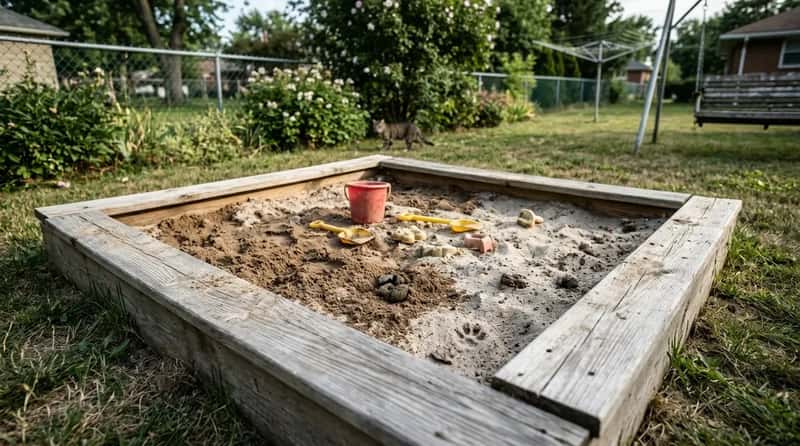
Backyard design guides of the era recommended the sandbox as a standard fixture for any family yard – a wooden frame, maybe two feet deep, filled with sand and placed in a sunny corner. Kids built elaborate cities in it, buried toys in it, and spent entire summer mornings in a completely self-contained world. It was genuinely one of the better ideas the sixties backyard produced.
The problem nobody discussed was that an open sandbox, left uncovered overnight, was essentially a litter box for every cat in the neighborhood. By mid-summer, the sand had seen things. Parents occasionally raked it out, but a proper lid required a dedicated effort most families never made. The sandbox also collected leaves, rain, and the occasional dead beetle throughout the season. Nobody considered any of this a dealbreaker. You played in it anyway, and somehow everyone survived, and the sandbox sat there in its corner year after year, open to the sky, taking whatever came.
#17 – The Rope Hammock Between Two Possibly-Too-Close Trees
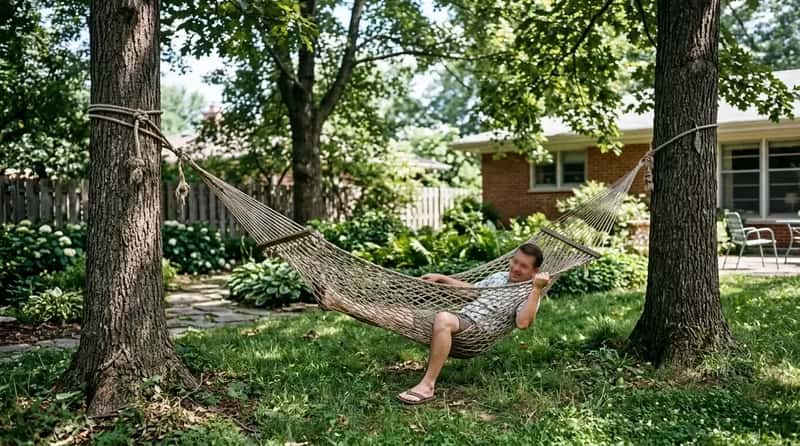
The rope hammock was the 1960s backyard’s answer to the concept of relaxation – strung between two trees at whatever height and distance happened to work with the available yard layout. In theory: a place to nap and read in dappled shade on a Sunday afternoon. In practice: getting into it without flipping required genuine skill, staying in it without slowly tilting sideways was a continuous battle against physics, and the ropes left crosshatch impressions on any exposed skin after thirty minutes.
Despite all of this, the hammock was aspirational. It communicated that you were the kind of family that took it easy. The tree it was tied to was usually not the most structurally ideal tree in the yard. The ropes were often too long, which meant the hammock sagged close enough to the ground that lying in it felt less like floating and more like being slowly folded in half. Nobody cared. It went up every spring, got called a relaxation station, and fulfilled its symbolic purpose whether anyone actually relaxed in it or not.
#16 – The Horseshoe Pit Dug Right Into the Lawn
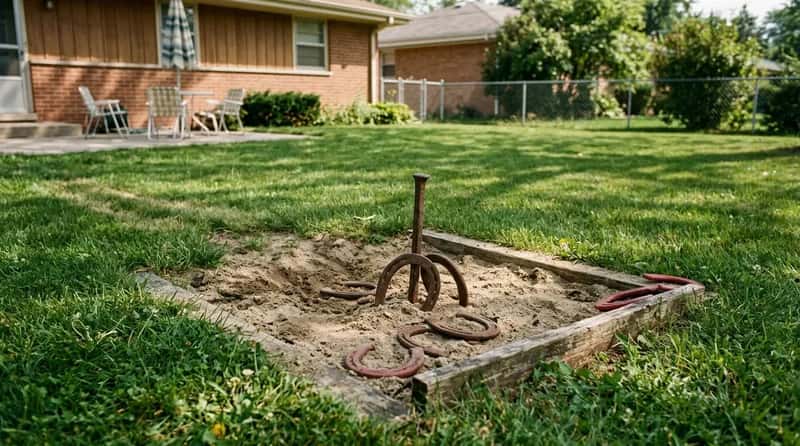
The horseshoe pit was one of the more permanent installations of the sixties backyard – two metal stakes driven into the ground with sand or clay pits dug out around each one. Once you committed to a horseshoe pit, that was it. That section of your lawn was now the horseshoe pit. Permanently. Grass didn’t grow there. Kids were warned away from the stakes. And the game itself – tossing heavy curved metal objects through the air – happened at every family gathering without anyone treating it as remotely unusual.
The satisfying clang of a ringer was one of the great sounds of 1960s suburban life. It carried across three backyards. Everyone knew what it meant. The stakes stayed in the ground from the day they went in until the house was sold, and whoever bought it either embraced the pit or spent an entire Saturday afternoon trying to pull out stakes that had been in the earth for fifteen years. A lot of them just left the stakes. Who were they to argue with tradition?
#15 – The Rolling Lawn Aerator That Was Actually Just Punishing the Ground
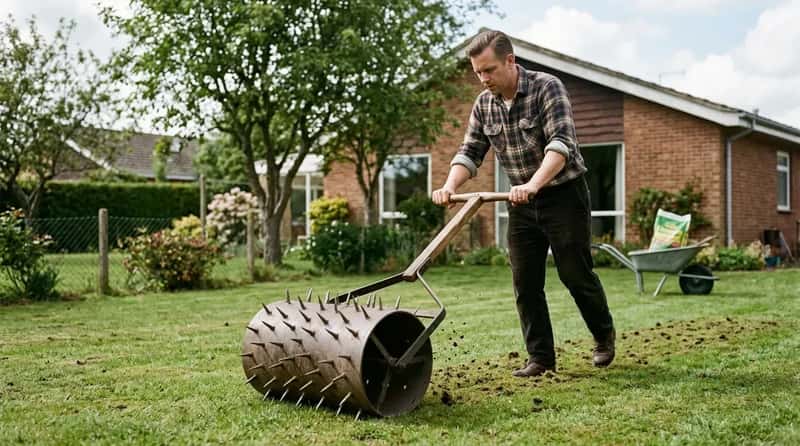
The perfect lawn as a status symbol took off in the 1950s and 1960s as suburban culture expanded. The rising popularity of golf under President Eisenhower didn’t hurt – suddenly, every homeowner wanted a smooth, dense, weed-free carpet of grass in front of the house. The lawn aerator – a rolling spiked drum that punched holes into the soil – was one of the tools serious homeowners deployed in pursuit of that dream. Most borrowed one from a neighbor, used it once in spring, and put it away until next year.
The obsession extended to rituals that consumed entire weekends. Fertilizing, overseeding, edging borders with a manual edger, hand-pulling dandelions one by one – all standard activity for the American suburban dad of the sixties. Magazines like Popular Mechanics and Family Handyman ran tips and tricks for exactly this. A good lawn wasn’t just maintenance. It was a statement about who you were and how seriously you took your place in the neighborhood. The aerator was just one tool in a very committed arsenal.
#14 – The Cinder Block Planter That Nobody Could Move

The DIY cinder block planter was a common sight in sixties backyards – stacked cinder blocks arranged in L-shapes or squares, filled with soil, used to grow tomatoes, marigolds, or whatever came in a seed packet from the hardware store. They were cheap to build and heavy enough that once stacked, they stayed put. This was considered an advantage. You didn’t have to worry about anyone knocking them over. That was also because nobody could move them anyway, including the people who built them.
Cinder blocks were the sixties suburban version of raised garden beds, and they had a utilitarian honesty that was actually ahead of its time. The planter changed the shape of the yard. It was a commitment – the kind you made on a Saturday morning without fully thinking through and then lived with for the next decade. It was also usually a little bit crooked, because nobody used a level when stacking it, and nobody went back to fix it once the tomatoes started growing. The tomatoes didn’t seem to mind.
#13 – The Rotary Mower That Could Take a Finger
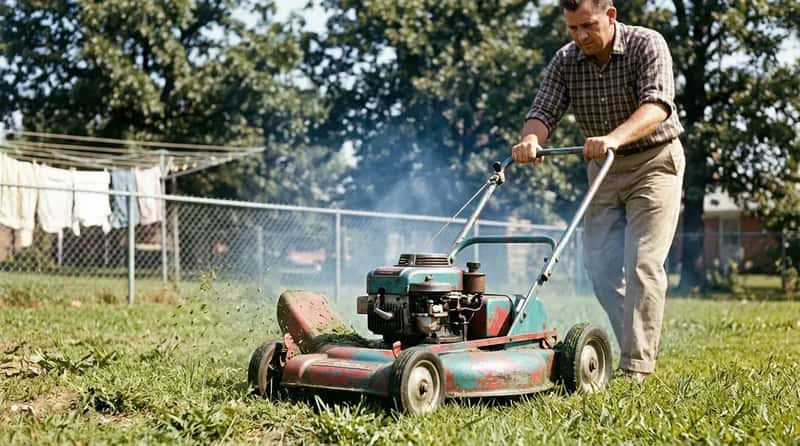
The rotary gas-powered lawn mower of the sixties came with no safety housing, no dead-man’s switch, and no automatic shutoff when you let go of the handle. The blade kept spinning. You just knew to be careful. Children were warned once, firmly, and then expected to remember that warning forever. Nobody handed out a second warning. That was the system, and it mostly worked.
The mower was loud enough to be heard two streets over, left a blue haze of exhaust hanging over the yard, and required a specific pull-cord-and-choke ritual to start. If you flooded the engine, you waited ten minutes and tried again. Weekend mornings across America smelled like cut grass and two-stroke exhaust because every lawn on the block was being mowed at roughly the same time – usually starting at 8 a.m. on Saturday. Neighbors tolerated it without complaint. That was just what Saturdays were, and the unspoken agreement held from one end of the block to the other without anyone ever discussing it.
#12 – The Poured Concrete Patio Slab with No Shade
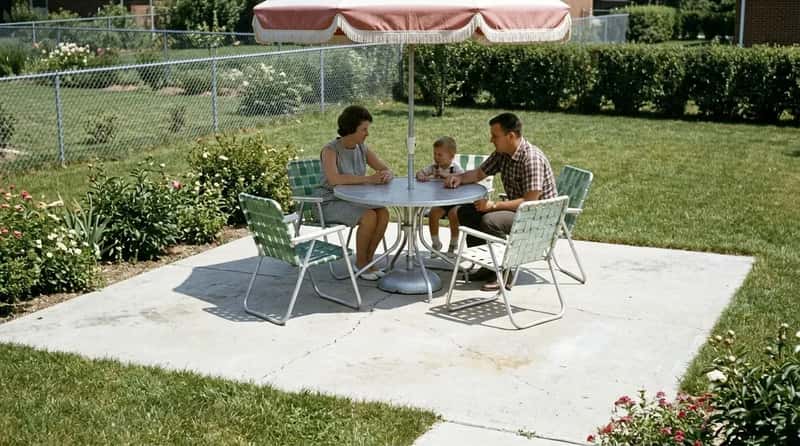
The backyard concrete slab was the entry-level outdoor room of the 1960s. Sliding glass doors opened onto it. Grills fired up on it. Parties happened on it. It was usually a plain rectangle of poured concrete, bordered by nothing, exposed to full sun from noon until evening – which in July meant the surface absorbed enough heat to make bare feet feel like a very bad idea by 11 a.m.
The solution was a patio umbrella – a heavy metal pole planted in a sand-filled base in the center of the table – that shaded roughly one person if the wind was calm. On genuinely hot afternoons, the whole family crowded into that one strip of shade and agreed it was enough. The slab was not beautiful. It was not shaded. It cracked eventually, and people filled the cracks with caulk that never quite matched. But it was outside, and outside was where everyone wanted to be, so the slab was enough, and it served its purpose for forty years without complaint.
Worth Knowing
- Concrete absorbs heat all day and radiates it back through the evening – great for staying warm after sunset, brutal for bare feet at noon.
- The sliding glass door connecting house to slab was itself a 1960s innovation that redefined how Americans thought about indoor-outdoor flow.
- Patio umbrellas of the era were heavy, difficult to angle, and offered roughly a 7-foot diameter of shade – enough for one table and one argument about who sat in the sun.
- Slab cracks were typically filled with whatever caulk was in the garage, rarely the right color, and never the right texture.
#11 – The Potted Herb Garden on the Back Step
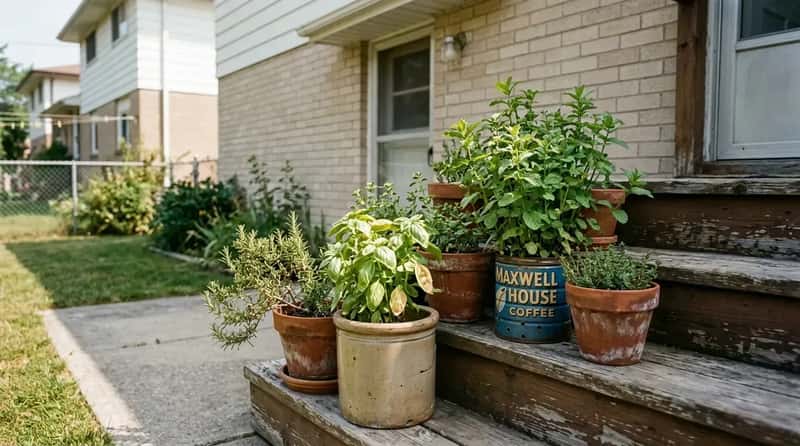
Pots of basil, rosemary, and mint on the sunny back patio, ledge, or alongside the stairs – this wasn’t a Pinterest project. It was practical. Fresh herbs were a sign of a good cook, and growing your own was cheaper and more convenient than a weekly trip to the store. Ceramic pots, terra cotta, old coffee cans – anything that held soil would do, and most back steps had a small collection of all three.
The herb garden on the back step was the most democratic form of gardening – no yard space, no special tools, almost no expertise required. You watered the mint too much and it took over everything. You forgot the basil for a week and it bolted into flowers. The rosemary survived all of it regardless, because rosemary always survives. The back-step collection got replenished every spring from the same seed rack at the same hardware store, season after season, decade after decade – and it turns out the exact same logic that made it popular in 1963 is why it’s everywhere again right now.
#10 – The Wicker and Rattan Furniture That Lived Outdoors
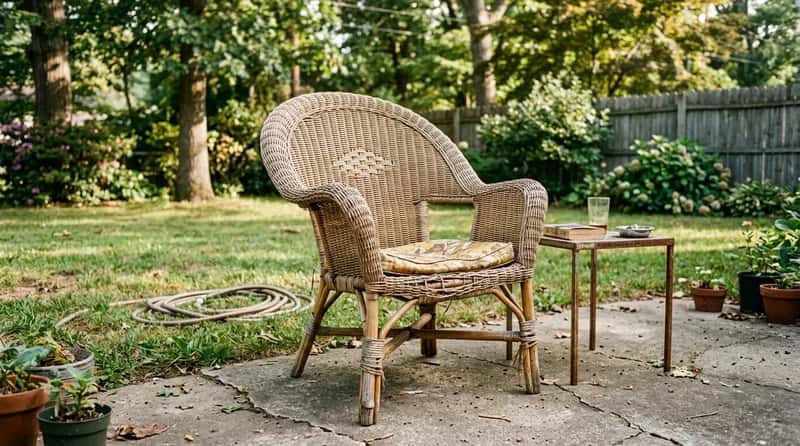
Wicker and rattan chairs – big, rounded, sometimes egg-shaped, representing a longing for organic materials and natural textures – appeared on patios and in backyards across America through the sixties. They were not technically outdoor furniture in the modern sense. They were not treated for moisture or UV exposure. They sat outside anyway, through rain and sun and the occasional thunderstorm, and lasted about three or four years before the weave started crackling and sagging in specific, structurally concerning ways.
When they developed that characteristic dry creak – the slightly alarming sound when you shifted your weight – nobody replaced them. You just learned which angle was safe and sat in it carefully. Wicker carried a tropical, relaxed feel that matched the era’s Polynesian obsession and mid-century modern aesthetic perfectly. Floral prints, citrus tones, mod silhouettes – it all bled from indoors to outdoors and back again. The wicker chair was the physical expression of that indoor-outdoor philosophy, even when it was, technically, in the process of quietly falling apart.
#9 – The Sunken Conversation Pit (If Your Parents Were Fancy)
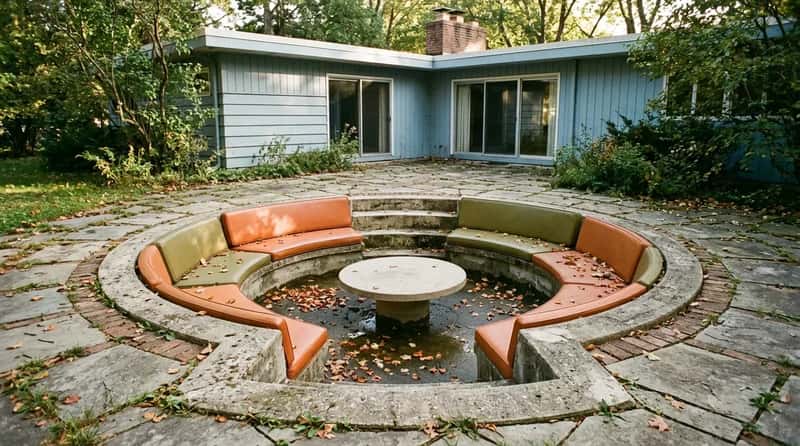
The sunken conversation pit – whether built into a living room or excavated into a patio – was the ultimate sixties design flex. It communicated that your home was designed, not just built. Guests didn’t just sit anywhere; they descended into a curated seating arrangement. It was architectural ambition built into a family home, and the outdoor version meant actually digging a section of the patio or lawn down several feet and lining it with brick or concrete.
Drainage was always an afterthought. Leaves collected in it every fall in quantities that required a dedicated raking session. Rain pooled in the center unless the grading was perfect, which it rarely was. But it looked like something out of a magazine, and in the sixties, that was the whole point – the backyard had become an extension of the home as a living and entertaining space, and the conversation pit was the most theatrical expression of that ambition. The people who had one never stopped mentioning it.
#8 – The Standalone Barbecue Island Made of Cinder Block and Mortar
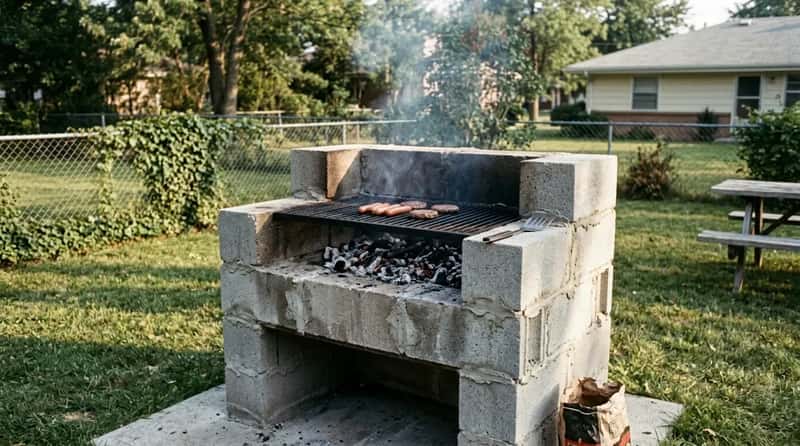
The backyard built-in barbecue – a permanent structure of mortared cinder block or brick with a metal grate bolted into the masonry – was the aspirational step above the portable kettle grill. It meant you were serious about outdoor cooking. It was built on a single weekend with a brother-in-law’s help, a bag of mortar mix, and a rough sketch on a napkin. It was almost always slightly lopsided. The grate was never quite at the right height. None of that diminished anyone’s pride in it.
Once built, it was permanent in the most absolute sense. It could not be moved when you re-landscaped. It could not go with you when you sold the house. It was the most ambitious of the era’s many DIY backyard projects, and Americans embraced that ambition with real enthusiasm – magazines like Popular Mechanics ran full construction guides for them. Some of those built-in barbecues are still standing today in backyards across America, too heavy to demolish without equipment, quietly outlasting every single person who ever cooked on them.
#7 – The Striped Canvas Awning Over the Back Door
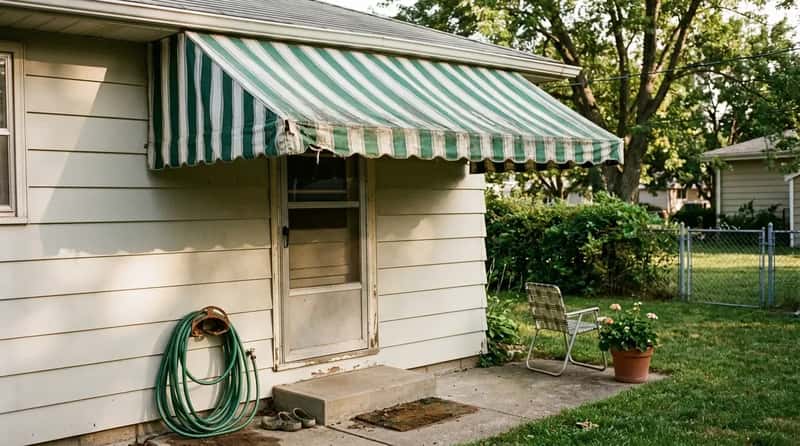
Before composite decking and pergolas and motorized retractable shades, the striped canvas awning was the 1960s solution to the back-door sun problem. Usually candy-striped in green-and-white or red-and-white, it bolted above the door or window and created a small covered zone over the concrete stoop – the transition zone between inside and outside, where the wet umbrella went, where the dog waited in the rain, where guests paused before entering and hosts stood to say goodbye.
The canvas mildewed if left up through winter. The metal brackets rusted. The fabric faded and frayed at the edges after a few years in the sun. None of that stopped anyone from keeping it up. The awning gave the back of the house a finished, intentional look that plain siding simply couldn’t match. And if you grew up in a 1960s ranch house, there’s a very good chance the smell of warm canvas on a summer afternoon is still somewhere in your memory – attached to something specific, something you can almost name but not quite.
#6 – The Decorative Garden Gnome or Ceramic Frog
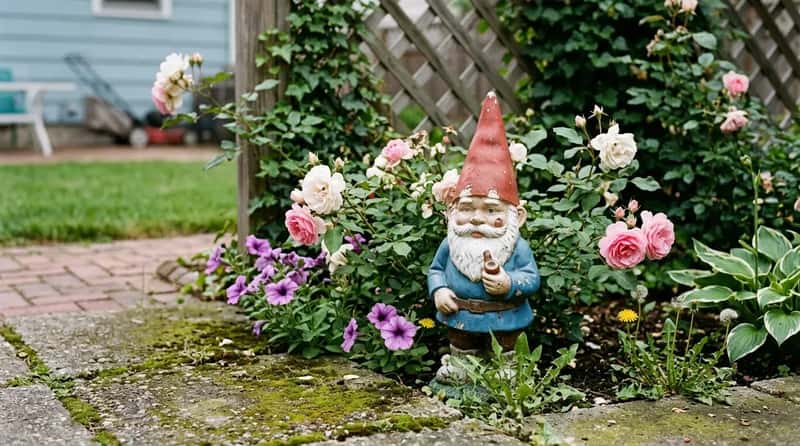
Ceramic garden ornaments – gnomes, frogs, mushrooms, wishing wells, concrete deer – were standard backyard decor in the 1960s. They were placed among flower beds, stationed near the garden gate, or arranged on the patio steps in configurations that made complete sense only to the person who arranged them. Nobody thought too hard about why a ceramic frog belonged next to the rose bushes. It looked cheerful. It stayed where you put it. That was decoration, and decoration was good.
The garden gnome has Germanic roots stretching back to the 1800s, but it reached true mass-market suburban America through the fifties and sixties when garden centers began stocking them alongside seed packets and fertilizer. They were considered charming by the people who owned them and deeply baffling by people who didn’t – a division that still exists today with exactly the same intensity. What makes them specifically of the sixties is the complete absence of irony. They were placed with total sincerity, as a straightforward expression of the desire to make the garden feel like a place worth spending time in.
#5 – The Plastic Pink Flamingo Staked Into the Front Lawn
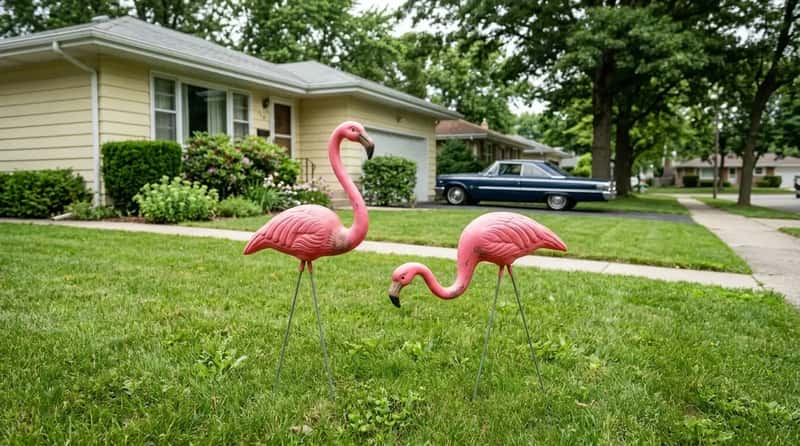
The first pink flamingo lawn ornament was designed in 1957 by Don Featherstone for Union Products of Leominster, Massachusetts – using a National Geographic photo spread as a reference. When they hit stores they sold in pairs for $2.76. By the early 1960s, they were everywhere. Florida was the ultimate symbol of leisure, and planting a flamingo in your Ohio or Michigan front yard was a way of bringing a little of that vacation feeling home – a piece of tropical elegance, as Featherstone himself once put it, delivered in a box for under $10.
Homeowners’ associations despised them. The bright synthetic pink was an affront to the middle-class preference for tasteful, well-manicured lawns free of ornament. That tension – between the people who loved them and the people who found them offensive – was actually the most interesting thing about them. The sixties saw real cultural rebellion against middle-class conformity, and the pink flamingo was right in the middle of that argument, blazing hot pink, staked into the lawn, completely unapologetic about every inch of itself. By 1993, Featherstone estimated that plastic flamingos outnumbered real, live ones globally at a ratio of 7 to 1.
Why It Stands Out
- Designed: 1957 by Don Featherstone for Union Products, Leominster, MA.
- Original price: $2.76 per pair – accessible to anyone who walked into a Sears or garden center.
- Total reproductions: More than 20 million units sold over the ornament’s lifetime.
- Cultural status: Named Madison, Wisconsin’s official city bird in 2009; included in the Smithsonian’s permanent collection.
- The divide: HOAs banned them. Working-class subdivisions embraced them. That tension is still alive today.
#4 – The Lathe-Turned Wooden Fence with Pointed Tips
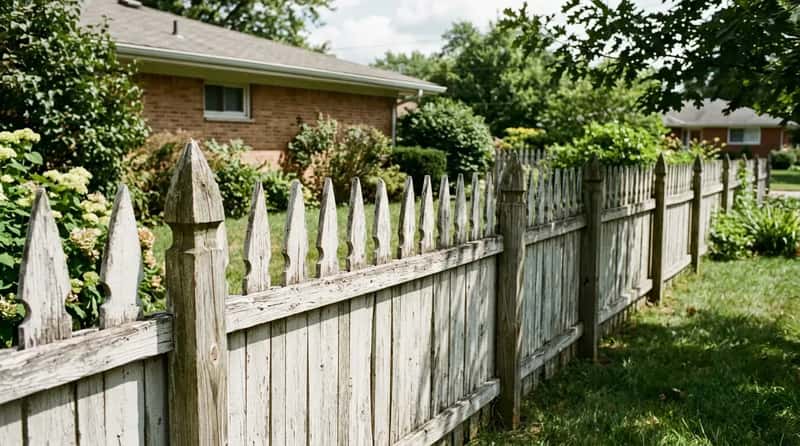
The wooden privacy fence of the sixties was usually rough-cut lumber, painted white or left to weather, with each post cut to a point at the top. Those pointed tips were a design choice nobody questioned – they looked intentional, like a traditional picket fence scaled up for a real yard. What they actually were was a row of wooden stakes lining the perimeter of a space where children and adults moved regularly in low light – chasing fireflies, retrieving a ball, navigating the yard after dark.
Building the fence was a neighborhood event. A neighbor helped dig. Someone’s uncle brought the post-hole digger. The fence went up over a Saturday, got painted the following weekend, and then stood there for the next twenty-plus years getting progressively more weathered and leaning at increasingly creative angles – held upright by habit, inertia, and the accumulated weight of the honeysuckle that eventually grew over everything. You didn’t fix a fence like that. You just appreciated it for what it had become.
#3 – The Japanese-Inspired Zen Garden Corner

In 1960, two issues of House Beautiful instructed Americans on how to adapt Japanese design principles in their homes and gardens. It landed. The Zen garden corner – raked gravel, carefully placed stones, perhaps a small bamboo water feature – represented something genuinely new in American backyard culture: the idea that the yard could be a place of intentional calm, not just activity. That was a real shift, and people embraced it enthusiastically.
Most sixties interpretations were approximate – a bag of white gravel from the hardware store, some river rocks arranged from biggest to smallest, a wooden rake from the same display. The bamboo water feature dripped unevenly. The gravel scattered within a week courtesy of neighborhood squirrels. But the intent was sincere, and the aesthetic was genuinely new for American suburban backyards. Many mid-century modern outdoor trends from the sixties are cycling back into popularity right now – and the Zen garden corner might be the clearest proof that those sixties homeowners were occasionally ahead of everyone else.
#2 – The Chest Freezer on the Back Porch Holding Mystery Meat
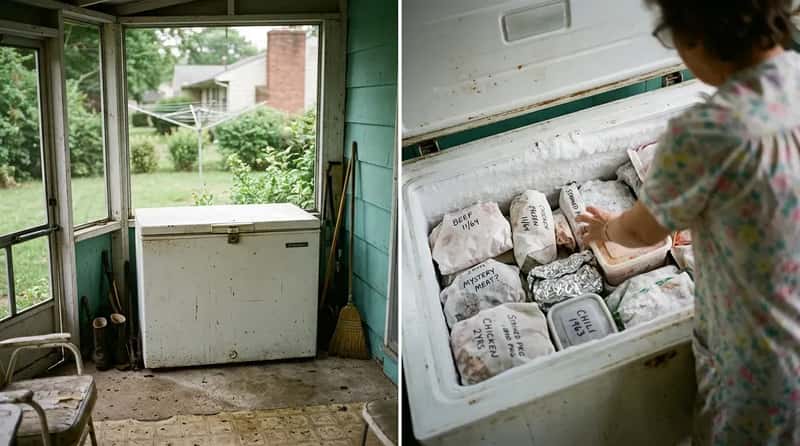
The chest freezer was the unsung hero of 1960s suburban life – and for millions of American families, it lived not in the basement but on the enclosed back porch, just outside the kitchen door. It hummed constantly. It was enormous, roughly the size of a small coffin, and it was filled with a rotating inventory that defied complete understanding. There were labeled bags from two Christmases ago. There was something wrapped in butcher paper with a faded marker date. There were at least four containers of frozen soup of uncertain origin.
The chest freezer was a product of postwar abundance and the American conviction that more storage meant more security. Keeping it on the back porch meant easy kitchen access without sacrificing basement space – and it meant the back porch had a permanent appliance that shaped every design decision around it for the next forty years. The freezer outlasted furniture, pets, and in many cases the original owners. It was the most load-bearing object in the back of the house, and it hummed through every season without asking for anything except the occasional defrost that everyone kept putting off until next month.
#1 – The Backyard as the Center of Everything
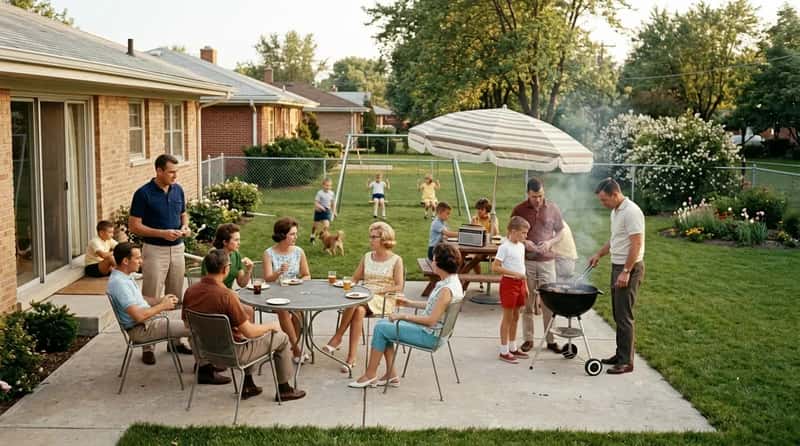
In the 1960s, the pursuit of the American dream was in full swing – families flooding suburbs in search of the house with the yard, and the yard became as important as the house itself. Backyards became essential gathering spots for everything from Sunday barbecues to evening cocktail parties, with a design philosophy that emphasized a genuine, practical connection with the outdoors. This wasn’t a trend. It was a full cultural shift – one of the most significant changes in how American families organized their daily lives.
The 1960s backyard was not just a collection of features. It was a philosophy: that outdoor space was living space, and living space was where real life happened. The metal swing set, the burn barrel, the lawn darts, the concrete slab – all of it was in service of that one idea. The safety record was questionable. Some of the design choices were genuinely baffling in retrospect. But the instinct behind all of it – that the best thing you could do with a summer afternoon was get outside and stay there – was exactly right.
Looking back, the 1960s backyard was equal parts inspired and completely unhinged, and somehow that combination produced some of the most genuinely joyful outdoor spaces American neighborhoods have ever seen. Tag someone who grew up with at least half of these in their yard.