Millions of people cross the U.S.-Mexico border every year without incident, heading south for cheap dental work, family visits, or a weekend in a beach town. But not every crossing point carries the same risk, and this year the gap between “busy” and “dangerous” has widened in a few specific spots. Recent State Department updates and on-the-ground reporting point to three land crossings where the warnings have gotten sharper, not softer, heading into the back half of 2026.
Nuevo Laredo, Tamaulipas (via Laredo, Texas)
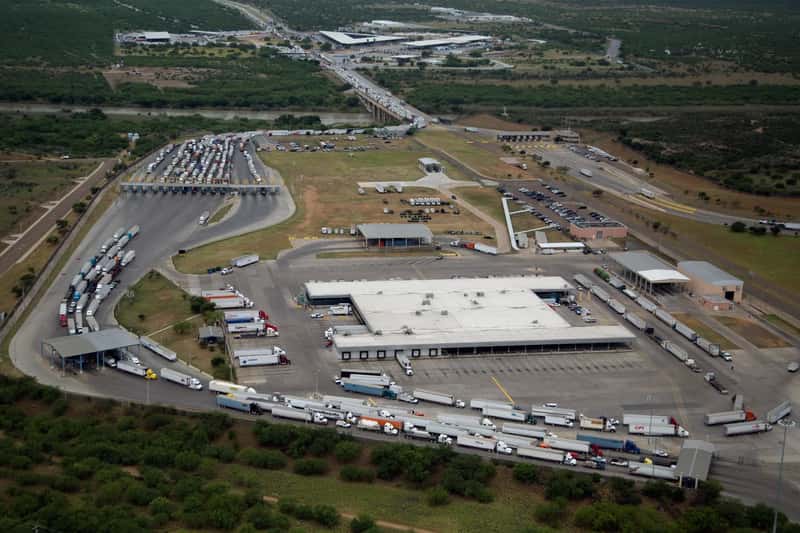
Nuevo Laredo sits directly across from Laredo, Texas, and it’s one of the busiest commercial crossings on the entire border, which is part of the problem. Frequent cartel-related violence and armed crime make some areas dangerous. The State Department has gone as far as restricting how its own government employees can move through the region, which tells you something about how seriously the risk is being treated on an official level.
Government staff currently traveling between Nuevo Laredo and Monterrey are limited to a single highway during daylight hours and only with prior authorization, a restriction that rarely gets applied unless the alternative routes are considered genuinely unsafe. Travel between Nuevo Laredo and Monterrey is limited to Federal Highway 85D during daylight hours with prior authorization. Independent travel guides echo the same caution, with one describing the crossing as a “Colombia Bridge (a quieter alternative about 20 minutes west of Laredo)” following a violent incident involving four American travelers in 2023. For most casual visitors, that’s a strong signal to route around the city entirely rather than pass through it after dark.
Reynosa-Hidalgo, Tamaulipas (via McAllen area, Texas)
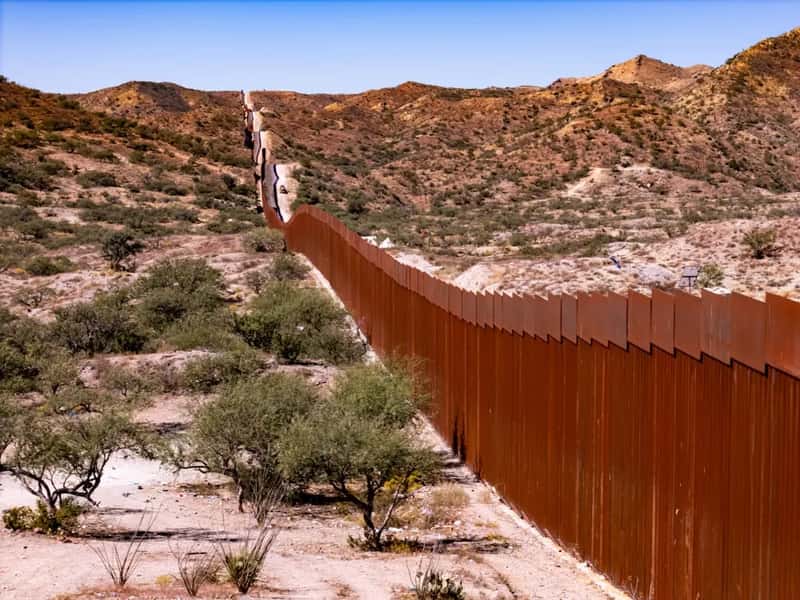
The Reynosa crossing links the Mexican city of Reynosa with the Hidalgo port of entry near McAllen, and it has become one of the more consistently flagged points along the border. Reynosa (Tamaulipas) also has Level 4 travel advisory. The area falls squarely within the stretch of border that federal officials describe as heavily patrolled by armed criminal groups rather than local law enforcement.
Heavily armed members of criminal groups often patrol the state, especially along the border region from Reynosa to Nuevo Laredo, acting without fear of punishment in these areas, and local law enforcement has limited capacity to respond to crime. Travel guides that normally try to offer workarounds for nervous drivers are notably blunt about this one, warning that it “can be a confusing and difficult crossing to navigate” and that “the Mexican side of the border is far from the safest part of the country.” Some travelers still use the Progreso International Bridge southeast of McAllen as a comparatively calmer alternative, since it operates on a smaller, more predictable pedestrian schedule.
Matamoros, Tamaulipas (via Brownsville, Texas)
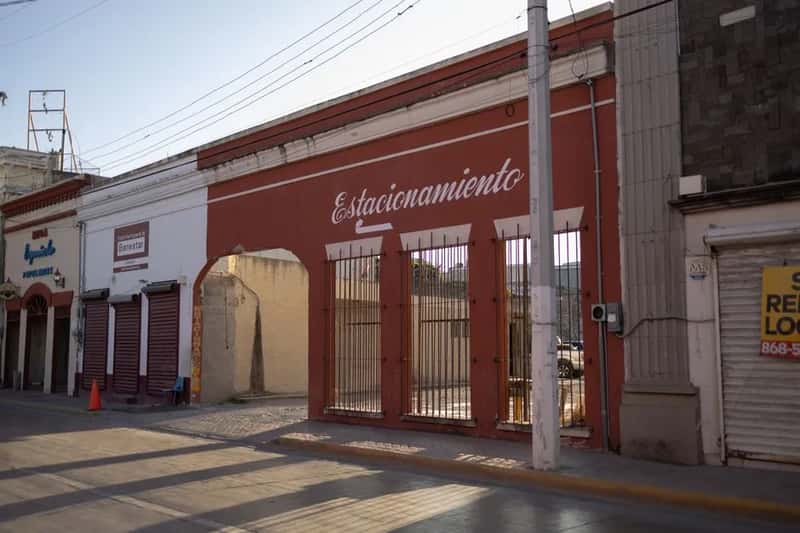
The Matamoros crossing, connecting to Brownsville via the Veterans International Bridge, rounds out the trio of Tamaulipas points drawing renewed warnings. Even U.S. government personnel operating in the region are confined to a tightly defined zone rather than allowed to move freely through the city. Travel for U.S. government employees is limited to specific areas in Matamoros including the neighborhoods of Jardin and Rio, bounded by Avenida de Las Americas from the Brownsville and Matamoros Bridge south to Calle Hidalgo and west to Calle Diez.
That kind of geofencing is unusual and reflects how unpredictable conditions can be just blocks outside the main tourist or business corridor. The broader state advisory doesn’t mince words either, noting that organized criminal activity is common along the northern border of the Mexican state, in which gun battles, murder, armed robbery, carjackings, kidnappings, forced disappearances, extortion and sexual assault are all common. For travelers who still need to cross here, sticking strictly to daylight hours and the immediate bridge area is the guidance most consistently repeated by both official and independent sources.
All three crossings sit within Tamaulipas, a state the U.S. government currently rates at its highest advisory level. Tamaulipas, where Nuevo Laredo, Reynosa, and Matamoros border the South Texas communities of Laredo, Hidalgo County, and Brownsville, is designated as a Level 4 risk: Do not travel. That doesn’t mean the border is closed or that crossing is impossible. It means the margin for error has narrowed, and travelers who still need to pass through are being told, repeatedly and specifically, to plan their route, time their crossing, and avoid detours onto interior highways where help can be hours away.