

Most people assume a happy childhood means matching family portraits, zero yelling, and parents who never fought. But therapists say that’s almost never the real marker – genuinely happy homes are often messier, louder, and far less “perfect” than the highlight reel suggests. What actually separates a happy home from a struggling one has almost nothing to do with money, matching schedules, or a spotless house.
The real signs are quieter, and most people don’t even notice them until years later, usually after a hard conversation with a therapist or a friend who grew up differently. Here’s what experts and adult children of happy homes actually say gave it away.
#41 – Bedtime Wasn’t a Battlefield, It Was a Routine You Could Set Your Watch To
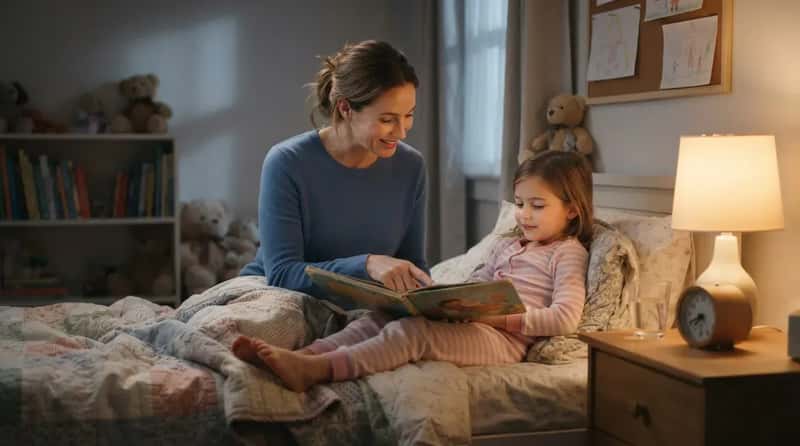
If bedtime in your house was predictable rather than a nightly negotiation, that’s a bigger deal than it sounds. Kids in stable homes usually had the same wind-down sequence – bath, story, lights out – night after night, and that repetition did something important under the surface.
Predictability at night is one of the clearest markers of a securely attached childhood. Children who know exactly what’s coming next tend to sleep easier and trust their environment more. It’s a small ritual, but it quietly built a sense that the world was safe and orderly, even when nothing exciting was happening.
#40 – Nobody Had to “Read the Room” Before Opening Their Mouth

In a lot of households, kids develop a sixth sense for parental moods before they even walk through the door. In genuinely happy homes, that skill never had to be learned, because the emotional weather didn’t change without warning.
You could just talk, without scanning a parent’s face first. There was no walking-on-eggshells feeling, no bracing for an explosion. Conversations started because someone had something to say, not because the coast was finally clear.
#39 – Your Parents Apologized First, Even to You

Adults who grew up watching their parents apologize sincerely tend to become better partners themselves later in life. That modeling of healthy behavior helped them grow into adults who take accountability without fuss, long before they ever needed to use it in a relationship of their own.
Hearing “I was wrong, I’m sorry” from a parent – not just expecting it from a kid – flips the usual family script. It teaches that authority and humility aren’t opposites, and that single habit often resurfaces decades later in how someone handles conflict at work or in marriage.
#38 – Report Cards Were Feelings, Not Identity

A bad grade in a happy home triggered a conversation, not a character assessment. Nobody got called lazy, stupid, or a disappointment over a math test, and that distinction mattered more than most parents realize.
Emotional intelligence, not raw achievement, predicted more of long-term success than grades ever did. Research has shown that emotional intelligence “predicts over 54% of the variation in success,” and young people with high EQ earn higher grades, stay in school, and make healthier choices. Homes that treated failure as feedback instead of a verdict were quietly building that skill without ever naming it.
#37 – Your House Had an Open-Door Policy for Friends

If your friends could show up unannounced and just exist in your kitchen, that was never an accident. It signaled that your parents weren’t performing for outsiders – the house was genuinely as calm behind closed doors as it looked from the porch.
Kids notice fast which houses are “real” and which ones are staged for company. Friends gravitating toward your place, wanting to stay for dinner, or asking if they could just come over “for no reason” was often the clearest outside confirmation that your home ran on something steadier than performance.
#36 – Silence in the House Never Felt Dangerous

In some households, quiet means a storm is coming. In genuinely happy ones, silence was just silence – someone reading, someone napping, nothing to brace for.
The absence of tension is easy to overlook precisely because it never demanded your attention. You didn’t lie awake trying to interpret a slammed cabinet or a long pause at dinner. That kind of quiet safety is rarely appreciated until you meet someone who flinches at silence, because they never got to have it.
#35 – Your Family Has an Inside Joke Nobody Outside Would Understand

Every genuinely happy family collects its own private language over time – a mispronounced word from age four, a nickname from a road trip, a phrase that means something only to the people who lived it.
Shared humor is one of the strongest predictors of family bonding researchers point to. A family that could laugh, even during hard weeks, built a kind of glue that outlasted arguments. If you still repeat a random line from twenty years ago and everyone at the table cracks up, that’s not corny – that’s evidence.
Fast Facts
- Inside jokes act like emotional shorthand – one word can bring back an entire memory
- Families with a shared “private language” tend to report closer long-term relationships
- Old jokes often outlive the actual event that started them by decades
#34 – Nobody Kept a Running Scoreboard of Who Did What

In some families, every favor gets logged and every slight gets remembered for years. In happy homes, help was just help – nobody tracked who mowed the lawn more or who “owed” who an apology from three fights ago.
Resentment accumulation is one of the biggest predictors of long-term family dysfunction. When your parents let things go instead of stockpiling grievances, they modeled a kind of relational forgiveness most adults still struggle with. It made forgiving easier, and grudges felt foreign rather than familiar.
#33 – Your Parents Actually Liked Each Other, Not Just Tolerated Each Other

Loving your spouse and liking your spouse are two very different things, and kids can tell the difference instantly. If your parents genuinely enjoyed each other’s company – inside jokes, casual affection, actual conversations – you likely absorbed a template most people never get.
Watching two adults choose each other daily, not just stay together out of obligation, teaches something no lecture ever could. It quietly set the bar for what a functional relationship should feel like later on, and it explains why some adults have an almost stubborn refusal to settle for less.
#32 – There Was a Chore Chart, But Also Room to Flex It

Structure without rigidity is a rarer combination than people think. Happy homes usually had expectations – dishes, trash, homework before screens – but those rules bent when life got messy, instead of triggering a punishment spiral.
Flexible structure, not strict control, is what family researchers consistently link to healthier outcomes. Healthy families adapt when circumstances change, and that adaptability taught kids that rules existed to help the household function, not to prove who was in charge.
#31 – You Never Had to Pick a Side Between Your Parents

Being pulled into parental conflict, even subtly, leaves a mark that follows kids well into adulthood. If your parents kept disagreements between themselves and never recruited you as a judge, witness, or messenger, that restraint mattered enormously. In a healthy family, parents work as a team instead of trying to get a child to take sides.
That single boundary protected you from a loyalty conflict most kids from divided homes never escape. You got to just be a kid, not a diplomat negotiating a ceasefire at the dinner table.
#30 – Bad Days Ended Instead of Defining the Whole Week

Every family has rough patches – a lost job, a bad week, a sick relative. What separated happy homes wasn’t the absence of hard days, it was how quickly the household returned to normal afterward.
Recovery speed after conflict matters more than conflict frequency, according to family researchers. A blow-up on Tuesday didn’t poison Wednesday, Thursday, and the rest of the month. That bounce-back ability is often the single clearest difference between a “happy” home and a merely “functional” one.
#29 – Your Parents Showed Up, Even to the Boring Stuff

Not every recital is thrilling. Not every soccer game matters in the standings. But if your parents were there anyway – sitting in folding chairs, half paying attention, but present – that consistency built something bigger than the event itself.
Showing up repeatedly, even for low-stakes moments, is one of the clearest signals of unconditional attention kids remember decades later. It wasn’t about the trophy or the performance. It was about proving, over and over, that you mattered enough to bother.
#28 – Money Was Tight Sometimes, But It Was Never a Weapon

Plenty of happy homes weren’t wealthy. Bills got discussed at the kitchen table, sometimes with visible stress. But even during lean years, money was never used to punish, guilt, or control.
Financial strain doesn’t automatically damage a child’s sense of security – how parents talk about it does. If your family treated money as a shared problem to solve together rather than a source of shame, that distinction likely protected you from the anxiety kids in higher-conflict homes carry well into adulthood.
#27 – You Could Say “I Disagree” Without Bracing for Fallout

Disagreeing with a parent is a small act of independence that some kids never get to practice safely. If you could push back on a rule or opinion and still expect to be heard rather than punished for the tone, that’s a bigger deal than it seems.
Healthy families maintain clear and open communication patterns, and family members feel safe expressing their thoughts and feelings without fear of judgment or criticism. That single freedom – to disagree out loud – is one of the strongest predictors of confident, self-assured adults.
#26 – Extended Family Visits Were Something to Look Forward To

If holidays with grandparents, aunts, and cousins felt like a treat instead of an obligation, your family had something a lot of people quietly envy. Dread before a family gathering is common; genuine excitement is not.
The wider your circle of consistently warm relationships, the more resilient researchers say children turn out to be. Even one consistently loving attachment figure – a parent, grandparent, aunt, or mentor – can significantly buffer against the effects of other relationships, and that single secure connection becomes the template for future ones. A house full of people who genuinely wanted to be there was rarer, and more protective, than most people realize.
#25 – Nobody Was the Built-In Scapegoat

Some families quietly assign roles – the golden child, the troublemaker, the peacekeeper – and those labels stick for life. , no single kid absorbed the blame for every problem.
In a healthy family, children are allowed to be children, instead of being locked into rigid roles that follow them into adulthood. If nobody in your family was “the difficult one” by default, that absence of a scapegoat is one of the clearest markers therapists look for.
#24 – Failure Was Allowed, Sometimes Even Celebrated as a Lesson

Falling off a bike, blowing an audition, striking out in the championship game – in some homes these moments trigger shame. In happy homes, they became stories told later with affection instead of embarrassment, because failure was treated as a normal part of learning rather than a personal flaw.
That reframe – failure as data instead of disgrace – is one of the biggest predictors of resilience in adulthood. Kids who grew up this way tend to take more risks later in life, precisely because failing never felt catastrophic the first time around.
#23 – Your Parents Let Go of the Small Stuff

A spilled drink, a messy room, a forgotten chore – none of it turned into a full-blown crisis . Parents had a clear sense of what actually mattered, valuing the person over the mistake, so minor slip-ups rarely triggered major consequences.
Proportional reactions taught kids an underrated skill: how to tell the difference between a real problem and an inconvenience. That calibration is exactly what a lot of anxious adults say they never learned growing up.
#22 – Your Family Had a Ritual That Felt Like “Home Base”
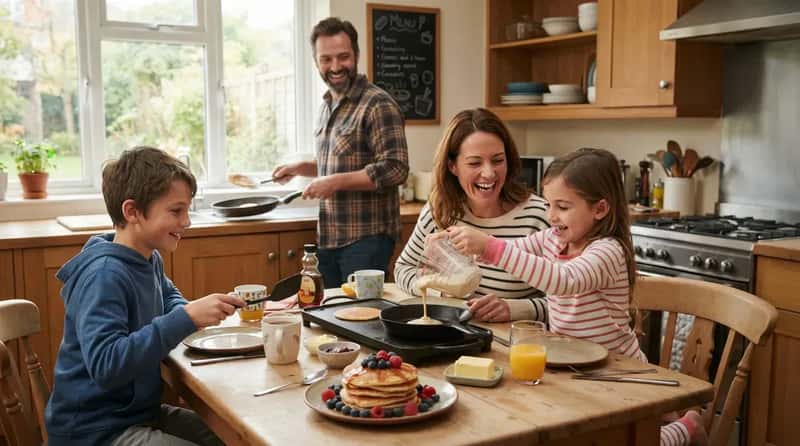
Sunday pancakes, a specific drive to school with the same playlist, a movie night every Friday – happy homes almost always had at least one small, repeated ritual that never got skipped.
Rituals act as emotional anchors, giving kids something predictable to hold onto during otherwise chaotic weeks. Decades later, adults from happy homes can usually name the exact ritual instantly, often with a level of nostalgia that surprises even them. It wasn’t the activity that mattered – it was the reliability of it.
Quick Compare
- Home with a ritual: The week has a shape, something to look forward to, a built-in reset point
- Home without one: Days blur together, nothing anchors the chaos, nothing to point back to later
#21 – You Could Hear the Word “No” Without Spiraling

Being told no is a normal part of childhood, but in some homes it triggers panic, shame, or rage because “no” was rare or unpredictable. In happy homes, no was just an answer – sometimes disappointing, never destabilizing.
Rules were predictable, consistent, and fair, creating a sense of stability and safety by maintaining clear and consistent rules that made sense. That consistency is exactly why the word “no” never felt like rejection – it felt like a boundary, and boundaries were normal.
#20 – Physical Affection Was Normal, Not a Performance for Guests

Hugs, ruffled hair, a hand on the shoulder walking past – in genuinely happy homes, physical affection happened whether or not anyone was watching. It wasn’t reserved for photos or company.
Children raised in loving families develop a secure attachment style, involving a strong emotional bond between children and their caregivers characterized by trust and comfort. That everyday physical warmth, not the occasional grand gesture, is what actually built the bond.
#19 – Holidays Didn’t Require a Battle Plan

For a lot of adults, holidays mean strategy – who to seat where, which topics to avoid, how to survive without a scene. In happy homes, holidays were something people actually looked forward to without a survival guide.
The absence of holiday dread is a bigger sign of family health than most people give it credit for. If you never had to mentally prepare yourself before walking into your own living room on Thanksgiving, that ease was never guaranteed – plenty of families never get there.
#18 – Your Parents Fought, But You Never Doubted They’d Stay

Happy homes aren’t conflict-free – that’s a myth worth retiring. What actually mattered was the sense of stability underneath the disagreements: conflicts got resolved, apologies happened, and the underlying care never seemed to disappear mid-argument.
Kids can absorb the difference between a fight and a threat, and that distinction shapes how they handle their own relationships for decades. A raised voice during an argument never meant the marriage – or the family – was in danger.
#17 – You Were Allowed to Be Bored

Nobody scheduled every waking hour. There was room for staring at the ceiling, wandering the backyard, or complaining “there’s nothing to do” without a parent immediately filling the silence.
Unstructured downtime, not constant enrichment, is what a lot of child development experts now say builds creativity and independence. Boredom wasn’t a problem to be solved for you – it was space you were trusted to fill yourself, and that trust mattered more than any activity ever could.
#16 – Your Friends Genuinely Wanted to Come Over
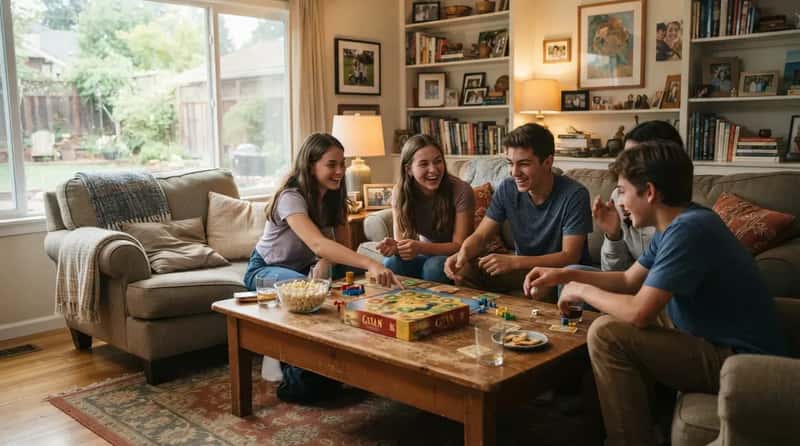
Kids vote with their feet. If your friends consistently chose your house over their own – for sleepovers, hangouts, or just killing time after school – that wasn’t random.
An outside kid’s comfort level in your home is one of the most honest gauges of family atmosphere available. Friends can sense tension adults think they’re hiding. If yours kept coming back, your house was doing something right that even outsiders could feel.
#15 – Nobody Had to Be “the Responsible One” as a Kid
In some households, one child ends up parenting siblings, managing a parent’s emotions, or holding the family together far too early. In genuinely happy homes, kids got to just be kids – the adults handled adult problems.
Parentification, as therapists call it, is one of the clearest markers of a difficult childhood, and its absence is just as telling. If you never had to grow up faster than your age required, that’s not something to take for granted.
#14 – Feelings Had Names, and Nobody Dismissed Them

“You’re fine” is a phrase that shuts a kid down fast. In happy homes, emotions got named instead of brushed off – sad, frustrated, embarrassed, disappointed – and those words were treated as valid, not dramatic, because feelings were allowed to just exist without being managed away.
Being allowed to feel something without it being minimized taught kids emotional vocabulary most adults still struggle to access. That skill alone explains why some people can name exactly what they’re feeling in a hard moment, while others just go quiet.
#13 – Discipline Came With an Explanation, Not Just a Punishment
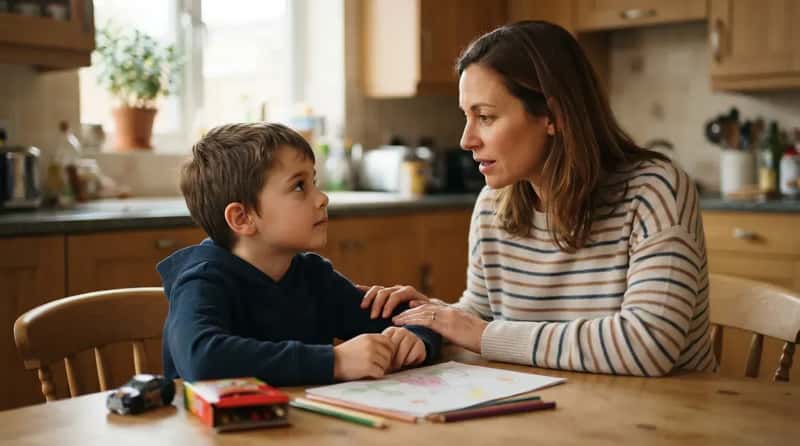
“Because I said so” is a common phrase, but in happy homes it usually came with a follow-up. Consequences existed, but so did context – why the rule mattered, not just that it was broken.
Explaining the “why” behind discipline is one of the biggest differences between authoritative and authoritarian parenting, according to family researchers. Kids who got the reasoning, not just the punishment, tended to internalize the lesson instead of just resenting the rule.
#12 – Your Parents Said “I Was Wrong” Out Loud, in Front of You

Admitting fault to a child is harder than it sounds for a lot of parents. But hearing it – genuinely, without excuses attached – teaches something a lecture never could.
Modeling accountability out loud is one of the most underrated parenting behaviors, and one of the rarest. If you can remember a specific moment your mom or dad admitted a real mistake to you directly, that memory is doing more work than you probably realize.
Children have never been very good at listening to their elders, but they have never failed to imitate them.
James Baldwin
#11 – You Know Your Family’s Stories, Not Just Its Rules

How your parents met, what your grandparents survived, the funny disaster from a family vacation twenty years ago – happy homes tend to be storytelling homes. Family history gets repeated, not buried.
Kids who know their family narrative in detail show measurably higher resilience and self-esteem, according to family researchers who study this exact pattern. Knowing where you come from, in specific detail, gave you a sense of identity that abstract love alone never could.
#10 – Weeknight Dinners Had Actual Conversation, Not Just Silence and Screens

The dinner table is a small ritual with outsized importance. If yours involved real back-and-forth – about school, friends, dumb jokes, the news – instead of silent chewing, that mattered more than the meal itself. That’s quality time in its purest form: full attention, no phones, nowhere else anyone needed to be.
The dinner table conversation habit is one of the most consistently cited predictors of family closeness in modern research. It wasn’t the food – it was the twenty uninterrupted minutes of everyone actually talking.
At a Glance
- Regular family meals are consistently linked to stronger communication habits in kids
- Undistracted conversation matters more than the length of the meal itself
- Families who talk regularly at the table tend to report fewer behavioral struggles later on
#9 – Your Parents’ Disagreements Never Spilled Onto You
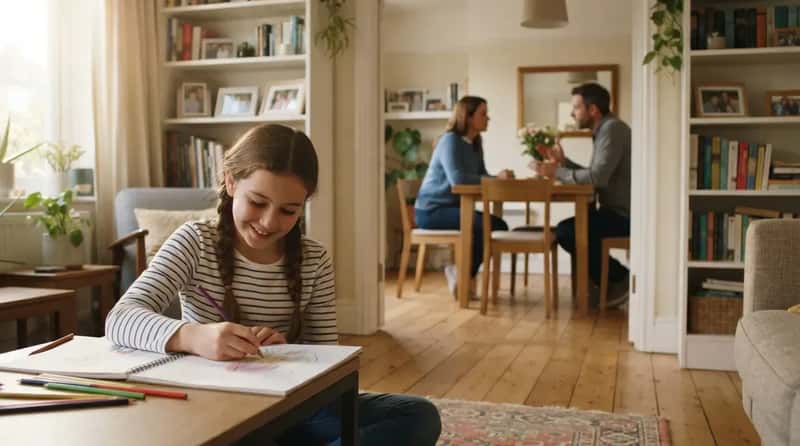
Adult problems belonged to adults . Financial stress, marital tension, work frustration – none of it got dumped onto a child’s shoulders as if you were a built-in therapist.
Emotional enmeshment, where a parent leans on a child for adult support, is one of the quiet ways happy-looking homes can secretly struggle – and its absence is a real sign of health. If you never had to comfort a parent through their own crisis as a kid, that boundary protected a part of your childhood most people don’t even realize was at risk.
#8 – Nobody Had to Earn Love With Good Grades or Achievements

Love that’s conditional on performance teaches kids to chase approval instead of connection. In happy homes, love stayed constant whether the report card was glowing or genuinely rough, and that steadiness carried forward into how those kids handled relationships and jobs as adults.
Unconditional regard, not praise for accomplishments, is what psychologists consistently link to stable adult self-esteem. If you never felt like your worth was up for renewal every semester, that steadiness is rarer than most people think.
#7 – You Never Learned to Read a Parent’s Mood Before Speaking

Some adults still instinctively scan a room before saying anything, a habit built from years of unpredictable reactions at home. If you never developed that reflex, it’s because you never needed to.
The absence of hypervigilance is one of the clearest, quietest signs of a safe childhood environment. You could just walk in and talk, without first calculating whether it was a good moment. Most people who had that skill never realize it was a skill at all.
#6 – Comfort Was Your First Instinct During a Crisis, Not Fear

When something went wrong – a scary phone call, a bad grade, an injury – your first instinct was to run toward your parents, not away from them. That reflex says more about your upbringing than almost anything else on this list.
Associations between childhood happiness and better health were mediated by psychosocial resources including self-mastery and perceived social support from family members, implying that growing up in a nurturing, cherished family environment builds resilience that supports successful aging. That instinct to seek comfort rather than hide problems is a lifelong marker of secure attachment.
#5 – You Still Call Home First With Big News

Good news, bad news, weird news – if your gut reaction as an adult is still to call your parents before anyone else, that habit was built decades ago, one small moment at a time.
The instinct to share news with parents first, even well into adulthood, is one of the clearest long-term signals of a happy childhood home. It means the relationship never expired when you moved out – it just kept going, quietly, in the background of your adult life.
#4 – Your Parents’ Love for Each Other Never Felt Conditional

Some kids grow up bracing for divorce during every argument. Others never once doubted their parents’ relationship, even during rough patches, because the underlying commitment was never actually in question.
Watching a stable partnership, arguments and all, is one of the strongest templates kids carry into their own adult relationships. It’s not that your parents never disagreed – it’s that disagreement never once felt like a threat to the family’s existence.
#3 – You Never Had to “Perform Happy” for Outsiders

Some families put on a show for company – smiles at the door, tension the second guests leave. If your home was the same behind closed doors as it was in public, that consistency is rarer than people assume.
The gap between a family’s public face and private reality is one of the biggest predictors therapists use to spot dysfunction. If there was no gap in your house – if the warmth was real whether or not anyone was watching – that’s one of the strongest signs of all.
#2 – Home Was the Place You Wanted to Return To, Not Escape

Some people count down the days until they can leave home for good. Others feel a pull back toward it – during college breaks, hard weeks, holidays – because home genuinely felt like relief, not obligation.
The emotional direction of “home” – toward it or away from it – is one of the clearest indicators of childhood happiness that follows people for life. If your instinct has always been to go back rather than get out, that pull was built one ordinary day at a time.
Why It Stands Out
- Most people sense within seconds whether a house feels like home or just a residence
- The urge to return “just because” is rare enough that people who feel it rarely realize how rare it is
- This pull tends to stay constant across decades, long after anyone actually lives there full-time
#1 – You Can’t Remember Feeling Truly Alone

Not “never sad,” not “never struggling” – just never alone in it. Even during hard moments, you had the sense that someone was in your corner, paying attention, ready to help if you asked.
Childhood happiness significantly predicts older adult health, and it was associated with better self-rated health and lower depressive symptoms even decades later. That single feeling – of never being truly alone, even in hard moments – is the clearest sign of a genuinely happy home there is. Everything else on this list is really just a version of that one thing.
None of these signs require a perfect childhood, a wealthy household, or parents who never raised their voices. What they have in common is smaller and steadier – safety, consistency, and the quiet sense that love wasn’t going anywhere, even on the hard days. If several of these hit close to home, that’s not a coincidence. It’s evidence of something a lot of people don’t get to say they had.
Which one of these hit you the hardest? Drop the number in the comments – we’re curious which sign resonates most.