Travel budgets used to be about flights, a bed and a few good meals. Now there’s a growing list of small charges that show up at checkout, on a hotel bill or buried in a ticket price. Governments say the money helps manage crowds, protect fragile places and keep local services running.
Here are five destinations where new or increased fees are part of the 2026 travel picture. Some are brand new, some are expanded, and a couple are easy to miss until you’re already paying them. Knowing what’s coming won’t make the charges disappear, but it can stop them from turning into a surprise.
Japan: A Tripled Departure Tax

Japan’s departure tax, nicknamed the “Sayonara tax,” went up on July 1, 2026. The international departure tax tripled from 1,000 yen to 3,000 yen per person.[1] That works out to roughly 28,350 Korean won, according to one Korean outlet.[2] It’s not a small tweak, and travelers leaving by air or sea will feel it.
The good news is that you won’t be paying it at an airport counter. The levy is already included automatically in airline and ferry fares.[1] Infants under two are exempt, as are eligible transit passengers leaving within 24 hours.[1] Eligible tickets issued on or before June 30, 2026 could stay on the older 1,000 yen rate.[3] Japan says the revenue is meant to support a less crowded, more comfortable travel environment.[3]
Scotland: Edinburgh’s 5% Visitor Levy

Edinburgh has become the first UK city to charge a citywide tourist tax. The mandatory levy began on 24 July 2026 and adds 5% to the cost of overnight accommodation.[4] It covers hotels, B&Bs, hostels, self-catering properties, short-term lets and paid caravan and campsite stays.[4] It’s calculated on the accommodation cost before VAT and applies only to the first five consecutive nights.[4]
In practice, it’s easy to work out. A £100 overnight stay would attract an extra £5.[5] The scheme applies to bookings made since 1 October 2025 for stays on or after 24 July 2026.[6] The council projects the levy could raise up to £50 million a year.[6] Day visitors aren’t affected, because the charge is tied to overnight stays.[7]
Italy: Venice’s Day-Tripper Access Fee
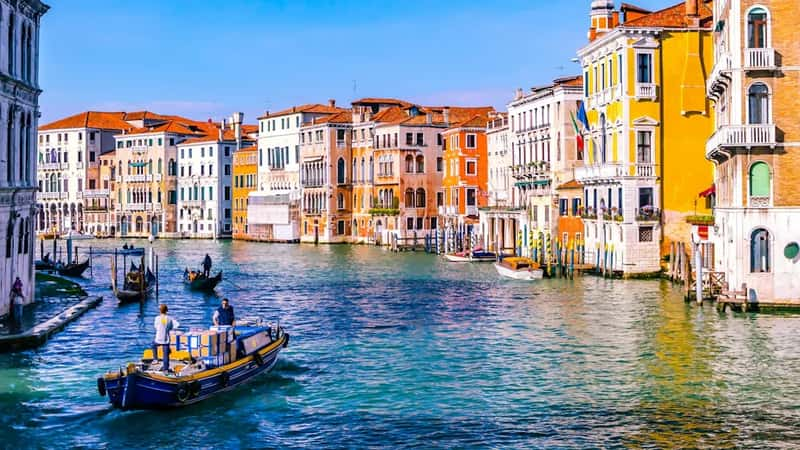
Venice has been experimenting with a fee for day visitors since 2024, and it keeps growing. The council confirmed the daytripper fee, introduced in summer 2024, would return in 2026.[8] The number of fee days was extended to 60, compared with 54 in 2025.[8] Daytrippers had to pay on Fridays to Sundays in April, May, June and July.[8]
The price depends on when you book. It’s €5 for those who pay at least four days ahead, and €10 for payments made in the three days before arrival.[9] Overnight guests don’t pay the access fee, but they still need to register and get a free QR code.[10] The city may not stop there. The Guardian reported that Venice’s new mayor was seeking permission to raise the fee to between €30 and €50 on particularly busy days.[9]
Greece: Cruise Fees on Santorini and Mykonos

Greece has focused on cruise passengers, who can flood small islands in a matter of hours. The policy came into effect on 21 July 2025 and continues through 2026, with every cruise traveler who disembarks at a Greek port paying a fee.[11] During peak summer, from 1 June to 30 September, stepping ashore at Mykonos or Santorini costs €20 per person, while other Greek cruise ports charge €5.[12]
Prices drop outside the high season. In October, April and May, the fee falls to 12 euros at Santorini and Mykonos. From November through March, it’s 4 euros.[13] Visiting both islands on the same cruise in peak season would total 40 euros per person.[13] The charge lands on your onboard cruise account each time you disembark.[12] Santorini also set a cap of 8,000 cruise passengers a day, after seeing as many as 17,000 in peak season.[14]
Indonesia: Bali’s Tourist Levy
Bali introduced a levy for international visitors in February 2024, set at 150,000 Indonesian rupiah per person, roughly ten US dollars. The money is meant to support cultural preservation and environmental protection on the island. It’s a one-time payment for each visit, and it’s separate from your visa fees. Check the current rate and payment method on Bali’s official channels before you travel, since local rules can change.
Bali is a useful reminder that a “new” fee can quickly become a normal part of the trip. Visitors who pay the levy are contributing to an island that has struggled with heavy tourism and pressure on its natural and cultural sites. It’s a modest charge compared with the cost of flights and accommodation. Still, it’s worth budgeting for, especially if you’re traveling as a family.
Taken together, these fees show a clear trend. Popular destinations increasingly want visitors to help pay for the strain they create, and they’re doing it with departure taxes, nightly levies, day passes and port charges. Most of them are small on their own, though they add up on a multi-stop trip.
The practical advice is simple. Look up local charges before you book, and book early where timing affects the price, as it does in Venice. Treat these fees as part of the real cost of the trip, because for many of the world’s most popular places, they now are.