Walk down a main street in Reykjavik or a quiet lane in Ikaria, and you won’t spot the golden arches or a bucket of fried chicken glowing under neon lights. That absence isn’t an accident of geography. In a handful of places around the world, the drive thru simply never took hold, and the people who live there tend to outlast almost everyone else on the planet.
There’s a real pattern behind this, one that public health researchers have been tracking for years. Neighbourhoods with fewer fast food outlets tend to have higher life expectancy. The five nations below aren’t random picks. Each one built a food culture that left little room for quick service chains to dominate, and each one shows up in longevity data for a reason.
Iceland

Iceland might be the clearest case of a country that tried fast food and largely walked away from it. McDonald’s opened in Reykjavik in 1993 with real fanfare, but the arrangement didn’t survive the 2008 financial collapse. The three McDonald’s outlets operating in Iceland closed in 2009 because the country’s financial crisis made it too expensive to operate. No franchise has returned since, and Iceland now sits among the small group of nations without a single McDonald’s location.
What filled the gap wasn’t a wave of other global chains but a diet built on fish, lamb, dairy, and skyr, a strained yogurt that’s been a staple for centuries. Iceland ranks among the world leaders in the Human Development Index, and researchers have noted the country ranks 6th overall for life expectancy despite having near the fewest general practitioners per population in the OECD, a detail that suggests strong preventive health habits matter as much as raw medical infrastructure. Low income inequality plays a role too, since a more even distribution of wealth tends to mean more even access to good food and healthcare. It’s a small population making do with what the island offers, and that turned out to be a fairly healthy accident.
Italy
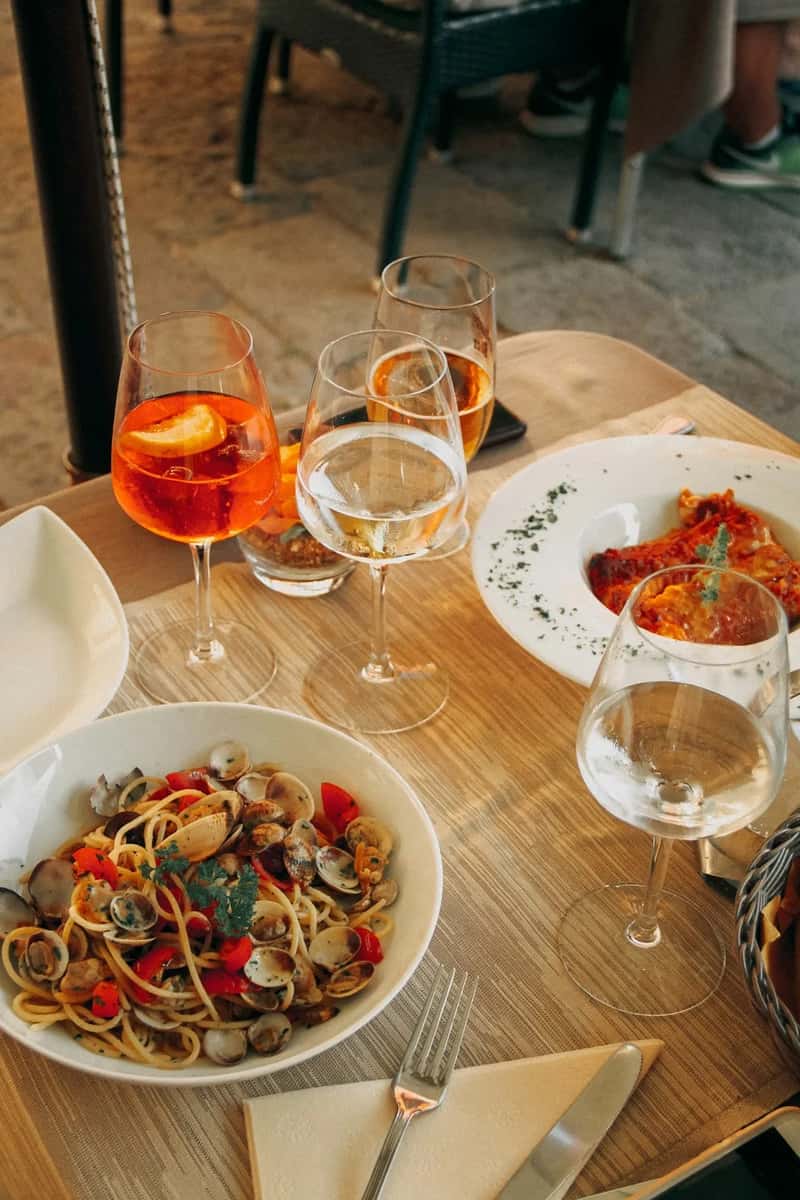
Italy is an interesting case because fast food chains do exist there, yet the culture around eating has actively pushed back against them since the very first arrival. March 20, 1986 marks an important point in Italian culinary history, the day McDonald’s opened its doors to the Italian public for the first time, planting the golden arches in Rome’s Piazza di Spagna. The reaction wasn’t quiet. Officials said it didn’t have the right construction permits, celebrities called it the Americanization of Italy, and thousands of people rallied outside the location.
That protest led directly to the Slow Food movement, which still shapes how many Italians think about meals, favoring long lunches, local ingredients, and regional recipes over anything wrapped in paper. The payoff shows up on the island of Sardinia, where traditional habits held on especially well. Sardinia, specifically the Nuoro region in Ogliastra, has the highest concentration of male centenarians in the world. Whole grains, legumes, and moderate portions of meat, mostly from animals raised on biodiverse pasture rather than industrial farms, remain the backbone of the everyday diet there.
Japan

Japan is a bit more complicated than the others on this list, since convenience stores and quick meals are everywhere in its cities. Still, the traditional diet has held its ground in a way that keeps outcomes remarkably strong. Japan has one of the highest life expectancy rates and some of the lowest rates of overweight and obesity in developed countries, with the traditional Japanese diet likely being a big contributor. Fish, rice, seaweed, soy, and small portions eaten slowly remain the norm in most households, even as Western chains have crept into the cities.
The numbers back this up in a striking way. Japan consistently ranks as the country with the highest life expectancy, with women living an average of 87.13 years and men living an average of 81.09 years, attributed to low mortality rates from heart disease and cancer. Okinawa in particular built its reputation on a diet heavy in sweet potatoes, greens, and soy products, plus a cultural habit of stopping a meal before feeling completely full. It’s not that fast food is banned or scarce everywhere in Japan, but the deeper eating culture never really surrendered to it.
Greece

Greece has kept its distance from fast food largely because the alternative was already so good that nobody felt the need to replace it. Olive oil, vegetables, legumes, and fish have anchored meals here for generations, and the results are visible in places like Crete and the island of Ikaria. The inhabitants of Crete, with a remarkable life expectancy of 82 years, boast the highest per capita consumption of olive oil in the world, reaching 25 liters.
Ikaria in particular has earned attention from researchers studying why some populations age so well. Ikaria, Greece, is noted for its low rates of dementia and cardiovascular disease. Herbal teas, wild greens foraged from the hillsides, and unhurried, communal meals are still part of daily life there. Big chain restaurants have made inroads in Athens and other tourist centers, but in the villages that shaped this reputation, the old habits are still what people actually eat.
Costa Rica

Costa Rica doesn’t get talked about as often as the Mediterranean countries on this list, but it holds its own in longevity research. The Nicoya Peninsula, a rural stretch on the Pacific coast, has become something of a case study for researchers tracking exceptional lifespans outside the usual wealthy nations. Nicoya, Costa Rica has the second-highest concentration of male centenarians globally.
The reason seems to come down to what’s actually on the plate day after day. The Nicoya Peninsula diet is centred on beans, plantains, corn, squash, and rice. Corn tortillas are still made from whole corn rather than refined flour, and beans are cooked from dried stock instead of anything canned or processed. Add in strong family ties, regular walking as a form of transportation rather than exercise, and generally low stress levels, and you get a population that has managed to age well without much help from a drive thru menu.
These five countries didn’t set out to become case studies in longevity. They simply held onto food habits that predate the fast food industry by centuries, and in most cases, actively resisted the chains when they tried to move in. The lesson isn’t that fast food is inherently evil or that any one diet holds a secret formula. It’s that a culture built around real, unprocessed food, eaten slowly and often in company, tends to add years that a value meal never will.