There’s a particular kind of magic in wandering down a narrow, lantern-lit street and forgetting, just for a moment, which continent you’re on. Most travelers assume that feeling requires a transatlantic flight, a stack of euros, and a decent grasp of a foreign language. But scattered across the United States are pockets of Old World charm built by immigrants, colonists, and stubborn dreamers who refused to leave their heritage behind.
From Spanish-influenced courtyards in the Deep South to a Bavarian village hiding in the Cascade Mountains, these five American destinations prove you don’t need a passport to feel like you’ve stepped into a European postcard. Each one earned its European character honestly, through centuries of colonization, waves of immigration, or a deliberate community reinvention that paid off spectacularly.
1. New Orleans, Louisiana – The French Quarter’s Spanish Soul
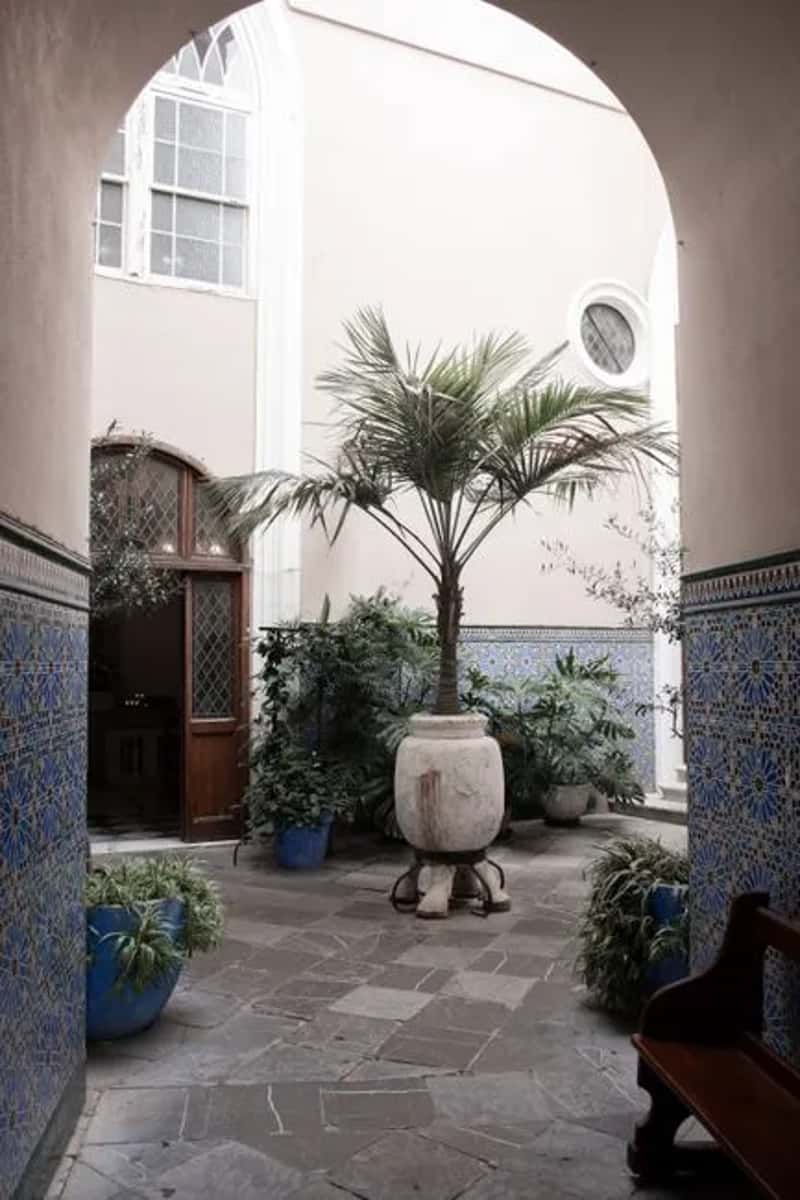
New Orleans’ French Quarter carries a name that’s a bit misleading once you learn its history. Although New Orleans’ early European residents were French, the architecture of the French Quarter is actually Spanish, since France gave up control of Louisiana to Spain from 1763 until 1803. Devastating fires in the late 1700s wiped out much of the original French construction, and several fires destroyed the Vieux Carré’s original French architecture during Spain’s 40-year rule, so much of the city’s trademark charm can be credited to the Spanish rebuilding effort.
Walk through the Quarter today and you’ll notice the details that give it away as more Iberian than Gallic. The flat-tiled roofs, tropical colors, and ornate ironwork of the French Quarter are Iberian touches, and the Spanish-controlled government mandated that stucco replace wood for construction and that buildings be placed close together near the street. Even the neighborhood’s beloved hidden courtyards trace back to Spain rather than France. The iconic ironwork balconies, now synonymous with the French Quarter, are a distinct Spanish architectural feature, and the courtyards the district is famous for are Spanish as well. It’s this layered French-Spanish-Creole DNA that gives the neighborhood its unmistakably European cadence, right down to Jackson Square, once known as the Plaza de Armas.
2. Charleston, South Carolina – Cobblestones and Colonial Elegance
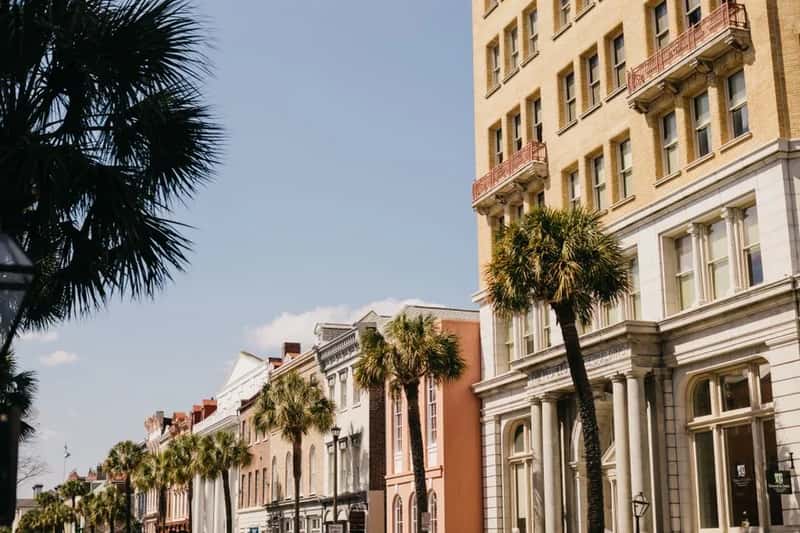
Charleston has been quietly channeling European port cities since the 1670s. Founded in 1670, Charleston quickly became a prominent port city in colonial America, attracting trade, culture and architectural inspiration from Europe. That inspiration is still visible underfoot. Cobblestones were imported from Europe as ship ballast since the 1670s, providing the city’s earliest street covering, though the campaign to pave local thoroughfares with cobbles didn’t commence until the early 1800s. Wander the peninsula and you’ll find those same stones still rattling beneath carriage wheels.
What sets Charleston apart is how much of its old-world fabric survived intact. As one of America’s oldest cities, Charleston offers a clear, almost effortless timeline of architectural styles, an open-air gallery with over 2,800 historic buildings casually arranged around visitors. The city’s religious tolerance also shaped its European flavor early on, since the colony welcomed persecuted minorities including French Huguenots, Sephardic Jews, and various Protestant denominations. Pastel row houses, wrought-iron gates, and church steeples give neighborhoods like the French Quarter and South of Broad a distinctly Continental rhythm that feels closer to Bristol or Bordeaux than to the American South.
3. Savannah, Georgia – A City Built Around European-Style Squares
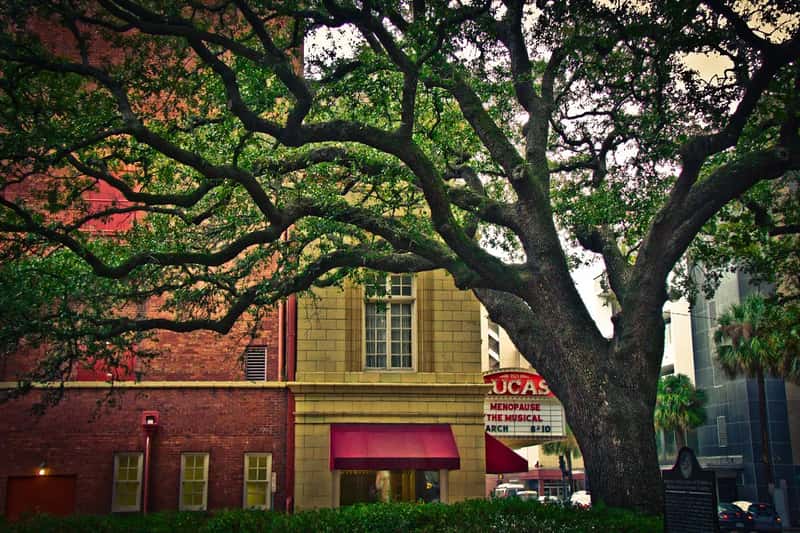
Savannah’s European feel isn’t accidental scenery, it’s baked into the city’s actual blueprint. In the Oglethorpe Plan, public green space, which had been the exclusive purview of royalty and aristocrats in Europe, became accessible to every citizen. The city of Savannah was founded in 1733 by General James Oglethorpe, who designed a grid of leafy public squares that still anchors the historic district today.
The scale of preservation is genuinely rare in American cities. Laid out in 1733, it’s one of the largest urban historic districts in America, with 22 parklike squares draped in Spanish moss and cobblestone streets lined with 18th and 19th-century architecture. Of the original squares, the original Oglethorpe plan called for 24 squares, and today 22 survive. Stroll beneath the oak canopies from Johnson Square to Madison Square and you’ll pass fountains, monuments, and churches that give Savannah the unhurried, park-hopping charm of a smaller European capital.
4. Solvang, California – A Danish Village in Wine Country
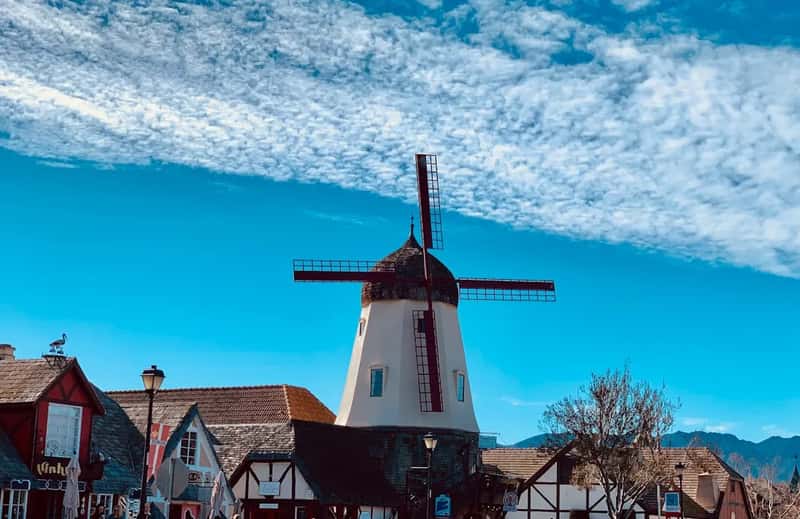
Tucked into the Santa Ynez Valley, Solvang looks like it was airlifted straight out of Jutland. Three Danish immigrants, the Rev. Benedict Nordentoft, Rev. J. M. Gregersen, and Professor P. P. Hornsyld, dreamed of creating a Danish-American colony in sunny California, gathering fellow immigrants and signing the contract to buy the land and settle Solvang in 1911. The town’s name itself is a nod to its founders’ hopes for a brighter climate, since Solvang’s name comes from the Danish word meaning Sunny Field.
For decades Solvang looked like an ordinary rural California town, until a magazine feature changed everything. The community took on its distinctive Danish-themed architecture beginning in 1947 and has since become a prominent tourist destination. Today the payoff is obvious in the visitor numbers alone: over 1 million visitors come each year to experience the northern European culture, cuisine and unique boutique shopping. Half-timbered facades, working windmills, and bakeries pulling fresh kringle from the oven make it easy to forget you’re only a couple hours from Los Angeles.
5. Leavenworth, Washington – Bavaria in the Cascade Mountains
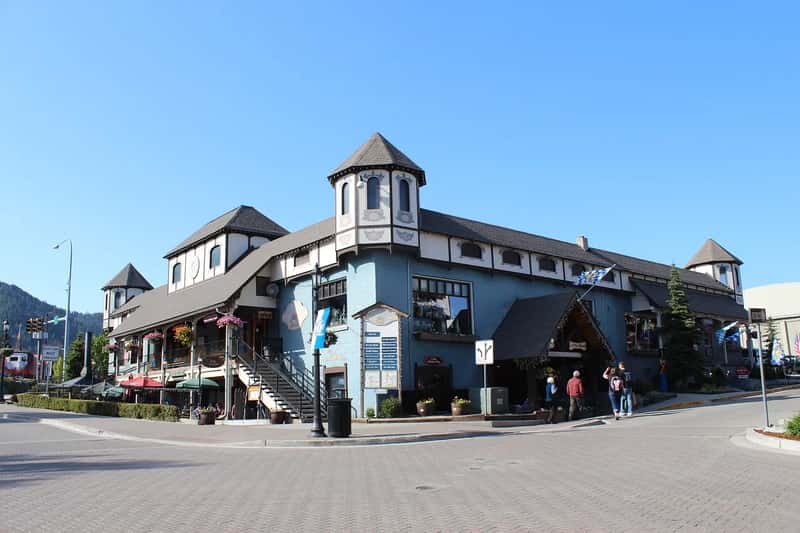
No city on this list transformed itself quite as dramatically as Leavenworth. Once a fading timber and railroad town, it reinvented itself wholesale in the 1960s. In the early 1960s, in a last-chance effort to turn their precarious situation around, community leaders decided to change Leavenworth’s appearance, remodeling the town into a Bavarian village using the backdrop of the surrounding Alpine hills. The gamble paid off almost immediately and has kept paying off ever since.
Today the commitment to the theme is total, right down to municipal code. The city requires all buildings in Leavenworth to be built in a Bavarian style, and this even includes the McDonald’s. The results speak for themselves in visitor traffic, with Leavenworth today a major tourist attraction, drawing about 3 million visitors annually. Between the timber-frame architecture, the wurst gardens, and an Oktoberfest that runs across multiple weekends every fall, it’s easy to see why travelers describe the town as a slice of the German Alps dropped into central Washington.
What ties these five places together isn’t just pretty architecture or clever marketing, it’s the layered history of people who carried a piece of Europe across an ocean and refused to let it fade. Some, like New Orleans and Charleston, absorbed their European character through centuries of colonization and trade. Others, like Solvang and Leavenworth, built their identity on purpose, betting that heritage and charm could outlast economic hard times. Savannah split the difference, preserving an 18th-century European urban plan almost exactly as it was drawn.
The next time a European getaway feels out of reach, financially or logistically, consider that a shorter, cheaper trip might scratch the same itch. Cobblestones, courtyards, windmills, and squares are all closer than you think, no long-haul flight required.