For a certain kind of traveler and investor, the dream isn’t just owning a beautiful home abroad. It’s the residence card that often comes with it. While Portugal and Spain have closed their real estate golden visa doors in recent years, several countries still let you turn a property purchase directly into legal residency, sometimes within months and without ever needing to relocate full time.
The rules, thresholds, and benefits vary enormously from one country to the next, and 2024 through 2026 has been a period of real turbulence in this space, with price hikes, program closures, and new restrictions reshaping the landscape. Here are six countries where a real estate purchase still opens the door to a residence permit, along with what you actually need to know before signing anything.
1. Greece
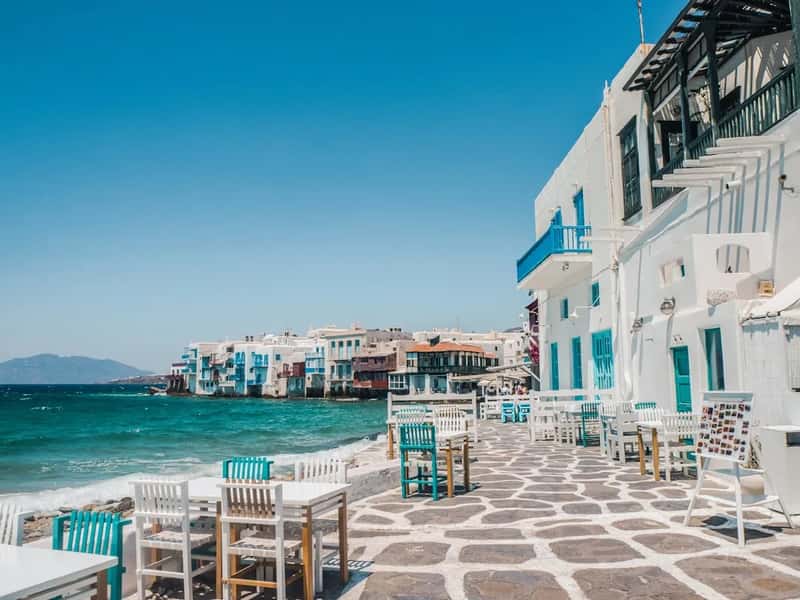
Greece remains one of the few European Union countries where a property purchase leads directly to residency, though the rules have changed dramatically. The Greece Golden Visa offers a tiered real estate investment structure, with qualifying investments starting at €250,000, €400,000, or €800,000, depending on the property’s location and type.[1] The €800,000 tier now applies in prime areas including the entire Region of Attica, the Regional Unit of Thessaloniki, Mykonos, and Santorini, plus islands with a population above 3,100.[2] Outside those zones, the €400,000 threshold applies, while the lower €250,000 option survives only for specific cases like converting commercial buildings into residential units or restoring listed heritage properties.
The Greece Golden Visa 2026 program allows non-EU/EEA nationals and their families to acquire a five-year residence permit in Greece through investment.[1] What makes it particularly appealing compared to citizenship-track programs is the lifestyle flexibility built in. While residency has no stay requirement, obtaining Greek citizenship requires living in Greece for at least 183 days per year over 7 years.[1] Despite the higher price tags introduced through recent legislation, demand hasn’t cooled off. In 2024, Greece received a record 9,289 applications from main investors, the highest annual total since the program launched.[1]
2. Cyprus
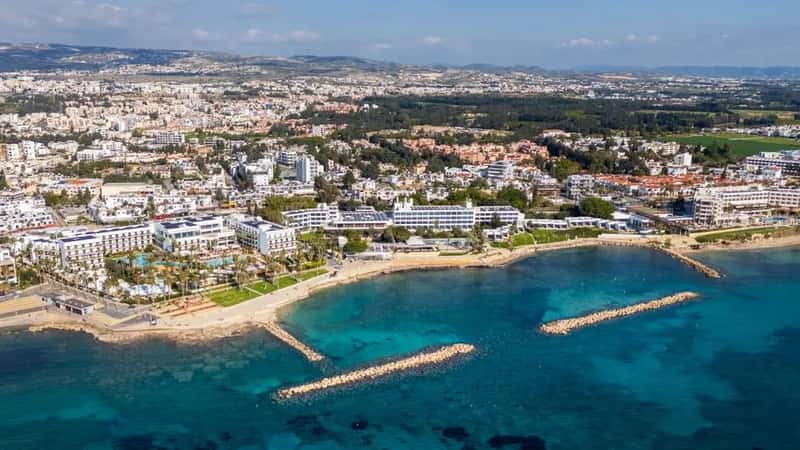
Cyprus has quietly become one of the most stable and investor-friendly permanent residency routes in Europe, especially as neighboring programs have raised their prices or shut down entirely. A minimum investment of €300,000 is required in one of four categories: new residential property, commercial real estate, shares in a Cypriot company, or investment funds.[3] Unlike temporary residence permits that need yearly renewal, this one is different in a meaningful way. The permit is permanent and does not require renewal.[3] Applicants do need to show financial means beyond the property itself, since applicants must prove a secure annual income of at least €50,000 from abroad, with additional funds required for a spouse and children.[3]
Permanent physical presence in Cyprus is not required, provided the investor does not intend to apply for Cypriot citizenship.[4] Instead, holders just need to check in occasionally, since a physical visit to Cyprus is only required once every two years.[3] The program has held remarkably steady while others have wavered. Its investment-based permanent residency programme, requiring just €300,000 in property investment with zero mandatory physical presence, remains stable in 2025 whilst competitors across Europe have closed, doubled thresholds, or introduced severe restrictions.[5] Families are well covered too, as the permit covers the main applicant, their spouse, and financially dependent children up to the age of 25.[3]
3. Turkey

Turkey occupies a unique spot on this list because property ownership there can lead not just to a residence permit, but eventually to full citizenship, and the pathway starts almost immediately after purchase. Foreigners who acquire property in Türkiye are granted renewable short term residence permits under Law No.[6] That residence permit applies regardless of the price paid, but reaching the citizenship threshold requires more. To qualify, the applicant must purchase one or more properties with a total value of at least USD 400,000.[7] That figure isn’t new territory for the program. The minimum investment requirement for real estate changed in 2022, increasing from $250,000 to $400,000.[8]
You can also buy multiple properties whose total amounts to the minimum $400,000 figure, however, they must be located in the same neighborhood.[9] There’s also a holding requirement worth knowing about, since there is now a three-year holding period, meaning Turkish real estate bought under the citizenship by investment program cannot be resold within three years.[8] The appeal for many investors is speed and flexibility rather than a forced lifestyle change. Applicants can complete the process without residing in Turkey, but must visit the country during the process.[10]
4. United Arab Emirates (Dubai)
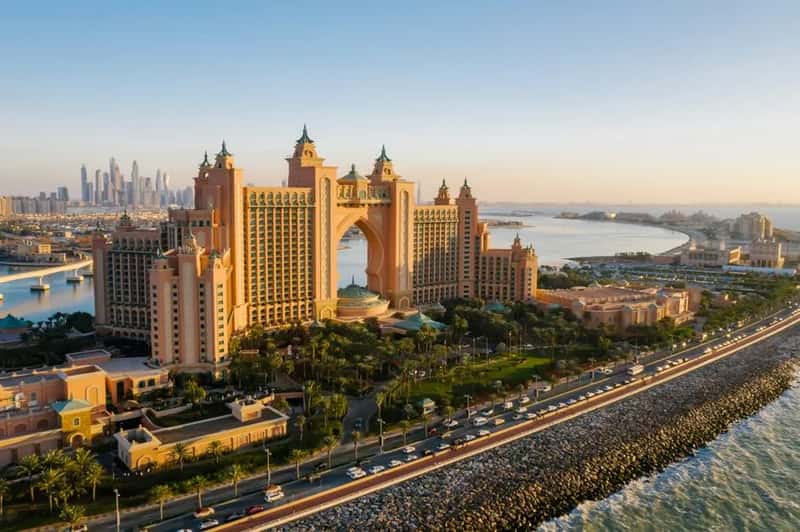
The UAE, and Dubai in particular, has built one of the most straightforward property-to-residency pipelines in the world, and 2026 brought rule changes that made it even more accessible. This service allows the real estate investor owning a property the purchase value of which is equal to or more than 2 million AED at the time of purchase, to apply for a 10-years renewable residence permit.[11] Unlike some programs where financing disqualifies you, the UAE now accepts leveraged purchases. A February 2026 update to the qualification framework clarified that for ready properties with a mortgage, the full DLD-registered value of the property counts toward the threshold, not just the paid-up equity portion.[12]
A 10-year renewable residency, no employer needed, no minimum stay requirement, your whole family included.[13] Off-plan buyers aren’t left out either, since off-plan properties still use the paid-amount test, meaning the investor must have paid at least AED 2 million to the developer through Oqood registration at the time of application.[12] The scale of adoption has been striking. Dubai alone issued over 100,000 real estate investor family visas between 2021 and early 2026.[13] Family members benefit too, as the husband or wife, children and parents can be sponsored.[11]
5. Malta

Malta offers a genuinely EU-based residency route through property, though its structure looks a bit different from a simple “buy and get a card” arrangement. To obtain permanent residency in Malta through investment, applicants must make a contribution to the national fund, donate to a registered non-governmental organization, and either rent a property for five years or purchase their own home.[14] On the purchase side specifically, Malta MPRP offers permanent EU residency through €300K-€350K property investment plus €37K government contribution.[15]
In addition, investors must demonstrate assets of €500,000, of which at least €150,000 must be in financial assets, or €650,000, of which at least €75,000 must be in financial assets.[14] It’s worth noting that Malta’s faster citizenship-by-investment track no longer exists alongside this program. Following a July 2025 European Court of Justice ruling, Malta’s investment-for-citizenship program was discontinued, and MPRP residency now leads to a standard 5-year naturalization requiring actual residence and language proficiency.[15] Even so, the residency benefits alone remain compelling, since holders of Maltese permanent residency enjoy unlimited visa-free travel across the Schengen Area.[14]
6. Panama
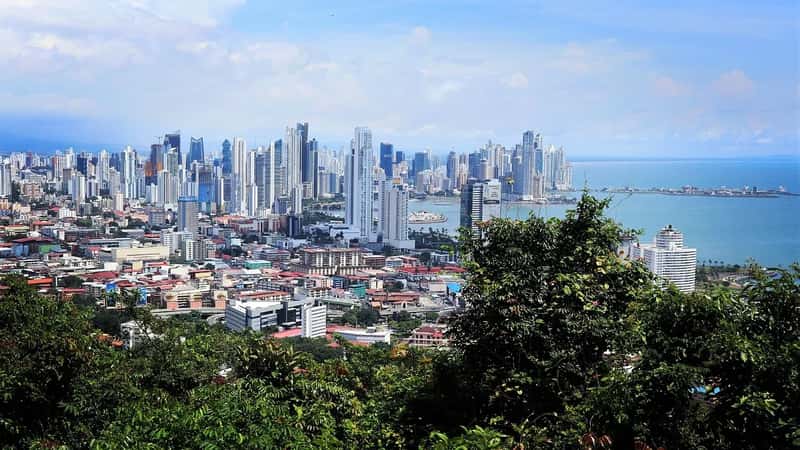
Panama has long been a favorite for North American retirees and investors, and its Qualified Investor Program includes a real estate route that leads straight to permanent residency rather than a temporary card that needs constant renewal. Buyers who purchase registered property in Panama at the qualifying investment level can apply for permanent residence status directly, bypassing the years-long provisional stages that many other countries require before granting long-term security.
What draws people to Panama isn’t only the paperwork speed but the broader package around it, including its territorial tax system, use of the US dollar alongside its own currency, and a well-established expat community in cities like Panama City and beach towns along both coasts. The program has remained a steady alternative for investors looking outside Europe as programs there have tightened, offering a Latin American base with strong ties to US travel and banking networks.
Buying property for residency isn’t a decision to rush into, no matter how attractive the headline numbers look. Thresholds have climbed sharply in places like Greece, entire programs have vanished in Spain and Portugal, and even stable performers like Cyprus and the UAE come with fine print around financing, family inclusion, and eventual citizenship timelines. Still, for those willing to do the homework, these six countries prove that a well-chosen property purchase can still open a genuine legal door to living, working, or simply having a foothold abroad. The smartest buyers treat the residence permit as a serious bonus attached to a sound property decision, not the other way around.