
Picture an RV park after 60 and you probably see silver-haired couples in folding chairs at sunset. The data says that picture is mostly wrong, and it’s only the first thing nobody tells you.
One insurer’s 2022 survey found just 18% of RVers were 65 or older, and the industry’s 2025 profile puts the median owner at 49. The bigger surprises hide in Medicare fine print, depreciation and park passes, and the last one on this list can quietly end your health plan mid-trip.
#12 – You’re Not Camping Among Retirees

The “retiree RV park” is mostly a myth now, and the numbers aren’t close.
In that 2022 survey, half of RVers were 18 to 44, and only 18% were 65 or older. The stereotype of senior couples cruising to warm-weather spots describes a minority of the picture.
The industry’s own figures agree. The median age of RV owners fell from 53 in 2021 to 49 in 2025, and 46% of owners are now 35 to 54.
Surveys do differ, though. ConsumerAffairs puts the median owner age at 55, so treat any single number as a rough guide rather than gospel.
Expect kids on bikes, dogs on leashes and full weekends. But the cheapest item on this list comes with fine print most buyers miss, and it’s next at #11.
#11 – The $80 Pass Has Limits Nobody Mentions

The best bargain in RV travel for over-62s costs less than one night at many private resorts.
U.S. citizens and permanent residents 62 and older can buy a Senior Pass for $20 a year, or a lifetime version for $80. It may cut amenity fees, such as camping, by 50 percent at some federal sites.
Here’s the catch. The Senior Pass generally does NOT cover special recreation permit fees or fees charged by concessioners.
It also covers only federal sites, not state parks, which run their own senior programs.
Many travelers assume the standard pass is the same deal. It isn’t, but the general-public annual pass costs $80, the same as the senior lifetime pass, which makes lifetime the stronger value for frequent travelers.
But a great pass is useless if the campsite is already gone, and that’s the problem at #10.
#10 – The Best Sites Are Gone Before You Decide
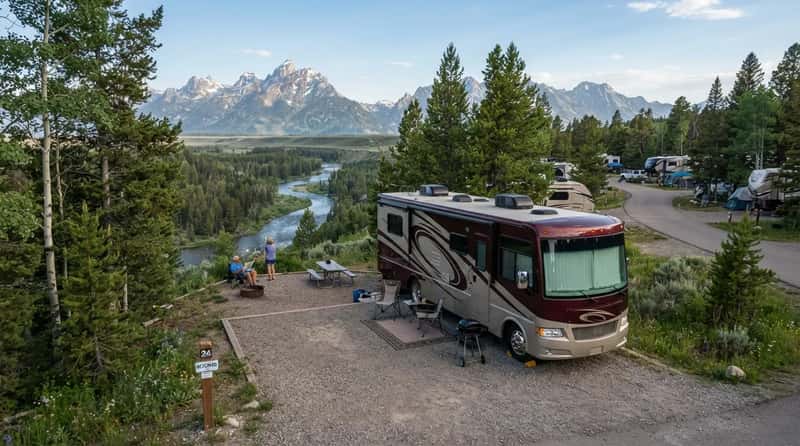
Freedom is the pitch, but the popular campsites are quietly the scarcest thing in RVing.
Prime spots, especially in sought-after areas, often require advance planning. That cuts against the dream of wandering wherever the mood takes you.
The supply looks huge on paper, with more than 18,000 public and privately owned campgrounds nationwide. So does the demand, since 11.2 million households owned RVs in a 2021 Go RVing study.
Booking rules differ by campground and by agency. Some take reservations far ahead, while others are first-come, first-served, so check each one before you build a route around it.
The no-plan trip works best in the off-season or at lesser-known stops. Famous parks in peak months need a backup, and a second-choice campground is a smart habit, not a failure.
That’s the planning side. The money side is where a lot of buyers get burned, starting at #9.
#9 – Buying New Is the Costliest Mistake

The moment you drive a new RV off the lot, a chunk of your money is already gone.
Figures attributed to J.D. Power say to expect about 20% of value to vanish as you leave the dealer’s lot. Class A rigs lose about 30% after three years, and Class C RVs about 38% after five.
Numbers vary by source. One analysis says 18 to 21% is gone after the first year, while others say 20 to 30%.
A Class A can lose as much as half its value within 10 years. That’s a steep price for a rig you may use only part of the year.
Quick Compare
- Leaving the lot: about 20% of value gone
- Class A after 3 years: about 30% lost
- Class C after 5 years: about 38% lost
- Class A after 10 years: as much as half lost
J.D. Power goes further, saying the best way to lose money quickly is to buy a brand-new RV, especially a large one.
Yet even a used RV hides a depreciation quirk that surprises most owners, and it has nothing to do with miles. It’s at #8.
#8 – Mileage Barely Matters, but Age Does

Most buyers check the odometer first, and that’s the wrong number to obsess over.
J.D. Power says mileage does not play a significant role in an RV’s value, while time certainly does. A low-mileage RV that has sat outside for years can be a worse buy than a well-kept one that’s been driven.
The decline isn’t even, either. Depreciation levels off after five years, then speeds up again around the 10-year mark.
Buyers are pricing in risk. That’s about when expensive chassis work, roof reseals and appliance replacements start appearing, and around year 9 to 10 is when the repair bills tend to arrive.
Storage matters too. RVs exposed to snow, ice, rain, UV and temperature swings degrade faster than units kept indoors.
So before you fall in love with a price, ask for maintenance records and roof history. And speaking of price, the cost math behind full-time life is fuzzier than you’ve been told, at #7.
#7 – Nobody Agrees on What It Costs

Every budget you’ve seen online is either a best case or a sales pitch.
One compilation of full-time RV statistics cites about $1,400 to $3,000 a month. That range is so wide it’s barely a number.
Another source argues that full-timers who eliminate $1,500 to $3,000 a month in rent and hotel costs can save $18,000 to $36,000 a year. That’s a calculator-site claim, not a study, and it depends entirely on what you’d otherwise pay.
What both leave out is the unpredictable part. Maintenance and repairs, especially with older RVs, can swing wildly in cost.
Money is only half the story, though. The cost nobody puts in a spreadsheet shows up at #6.
#6 – The Hard Part Isn’t the Driving

The hardest part of life on the road is rarely mechanical.
The nomadic lifestyle can make lasting friendships hard to build and keep. That sounds minor until you’ve spent a winter three states from everyone you know.
Family visits get trickier than expected, too. If relatives don’t have room to park an RV, a simple visit can turn into a logistics puzzle.
Close quarters and noisy campgrounds can also chip away at your privacy. A rig can feel very small once the honeymoon weeks are over.
None of this means you shouldn’t go. It means the trip should include people, whether that’s a regular call schedule, a rally or a home base you return to.
Still, the next five items aren’t about comfort at all. They’re about coverage, and #5 catches people at the pharmacy counter.
#5 – Your Prescriptions May Not Travel With You

A three-month trip can turn into a pharmacy headache if your plan has geographic limits.
Unlike Original Medicare, Medicare Advantage and Part D plans can be limited by the plan’s service area. Leave it, and your plan may not cover you.
The good news is that most Part D plans have a national or regional pharmacy network. AARP notes you’ll save money by using a preferred pharmacy near where you’re staying.
Worth Knowing
- Check your plan’s service area before you map the route.
- Ask which pharmacies count as preferred near each long stay.
- Save your plan’s app or phone number for walk-in clinics.
- Ask whether specialist visits need a referral from your primary doctor.
Finding care is the other half. Locating an urgent care center that takes Medicare can help you avoid an emergency room trip, and your plan’s app may help you find walk-in clinics.
One more trap applies if you need referrals. If your Medicare Advantage plan requires a primary care referral for specialists, choose a new PCP near your temporary residence.
Crossing a border changes the picture entirely, and what happens there is at #4.
#4 – Medicare Mostly Stops at the Border
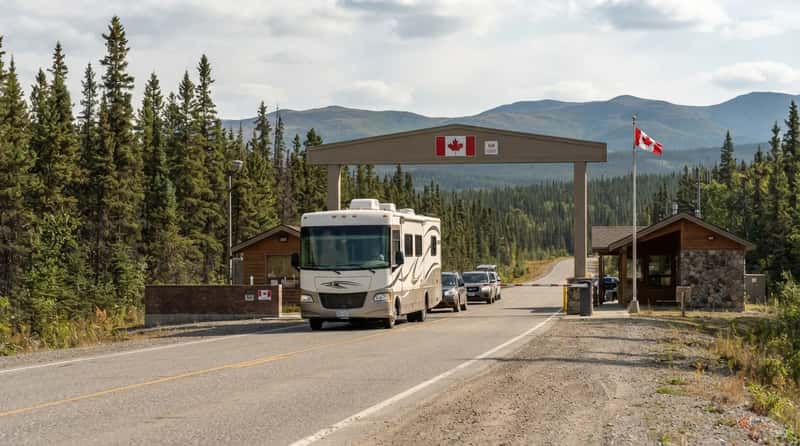
A quick hop into Canada or Mexico is where many travelers discover their coverage has an edge.
Outside the country, most medical services won’t be covered except in special circumstances. AARP says plainly that foreign trips are not covered.
There is one narrow exception that matters for RVers. Original Medicare covers emergency services in Canada if you’re traveling between Alaska and another state, the route is direct, and the closest hospital that can treat you is in Canada.
That’s a very specific situation. A sightseeing detour doesn’t qualify.
Whether you cross for a day or a month, the gap is the same. Standard coverage rarely pays for foreign care, which makes private travel insurance essential on international trips.
Back on U.S. soil, the plan you picked matters even more, and the gap between the two main options at #3 is wider than the ads suggest.
#3 – Advantage Plans and Original Medicare Aren’t Equal on the Road

Plenty of retirees choose a plan for its low premium, then hit the highway and find out what a network really means.
Original Medicare covers you anywhere in the U.S. and its territories. You can see any doctor or use any facility that accepts Medicare and new patients.
Advantage plans work differently. If you use providers outside your plan’s network, you will likely have to pay the full cost out of pocket, which is a serious risk for a full-timer.
At a Glance
- Original Medicare: usable anywhere in the U.S. and its territories
- Original Medicare: any provider that accepts Medicare and new patients
- Advantage plans: network rules apply, and out-of-network care can mean paying the full cost
- Advantage plans: some have a regional focus, with few or no doctors out of state
Many advisors who sell supplements argue that Original Medicare plus Medigap is the better match for RVers. That’s a view from people who benefit from selling it, so weigh it with care.
The trade-off is real, though. Some Advantage plans have a regional focus, with few or no doctors out of state, and more than half of Medicare enrollees have an Advantage plan.
But even the strictest plan has to cover one thing, and the details at #2 are more complicated than ‘covered.’
#2 – “Covered Everywhere” Still Has a Cost

Emergencies are the one place everyone is protected, but the bill can still surprise you.
Original Medicare covers emergencies anywhere in the U.S., and Medicare Advantage plans must cover emergency and urgent care in or out of network. Being far from home doesn’t cost you coverage in a real emergency.
Costs are where it gets fuzzy. AARP notes that copayments may differ from Original Medicare’s, and one plan might charge a $115 copay for emergency care and $50 for urgent care, in or out of network.
The bigger issue comes afterward. Once your condition is stable, you or the doctor treating you should contact the plan to discuss next steps.
That follow-up is where the network rules return. A hospital stay in a small town can leave you far from your plan’s doctors.
So the smartest RVers plan for the week after the emergency, not just the emergency itself. And the rule at #1 is the one that can undo everything.
#1 – Your Plan Can Quietly Drop You After Six Months

The rule that shocks long-haul RVers most is one most of them never read.
If you travel outside your Medicare Advantage plan’s service area continuously for more than six months, you’ll be automatically disenrolled from most plans. That is exactly how a long RV trip can end your coverage.
It isn’t identical everywhere. While six months is common, some plans allow continuous U.S. travel for up to one year.
After disenrollment, the fallback isn’t a disaster, but it isn’t a plan you chose either. You get a Special Enrollment Period to join another Advantage plan, and if you don’t pick one, you’re placed in Original Medicare.
Fast Facts
- The trigger: more than six months continuously outside your plan’s service area
- The exception: some plans allow up to one year of continuous U.S. travel
- The result: automatic disenrollment from most plans
- The fallback: a Special Enrollment Period, or Original Medicare if you don’t choose
It’s far better to learn this from your plan’s paperwork than from a letter in your mailbox. Anyone planning a winter-to-summer loop or a full-time life should check the language before leaving.
That single phone call could be the most valuable thing you do before your first long trip.
The Bottom Line

RVing after 60 isn’t the retiree-only lifestyle the ads imply, and the real costs live in the fine print. The Senior Pass has limits, new rigs lose value fast, and age matters more than mileage.
The biggest surprises are about health coverage. Medicare Advantage plans can be limited by service area, most care abroad isn’t covered, and more than six months outside that area can get you disenrolled from most plans.
The rig is the easy decision. The plan behind it is what decides how the trip ends.
Which surprised you more: the six-month rule or the senior pass fine print?