

Airports in 2026 are a strange mix of old habits and new technology. One traveler is still fumbling for a paper boarding pass while the person next to them breezes through a facial recognition lane without touching their phone. The gap between the two experiences has never been wider, and it usually comes down to a handful of small decisions made long before anyone reaches the terminal.
Frequent flyers who move through airports every week tend to agree on a short list of things that genuinely cut down wait times, rather than just feeling productive. None of these tricks are secret, exactly. They just get overlooked by people who fly a few times a year and never bother to build the habit.
1. Enroll in TSA PreCheck Before Your Next Trip
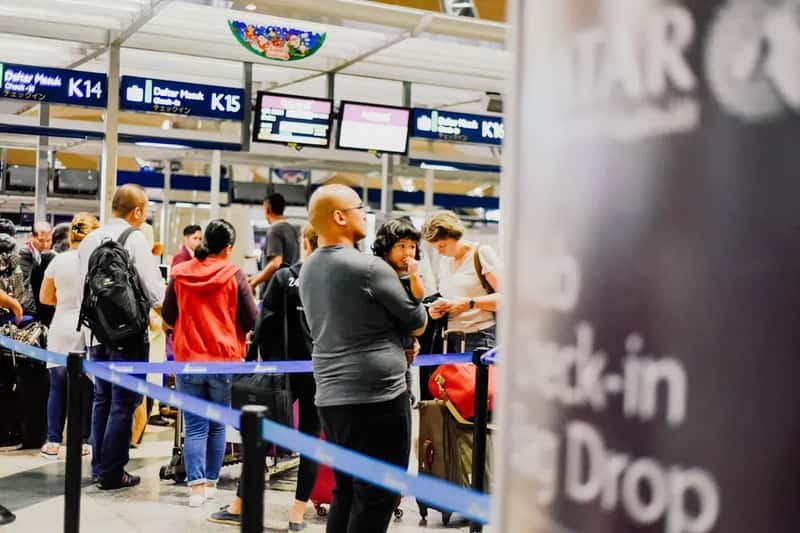
TSA PreCheck remains one of the most reliable ways to shave real time off an airport visit, even though the gap between it and standard screening has narrowed somewhat. Recent data indicate TSA PreCheck saves about seven minutes on average compared with standard security lines, producing reported averages near 36 minutes for PreCheck and 43 minutes for regular lanes. That might sound modest, but on a morning when regular lines stretch past checkpoint boundaries, seven minutes can be the difference between a calm walk to the gate and a sprint.
The bigger advantage shows up in consistency rather than raw speed. The vast majority of PreCheck passengers still wait less than 10 minutes nationwide when dedicated lanes are available. Travelers enrolled in the program can also opt into Touchless ID, a facial verification system that has expanded rapidly, with the pilot program growing significantly in recent years with the addition of more airports and airlines, including Alaska Airlines, United Airlines and most recently American Airlines and Southwest Airlines in 2025. In June 2026, that reach grew further when a new partnership with Google Wallet unlocked Touchless ID access for eligible passengers flying with any airline that participates in TSA PreCheck.
2. Check Live Security Wait Times Before You Leave Home
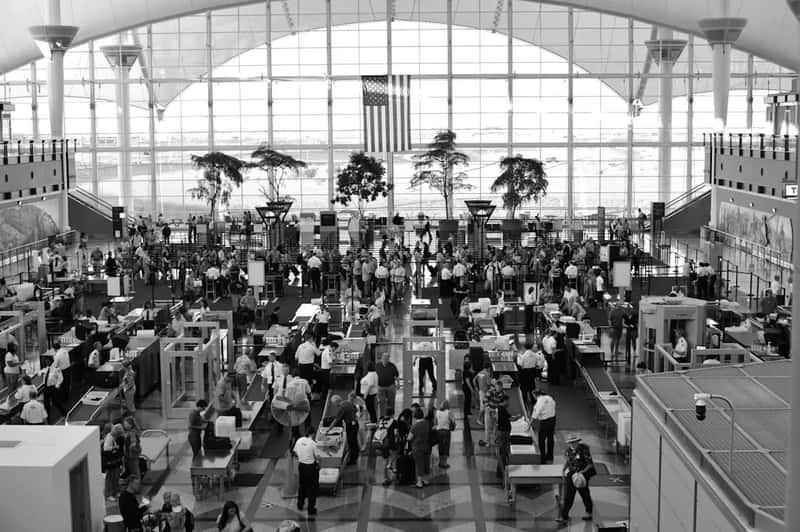
Frequent flyers rarely just guess how busy security will be. Many major airports now publish live data, and checking it before leaving for the airport can save a wasted early arrival or, worse, a late one. Dallas–Fort Worth International Airport operates multiple security checkpoints across its five terminals, and the airport publishes live TSA wait times directly on its official website, with travelers able to view estimated wait times by checkpoint and terminal before choosing where to enter security.
Denver takes this a step further. Denver has a wait time dashboard on its website that estimates how long it will take people to get through regular security, as well as TSA PreCheck, and the airport also allows people to reserve a spot in a security line through DEN Reserve. For less tech-savvy travelers, the simplest tool is still the federal one. Downloading the My TSA application lets travelers check and post airport delays reported by fellow travelers in real time, confirm what items can be brought through security, and review other tips for travelers from TSA.
3. Switch to a Fully Digital Boarding Pass and ID
Paper boarding passes are quickly becoming the backup plan rather than the main event. Since May 2025, identification rules have tightened for every traveler moving through a US checkpoint. REAL ID enforcement began May 7, 2025, and travelers must show a REAL ID compliant license or an acceptable alternative, such as a passport or DHS Trusted Traveler card, at all checkpoints, including PreCheck.
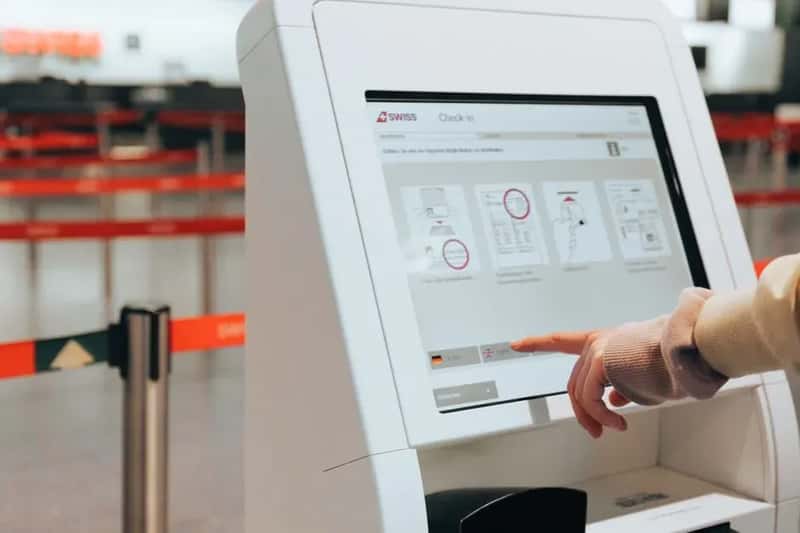
Digital identity has caught up fast in response. TSA now accepts digital IDs at more than 250 US airports through Apple Wallet, Google Wallet, and select state issued apps. Those checkpoints often use facial comparison technology to verify identity and confirm ticket status directly, meaning the boarding pass itself becomes optional at equipped checkpoints when a digital ID is in use. A mobile boarding pass loaded ahead of time also means skipping the counter entirely, since it saves time waiting in queues when you check in online and obtain a mobile boarding pass.
4. Pack a Pouch That Is Ready to Scan Instantly

Seasoned travelers rarely dig through a bag at the checkpoint. They build a small, dedicated kit ahead of time so nothing needs sorting under pressure. This usually means keeping a toiletry bag with containers under 3.4oz ready to go, so everything fits the liquid requirements and pulls out easily for screening.
The same logic applies to electronics. Frequent flyers keep all electronics, including a laptop, tablet, and chargers, in one easily accessible section of a carry-on, so when security asks for devices, everything comes out quickly without digging through the entire bag. Clothing choices matter too, since avoiding boots and complex belt buckles, and sticking with simple shoes and minimal metal accessories, speeds up the process.
5. Fly Carry-On Only Whenever the Trip Allows It

Skipping checked luggage removes two of the slowest parts of any airport visit, the bag drop line at the start and the carousel wait at the end. It also avoids fees that some carriers now attach to airport-based check-in. Some airlines now charge for the privilege of checking in at the airport, due to staffing and printing costs, so checking in online and obtaining a mobile boarding pass before arriving cuts out that cost entirely.
There is a practical safety net built into this habit as well. Travelers who check in ahead of schedule and travel light have more flexibility if plans shift last minute, since having checked in already can make a huge difference in whether an airline still allows a late arrival onto the plane. For short domestic hops especially, a single carry-on bag often turns a two-stop airport routine into a one-stop walk straight to the gate.
6. Get Global Entry if International Trips Are Regular

TSA PreCheck handles domestic security, but it does nothing for the re-entry line at customs after landing back in the United States. That is where Global Entry earns its keep. Frequent international flyers benefit from having Global Entry, which expedites the clearance process when re-entering the US.
Global Entry membership also includes TSA PreCheck benefits, so most frequent international travelers apply for the combined package rather than enrolling in both programs separately. It requires an in-person interview similar to PreCheck, and once approved, it typically lasts for years before renewal is needed. For anyone who crosses a border more than once or twice annually, skipping the standard customs line on the way home tends to matter more than the modest savings at domestic security.
7. Choose the Right Terminal or Checkpoint at Busy Hubs
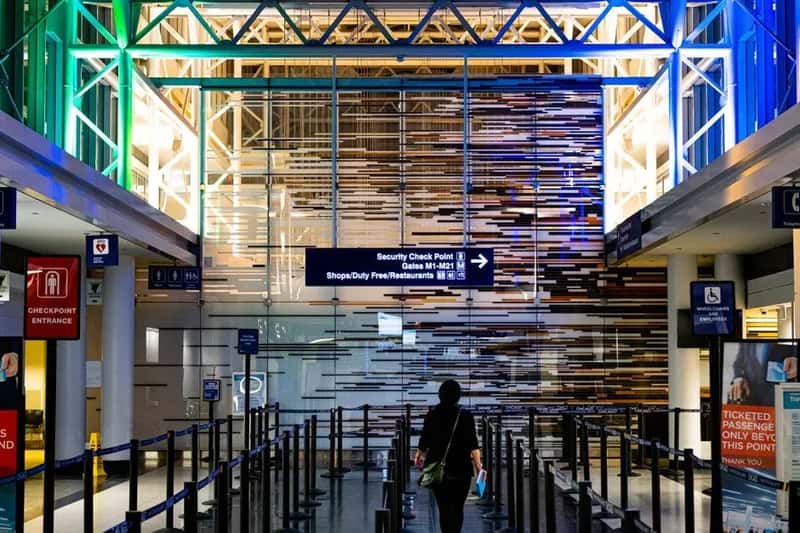
Not every checkpoint inside a large airport moves at the same pace, and frequent flyers know which one to walk toward. Hartsfield-Jackson in Atlanta, the world’s busiest airport in 2025, illustrates this well, since it services over 108 million passengers each year and publishes minute by minute TSA wait times on its official website, allowing travelers to view current conditions at each checkpoint across domestic and international terminals.
The same strategy applies at other major hubs. LAX publishes terminal level TSA wait times on its official website, showing separate estimates for general screening and TSA PreCheck lanes, with the data refreshed throughout the day. Travelers who check this information before arriving can walk directly to the checkpoint running fastest that day, rather than joining the first line they happen to see.
Staffing levels, seasonal crowds, and shifting federal rules mean airport conditions rarely stay fixed for long. What frequent flyers rely on instead of luck is a small set of habits that hold up regardless of which terminal they land in.