Ask someone to name a European wine region and you’ll likely hear the same two answers every time. Bordeaux and Tuscany deserve their fame, sure, but they’ve also become shorthand for “good wine” in a way that crowds out dozens of equally compelling places. Step outside that well-worn path and you’ll find regions shaped by volcanoes, slate cliffs, and centuries-old river terraces, each producing wines with a personality all their own.
What follows isn’t a ranking of prestige or price. It’s a look at seven places where geography, climate, and stubborn old vines have created something genuinely distinct, often at a fraction of the cost you’d pay for a bottle from those two famous Italian and French heavyweights.
Douro Valley, Portugal
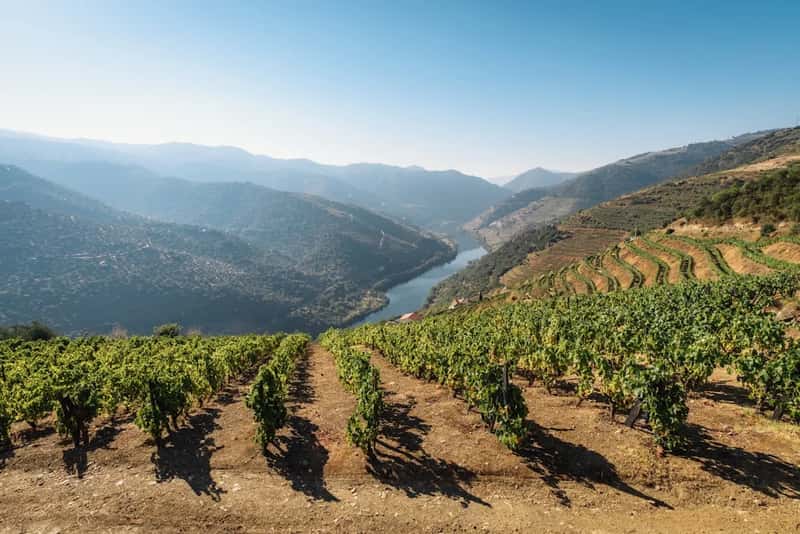
The Douro is best known as the birthplace of Port, but that reputation only tells part of the story. The Douro Valley is one of the world’s oldest demarcated wine regions and a UNESCO World Heritage site, where dramatic terraced vineyards cascade down steep hillsides to meet the winding Douro River. Those terraces, locally called socalcos, were carved by hand into schist slopes that look almost impossible to farm, yet they’ve supported vines for centuries.
While fortified Port still dominates exports, the region’s dry table wines have quietly become some of Portugal’s most exciting. Though perhaps most famous for its Port wines, production is now spread across fortified and non-fortified table wines, the latter mostly red blends with native grapes and, increasingly, some international varieties such as Cabernet Sauvignon. Indigenous grapes like Touriga Nacional and Touriga Franca give these reds a floral, dark-fruited intensity that’s hard to find anywhere else in Europe.
Priorat, Spain
Tucked into the mountains southwest of Barcelona, Priorat shares Spain’s highest wine classification with only one other region. It is one of only two wine regions in Spain to qualify as DOCa, the highest qualification level for a wine region according to Spanish wine regulations, alongside Rioja DOCa. That status reflects decades of work by winemakers who transformed a nearly abandoned farming area into one of Spain’s most sought-after red wine zones.
The secret sits underfoot in a soil the locals call llicorella. Priorat’s flagship soil type is “llicorella” a free-draining, nutrient-poor soil made up of partially-decomposed slate and quartz. Vines struggle to survive in it, which is exactly the point, since the resulting stress produces small, concentrated berries. Garnacha and Cariñena thrive here, yielding wines that are dense, mineral, and built to age for years.
Wachau, Austria
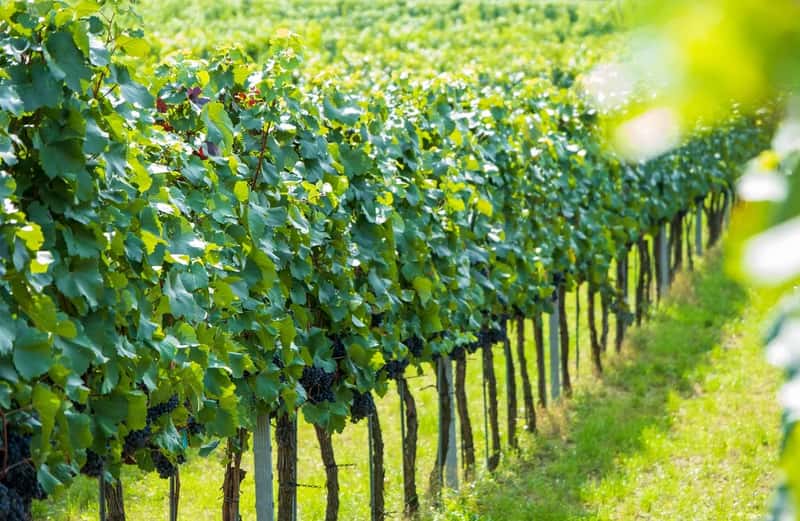
Along a narrow stretch of the Danube between Melk and Krems, Austria has quietly built one of Europe’s most respected white wine regions. The narrow Danube valley between Melk and Krems, designated a UNESCO World Heritage Site in 2000, offers spectacular stone terraces, a unique microclimate, and world-class wines. The steep, often hand-worked slopes above the river create a rare combination of warm days and cooling night air.
Two grapes define the Wachau: Grüner Veltliner and Riesling. Many vineyards in the Wachau are planted on ancient primary rock soils such as gneiss and mica schist, poor in nutrients, and store little water, and as a result, the vines must develop deep roots, which often leads to wines with great structure and minerality. The region even has its own quality system, Steinfeder, Federspiel, and Smaragd, based on ripeness rather than vineyard hierarchy, which makes shopping here refreshingly straightforward once you understand the labels.
Mosel, Germany
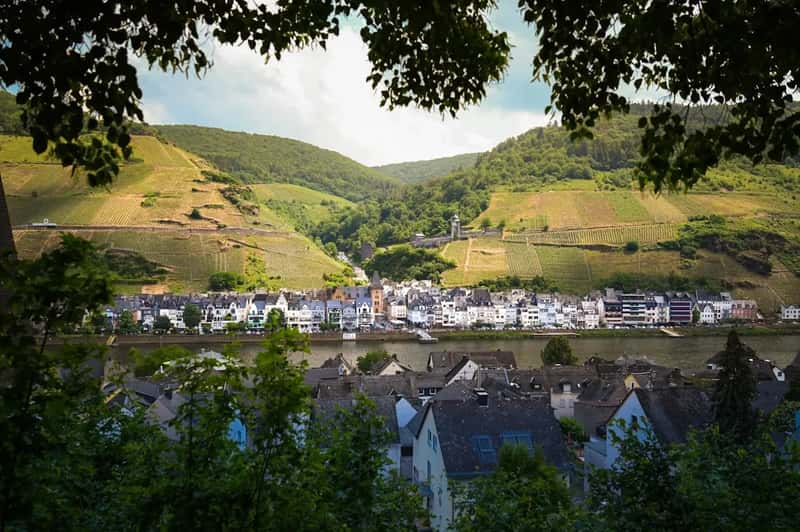
Germany’s Mosel Valley is home to some of the steepest vineyards on the planet, with certain slopes tilting past a sixty-degree angle above the winding river. Riesling is the grape that matters here, thriving on slate soils that store heat during the day and release it slowly at night, helping thin-skinned grapes ripen even in a cool northern climate. The result is a style of white wine that balances high acidity with a delicate, almost weightless sweetness in many bottlings, though plenty of producers now make bone-dry versions too.
Villages like Bernkastel, Piesport, and Wehlen have built international reputations on single vineyard sites that have been cultivated for generations. What sets Mosel apart from flashier regions is restraint. The wines rarely shout, but they reward patience, often improving in the bottle for a decade or more while staying remarkably affordable compared to top-tier Burgundy or German Riesling’s more expensive cousins.
Etna, Sicily
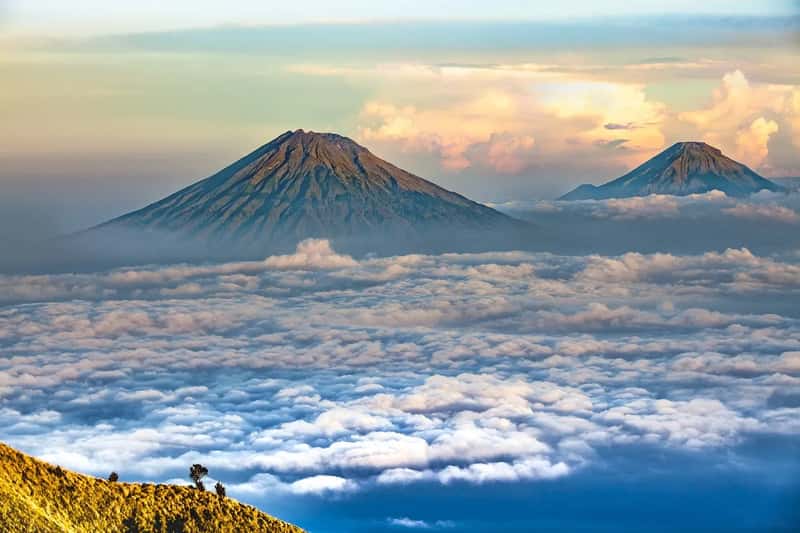
Mount Etna is Europe’s largest active volcano, and its slopes have become one of Italy’s most closely watched wine frontiers. The Etna DOC was established in 1968, the first in Sicily, and covers vineyards from roughly 400 to over 1,000 meters in altitude, planted on lava-derived soils that are mineral-rich and free of phylloxera, with the signature red being Nerello Mascalese, a thin-skinned indigenous grape often compared to Burgundy’s Pinot Noir and Piedmont’s Nebbiolo for its elegance and aging potential. That comparison isn’t just marketing. The wines genuinely share a certain transparency and lightness of touch that’s rare in southern Italian reds.
Altitude plays a huge role in why Etna feels different from the rest of Sicily’s typically warm, fuller-bodied wine landscape. Etna’s vineyards run from 400 meters to well above 1,000 meters among the highest in Europe, and lava, pumice, and ash create porous, mineral-rich, sharply draining soil that has kept phylloxera, the louse that devastated nearly every other European vineyard in the late 1800s, almost entirely at bay. Many vines here are still growing on their original, ungrafted roots, some over a century old, which gives the region a living connection to pre-phylloxera European winemaking that’s almost impossible to find elsewhere on the continent.
Santorini, Greece
Few wine regions anywhere look quite like Santorini, where vineyards grow directly in volcanic ash on an island shaped by one of history’s most violent eruptions. Santorini soils are volcanic and consist of a combination of basalt, volcanic ash, sand, pumice, andesite and various other volcanic rocks, and this vineyard is the oldest in Greece and one of the oldest in the entire world. The white grape Assyrtiko dominates plantings and has become something of a poster child for Greece’s broader wine revival over the past two decades.
Growing anything here means fighting near constant wind and almost no rainfall, so farmers developed a training method unlike anything found in France, Italy, or Spain. The strong summer winds, locally known as meltemia, have prompted growers to develop two unique training systems to shield their vines from the elements, with the koulouraki employing low training and a goblet shape, while the kouloura involves vines hugging the ground and forming a spiral knit that resembles a basket to provide support for the grape clusters. The resulting wines carry a briny, citrus-driven minerality that pairs beautifully with seafood and rarely resembles Assyrtiko grown anywhere else.
Alsace, France
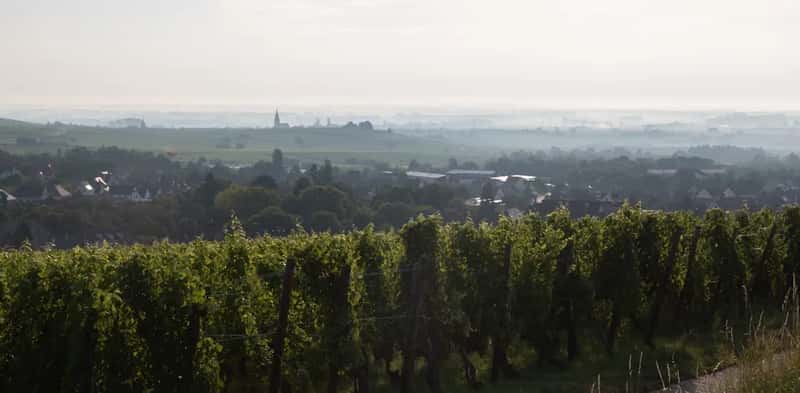
Pressed against the German border in northeastern France, Alsace occupies an unusual middle ground between two winemaking cultures. The region grows mostly the same aromatic grapes you’d associate with Germany, Riesling, Gewürztraminer, Pinot Gris, and Muscat, yet bottles them in the tall, slender flûte typical of French tradition and usually ferments them fully dry, unlike many of their sweeter German cousins. The Vosges Mountains shield the valley from Atlantic rain, giving Alsace one of France’s driest and sunniest climates, which lets grapes ripen slowly and hold onto bright acidity.
Alsace also has one of France’s more transparent classification systems, with dozens of officially recognized Grand Cru vineyards spread across distinct soil types, from granite to limestone to marl. That diversity means two bottles of Riesling from villages just a few kilometers apart can taste noticeably different, something serious wine drinkers have started to notice as prices for grand cru Burgundy and Bordeaux keep climbing. For anyone curious about food-friendly, aromatic white wine that isn’t trying to imitate anywhere else, Alsace remains one of the more underappreciated corners of France.
These seven regions share a common thread beyond geography. Each one built its reputation on soil, climate, and grape varieties that simply don’t exist in quite the same combination anywhere else, which is precisely what makes exploring beyond Bordeaux and Tuscany worthwhile in the first place. Whether it’s the volcanic ash of Santorini, the slate cliffs of the Mosel, or the terraced schist of the Douro, these places prove that some of Europe’s most interesting wine stories are still being written outside the regions everyone already knows.