Most Americans think they know Mexican food. Tacos, burritos, enchiladas and a good bowl of guacamole have become so familiar that they can pass for the whole cuisine. In Mexico, though, cooking changes from state to state, and sometimes from one valley to the next.
The dishes below belong to specific places, specific ingredients and specific occasions. Some are showing up in more big city restaurants, yet they remain far less common on U.S. menus than their reputations in Mexico would suggest.
Cochinita Pibil
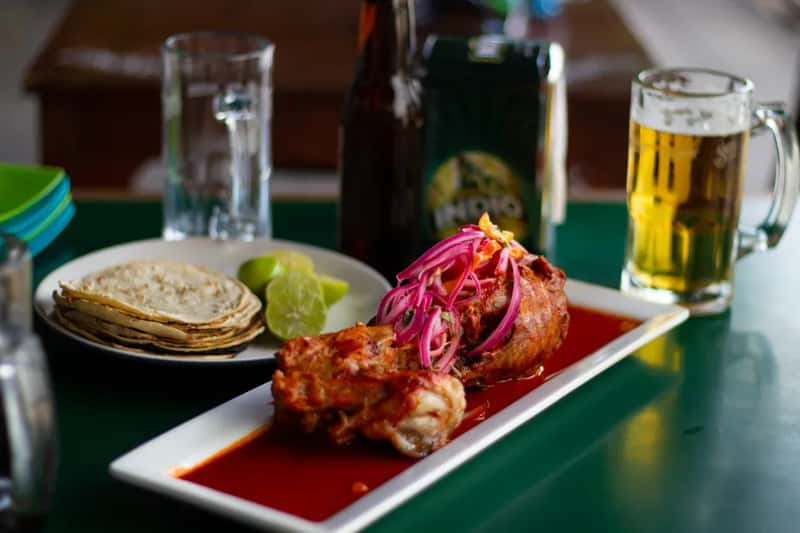
Cochinita pibil is the pride of the Yucatán Peninsula, a dish of smoky, slow roasted pork marinated with cinnamon, allspice and achiote.[1] The name means “baby pig,” and traditional recipes use a whole suckling pig wrapped in banana leaves and buried in a pit with a fire at the bottom, called a pib.[1] Today the cut is more often shoulder, but the method stays close to the original. Pit roasting takes anywhere from eight to twelve hours.[2]
The flavor comes from a Yucatecan pantry that looks quite different from central or northern Mexico. Achiote replaces dried chiles as the main seasoning base, sour orange stands in for lime, habanero provides heat, and banana leaves take the place of corn husks.[3] The banana leaf wrapping is also what separates it from barbacoa, which uses maguey leaves.[2] Outside Mexico, cooks often work around the missing pit, and home recipes commonly rely on an oven or slow cooker instead.[4]
Tlayudas
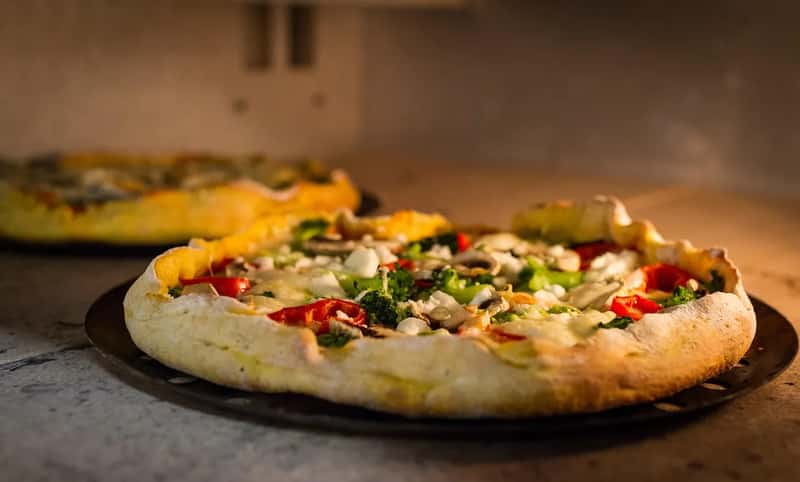
A tlayuda starts with an enormous tortilla. It’s a white corn tortilla about thirty centimeters wide, toasted on a flat clay comal.[5] It gets a layer of asiento (unrefined pork lard) and black bean puree, then cabbage, avocado, a meat such as tasajo, and quesillo, the Oaxacan string cheese.[5] Salsas finish it off.
The giant tortilla has deep roots in the Zapotec diet of Oaxaca’s Central Valleys, though the crispy, oversized tlayuda we know today became popular there around the 1930s and 1940s.[5] The name likely comes from the Nahuatl word tlaoli, meaning shelled corn.[6] People often call it a Mexican pizza, and some object that the comparison treats it as a variation on an Italian original rather than a dish with its own history.[6]
Zacahuil
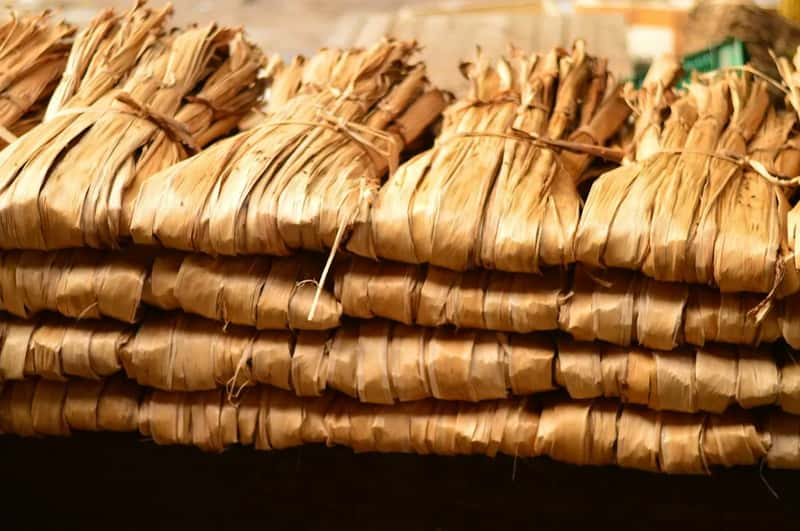
Zacahuil is a tamal on a scale that surprises first timers. It comes from the Huasteca, a cultural region shared by Veracruz, Hidalgo, San Luis Potosí, Tamaulipas, Querétaro and northern Puebla.[7] The whole thing is wrapped in several layers of banana leaves and cooked in a wood fired oven, usually overnight.[8]
The dough is different too. It’s made with coarsely ground maize, which gives it a grainy texture.[7] During the long bake, a golden, crisp layer called the pegado forms on the surface, and many people consider it the best part.[9] It’s a celebration dish, and a single tamal at a wedding, baptism or quinceañera can feed anywhere from fifty to one hundred fifty people.[9]
Cabrito al Pastor
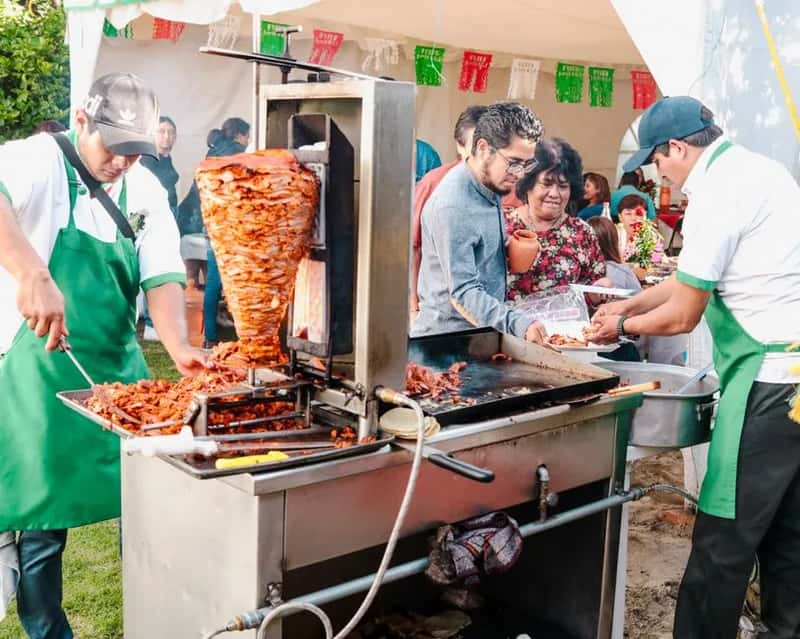
Cabrito is young goat, and in the northern state of Nuevo León it’s closely tied to Monterrey’s identity. The classic approach is to open the animal flat and set it upright on a metal frame close to glowing coals. The heat is gentle, so the meat cooks slowly while the skin turns crisp and the inside stays tender.
It’s usually served in generous portions, often with warm tortillas, salsa and beans so diners can build their own tacos at the table. Restaurants in Monterrey sometimes display the cabrito roasting in the window as a kind of advertisement. Goat remains a niche choice on most American menus, which helps explain why this northern specialty rarely makes the trip across the border.
Chiles en Nogada
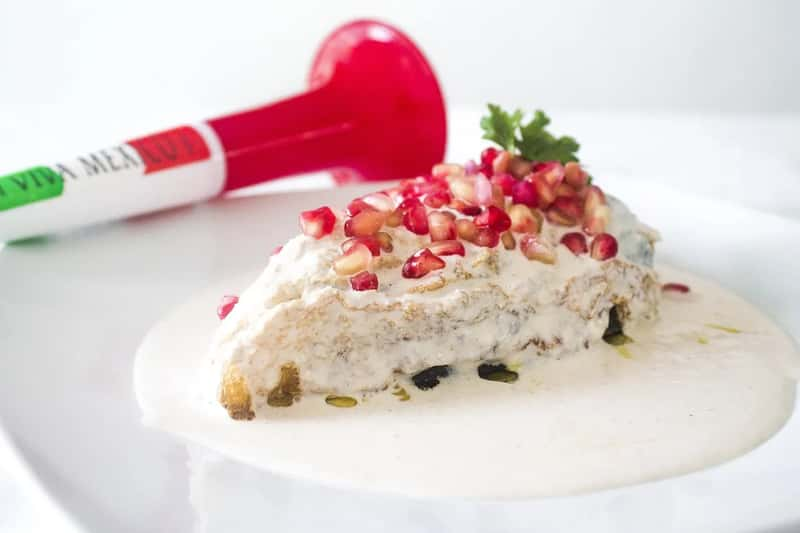
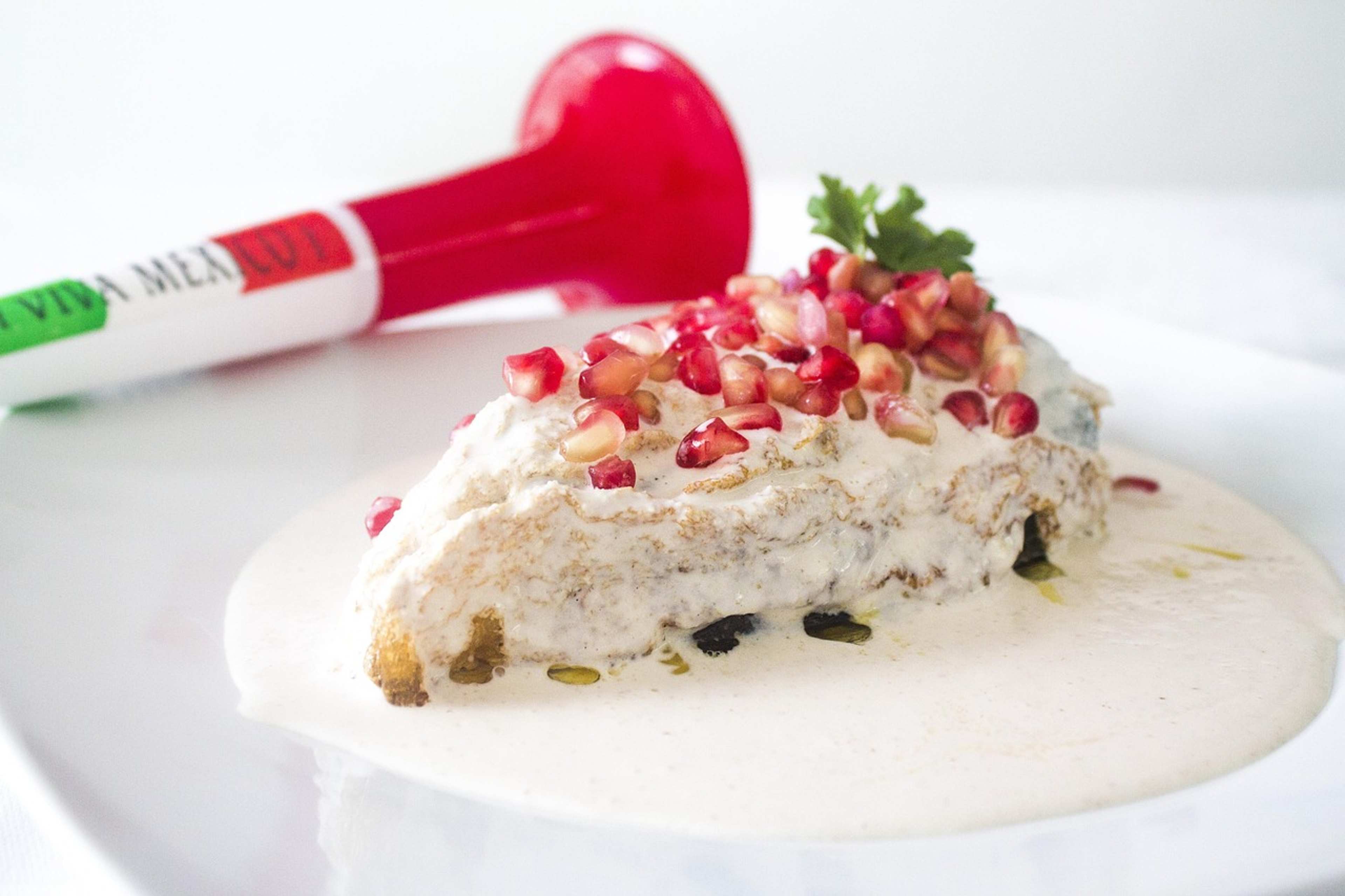
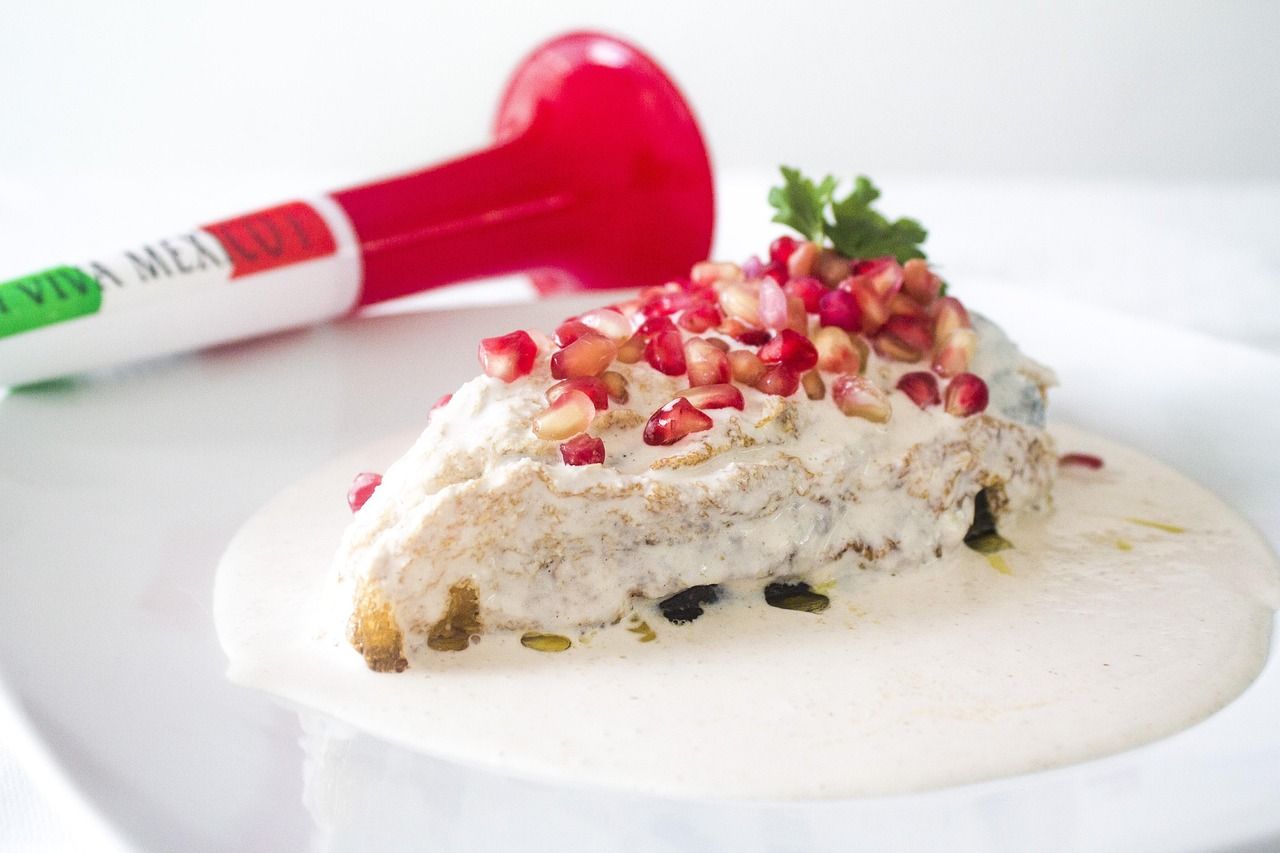
This is one of Puebla’s most celebrated dishes, and it’s as much about presentation as flavor. Large poblano chiles are stuffed with picadillo, a mix of meat, fruit and spices, then covered in a creamy walnut sauce. Pomegranate seeds and parsley go on top, giving the plate the green, white and red of the Mexican flag.
The dish is seasonal. It’s most closely associated with late summer and early autumn, when fresh walnuts and pomegranates are available, and many Mexican restaurants serve it only for a few weeks each year. A popular story links its creation to the 1821 celebrations for Agustín de Iturbide, though the exact origin is debated. That short window and the labor involved are part of why it almost never appears on everyday U.S. menus.
Pozole Verde
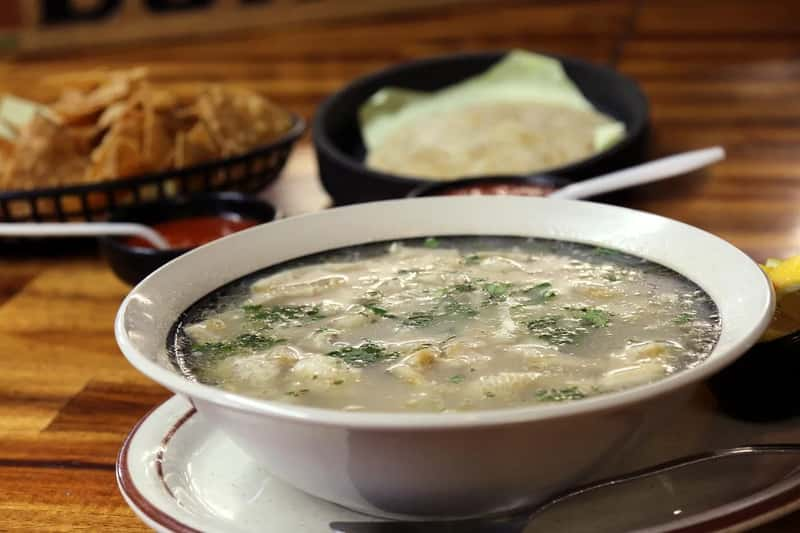
Many diners in the United States have met pozole in its red form, but the green version from the state of Guerrero is a different experience. The base is the same, hominy simmered with pork. The broth, however, gets its color and body from a sauce of tomatillos, green chiles, herbs and ground pumpkin seeds.
Garnishes matter as much as the stew itself. Radish, shredded lettuce or cabbage, onion, lime, avocado and crisp tostadas are set out so each person can adjust the bowl. In Guerrero, pozole has a social rhythm, with many families and restaurants treating Thursday as the traditional day for it. Menus elsewhere tend to offer a single pozole, so the green style can be hard to find.
Uchepos
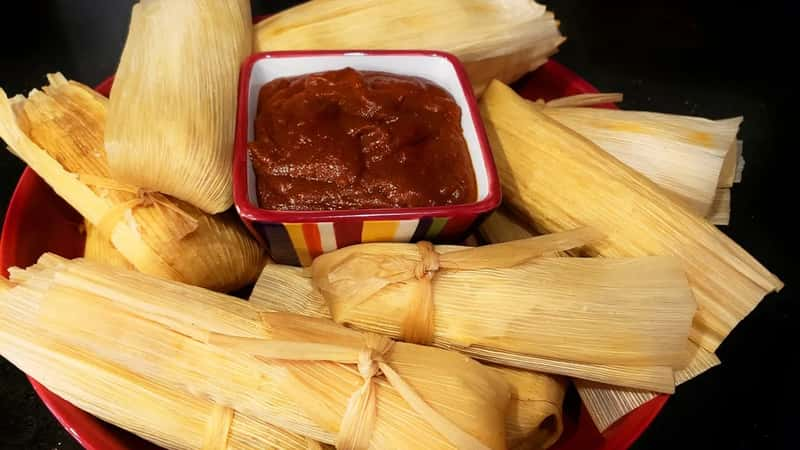
Uchepos are the fresh corn tamales of Michoacán. Rather than using dried, nixtamalized masa, cooks grind tender fresh corn, wrap the mixture in the plant’s own husks and steam it. The result is softer, lighter and noticeably sweeter than the tamales most Americans know.
They’re usually served with crema and a spoonful of salsa, and sometimes with a slice of fresh cheese. Because they depend on fresh corn, they’re tied to the harvest season in the Michoacán highlands, which makes them hard to standardize for a restaurant menu. That seasonality is exactly why they remain a regional treat, best eaten close to where the corn was grown.