Marriage laws still vary wildly around the world, and in a surprising number of places, the exit door is welded shut, or at least locked, if you happen to be the wife. In some countries this is written directly into the law books. In others, the barrier is procedural, religious, or simply a matter of who controls the courtroom. Either way, women in these places often find that ending a marriage takes years, money, or a level of endurance most people never have to test.
1. The Philippines

The Philippines remains one of only two places in the world, alongside Vatican City, where absolute divorce is not available to the general population. The Philippines still has no divorce law in 2026, making it the only sovereign nation besides Vatican City where married couples in the general population cannot legally end their marriage. Filipino couples are left with annulment or legal separation, neither of which fully dissolves a marriage the way divorce does.
Efforts to change this have gained more traction lately than at any point in recent memory. The House of Representatives approved House Bill 9349, titled the Absolute Divorce Act, on May 22, 2024, with a final tally of 131 votes in favor, 109 against, and 20 abstentions. Still, that landmark bill never reached a Senate vote, and the measure expired when the 19th Congress adjourned in 2025. New bills have been refiled in the current Congress, but as of mid-2026 nothing has moved past committee level, leaving Filipino women who want out of a marriage with very few real legal options.
2. Vatican City

Vatican City is technically the other country where divorce does not exist, though its situation is unusual because of who actually lives there. This tiny sovereign city-state spans merely 100 acres and is home to approximately 842 Catholic residents. Most of that population consists of clergy bound by vows of celibacy, so marriage itself is rare within its walls.
Even so, the ban matters because it reflects the doctrinal position that shapes Catholic-majority countries elsewhere, including the Philippines. Vatican City, ruled by the Pope, strictly prohibits divorce, aligning with its religious doctrines. Any woman who happens to marry under Vatican jurisdiction, a rare circumstance, would face the same absence of a legal dissolution process that defines the city state’s approach to marriage.
3. Saudi Arabia

Saudi Arabia’s guardianship system has loosened somewhat in recent years, but divorce remains one of the hardest doors for a woman to open on her own. Filing for divorce is incredibly difficult for women in Saudi Arabia, since the law only permits a woman to obtain a divorce with her husband’s approval or if he has caused her harm, and in reality it is still extremely tough for Saudi women to obtain a judicial divorce. A husband, by contrast, can end a marriage far more easily and without needing to prove anything.
Recent legal tweaks have not changed the underlying structure much. A February 2025 update to the Personal Status Law introduced some procedural refinements, but Saudi Arabia’s longstanding male guardianship system has historically limited women’s legal autonomy, with the guardian’s consent remained required in multiple areas, including the woman’s marital decisions and her divorce. For many Saudi women, a judicial divorce still means proving harm in a system where the burden of evidence sits squarely on their side.
4. Yemen
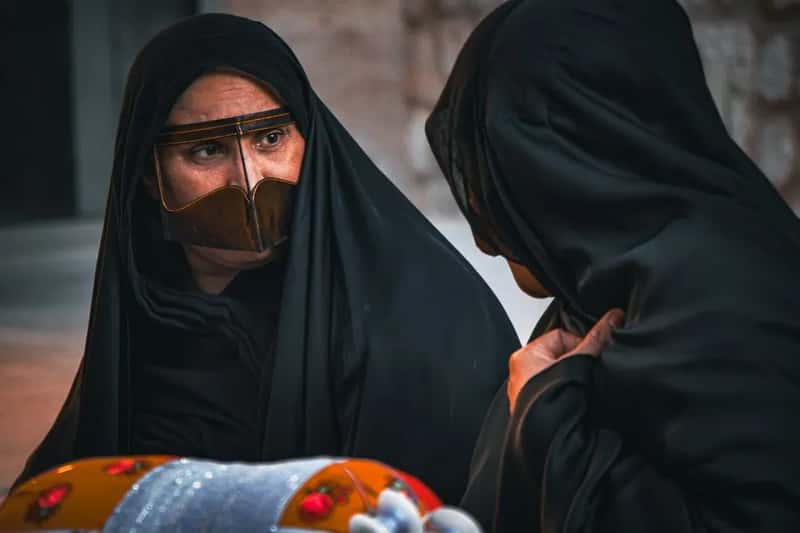
Yemen offers one of the starkest legal contrasts between what a husband can do and what a wife can do. Women do not have equal rights to divorce, since a husband may unilaterally divorce his wife without reason, through verbally pronouncing the divorce declaration, whereas a woman may only obtain a divorce by resorting to court. That single line captures the entire imbalance of the system.
Women technically have a khula option, but it comes at a steep personal cost. A woman may seek redemptive divorce by paying back the dower to the husband and forgoing all her financial rights, and a khul divorce requires the agreement of the husband. Judicial divorce is available for specific grounds like abandonment or abuse, but proving those claims in a war-torn country with a strained court system is its own uphill battle.
5. Afghanistan
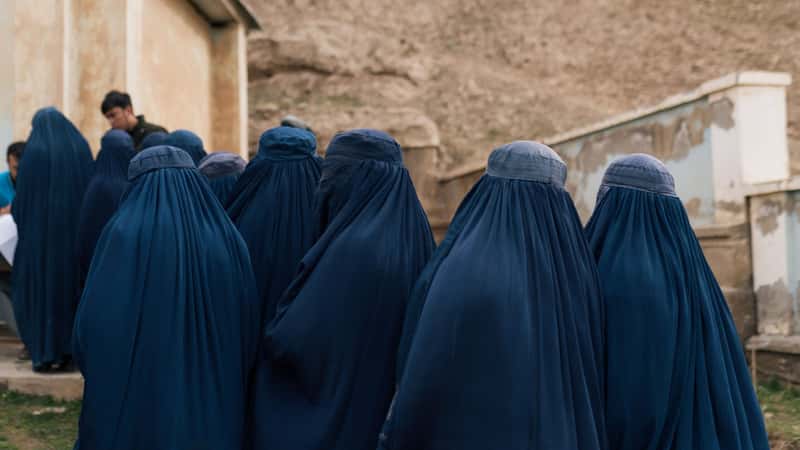
Since the Taliban’s return to power, the legal path to divorce for Afghan women has narrowed to almost nothing. A letter reviewed by the Afghanistan Analysts Network, sent from the Supreme Court to the Khost provincial court on April 7, 2024, stated that a judicial form of separation known as tafriq “is suspended until further notice.” That single administrative order effectively closed the main legal route women had used to leave abusive or unwanted marriages.
Compounding the problem, women cannot even represent themselves once a case does reach a court. Women are prohibited from representing themselves in court and instead must be represented by a male family member, and a 2025 UN CEDAW Committee expert statement confirmed that divorce for women has become almost impossible in practice. For many Afghan women, this means staying in a marriage regardless of circumstances, since there is no functioning legal exit left.
6. Israel

Israel presents a different kind of barrier, one built into religious law rather than civil statute. Jewish divorce requires a document called a get, which only a husband can grant, and rabbinical courts have limited tools to force a reluctant one to comply. The law permits rabbinical courts to prevent a recalcitrant husband from having a bank account or leaving the country, but only after the court has designated him a get-refuser and his wife as an agunah, or a chained woman.
The scale of this problem shows up in recent survey data. A recently released survey of 450 women from 11 countries who have undergone the process found that almost half, 48%, said their experience in rabbinical court harmed their mental health. Some cases drag on for a decade or longer, and even government sanctions do not always work, since courts still recorded dozens of new refusal cases in the past year alone, according to figures released by Israel’s Rabbinical Courts Administration.
7. Sri Lanka

Sri Lanka’s Muslim Marriage and Divorce Act, a law dating back to 1951, governs divorce for the country’s Muslim minority under a separate track from general civil law. Quazi courts demonstrate a gender bias, granting unilateral divorce rights primarily to men while complicating the process for women. Women are also shut out of the judging bench itself, since currently women are not allowed to be Quazis under the MMDA.
Reform efforts have circled this law for years without landing. A 2018 committee report recommended key reforms including setting the minimum marriageable age at 18, mandating bridal consent, appointing female quazi judges, and ensuring equal divorce rights for women, but resistance from conservative religious groups has stalled implementation. As of the latest consultations in 2025 and 2026, the Ministry of Justice is still gathering proposals, with no fixed timeline for when, or whether, actual change will follow.
These seven places show how differently the concept of marital freedom can play out depending on where a woman happens to live. Some barriers come from outright legal bans, others from religious courts that answer to tradition more than to legislation, and a few from guardianship systems that treat a woman’s consent as optional. What connects them is a simple, uncomfortable pattern: in each case, leaving a marriage takes far more from a woman than it does from a man.