Most people assume experienced travellers pack better because they know some clever trick about rolling T-shirts just right. They don’t. The real skill is speed – a seasoned traveller can glance at a suitcase, a destination, and a five-day itinerary and lock in 17 packing decisions before a first-timer even finishes choosing between two identical pairs of jeans.
None of it is random. Every choice is built on a hard lesson – a delayed flight, a lost bag, a suitcase dragged across cobblestones at midnight because it was ten kilos too heavy. Here’s the exact decision chain, in the order experienced travellers actually make it – and the one at the very end that changes everything before it.
#17 – They Decide on Bag Size Before They Decide on Clothes
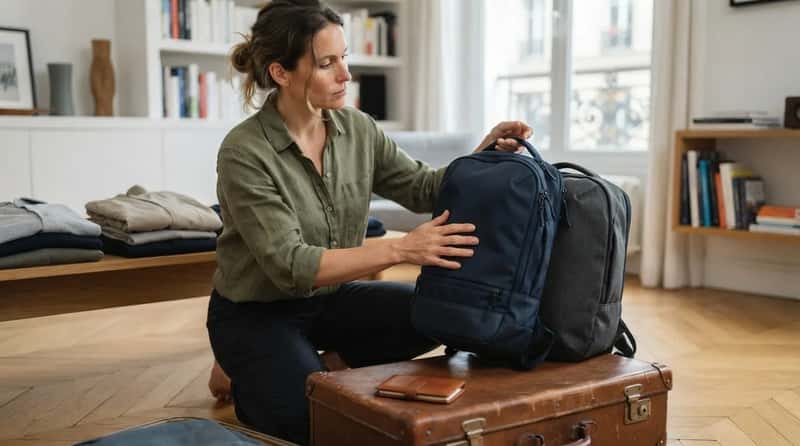
The first decision an experienced traveller makes has nothing to do with what goes inside the bag. It’s about locking in the right size before a single T-shirt gets chosen.
People naturally fill whatever space is available. By deliberately choosing a smaller bag first, experienced travellers force efficient packing before they’ve even started.
Frequent flyers lean on durable, weather-resistant carry-ons – soft-shell backpacks or hybrid bags flex better in tight overhead bins. Staying under 40 litres isn’t a limitation; it’s productive minimalism.
Most first-timers grab whatever bag is in the cupboard and work backwards from there. Experienced travellers do the opposite – they set the constraint first, then fill it, which quietly eliminates half of all overpacking decisions before they happen.
Fast Facts
- The most common U.S. carry-on limit sits at 22 x 14 x 9 inches, or 45 linear inches total.
- Southwest and Frontier allow larger 24 x 16 x 10-inch bags, roughly a third more room than the standard size.
- Most U.S. airlines skip weight checks on domestic carry-ons, but international carriers often cap them at 15 to 22 pounds.
- A soft-sided bag can squeeze into a tight gate sizer; a rigid hard-shell case at the exact same measurement often can’t.
The bag size determines everything else on this list, which is why it comes first. But the very next call is just as counterintuitive.
#16 – They Check the Weather for Every Single Day, Not “the Season”

Booking a trip to Barcelona in October and packing for “autumn” is one of the most common – and expensive – mistakes a traveller can make.
Before international travel especially, experienced travellers dig into the destination’s actual climate, culture, and local restrictions. That research becomes their packing compass.
The questions get specific: will evenings turn cold enough for a light jacket? Is this the rainy season, making an umbrella non-negotiable? Answering those in advance beats packing “just in case” for everything.
A ten-day average forecast and a day-by-day forecast can lead to wildly different bags – one light layer versus three heavy ones. Experienced travellers check both, and they wait until the day before packing, when the forecast actually becomes reliable.
Once the weather is locked in, they make the call that separates true packing veterans from everyone else: fabric.
#15 – They Choose Fabrics, Not Just Outfits
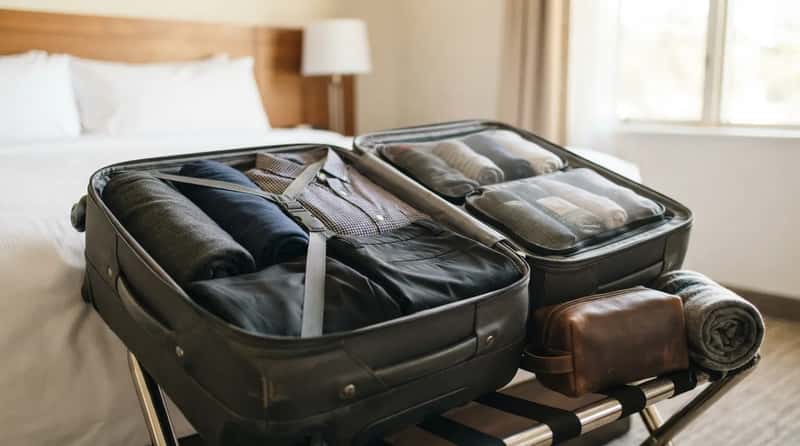
Experienced travellers think in materials first and looks second. This one shift alone eliminates wrinkles, saves space, and cuts laundry time in half.
Jersey knits, polyester blends, and merino wool resist creasing far better than pure linen or cotton. That’s the difference between stepping off a flight looking put-together and looking like you slept in your suitcase.
Merino wool wins on almost every metric – wrinkle-resistant, odour-resistant, and temperature-regulating. A single merino T-shirt can be worn three or four times between washes before odour becomes a problem, a fact that still surprises most travellers the first time they hear it.
Linen and 100% cotton wrinkle the fastest and demand the most careful folding. Yet they remain the default choice for warm-destination trips – exactly the situation where they perform worst.
Once the fabric question is settled, experienced travellers move on to how they physically organise everything, and the method is far more systematic than most people realise.
#14 – They Use Packing Cubes as a System, Not Just as Bags
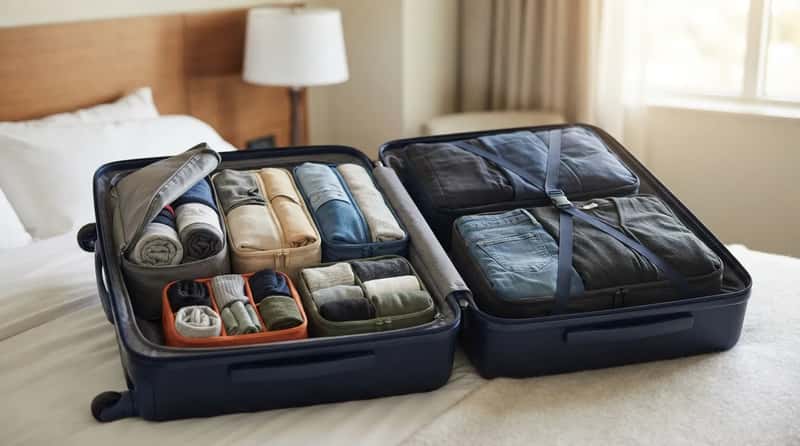
Packing cubes have become almost clichéd travel advice. What most people miss is that the system matters more than the cubes themselves.
Cubes don’t magically prevent wrinkles – they prevent clothes from shifting during transit, which is what actually causes wrinkles to set into folded layers.
Different sizes serve different jobs: small cubes for underwear, medium for shirts, large for pants. Experienced travellers treat each one like a dedicated drawer and never mix categories.
The real efficiency gain isn’t compression – it’s the speed of unpacking and repacking at every hotel. When each cube has one job, nobody spends three groggy minutes hunting for clean socks before a 6 a.m. flight.
But organisation inside the bag only matters once you’ve made the harder call about what goes in at all – and that’s where experienced travellers get shockingly aggressive.
#13 – They Apply the “One More Cut” Rule After the First Pack
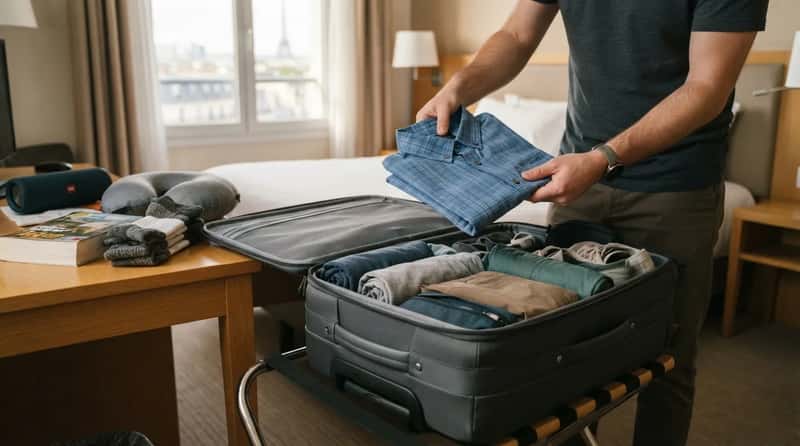
Every experienced traveller runs a version of this rule, and it always comes down to the same discipline: thinking you’re done packing means nothing.
They run a 90-second mental audit on every item, asking one question – did I actually use this on my last trip, or did it just ride along untouched?
The standard is simple: if something doesn’t serve at least two purposes, or isn’t needed on at least three of the trip’s days, it stays home. Most first-timers pack for worst-case scenarios that statistically never happen. Experienced travellers pack for what will actually occur and trust they can solve the rest locally.
This isn’t minimalism for its own sake – it’s arithmetic. Every unnecessary kilogram costs time, energy, and increasingly, money at the gate.
Once the cut is made, they lock in a decision that saves them at the airport almost every single time.
#12 – They Decide in Advance Whether to Check a Bag – and Never Waver
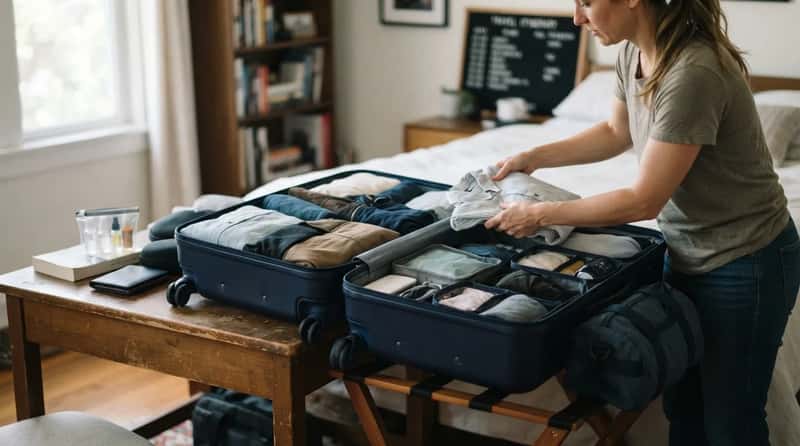
This decision sounds trivial. It isn’t – it shapes every packing choice that follows it.
Nearly one in two U.S. travellers actively avoids checking a bag, and experienced flyers tend to lead that group. It’s not stubbornness – the data on checked bags is genuinely alarming.
According to the U.S. Department of Transportation, American airlines lose an average of about 10,000 bags a day. That’s not a rounding error – it’s a systemic risk experienced travellers factor into every trip. Industry experts note that flying carry-on only puts you “in better shape for a lot of reasons.”
The carry-on decision isn’t made at the check-in counter – it’s made a week earlier, at home, while there’s still time to adjust. Committing to it changes how clothes, toiletries, and tech get packed from the very start.
Speaking of which – the next decision is one almost no casual traveller thinks about until they’re holding up the security line.
#11 – They Pre-Sort Their Liquids Before They Ever Open the Suitcase
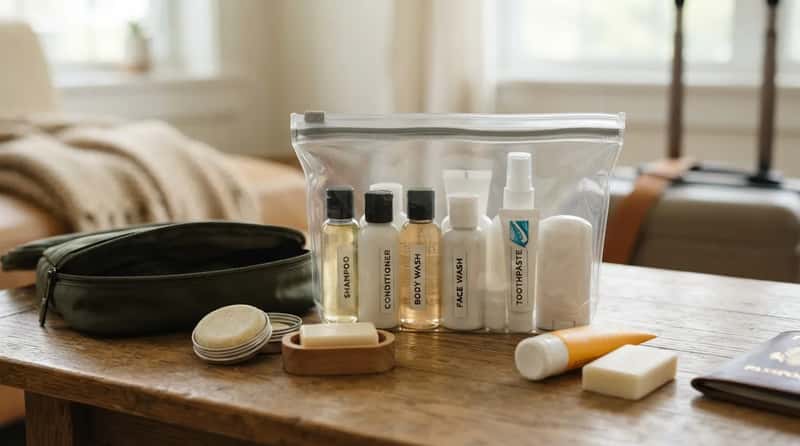
Every experienced traveller has watched someone at security frantically unzip every pocket, hunting for a leak-prone toiletry bag. That person is never a frequent flyer.
Most countries – the EU, the U.S., and much of Asia – follow the ICAO 100ml liquid rule: containers of 100ml or less, sealed in a transparent one-litre bag. Experienced travellers keep a pre-stocked, compliant toiletry bag ready to go before packing even starts.
Solid toiletries skip the rule entirely and are far less likely to explode inside a bag at 35,000 feet. Switching to solid shampoo and solid sunscreen alone eliminates the single most common headache at airport security. It also frees up that one-litre bag for whatever genuinely needs to be liquid.
Worth Knowing
- The U.S. version of this rule is known as 3-1-1: 3.4 ounces (100ml) per container, one quart-sized bag, one bag per passenger.
- Baby food, breast milk, and prescription medications are exempt from the container limit.
- Solid bars – including bar soap and solid shampoo – aren’t treated as liquids at all, so they carry no size limit.
- Newer CT scanners at some airports let travellers leave liquids inside their bag, though the volume limits still apply.
Pre-sorting takes about four minutes. Skipping it can cost twenty minutes and a confiscated bottle of expensive face serum – the math isn’t complicated.
Once that bag is sealed, experienced travellers make a decision about documents that goes well beyond just remembering a passport.
#10 – They Pack a Digital and Physical Backup of Every Critical Document
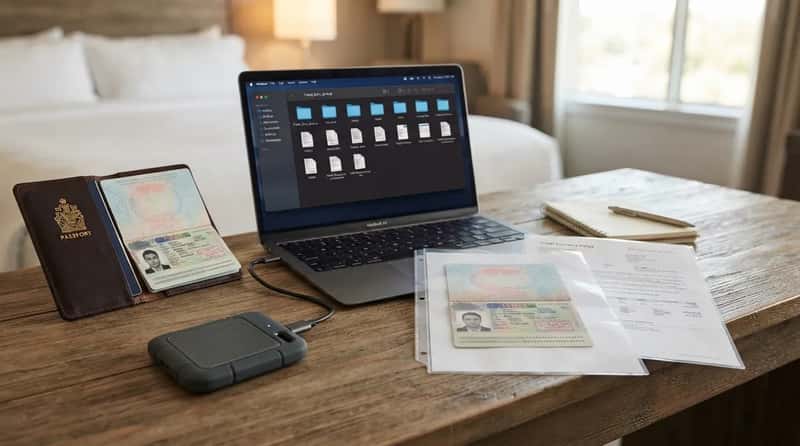
Losing a passport abroad with no backup isn’t just stressful – it can strand you for days. Experienced travellers treat document redundancy as procedure, not an afterthought.
They keep an encrypted digital folder with a photo of the passport data page, travel insurance documents, hotel confirmations, and emergency numbers – all accessible offline.
The physical backup matters just as much. A colour photocopy of the passport, stored in a separate bag from the original, has moved countless travellers through consular processes far faster when the original goes missing. Most fast-paid travel insurance claims have one thing in common: the traveller had copies of everything. The ones who didn’t often waited weeks longer.
Setting this up takes ten minutes at the start of a trip cycle and then requires no further thought.
Once documents are handled, experienced travellers move to a tech decision that most people get completely wrong.
#9 – They Consolidate Their Charging Setup Before Packing Anything Else
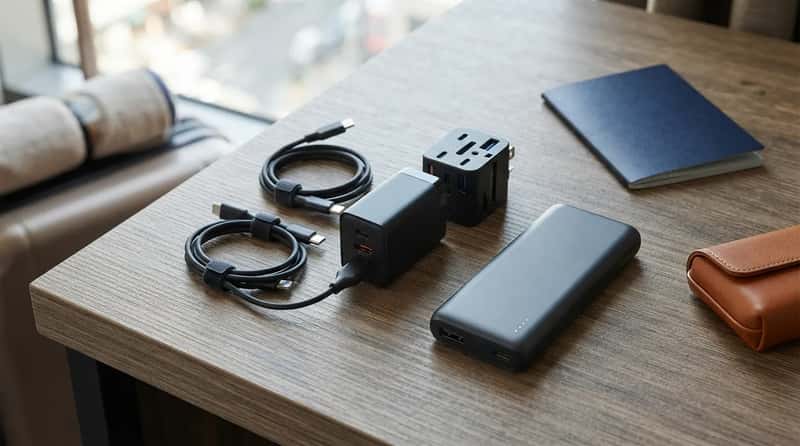
Nothing slows a modern traveller down like a tangled nest of incompatible chargers, dead power banks, and missing adapters. Experienced travellers solve this before the suitcase is even open.
The standard kit holds exactly three things: a multi-port USB-C GaN charger that can power a laptop, phone, and earbuds at once; one universal adapter for the destination; and a high-capacity power bank for transit days. That’s it – one brick, one adapter, one bank. Everything else is redundant weight.
A tight checklist keeps chargers, passports, and medications from getting left behind – and experienced travellers run through theirs in under two minutes. First-timers spend twenty minutes at the airport wondering why their European adapter won’t work in a Swiss outlet.
With the tech sorted, they make a clothing decision that feels almost counterintuitive – one most overpackers refuse to believe until they’ve tried it.
#8 – They Pack a Capsule Wardrobe Built Around a Single Colour Palette
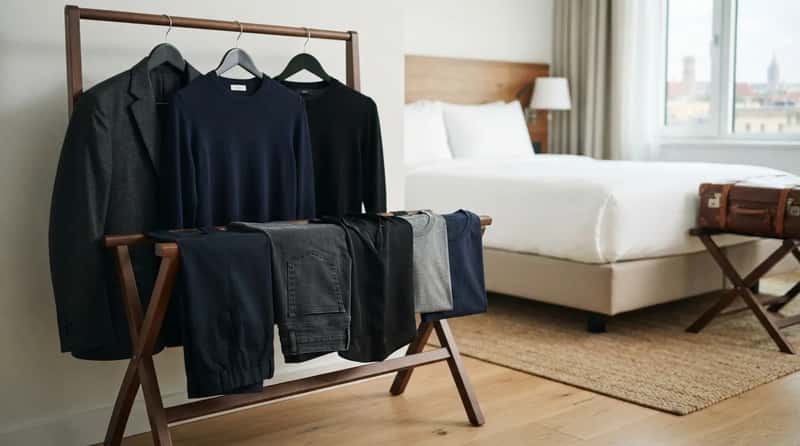
Experienced travellers don’t pack outfits. They pack a system of interchangeable pieces that multiplies into far more combinations than the item count suggests.
A typical capsule runs nine garments in one coordinated palette – black, grey, navy – built from five tops and two bottoms. Every piece works with every other piece, so no outfit is ever stuck waiting on something still in the laundry.
Five days of genuinely versatile clothing, plus a laundry system, covers a trip of any length. Experienced travellers on a two-week trip don’t pack twice as much as those going for one week – they just wash clothes more often.
At a Glance
- Five tops and two bottoms alone create 10 possible outfit pairings.
- Add one layering piece, and that number climbs well past 15 without adding a single extra garment.
- One palette also means shoes and accessories only need to match once, not five separate times.
The capsule approach sounds restrictive until you realise it produces more usable outfit combinations than a randomly packed bag twice the size.
Once the wardrobe is set, they make a rolling-versus-folding call with a surprisingly evidence-based answer.
#7 – They Roll Casual Items and Fold Structured Ones – Never the Reverse
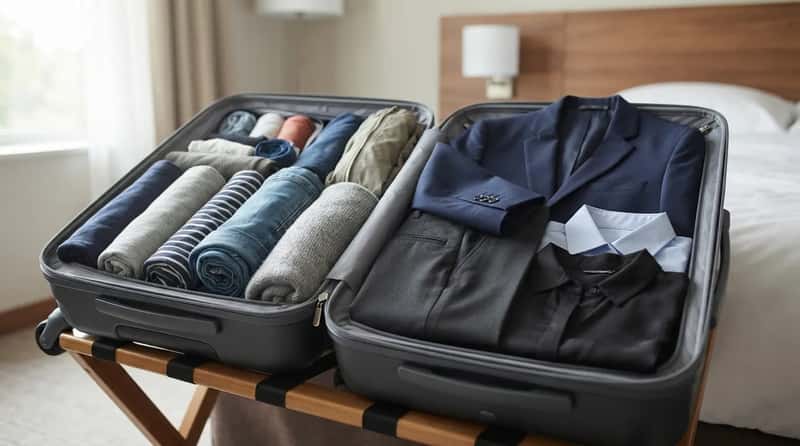
The roll-everything debate has raged in travel forums for decades. Experienced travellers settled it years ago: the method depends on the garment, not a blanket rule.
Rolling suits soft items – T-shirts, knits, jeans, casual pants – because it kills the hard fold lines that traditional folding leaves behind. Structured pieces like blazers and tailored trousers do better folded once along their natural seams, then laid flat on top.
Tight rolls can pack up to 33% more clothing when used on wrinkle-resistant synthetics. That’s the equivalent of getting a free day’s worth of clothes without adding a single extra bag.
Roll the casual, fold the structured – it’s the approach flight attendants, professional packers, and long-term travellers all land on independently.
Once clothes are packed, they make a decision about shoes that ruthlessly culls what most travellers consider non-negotiable.
#6 – They Commit to a Maximum of Three Pairs of Shoes
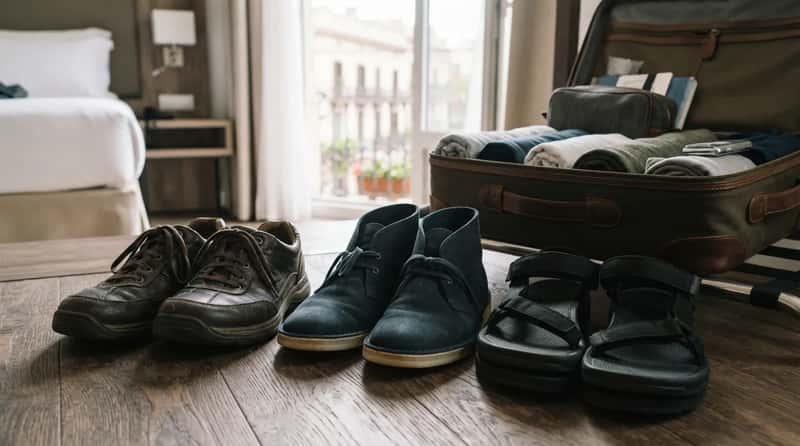
Shoes are the single biggest weight-and-space drain in almost every overpacked bag. Experienced travellers approach them with a severity casual travellers find almost offensive.
The rule they converge on, regardless of trip length, is three pairs maximum – one for walking long distances, one that works for smart-casual evenings, and one for specific activity demands like the beach, a hike, or the gym. No pair is purely decorative.
Even long trips rarely justify more than four pairs total, and that’s the absolute ceiling, not the baseline. Critically: never bring a brand-new, unworn shoe on a trip.
A blister from an unbroken-in shoe on day two of a ten-day trip can ruin more plans than a delayed flight ever could. Experienced travellers test every pair at least two weeks before departure.
Once shoes are locked in, they turn to a preparedness decision most people dismiss – right up until they desperately need it.
#5 – They Pack a “Problem-Solving Pouch” Most People Forget Until It’s Too Late
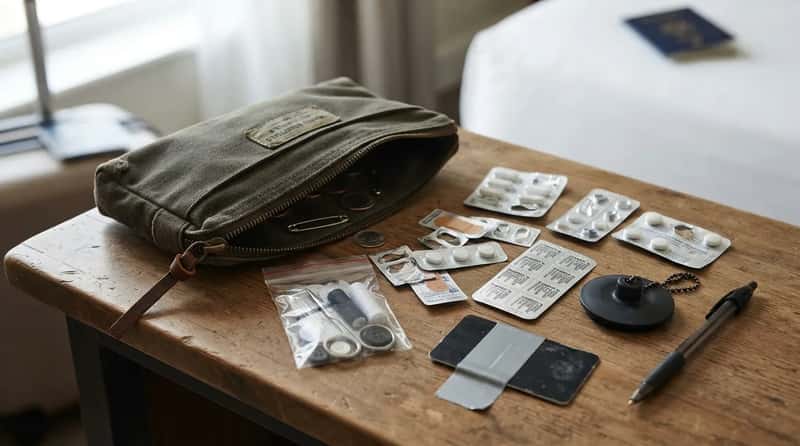
This is one of the most underrated differences between experienced and novice travellers. It’s not glamorous, it’s rarely on generic packing lists, but it solves the problems that actually derail a trip.
The core contents barely vary: a small sewing kit, an assortment of blister plasters, two doses of a broad-spectrum painkiller, a short strip of duct tape wrapped around a hotel key card, a universal drain stopper for sink laundry, and a spare pen for customs forms.
None of it weighs more than a few grams, and every single item has, at some point, been the difference between a problem and a non-event. Most travellers without this pouch have a story about needing exactly one of these things at the worst possible moment.
Experienced travellers don’t have those stories – they solved for them years ago.
Once the pouch is packed, they make a laundry decision that unlocks a completely different relationship with luggage capacity.
#4 – They Plan to Do Laundry on the Road – and Pack Accordingly
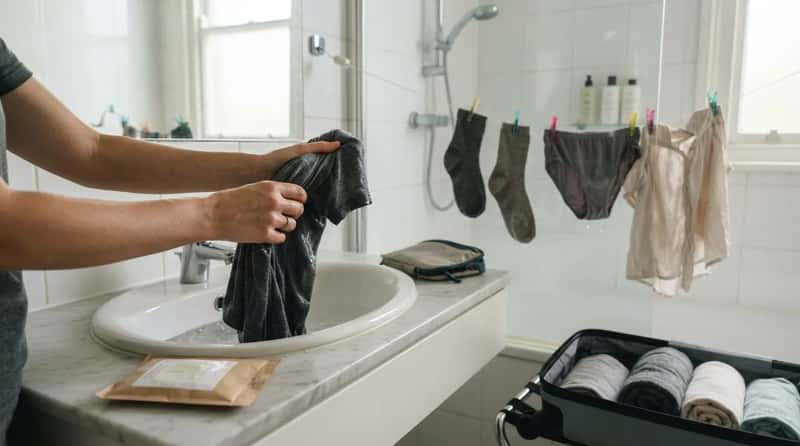
Here’s where experienced and casual travellers diverge most sharply. Novices pack enough clothes for every single day. Experienced travellers pack for half the trip and plan to wash the rest.
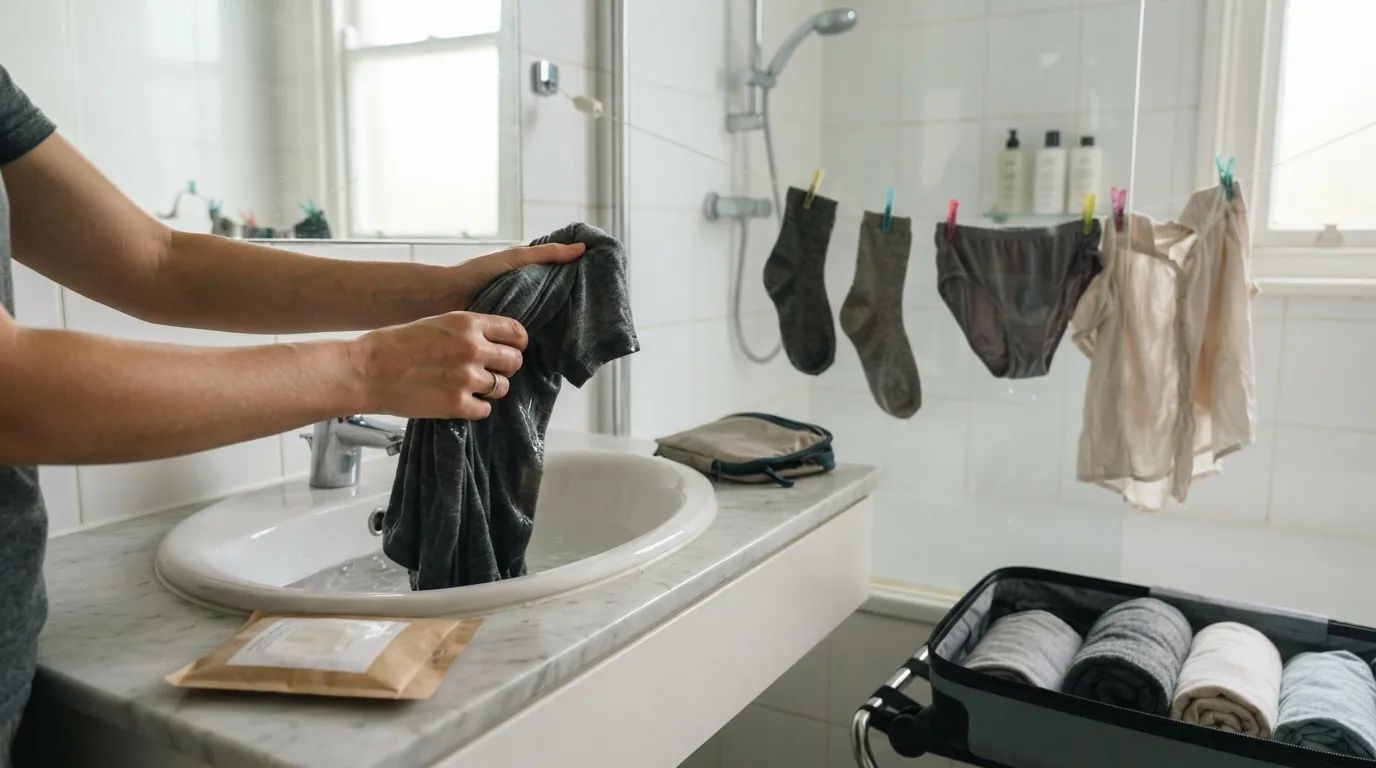
Instead of one pair of underwear and socks per day, they pack fewer than needed and hand-wash in the hotel sink or a travel wash bag, using biodegradable pocket-sized detergent sheets.
Merino wool makes this easy – cold wash, hang to dry, done. A traveller who packs for five days and washes every four can travel indefinitely from a single carry-on. That’s not theoretical – it’s how most full-time travellers actually operate.
Quick Compare
- Full-trip packing: more clothes, a heavier bag, zero dependence on finding a washer.
- Wash-as-you-go packing: fewer clothes, a lighter bag, roughly 20-30 minutes of hotel-sink laundry every few days.
- Most frequent flyers pick the second option permanently, once they’ve tried it a single time.
With laundry planned for, attention shifts to one of the most overlooked pre-departure decisions on this entire list.
#3 – They Wear Their Bulkiest Items on the Plane
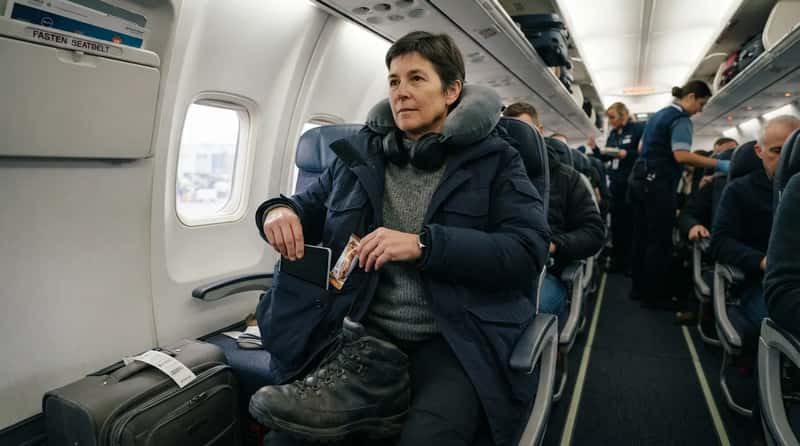
This decision costs nothing, takes no extra time, and frees up real space inside the bag. Yet most travellers pack their bulkiest items instead of wearing them – then wonder why the bag is overweight.
Heavy boots, a thick jacket, a chunky sweater – these are volume-eaters in a suitcase but weigh nothing extra once they’re on your body at check-in.
The jacket with deep pockets is especially valuable. Experienced travellers load them with a tablet, headphones, a neck pillow, and snacks before boarding, then unload once seated. This trick alone can shave two to three kilograms off a carry-on’s weight without leaving a single item at home. Airlines weigh bags, not bodies.
Once boarding is handled, two final decisions remain – and almost no casual traveller ever thinks to make either one.
#2 – They Research Local Pharmacies and Laundry Options Before Departure

This decision is quiet, takes about eight minutes, and dramatically changes what an experienced traveller feels they “must” pack.
They already know that most of the world has pharmacies stocked with basic medications, toiletries, and first-aid supplies. They also know that almost every urban destination – and plenty of rural ones – has coin laundry or a laundry service within walking distance of most accommodation.
Knowing this removes the psychological pressure to pack defensively for every possible scenario. The experienced traveller’s bag is light because they’ve outsourced the weight to the destination – and confirmed it’s actually there before they left home.
This isn’t a call to pack recklessly or skip real essentials. It’s calibration: if getting by with fewer clothes works, they do it; if buying shampoo there is more practical than hauling it, they do that instead.
This knowledge compounds with every trip. But the single most powerful decision – the one that separates true veterans from everyone else – is next, and it has nothing to do with what goes in the bag at all.
#1 – They Start From a Reusable, Trip-Specific Checklist – and Update It Every Time
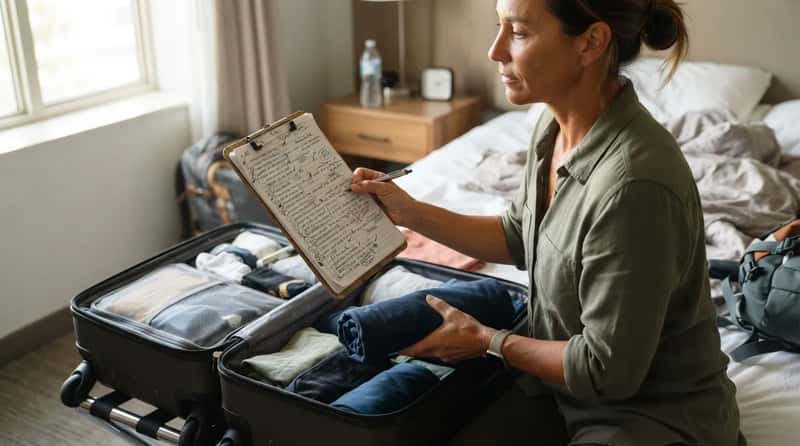
Every other decision on this list runs faster, smarter, and more reliably when it flows from a living, evolving packing checklist built from personal experience. This is the one habit experienced travellers share almost universally – and the one novices skip entirely.
Apps like PackPoint, Google Keep, or Evernote let travellers build and reuse digital lists tailored to trip type – beach vacation, business trip, backpacking route. But the tool matters less than the discipline behind it.
The critical word is reusable. An experienced traveller doesn’t build a new list from scratch every time – they maintain one master list, refined over dozens of journeys, with notes like “never need the second pair of dress shoes” or “always wish I packed a rain jacket for this region.”
The experienced traveller’s checklist isn’t a reminder – it’s a record of every mistake they’ve ever made, systematically eliminated. That’s why they can pack for a ten-day international trip in under 30 minutes while everyone else is still debating a fourth pair of shoes.
There’s nothing magical about it. It’s accumulated knowledge, captured and applied – exactly what separates someone who has travelled a hundred times from someone who has made the same mistake a hundred times.
The Bottom Line
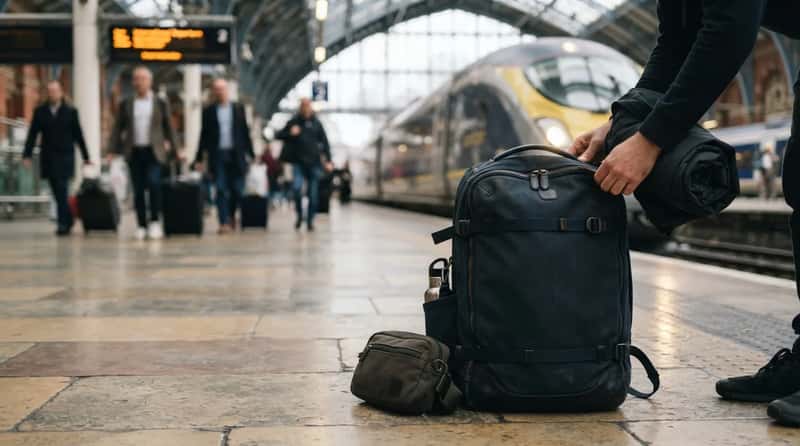
The gap between an experienced traveller’s bag and an overstuffed suitcase isn’t really about gear, budget, or how often someone flies. It’s decision-making discipline, applied before the bag is ever opened.
Choose the bag size first. Check the weather day by day, not by season. Pick fabrics that work for you, and commit to carry-on only whenever possible – because checked bags vanish more often than most people realise, and that risk gets built into the plan from day one.
Build a capsule wardrobe. Roll what should be rolled, fold what should be folded, wear the bulkiest items on the plane, and carry a pouch that quietly handles the crises nobody predicts.
Then capture everything that worked, and everything that didn’t, in a checklist that gets sharper with every single trip.
The 30-minute pack was never a talent. It’s a system – and now you know exactly what’s in it. Which of these 17 have you already made part of your routine?
#18 – The Personal-Item Loophole That Quietly Doubles Your Carry-On Space
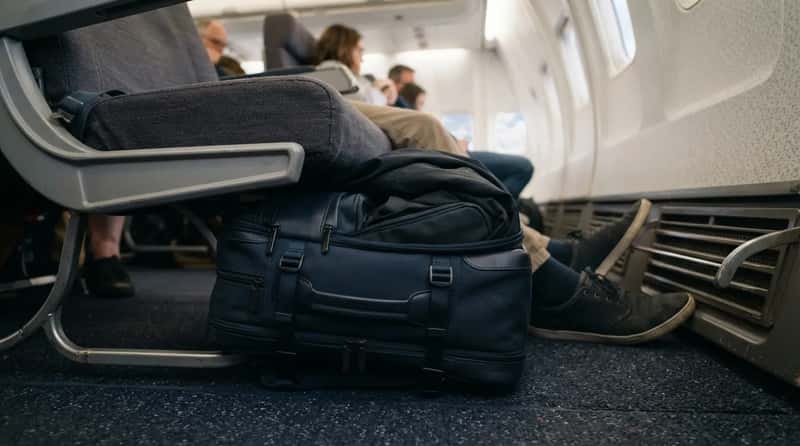
Almost every airline lets you bring a free personal item in addition to your carry-on – most define it as roughly 18 x 14 x 8 inches, small enough to fit fully under the seat in front of you.
Experienced travellers treat that personal item as a second legal bag, not an afterthought, by choosing an expandable tote or slim backpack that maxes out those dimensions instead of a small purse or thin daypack.
They load the personal item with the heaviest things first – shoes, a toiletry bag, a jacket – because gate agents almost never weigh or measure the personal item the way they check the roller bag.
- Pick a personal item that’s boxy and structured, not soft and floppy, so it actually holds close to the full 18 x 14 x 8-inch allowance.
- Pack your heaviest, densest items in it first: shoes, the toiletry bag, chargers, and any liquids.
- If your carry-on ever gets flagged as overweight or oversized at the gate, quietly shift a few items into the personal item before it’s checked – this alone resolves the vast majority of gate-side weight disputes.
- Keep the personal item’s front pocket loaded with anything you need in-flight, so you never have to dig through the overhead bin mid-flight.
Done right, this one habit lets a single carry-on trip carry roughly a third more gear than the suitcase alone ever could – for zero extra cost and zero extra time at check-in.