Airlines love a polished image: gleaming cabins, cheerful boarding music, and crew members who smile no matter how chaotic the day gets. Behind that curtain, though, flight attendants, gate agents, and pilots operate under strict rules about what they can and cannot say out loud, often for good reason. Some of these details are genuinely unsettling, others are simply practical realities of running an airline on razor-thin margins, but all of them shape your flight in ways most travelers never notice.
1. Your Flight Is Almost Certainly Overbooked
Overbooking isn’t a rare glitch, it’s standard operating procedure across the industry. Airlines overbook because they expect some passengers not to show up, and when this doesn’t happen, they may ask passengers to voluntarily give up their seats or, in some cases, bump them involuntarily.[1] The math behind it is simple economics: the average no-show rate is alleged to range from 5 to 15 percent, depending on the season, route, airline, and so on.[2]
The good news is that actually getting bumped is rarer than the practice itself. The DOT reports an involuntary bumping rate of about 0.25 per 10,000 passengers in 2024, which works out to roughly 1 in 40,000 travelers.[3] Still, not every airline handles it the same way. Frontier and Spirit have historically had the highest rates of both voluntary and involuntary denied boardings, while Delta has the highest voluntary denied boarding rate at 7.49 per 10,000 passengers, but very low involuntary numbers.[3] That’s a deliberate strategy of paying volunteers well enough that forced bumps rarely happen.
2. Your Paid Seat Assignment Isn’t Actually Guaranteed
Plenty of travelers pay extra for a specific seat and assume it’s locked in. In reality, that promise has more wiggle room than most people realize. Seat assignments, even when you pay extra, can get shuffled due to last-minute changes, maybe there’s an aircraft swap or a family that absolutely must sit together.[4]
This isn’t a conspiracy against any one passenger, it’s just how airlines juggle constantly shifting operational puzzles. Airlines have disclaimers buried in the fine print stating that seat selections are never 100% guaranteed, meaning if you’re traveling with your family, or you’re really picky about legroom, you should keep your expectations a tad flexible.[4] At the end of the day, operational needs trump passenger preferences, and it’s not a conspiracy against you, just the reality of trying to juggle dozens of last-minute variables.[4]
3. Those Oxygen Masks Won’t Last the Whole Flight
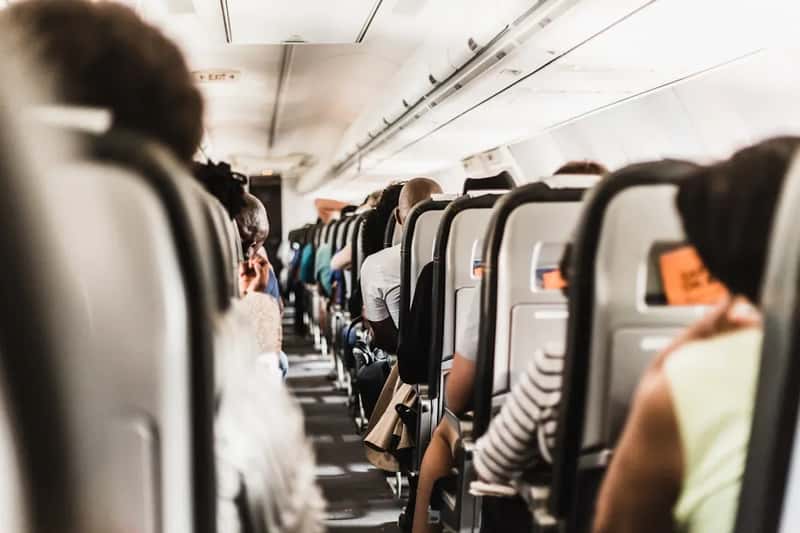
The safety demo mentions oxygen masks every single flight, but crews rarely elaborate on just how limited that supply really is. Passenger oxygen masks will only supply oxygen for around 12 to 15 minutes, meaning if the cabin suddenly loses pressure and everybody starts to panic, those life-saving oxygen masks will only keep you going for about a quarter of an hour.[5] Some aircraft do better than others too, since Boeing 777 chemical generators are rated for 22 minutes according to Boeing’s own parts catalogue.[6]
This isn’t a design flaw, it’s intentional engineering. It’s actually not quite as bad as it seems because that’s just enough time for pilots to make an emergency descent, bringing the plane under 10,000 feet as quickly as possible.[5] The 10 to 15-minute time frame isn’t a limitation, it’s a calculated engineering decision, since oxygen generators add weight, cost, and heat load to the aircraft, and the masks are only needed during descent to breathable altitude.[7] Crews are trained on this reality, but rarely explain it unprompted since it can sound scarier than it actually is.
4. The Cabin Gets Far Less Deep-Cleaning Than You’d Hope
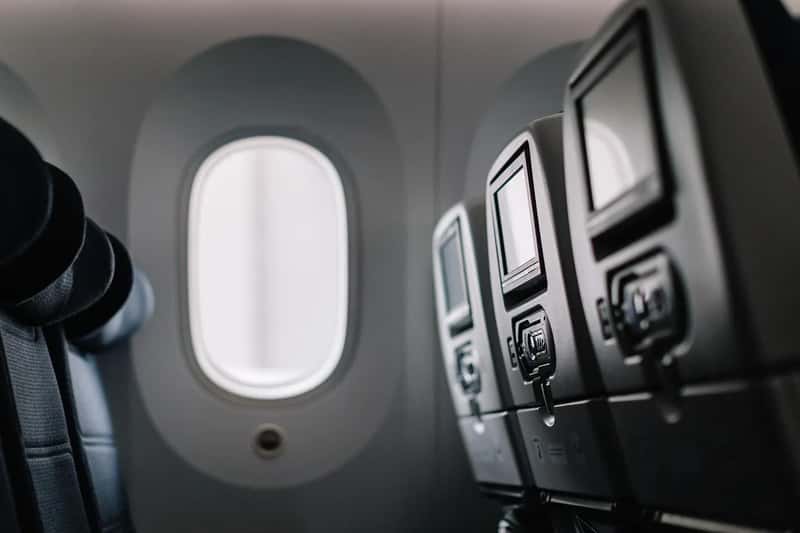
Between flights, there simply isn’t much time to make a plane spotless, and airlines schedule things this way on purpose. Turnaround time, the interval between an aircraft’s arrival and departure, can vary from just 25 to 45 minutes for small planes and between one to two hours for larger aircraft.[8] This doesn’t leave much time for cabin cleaning, so during the turnaround, cabin cleaners will pick up the trash and do a cursory cleaning of the restrooms.[9]
Real deep cleans happen far less often than passengers assume. Lufthansa’s planes get deep-cleaned after every 500 flight hours, while for Singapore Airlines, this takes place monthly.[8] A retired American Airlines flight attendant summed up the inconsistency bluntly, noting that sometimes you come on and have to tell the agent the plane looks terrible and needs to be redone, because it just varies all the time.[10]
5. Crew Members Know Something Is Wrong Long Before You Do
Flight attendants are trained to project calm no matter what’s happening around them, which is exactly why passengers rarely see panic even during genuine irregularities. Airlines love to keep their image polished, but ask a flight attendant what really happens at 35,000 feet, and a different picture emerges, one that’s less about the best parts of the job and more about the hidden side of flying.[11] From fume events that bring the smell of burning oil into the cabin, to the unsettling truth about what happens when someone dies in-flight, crews are trained for situations that never make it into safety videos, and most of what they share never appears in an airline press release.[11]
This composure is a professional skill, not evidence that nothing is happening. Crews rely on subtle chimes, coded phrases over the intercom, and quiet coordination with the cockpit long before passengers would ever pick up on a developing issue. The biggest secret in aviation is how much your safety depends on what passengers rarely see.[11]
6. Turbulence Is Getting Worse, and Crews Feel It First
Anyone who’s flown regularly over the past few years has probably noticed rougher rides, and it isn’t just anecdotal. If you’ve noticed bumpier rides, you’re not imagining it, and flight attendants feel it first: research from the University of Reading shows severe clear-air turbulence over the busy North Atlantic rose 55% between 1979 and 2020, a climate-linked trend that tracks what crews report from the aisle.[11]
What makes this type especially tricky is that it can’t be anticipated the way storm-related turbulence can. As the Association of Flight Attendants, a union representing more than 50,000 U.S. cabin crew, puts it, clear-air turbulence is the most dangerous type because it cannot be seen and is virtually undetectable with current technology.[11] Crews rarely broadcast this trend to nervous flyers, but it quietly shapes decisions like keeping seatbelt signs on longer and pushing beverage service earlier in a flight.
7. Onboard Coffee and Tea Aren’t Always What You Expect
Water tanks on aircraft are refilled at various airports around the world, and the systems that hold that water aren’t always cleaned as often as passengers would like to imagine. Flight attendants have quietly acknowledged this reality for years without airlines making it a talking point. One flight attendant admitted they’re reluctant to even use onboard lavatories, saying if it’s a short flight and they can leave the plane, they’re definitely waiting until they can use the bathroom in the airport.[12]
The hesitation extends beyond bathrooms and into anything made with onboard water. One long-time flight attendant described it plainly, joking about the moment a passenger keeps wondering why the flight attendant suddenly says the coffee maker is broken right when they need a caffeine hit the most, adding that you really don’t want that coffee.[13] It’s a small, almost humorous secret, but one rooted in a genuine concern crews rarely explain directly to avoid alarming passengers mid-flight.
None of these secrets suggest flying is unsafe, quite the opposite, most exist precisely because airlines and regulators have spent decades engineering redundancy and caution into every layer of the system. Overbooking, tight cleaning windows, and vague safety explanations aren’t cover-ups so much as the unglamorous mechanics of running a massive, tightly scheduled global industry. Understanding them doesn’t just satisfy curiosity, it makes you a slightly savvier, calmer traveler the next time you buckle in for takeoff.