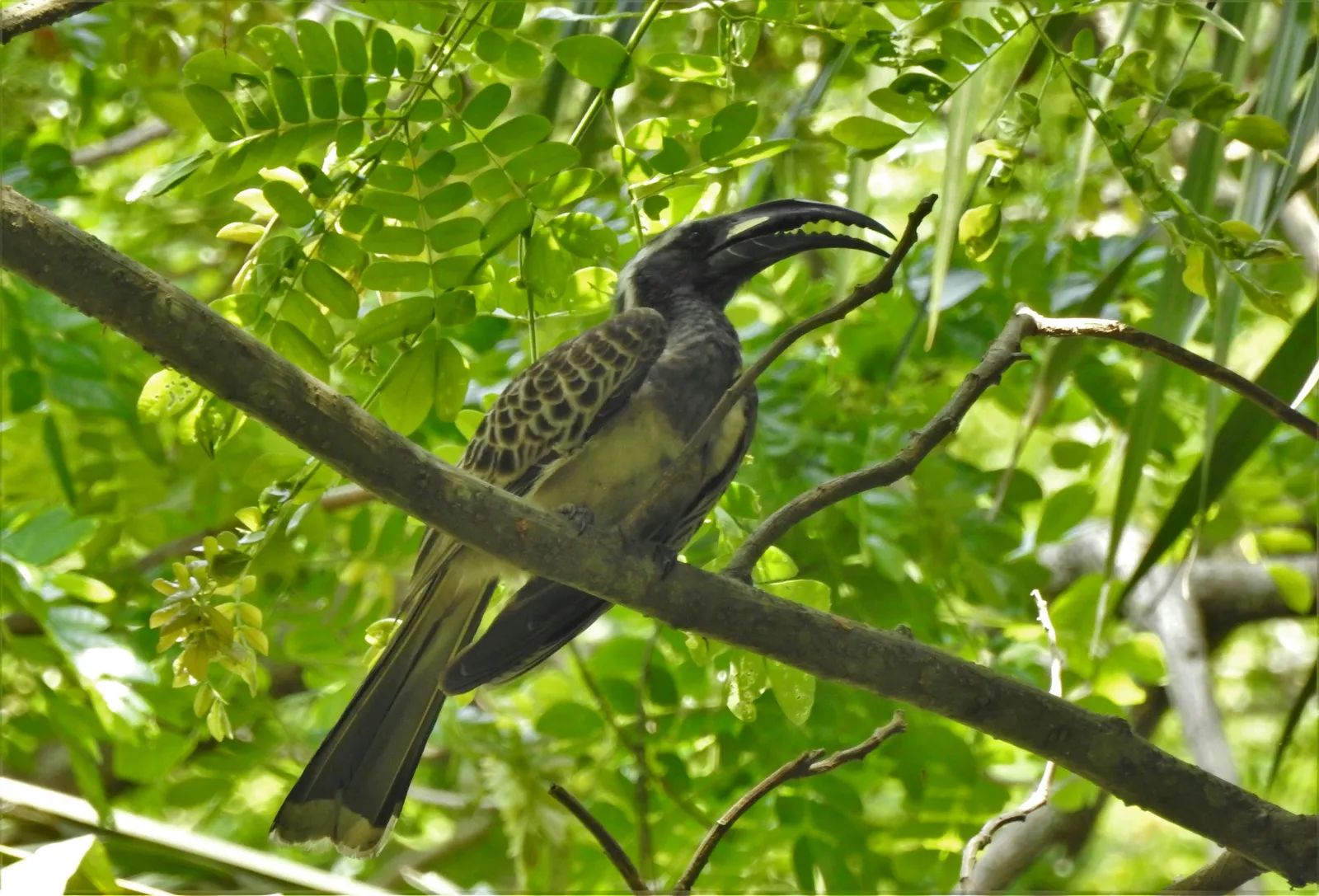
Taï National Park in Côte d’Ivoire holds one of the largest remaining tracts of Upper Guinean rainforest, a landscape that continues to support species long absent from formal records. A recent photograph taken there has now confirmed the presence of the Ghana cuckooshrike, a bird last documented in 2013. The image provides the first verified sighting in more than a decade and underscores how targeted fieldwork can still yield results in remote forest areas.
A Chance Capture in Dense Forest
Stephanie Bartlett, a field research fellow with the International Bird Conservation Partnership, obtained the photograph while working alongside colleague Paulo Ditzel. The pair had spent months conducting bird surveys supported by a team of West African researchers whose local knowledge proved essential to the effort. Bartlett noted that the birds remain wary of human presence, often requiring the camera itself to serve as the primary identification tool before any close visual confirmation occurs. The resulting image shows a small bird with an orange body and distinctive black and yellow wings. Ditzel described the West African team members as vital beyond measure to the project’s success. Their contributions allowed the researchers to navigate the park’s terrain effectively and interpret subtle signs of bird activity that might otherwise have gone unnoticed.
Species Background and Last Known Record
The Ghana cuckooshrike, scientifically known as Lobotos lobatus, was previously recorded in Ghana’s Atewa Forest in 2013. Ornithologists have long considered its range to extend across portions of the Upper Guinean Rainforest from Guinea through to Ghana. The species appears on the Search for Lost Birds list, which tracks avian species without scientific documentation for more than ten years. Habitat within that historical range has become increasingly fragmented. Logging and agricultural expansion have reduced continuous forest cover, leaving smaller, isolated patches that make encounters with the bird less frequent. The new record from Taï National Park extends the known contemporary distribution and offers a concrete data point for future surveys.
Practical Implications for Fieldwork and Monitoring
The sighting illustrates how sustained presence in protected areas can still produce meaningful updates even for species considered difficult to locate. Researchers involved in the project emphasized that months of systematic surveys, rather than single expeditions, created the conditions for the photograph. Local expertise played a central role in directing effort toward promising locations within the park. Such records also feed into broader assessments of forest health. Isolated sightings help conservation groups prioritize which patches of remaining habitat warrant continued protection or restoration. The International Bird Conservation Partnership’s work in the region demonstrates one model for combining international fellows with in-country teams to maintain consistent monitoring.
Looking Ahead in West African Forests
Confirmation of the Ghana cuckooshrike in Taï National Park adds one more verified location to the species’ modern distribution. Continued surveys in similar protected zones may reveal whether additional populations persist in other fragments of the Upper Guinean Rainforest. The photograph stands as a reminder that even species absent from records for extended periods can remain present when conditions allow systematic observation.