Money doesn’t always announce itself at the airport. You won’t necessarily see it in the luggage or the passport stamps. It tends to show up in smaller choices: when someone travels, how they book, and what they pay to avoid.
Most of the reliable data on this comes from luxury travel networks, airline statistics and advisor surveys, so it describes patterns rather than rules. Still, those patterns are consistent enough across 2024 to 2026 to be worth a closer look.
They Travel When Everyone Else Is Staying Home

Avoiding peak season is one of the clearest signals. Among Virtuoso clients who are adjusting trips for climate reasons, 76 percent are choosing shoulder season or off peak excursions.[1] That finding comes from the 2026 Luxe Report, which drew 2,485 responses across more than 50 countries.[2]
One operator’s numbers point the same way. Enchanting Travels found that peak season European travel among its U.S. guests fell from 47 percent of trips in 2023 to 40 percent in 2025.[3] The motive isn’t only comfort, since avoiding peak season gives high net worth travelers more control over their itineraries.[3] It’s one company’s dataset, so treat it as a signal rather than a verdict.
They Hand the Planning to a Travel Advisor

Booking everything yourself is easy now, which is partly why paying someone else to do it stands out. Virtuoso reports a sustained 76 percent increase in consumers seeking out travel advisors through its website.[4] The network has been courting the top of the market directly, and it launched an Ultra High Net Worth division in January 2025.[5]
The reasons are less about perks than you might expect. In Virtuoso’s 2025 Global Luxury Traveler Report, which surveys wealthy travelers across 17 countries, 75 percent said safety and security were of leading importance, and 65 percent named an added layer of protection as a top benefit of using an advisor.[6] That ranked above upgrades, exclusive access and VIP accommodations.
They Book on a Short Runway
Planning a year ahead is often treated as the sign of a seasoned traveler. Among affluent travelers, the pattern looks different. Virtuoso’s 2026 Luxe Report describes last minute requests as rampant, with many clients booking four to six weeks out and some within two weeks of departure.[7]
Short lead times don’t mean small budgets. Virtuoso said future bookings in the $50,000 and above category were up 35 percent compared with 2024.[8] Flexibility, in other words, tends to be a luxury of its own, because it assumes the trip can be arranged around a good opening rather than a fixed calendar.
They Pay for the Front of the Plane
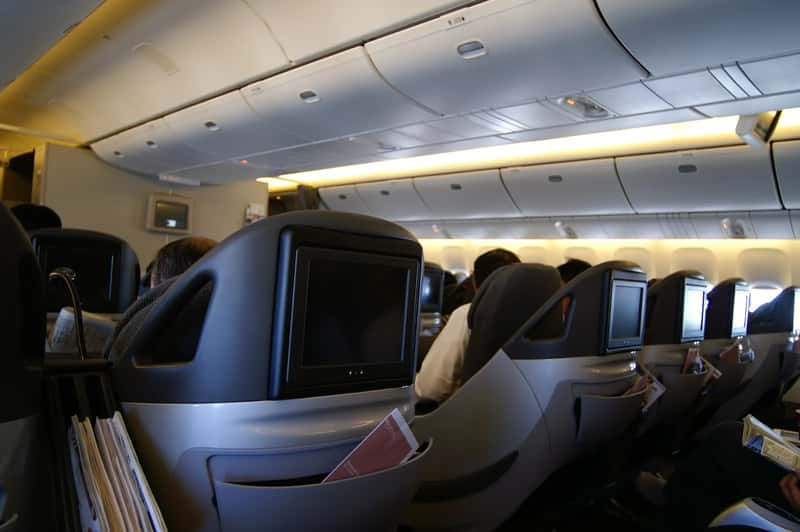
Premium cabins remain a small slice of air travel, which is exactly why they work as a marker. IATA reports that international business and first class passengers reached 109.7 million in 2025, up 4.5 percent, but still just 5.5 percent of all international travelers.[9] The share is much higher in some places, since North America accounted for 10.4 percent of passengers flying premium class, and the Middle East 9.5 percent.[9]
Long haul trips are where the habit shows most. Industry coverage of the IATA data notes that affluent leisure travelers are increasingly choosing premium products for long haul journeys.[10] Airlines have noticed, and they are giving more floor space to lie flat suites and enclosed business seats, which keeps supply tight.[11]
They Insure the Trip Without Thinking Twice

Travel insurance is a dull purchase, and that’s what makes it telling. In Virtuoso’s 2026 Luxe Report, 43 percent of advisors mentioned clients buying insurance as a safeguard against climate related disruptions.[12] That sits alongside a wider shift, as advisors report that 45 percent of clients are adjusting travel plans because of climate considerations.[1]
The logic is fairly plain. A trip priced in the tens of thousands has more to lose from a storm, a cancelled sailing or a closed route than a weekend city break does. Protection is part of how these trips get planned, rather than something added at checkout.
They Pay a Premium for Privacy

Exclusivity used to mean the best table or the biggest suite. Now it increasingly means being left alone. When Virtuoso asked about ultraluxe travel for the first time, 45 percent of advisors had seen an increase in recent requests.[12] Privacy ranked third among top ultraluxe experiences, with travelers seeking hidden islands and remote retreats.[12]
The wider picture backs this up. Affluent travel in 2026 is being redefined around control, privacy and proximity rather than distance and display.[7] Minor Hotels, drawing on a survey of its own newsletter subscribers, listed private cruising and villa stays among its four key luxury trends for 2026.[13]
They Travel to Mark Milestones, Often With Family

For many wealthy travelers, the trip is the celebration. Milestone birthdays, anniversaries and family gatherings are driving demand for private yachts and secluded estates.[12] The occasion decides the destination, rather than the other way around.
These trips often span generations. Minor Hotels named multigenerational legacy trips among its four key luxury trends for 2026,[13] and Virtuoso’s list of the biggest 2026 trends includes multigenerational family travel.[14] Paying to bring several households together, on one itinerary, is a habit that takes both money and time to pull off.