A decade ago, travelers planned summer trips around flight prices and hotel availability. Now a growing number of them check heat forecasts first, because the difference between a pleasant afternoon and a dangerous one can be ten degrees or more. Across several of the world’s most visited countries, that shift is no longer a future worry. It’s already changing when monuments open, how tour groups move through cities, and whether visitors come back at all.
Greece
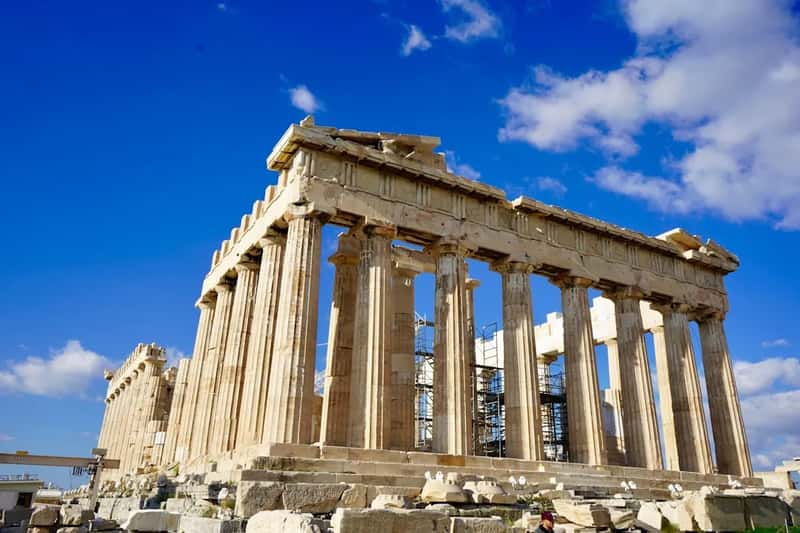
Greece has become something of a bellwether for how heat reshapes a tourist itinerary in real time. In July 2025, authorities closed the Acropolis in Athens temporarily due to soaring temperatures, reaching 42°C, with the site shut from 1:00 pm to 5:00 pm to protect visitors and workers. That was not an isolated event. Similar shutdowns occurred again in June 2025 and had already happened in previous years, and by summer 2026 the site was closing during heatwave peaks as a matter of routine practice.
The scale of the disruption is notable given how popular the site is. The 2,500-year-old Acropolis, built on a rock with little shade, draws tens of thousands of visitors daily, and last year it recorded some 4.5 million visitors, an increase of over 15 percent compared to 2023. Alongside the closures, Greek officials have also imposed mandatory outdoor work breaks during the hottest hours, a sign that heat is now treated as an operational hazard rather than a seasonal inconvenience.
Italy

Italy has faced some of the continent’s most severe heat consequences, both for public health and for how tourists experience its cities. In early August 2026, Italy’s Health Ministry placed all 27 cities monitored under its national heat surveillance system on red alert, the first time this year the entire network had been under the highest warning level simultaneously, with the alerts stretching from Trieste to Palermo. The response has visibly changed how landmarks operate, since the heat forced adjustments at major tourist attractions, with the ministries of tourism and culture extending evening opening hours at landmarks including Rome’s Colosseum and Pantheon.
Rome has also introduced unconventional cooling measures for both residents and visitors. Cooling mist fans have been installed at the Colosseum’s entrances, and the city introduced a free municipal urban beach along the Tiber River where people can cool off in swimming pools and fountains. The human cost behind these adaptations is considerable, as in the summer of 2025 a third of Europe’s heat-related deaths occurred in Italy, with the country recording 6,710 deaths, including 630 in Rome alone, the highest of any European city.
Spain

Spain draws tens of millions of summer visitors every year, but new research suggests the heat itself is starting to erode loyalty among returning tourists. A study by CaixaBank Research found that tourists are 15 percent less likely to return to Spain if they’ve experienced abnormally hot weather while on vacation. That matters for a country where, as of 2025, Spain welcomed 97 million tourists, many of them drawn by beach and terrace culture that becomes harder to enjoy at the peak of summer.
The physical extremes have kept climbing too. In 2025, the highest single-day temperature of 45.8°C was recorded in Jerez de la Frontera, southern Spain, on 17 August during a heatwave, and by mid-2026 the country was already facing its third official heatwave of the year, with meteorologists warning of record-breaking temperatures. Wildfires tied to these heatwaves have periodically disrupted transport as well, with rail service south of Bordeaux suspended and a highway partly closed during one such episode that spread risk into neighboring Spain.
Portugal
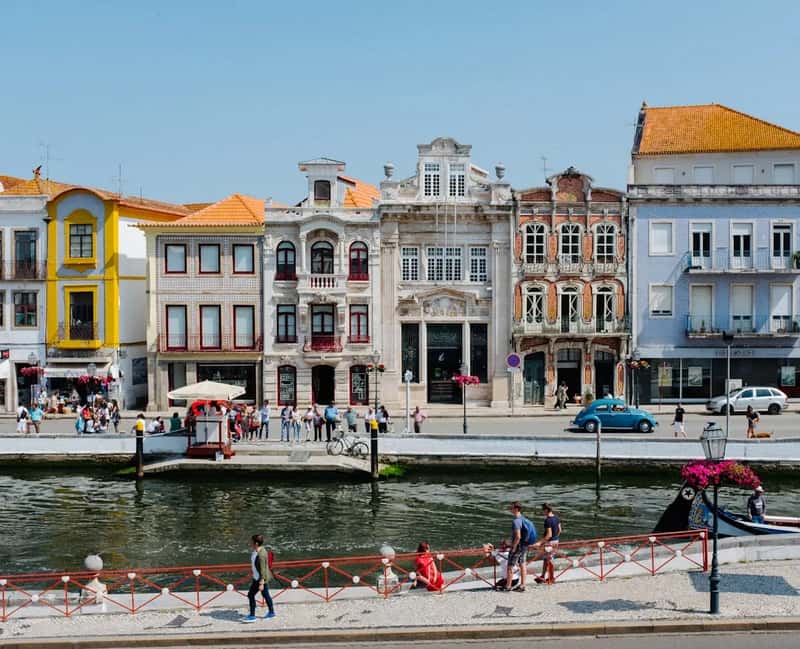
Portugal has repeatedly set the benchmark for Europe’s most extreme summer readings, which puts pressure on a tourism sector built around outdoor exploration and coastal living. In 2025, the country recorded a peak temperature of 46.6°C at Mora, Portugal, on 29 June, a level that ranks among the highest ever measured on the continent. The following year brought another record, when Portugal faced extreme temperatures during the May 2026 heatwave, with Mora in Alentejo recording a national record peak of 43.1°C on May 27.
These conditions have forced practical changes to how visitors experience the country. During a 2025 heatwave, two-thirds of Portugal was placed under high alert due to extreme heat and forest fire risk, with the capital Lisbon forecast to hit 42°C. For travelers used to wandering Lisbon’s hillside streets or the Algarve’s coastline at midday, that kind of alert increasingly means rescheduling activities around the cooler hours of early morning and evening.
Morocco

Morocco sits at a geographic crossroads that makes it especially vulnerable to extreme summer heat, since hot air masses from the Sahara regularly sweep toward its cities and the Atlantic coast. In early July 2026, the country was placed under orange vigilance from the General Directorate of Meteorology from June 30 to July 5, 2026, with peaks of 48°C in the Souss, the South East, and the Saharan provinces. Temperatures at that level go well beyond what most international visitors are prepared for, particularly in destinations like Marrakech that rely heavily on walking tours through open medinas.
Officials have acknowledged the tourism stakes directly, noting that the episode carries concrete health risks and potential consequences for summer tourism. Morocco has also been named among the Mediterranean and North African nations rolling out coordinated climate adaptation plans, as Mediterranean countries including Morocco, Spain, Portugal, France, Italy, Algeria and Tunisia are reshaping tourism policies as record breaking travel demand collides with extreme climate risks.
France

France remains one of the world’s top tourist destinations, but recent summers have shown how quickly extreme heat can disrupt travel infrastructure even in a country with strong emergency planning. In late July 2026, wildfires fueled by an ongoing heatwave triggered evacuations, and wildfires driven by an ongoing heat wave triggered mass evacuations in France and Spain, with EU officials warning the risk is spreading to Greece, Italy, and Central Europe. The fires were concentrated near Bordeaux, a region popular with wine tourists and river cruise passengers.
Despite the disruption, the damage to travel plans was described as limited rather than catastrophic. Airports in Bordeaux, Madrid, and Valencia remained operational, though some flights were delayed, rail service south of Bordeaux was suspended, and a highway was partly closed. Even so, the broader trend is hard to ignore, since Europe is warming at twice the global average and 2025 was already the worst wildfire year on record since 2006, a pattern that puts increasing pressure on France’s countryside tourism during peak season.
Thailand
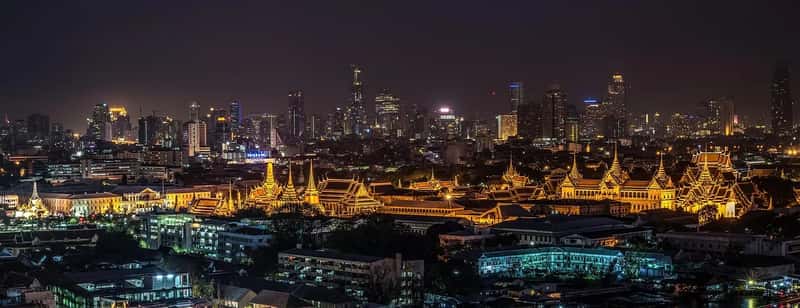
Thailand’s tourism industry has felt the effects of extreme heat more directly than almost anywhere else in Southeast Asia. By mid-2026, Thailand faced extraordinary challenges, with Bangkok, Chiang Mai, and the northern plains experiencing temperatures above 40°C, compounded by hazardous air pollution, making outdoor tourism activities from cultural excursions to street markets into health risks. The impact wasn’t just anecdotal. The Thai government responded by scaling back initial 2026 international arrival targets by an estimated 6.7 million tourists, relying more heavily on domestic travel to offset the loss.
Bangkok in particular illustrates how quickly the baseline is shifting. In 2025, Bangkok had around 45 extreme heat days a year, defined as days when temperatures exceed 35°C, a number projected to nearly triple by 2050. Coastal destinations haven’t been spared either, as Thailand’s southern coastline, including Phuket and Krabi, faced widespread coral bleaching from rising sea temperatures, threatening the marine biodiversity that underpins the country’s diving and snorkeling tourism.
Japan

Japan presents an unusual case, because record heat has coincided with record visitor numbers rather than a decline in demand. The Japan Meteorological Agency confirmed that summer 2025 was Japan’s hottest since national records began, with the nationwide average temperature standing 2.36°C above the long-term average. Despite that, tourism kept climbing, as Japan welcomed a record 42.68 million international visitors in 2025, the highest annual total in its history, demonstrating robust demand even as summer temperatures continued to climb.
What has changed is not whether people go, but how they spend their days once they arrive. Tourism businesses have responded by expanding early morning heritage tours, evening street food experiences and river cruises, while coastal destinations promote sunrise beach activities and later operating hours for cultural attractions. Forecasts suggest this pattern will continue, since above normal temperatures are expected nationwide for summer 2026, driven by elevated global temperatures and atmospheric patterns that push the Pacific High more strongly toward Honshu.
The pattern across these eight countries is remarkably consistent even though the details differ. Ancient sites close during the hottest hours, tour operators shift excursions to dawn and dusk, and governments issue warnings that once seemed reserved for genuine emergencies. Some destinations, like Japan, have managed to keep growing despite the heat by rethinking the shape of a typical visitor’s day. Others, like Spain, are starting to see early evidence that repeat visits may suffer if summer conditions keep intensifying. None of this means these countries are becoming unreachable or unworthy of a visit. It does mean that summer travel to them now requires more planning around the clock, and possibly around the calendar, than it did even five years ago.