Most people assume panic at the airport has an obvious cause, a fear of flying, a missed connection, bad news waiting at home. But plenty of travelers report a different experience: a wave of dread that arrives out of nowhere, in a moment that looks completely ordinary to everyone else standing nearby. There’s often nothing dramatic happening. No storm, no mechanical issue, no visible emergency.
What’s actually going on has more to do with how airports are built and how human nervous systems respond to unpredictability, noise, and loss of control. Researchers who study anxiety and sensory processing point to a handful of recurring triggers that show up again and again in these settings. Here are nine of them, along with why they hit harder than they should.
1. Waiting in the security screening line
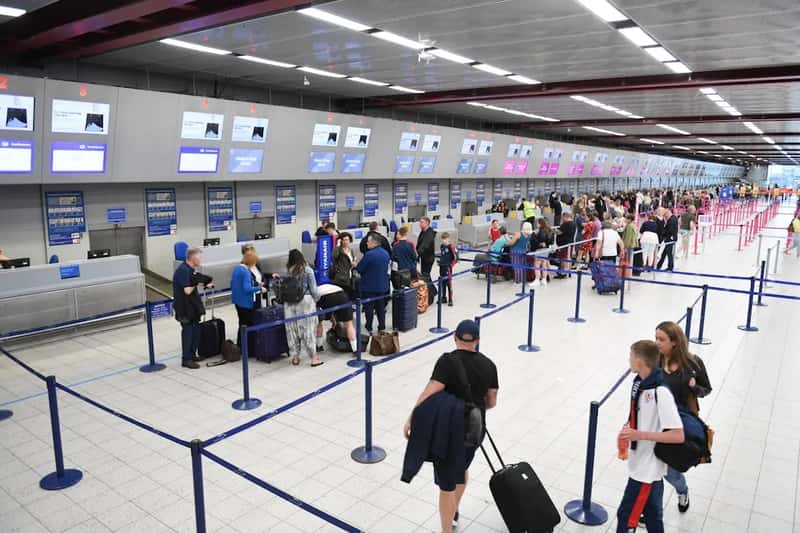
The security checkpoint asks travelers to do something unnatural: stand in a slow-moving line while strangers in uniform inspect their belongings, watch their movements, and occasionally pull them aside for extra scrutiny. A University of Washington study following pre and post 9/11 flyers found that the most stressful situations fliers listed were having to arrive early, waiting in lines, and a spectrum of nuisances related to security including intrusive and inconsistent searches[1]. The unpredictability of who gets flagged and why is enough to keep the body on edge even for people who have nothing to worry about.
Layer on the sensory environment, bright fluorescent lighting, beeping scanners, overlapping instructions from multiple staff members, and you get a setup that primes the nervous system for a stress response. Environments with bright lights, loud noises, or crowded spaces can contribute to overwhelming sensory experiences[2]. None of that requires a phobia of flying to produce a racing heart.
2. Hearing your name paged over the intercom
There’s a particular jolt that comes from hearing a stranger’s voice announce your full name across a crowded terminal. It’s rare enough that the brain treats it as a signal something has gone wrong, even before any details follow. That ambiguity, not knowing if it’s a forgotten bag, a gate issue, or something more serious, is exactly the kind of uncertainty that keeps anxiety circuits firing.
Unlike a text message or an email, a page can’t be muted, reread calmly, or processed on your own time. It demands an immediate reaction in a public space, often while you’re also trying to figure out which direction to walk. The combination of surprise and public exposure is enough to spike adrenaline in people who otherwise feel perfectly calm at the airport.
3. A sudden gate change announcement
Gate changes are common and usually harmless, yet they tend to arrive with no warning and force an instant decision: grab your things, reorient yourself, and move, often through unfamiliar parts of the terminal. The unpredictability itself is the trigger. Overstimulation research notes that overstimulation increases reliably in the afternoon and evening, in the presence of others, when unpleasant sensory or visual stimuli are present, and when a person is fatigued or in a negative mood[3], which describes a huge share of gate change moments almost exactly.
For travelers already running on limited sleep or caffeine, a gate change can feel like the floor shifting slightly. There’s rarely time to process it before the body has already started reacting, heart rate up, palms damp, a flash of disorientation before the rational brain catches up and confirms nothing is actually wrong.
4. Standing in a packed, noisy terminal
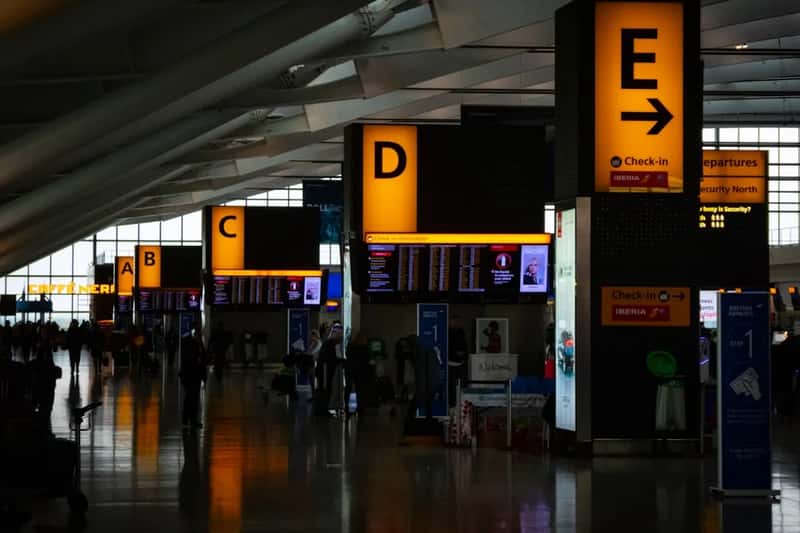
Modern terminals are dense sensory environments by design: overlapping announcements, rolling suitcase wheels, crying children, muffled music, and hundreds of people moving in different directions at once. Crowded environments can flood the brain with sensory data, sounds, sights, smells, and emotional responses like panic, irritability, or dread, and this overload often causes mental shutdown or escape behavior[4]. That’s not a character flaw or an overreaction. It’s a fairly predictable nervous system response to genuine sensory overload.
Human brains also evolved to scan crowds for potential threats, a leftover survival mechanism that modern airport crowds overwhelm almost instantly. Researchers describe this as the brain responding to perceived threats, since human brains evolved to monitor surroundings for danger, and modern crowds often overwhelm this system[4]. In an airport, where everyone is a stranger and the exits aren’t obvious, that ancient wiring can misfire without any real danger present.
5. An unexplained delay with no new information
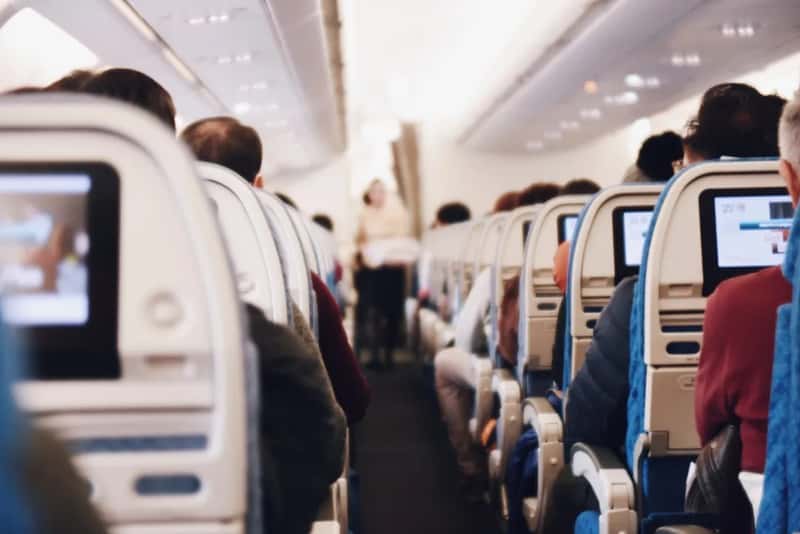
Few things test patience like a departure board that simply says “delayed” with no estimated time and no explanation. The uncertainty is often worse than bad news itself, because the mind fills the silence with worst case scenarios. Travel trend research backs this up directly: according to Booking.com’s 2025 study, the greater source of stress isn’t flying itself, but the uncertainty of delays and cancellations[5].
It’s also a statistically common experience rather than a rare inconvenience. Delay data cited by Travelperk puts the likelihood of experiencing a delay as high as 37 percent[5], meaning more than one in three travelers will face this exact scenario on any given trip. Sitting with that kind of open ended waiting, unable to plan or act, is a near perfect recipe for anticipatory anxiety.
6. Sprinting to make a tight connection
The physical sensation of running through a terminal, heart pounding, breath short, scanning signs for a gate number, mimics the exact physiology of a panic response even when the underlying cause is just a short layover. The body doesn’t always distinguish between “I’m late” and “I’m in danger.” Both produce the same flood of stress hormones and the same racing pulse.
What makes this particular trigger sneaky is that the panic can outlast the sprint. Even after reaching the gate safely, some travelers find the elevated heart rate and shaky hands linger for several minutes, a delayed physiological echo of a stress response that had nowhere else to go during the run itself.
7. Being physically boxed in during boarding
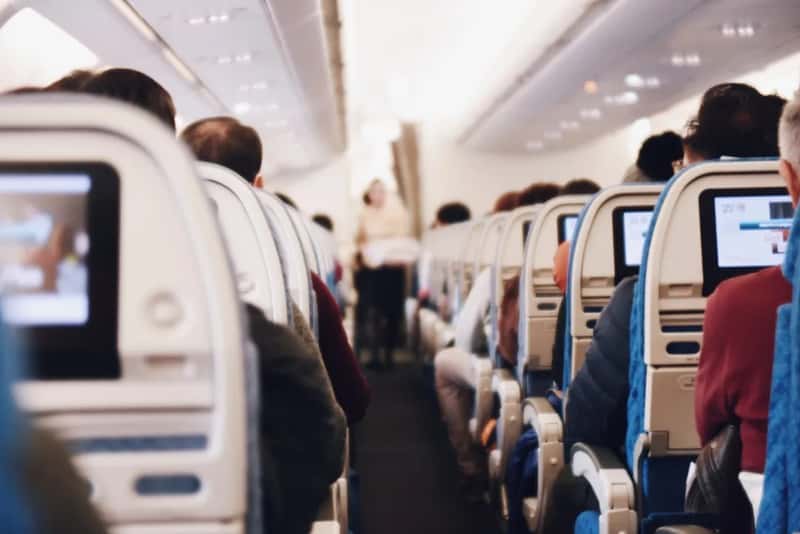
Jet bridges, boarding queues, and the narrow aisle of a full aircraft all share one feature: limited ability to move freely or step away. For people sensitive to confined spaces, this moment, standing shoulder to shoulder in a metal tube with no clear exit, can trigger a spike in anxiety that has nothing to do with fear of the flight itself. It’s the physical enclosure that does it, not the destination.
This kind of trigger often catches people off guard precisely because it doesn’t match their self image. Someone who flies regularly and enjoys travel can still feel a tight chest during the slow shuffle down a jet bridge, simply because the body is responding to close quarters rather than to any conscious fear.
8. Watching your bag or passport disappear from view
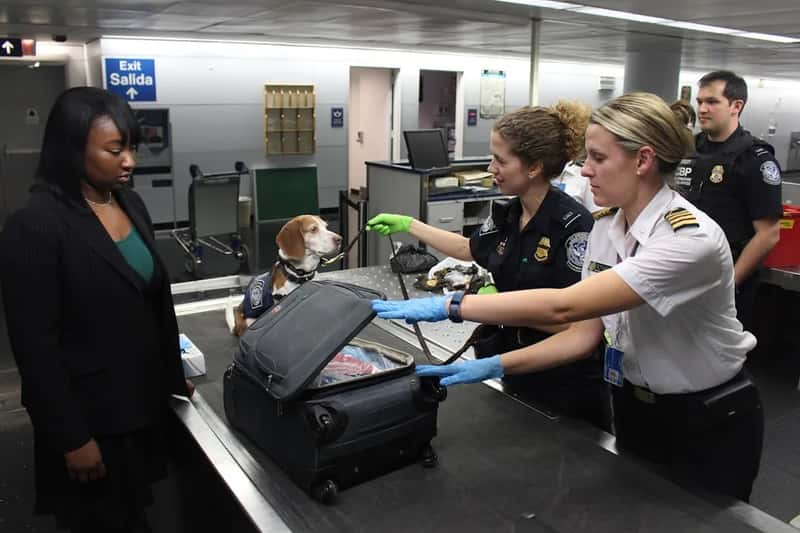
There’s a small but real moment of vulnerability when a passport gets handed to an agent, or a bag disappears into the X-ray tunnel and doesn’t immediately reappear. For a few seconds, control over something important is completely out of your hands. Loss of control is one of the most consistent themes in anxiety research, and airports manufacture dozens of these tiny moments throughout a single trip.
Most of the time, the bag reappears within seconds and the passport comes right back. Still, the brief interruption, watching a stranger handle your identification or belongings without being able to intervene, is enough to trigger a flicker of unease in people who wouldn’t consider themselves anxious in any other setting.
9. The final boarding call and closing cabin door
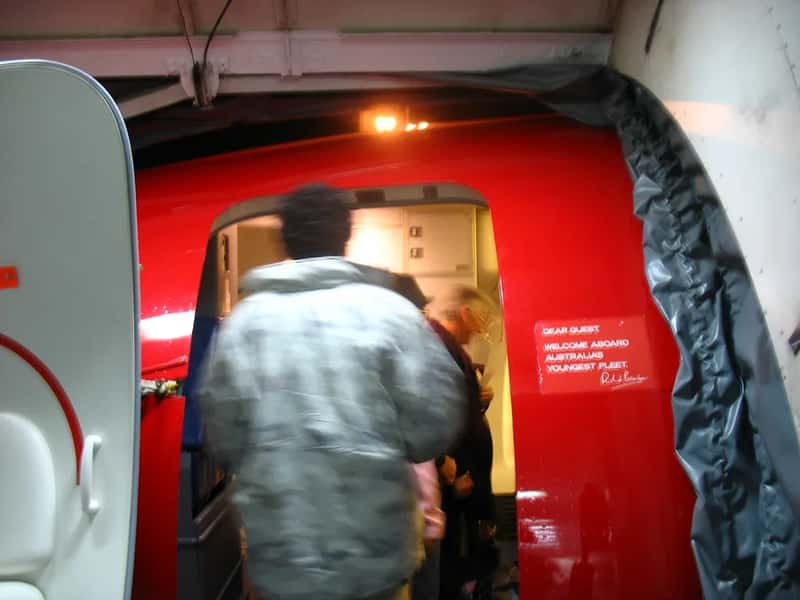
There’s a specific kind of finality to hearing the boarding door announcement or watching flight attendants prepare to close the cabin. It’s the last point where changing your mind is possible, and some part of the brain seems to register that threshold even without conscious thought. For a small percentage of travelers, this moment carries a disproportionate weight, not because of the flight ahead, but because it marks the end of options.
Clinical research on flight related anxiety notes that fear of flying is disproportionate to the danger involved, may involve intense anxiety or panic attacks, and must persist for at least six months[6] to meet formal diagnostic criteria. For most people, though, the closing door simply produces a brief, passing wave of tension rather than anything resembling a diagnosable phobia, gone within a few minutes once the seatbelt sign turns off and the plane settles into its climb.
None of these nine moments require a fear of flying to produce a genuine stress response. Airports are, by design, unpredictable, crowded, loud, and full of small loss of control situations stacked one after another. Recognizing which specific trigger is at play, whether it’s noise, confinement, uncertainty, or simple sensory overload, tends to make the reaction feel far less mysterious and far easier to manage the next time it shows up.