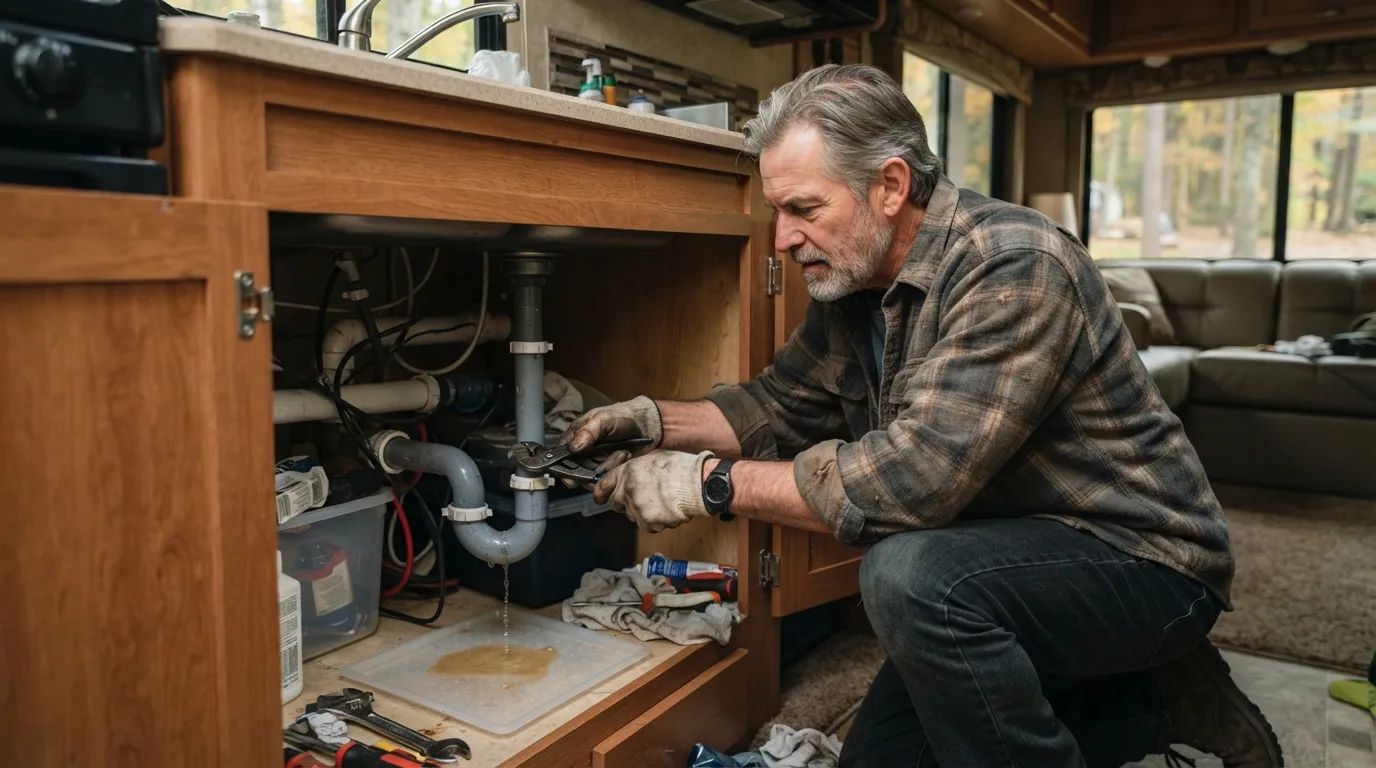
The brochure version of RV life is a sunset, a campfire and a rig that practically pays for itself. The version longtime RVers trade in campground parking lots has surprise bills, weight stickers nobody reads and leaks hiding behind fresh paint. If you clicked hoping for that second version, you’re in the right place.
About 36 percent of RV owners are first-time buyers, and plenty of them learn the real rules only after signing. Some of these truths are annoying and some are expensive. One of them surprises even people who’ve owned rigs for years, and it’s waiting near the end.
#12 – The Sticker Price Is the Cheapest Part of the Deal
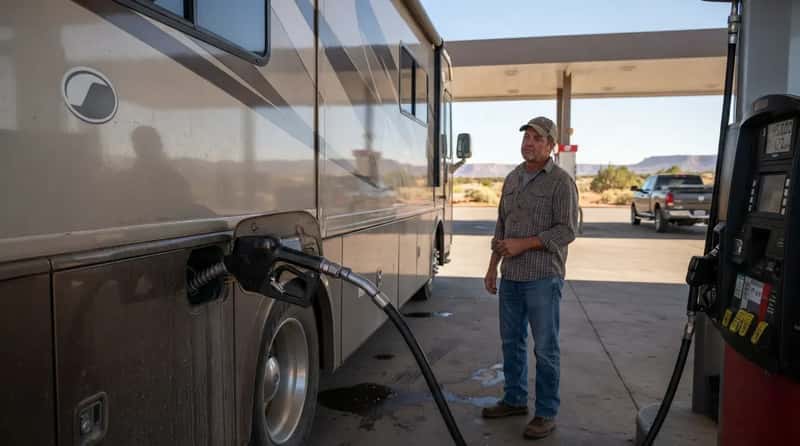
The price on the windshield is just the entry fee. One 2025 industry snapshot puts average daily camping spend at $200 a day, and that’s before your loan payment. Buyers budget for the monthly note and forget fuel, insurance, storage, maintenance and campsite fees. Longtime RVers say the payment is rarely the number that stings.
Big motorhomes are famously thirsty, often landing in the single digits to low teens per gallon. Filling the tank on one is a gut-check moment. If your HOA or city bans parking one at home, a storage lot becomes a monthly bill nobody mentioned at the dealership.
Some owners end up paying to store a rig they only use a few weekends a year. But the money you lose before you even leave the lot is worse, and that’s #11.
#11 – The Drive-Off Drop: Your New RV May Lose Thousands Before the First Campfire
An RV doesn’t ease into losing value. It drops hard, and it drops right away. Industry data commonly shows RVs losing 20 to 30 percent in year one, while other estimates put it at 15 to 19 percent depending on type. Even the low estimate is painful on a purchase this big.
Run the math on a $100,000 rig. One example has it worth $70,000 or $80,000 after the first year. Motorhomes generally take bigger hits than towables because they carry drivetrain wear and more mechanical complexity.
At a Glance
- Commonly cited first-year loss: 20 to 30 percent, with some estimates at 15 to 19 percent
- On a $100,000 rig, a 20 to 30 percent drop means $20,000 to $30,000 gone
- Motorhomes usually fall harder than towables
Depreciation happens whether you camp 60 nights or leave the rig parked in the driveway. And there’s a loan that quietly makes it worse, in #10.
#10 – The Loan That Keeps You Underwater for Years
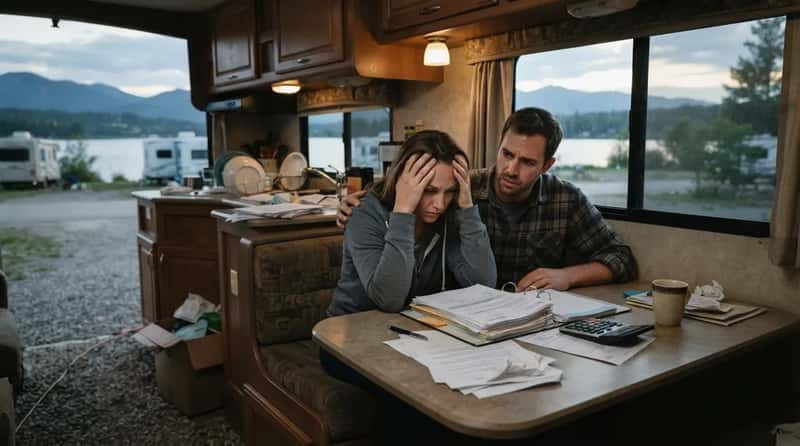
Long RV loans feel painless at first, because the monthly number looks friendly. With a typical 15-year loan and 10 percent down, most RV buyers are underwater for 3 to 6 years. Underwater means you owe more than the rig is worth. If life changes and you need to sell, you may have to bring cash to the closing table.
Many longtime RVers say the smartest move is letting someone else take the first hit. Buy a two- or three-year-old RV and the first owner absorbs the steepest drop. A lightly used rig often comes with the first round of dealer repairs already done.
A used RV with a service history can be a better deal than a brand-new one. Next up is a sticker most buyers never think to look for, in #9.
#9 – The Yellow Sticker That Says How Much Stuff You Can Actually Carry
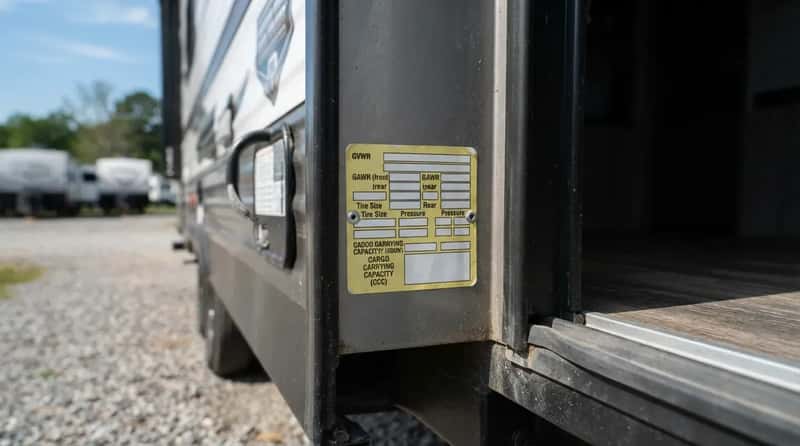
Most buyers fall in love with the floor plan and never check the weight. Every RV has a cargo carrying capacity, and it’s often smaller than people expect. A trailer with a 7,500-pound GVWR and a 6,200-pound dry weight has just 1,300 pounds left for water, food, clothing, tools and everything else you own on the road. That disappears fast.
Dealer-added extras make it worse. Dealer-installed equipment isn’t included in the listed number, and it reduces your capacity. One RV guide notes that exceeding GVWR is illegal on public roads and can void the warranty on structural parts like axles and tires.
Some of the prettiest, most loaded rigs on the lot have the least room left for actual belongings. And the truck you plan to tow with may have its own surprise, in #8.
#8 – “Your Truck Can Tow That” Is the Most Dangerous Sentence on the Lot
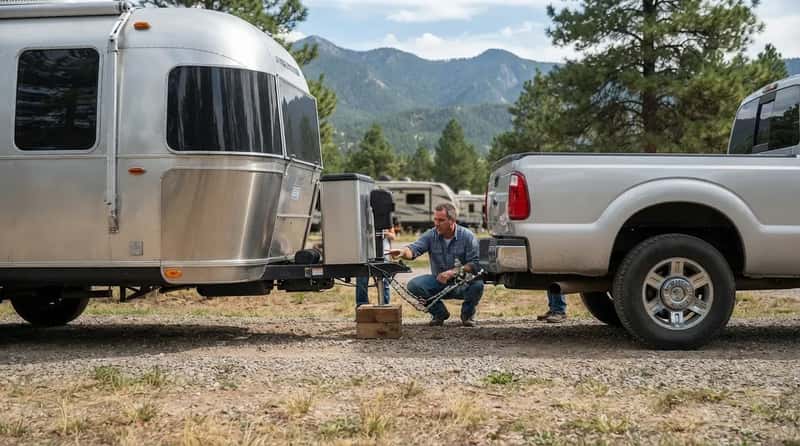
A salesperson says your truck can pull it, and that may be technically true. It doesn’t mean it can do it safely. Towing capacity is only one number, and payload, axle ratings and tongue weight matter just as much. Longtime RVers say tongue weight is the one that gets overlooked most.
Real-world weight runs higher than the brochure. One common rule of thumb adds 800 to 1,500 pounds to the factory weight for average packing. For travel trailers, tongue weight should be around 10 to 15 percent of actual trailer weight. That load sits on your truck’s hitch, so it eats into your payload before the family even climbs in.
Worth Knowing
- Towing capacity is only one limit. Payload and axle ratings count too.
- A loaded 6,000-pound trailer should put roughly 600 to 900 pounds on the hitch.
- That hitch weight comes out of your truck’s payload, along with passengers and gear.
- Packed weight usually lands well above the brochure number.
Many buyers learn their truck is the bottleneck only after the trailer is already theirs. What’s rolling underneath all that weight is an even bigger worry, and it’s in #7.
#7 – The Tires Can Look Brand New and Still Be Dangerously Old
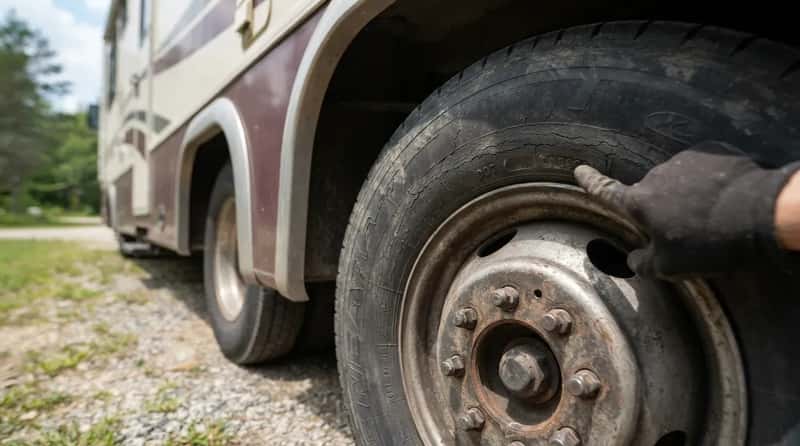
RV tires often age out before they wear out. A rig that sits most of the year can have deep tread and cracked sidewalls at the same time. Longtime RVers say fresh-looking rubber on a used RV isn’t proof of anything. Tire makers generally urge owners to watch age as closely as tread, and many RV tire guides suggest replacing tires somewhere around the five-to-seven-year mark no matter how good they look.
Checking takes about thirty seconds per tire. Find that four-digit code on the sidewall and do the math. A blowout on a loaded trailer can also tear up fenders, wiring and plumbing lines along the way.
A seller who says the tires are practically new may be talking about tread, not age. Walk away or budget for a full set. Even good tires can’t save you from the quiet problem in #6.
#6 – The Leak You Can’t See Is the One That Totals the RV

Water damage is the villain of RV ownership, and it works slowly. A small seam leak can rot a wall for months before anyone notices. Longtime RVers say a fresh coat of paint or new trim can hide a lot. Soft spots in the floor, bulging walls and a musty smell are all warning signs.
Check the roof, the window seams and the corners inside cabinets. Press on the floor near doors and slide-outs, and bring a moisture meter if you can. Sniff the closets too, because a damp smell rarely lies.
The cheapest-looking RV on the lot may be hiding the most expensive repair. Leaks aren’t the only thing that can quietly ruin a trip, and #5 proves it.
#5 – Your Shiny Rig Can Trip a Breaker the Moment You Plug In
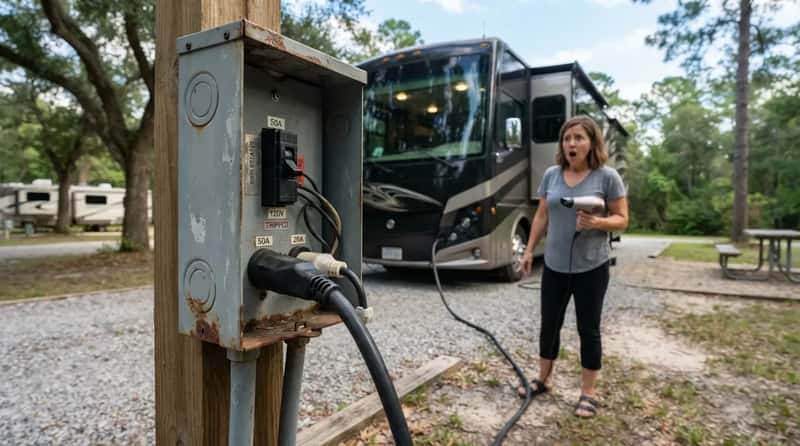
RV electricity confuses nearly every beginner. A 30-amp hookup supports roughly 3,600 watts, while a 50-amp service supports up to about 12,000. A rooftop air conditioner, a microwave and a hair dryer can overload the smaller one. Many new owners learn that lesson in the dark, in July.
Know which service your RV needs before you pick a campground. Not every site offers both, and older parks can have worn pedestals.
Plenty of campers own a rig built for 50 amps and then pull into a site that can only deliver 30. The next surprise is about where you’re even allowed to park all that rig, in #4.
#4 – Bigger Isn’t Better When the Best Campsites Say “No Large Rigs”
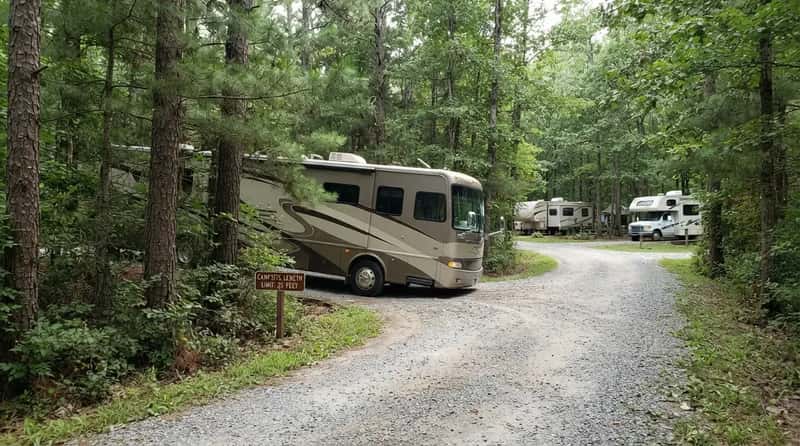
Here’s an opinion that makes owners of big rigs bristle: a longer RV often means fewer places to camp. Many state parks, national parks and older campgrounds have length limits or tight, winding roads. Longtime RVers say a smaller rig that fits anywhere beats a giant one that fits somewhere.
Quick Compare
- Shorter rig: fits more campgrounds and handles fuel stops and tight turns with less stress.
- 40-foot motorhome: runs into length limits and winding park roads.
- The trade-off: more floor space inside, fewer scenic sites outside.
Shorter rigs also handle fuel stops, parking lots and narrow turns more easily. Towable units account for 83 percent of the RVs owners use most often, and that mix is a big reason so many campsites are built with them in mind. The most scenic site in the park is rarely the one with room for a 40-foot motorhome. But even a rig that fits can leave you stranded in a service line, and that’s #3.
#3 – The Warranty Looks Great Until You Need Someone to Actually Honor It
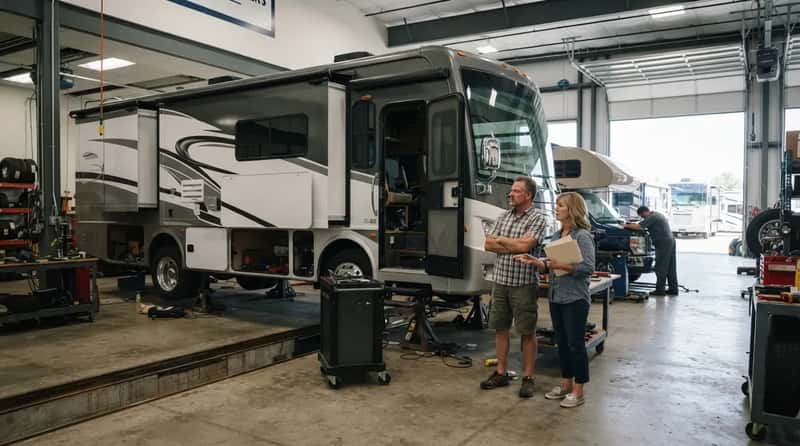
A warranty is a promise, not a repair appointment. Longtime RVers say the real test is how quickly the nearest shop can see you. Service departments can book up, parts can take time, and repairs may get bounced between the dealer and the manufacturer. That’s before you’re two states from home.
Ask the dealer how long service appointments usually take. Ask what happens if you break down away from home. A brand-new rig sitting in a repair bay while your vacation days tick away is a miserable way to learn the answer.
Some owners end up putting off camping until the warranty repair is finished. The biggest surprise for many, though, is how little they use the RV at all, and that’s #2.
#2 – Most Owners Camp Far Less Than They Imagined, So Rent First
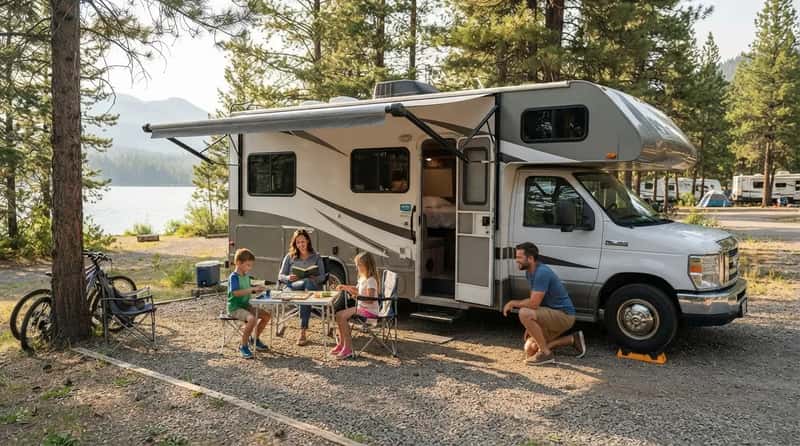
The dream is living on the road. The data is humbler. Median usage stands at 30 days a year across nine trips. That’s about a month of camping for a rig that sits in storage the other eleven. Longtime RVers say that’s exactly why renting first can save you years of regret.
A rental weekend teaches what a sales lot can’t. You find out whether you enjoy setup, whether the bed is comfortable and whether the kids can share a small space. It’s also a cheap way to learn if you’d rather drive a motorhome or tow a trailer.
Why It Stands Out
- You find out how you feel about setup day before you own the rig.
- You test the bed, the bathroom and the kid space in real life.
- You can compare a motorhome and a trailer without committing to either.
- You can walk away afterward with no loan attached.
A few rental trips can tell you more than any showroom walk-through. The last truth is the one every longtime RVer repeats, and it’s #1.
#1 – Something Will Break, and It’s Usually in the First Season
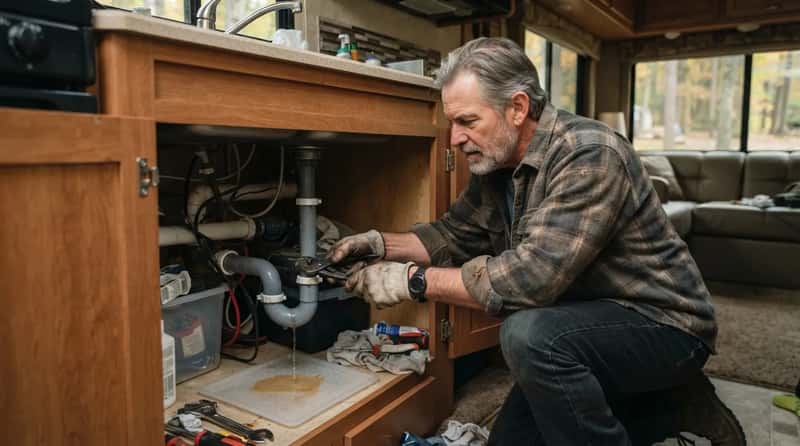
Veteran RVers have a running joke: RVing is just fixing your RV in beautiful places. It’s funny because it’s true. An RV is part vehicle, part house, and it vibrates down the highway. Slide-outs, awnings, plumbing and appliances all take a beating on the road.
That’s why longtime RVers push for a thorough pre-delivery inspection. Test every appliance, run the slides, fill the water system and look for leaks while you’re still at the dealership. Then plan a short, close-to-home first trip to shake out the problems.
The first shakedown trip is where most hidden problems actually show up. Everything on this list comes down to one idea: inspect first, and dream second.
The people who love RV life aren’t the ones who bought fastest. They’re the ones who did the math on weight, loans and depreciation, checked the tires and roof seams, and rented before committing.
Longtime owners usually say they wouldn’t give it up, as long as they went in with open eyes. The sunset and the campfire are real. They just taste better when the rig behind them isn’t a surprise.