Airport security lines move fast when everything goes right, and painfully slow the moment something doesn’t. Most travelers assume they’re following the rules, yet plenty still end up standing off to the side while an officer goes through their bag piece by piece. The reasons behind these delays are rarely mysterious once you know what screeners are actually looking for.
1. Cramming Too Much Into a Carry-On
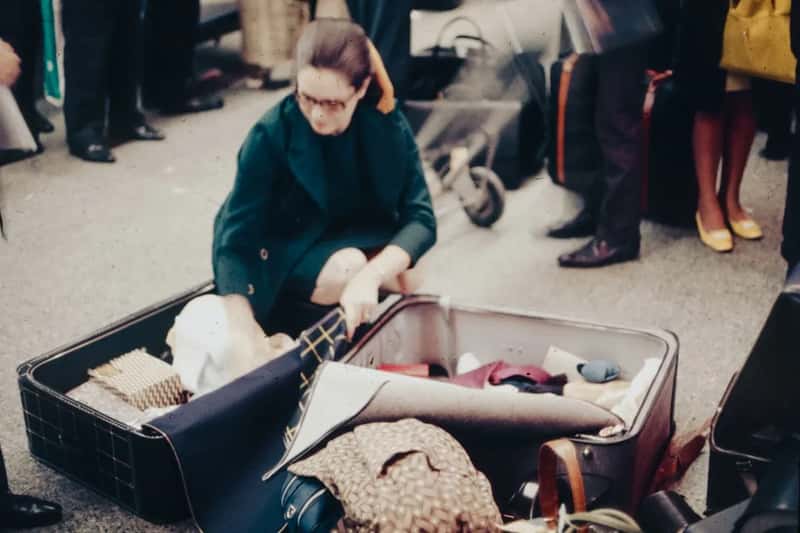
An overstuffed bag is one of the fastest ways to end up in secondary screening, and it has nothing to do with what’s inside. A former Transportation Security Officer explained that overpacked bags are harder for the X-ray operator to see through, and if the screen can’t reveal what’s inside, the bag gets pulled.[1] The math backs this up too, since an overpacked bag is roughly ten times more likely to be pulled because the X-ray operator cannot readily identify the masses inside it.[1]
Once that happens, there’s no shortcut. The contents then have to go through a full visual inspection[1], which means unpacking everything while other travelers wait behind you. Keeping electronics in one section and clothing loose rather than vacuum-packed tight gives the scanner a cleaner image and keeps your bag moving through the line.
2. Misjudging the Liquids Rule

Rumors about new scanner technology loosening liquid restrictions have circulated for a while now, but they don’t hold up. There’s been a lot of noise about liquids getting easier, leading travelers to pack loose bottles thinking the rules softened, but they haven’t changed, and the 3-1-1 rule has not changed in 2026.[2] Bringing a full-size bottle because you heard the newer CT scanners can “see through” it is still a guaranteed trip to the search table.
Powders cause similar trouble, especially the unlabeled kind. Packing a full bag of unlabeled, mysterious powder, whether it’s protein powder, powdered makeup, a drink mix, or powdered medication, is a problem if it’s not kept in its original packaging.[3] There’s also a hard limit to keep in mind, since TSA enforces specific weight restrictions on powders, and anything over 12 ounces, roughly the weight of a soda can, can require additional screening.[3]
3. Wearing the Wrong Kind of Clothing
Clothing choices matter more at the checkpoint than most people expect. According to travel experts, anything too loose, too tight, or with too much metal can set off the TSA scanners and lead to pat-downs and extra security checks.[4] Baggy outfits are a particular flag, since excessively loose or bulky clothing is considered suspicious, as the wearer may appear to be hiding something.[4]
Cargo pants and similar multi-pocket garments don’t help either, because anything with too many pockets is also a trigger, meaning things like cargo pants are out.[4] Heavy jewelry and oversized belt buckles create the same issue, since bulky clothing can prompt extra checks because it’s harder for scanners to clearly detect objects underneath the fabric, and clothing with heavy metal elements such as large belt buckles or chunky jewelry may also set off security machines.[5] Dressing simply, without excess layers or hardware, tends to move you through without a second look.
4. Showing Up With Mismatched or Non-Compliant ID
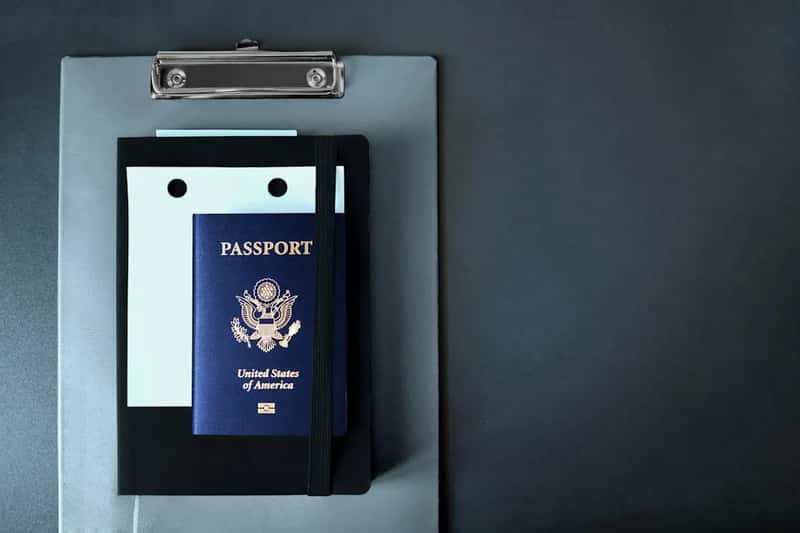
Identification issues have become a bigger sticking point since REAL ID enforcement took effect. When IDs don’t align with travel documents, officers may pull a passenger aside for additional questions or verification, and discrepancies may include significant differences in name spelling, birth date, or gender markers.[6] Anything that looks altered raises the same concern, since any indication that an ID has been tampered with, or is not in its original form, is also likely to raise alarms for agents.[6]
The financial cost of showing up without compliant ID is real now too. REAL ID enforcement began in May 2025, and as of February 1, 2026, travelers without a REAL ID-compliant driver’s license or acceptable alternative face a $45 non-refundable ConfirmID fee to pass through security, a process that can take up to 30 minutes.[5] Double-checking that your license, passport, or other approved document exactly matches your boarding pass name saves a headache that’s entirely avoidable.
5. Acting Nervous, Rushing, or Switching Lines

Behavior gets watched just as closely as belongings, sometimes more so. TSA officers observe travelers for signs of unusual stress or suspicious actions, and excessive nervousness, unusual body language, or tense behaviors may raise concerns and lead to additional screening.[7] This isn’t guesswork on their part either, since TSA officers are trained through the SPOT program, which uses a list of behaviors that could indicate high levels of stress, fear, or deception, including yawning, rapid blinking, gulping, skin flushing, coughing, throat clearing, and leg shaking.[8]
Trying to save time by hopping between lanes backfires in a similar way. Weaving in and out of security lines or trying to jump from lane to lane can garner unwanted attention from TSA officers, since to the passenger it may seem like an innocent way to save time, but to agents it may look like an attempt to avoid something, prompting officers to pull the person aside.[6] The irony, as one source put it, is that trying to rush could eventually delay travelers in the long run.[6]
6. Joking Around or Arguing at the Checkpoint
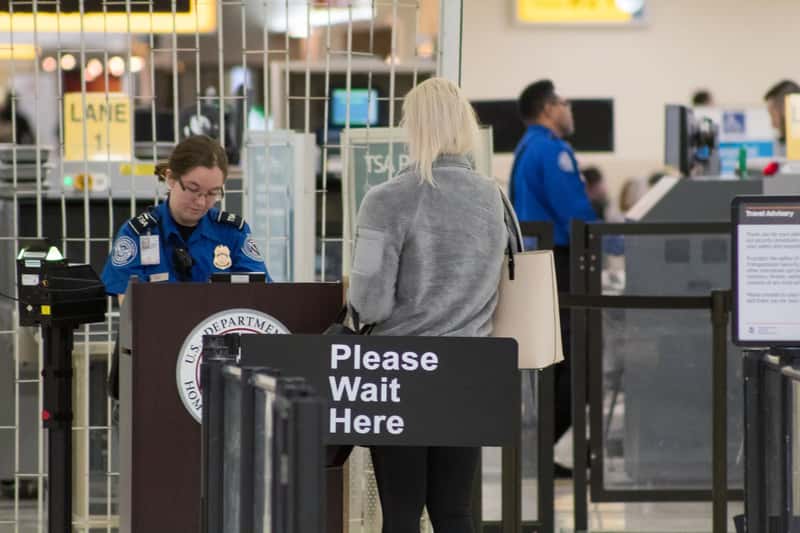
Humor doesn’t land well at a security checkpoint, and jokes about weapons or explosives are treated as serious statements rather than icebreakers. There are places where sarcasm is welcome, and the TSA security checkpoint is not one of them, since making jokes about bombs or explosives means expecting a visit from local police officers.[9] It’s a mistake that costs far more time than it saves, and it rarely gets read as anything other than a red flag.
Confrontation with officers creates its own set of problems too. Security lines run on a rhythm, and breaking that rhythm by arguing with officers or ignoring checkpoint instructions almost always backfires.[2] Staying calm, following instructions, and saving the commentary for after the checkpoint keeps the line moving and keeps you out of an unnecessary conversation with someone who has full authority to slow your day down.
None of these six mistakes require breaking any actual law, which is part of why they catch so many travelers off guard. They’re small, avoidable habits, packing tighter than necessary, misjudging a liquids rule that hasn’t budged, dressing in a way that confuses a scanner, letting an ID slip out of date, moving in a way that reads as evasive, or cracking a joke at the wrong moment. Airport security runs on pattern recognition, and understanding those patterns is often the simplest way to stay out of the slow lane.