Anyone who has flown recently knows the scene: a crowd hovering by the gate long before their boarding group is called, someone trying to sneak past with a scanned ticket that isn’t theirs, and a general sense of chaos before the plane has even started loading. That familiar mess is finally getting a serious response. Airlines around the world have spent the past year and a half rolling out new technology, tighter cutoff times, and stricter enforcement to bring order back to the gate.
What started as a scattered set of pilot programs has turned into an industry-wide push. Carriers in the United States, Asia, and Europe are all tightening the screws in their own way, whether through beeping scanners, earlier gate closures, or harder lines on passenger behavior. The result is a boarding experience in 2026 that looks and feels noticeably different from just a couple of years ago.
Why the Gate Became a Battleground
Boarding gates have always been a bit of a scrum, but the phenomenon airline staff call “gate lice,” passengers who crowd the boarding area and try to sneak on ahead of their assigned group, has become a defining headache of modern air travel. The crowds have been referred to by some frequent flyers as gate lice, an unflattering term that has its own Wikipedia page. Airlines say the behavior creates real operational problems, not just annoyance.
Use of new gate technology could help cut down on the crowds of people who hover near gates, creating confusion and congestion and at times blocking concourse thoroughfares. Part of the pressure comes from shrinking overhead bin space and rising checked-bag fees, which give travelers extra incentive to squeeze toward the front of the line regardless of what their boarding pass actually says. That dynamic has pushed airlines to treat boarding order as something worth actively policing rather than politely suggesting.
American Airlines Leads With the Beeping Scanner
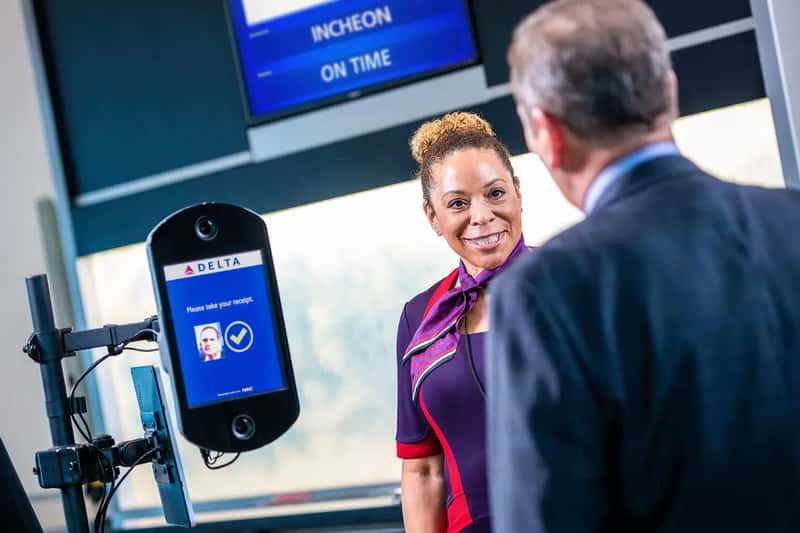
American Airlines has become the most visible face of this crackdown. The airline tested new technology at Albuquerque International Sunport in New Mexico, Tucson International Airport in Arizona, and Ronald Reagan Washington National Airport in Virginia that alerts gate agents with an audible sound if a passenger tries to scan a ticket ahead of their assigned group. The system doesn’t quietly flag the attempt behind the scenes; it makes noise right at the gate, in front of everyone.
The airline rolled out a system that emits two loud beeps when a traveler tries to get on an airplane before their boarding group is called. After the initial trial, the rollout moved fast. American Airlines expanded its new boarding technology that stops passengers from cutting in line during boarding to over 100 airports nationwide before Thanksgiving. Gate agents aren’t left guessing what to do when the alert sounds either. American Airlines said that a gate agent politely lets the customer know they’re unable to accept the pass and asks the customer to rejoin the line when their boarding group is called.
Other US Carriers Are Adjusting Their Own Boarding Playbooks
American isn’t operating in a vacuum. When reporters asked competitors about their own approach to line-cutting, the responses made clear that every major carrier is thinking about the same problem, even if the tools differ. United Airlines said its gate agents monitor the boarding process. Delta, meanwhile, has leaned on a different fix entirely. Delta Air Lines doesn’t use any special technology, but their passengers began boarding by numbered zones to bring more clarity to the process.
United has also tried to head off crowding before it starts by keeping passengers informed in real time rather than relying on enforcement at the moment of boarding. United texts customers when it’s time to board, provides a countdown-to-boarding clock via its iOS app, and has digital signs showing which boarding group has been called. The logic is straightforward: if travelers know exactly when their group will be summoned, there’s less incentive to camp out by the jet bridge just in case.
Unruly Passenger Numbers Are Still a Real Problem
The gate crackdown isn’t only about queue etiquette. It sits alongside a broader, more serious trend: rising incidents of unruly and disruptive passenger behavior that airlines say often start brewing before the aircraft door even closes. The latest global data shows some improvement, but the baseline remains elevated. Based on 93,107 incident reports from more than 140 operators worldwide, the rate improved from 1 incident every 307 flights in 2024 to 1 incident every 355 flights in 2025. Non-compliance remains the most common thread running through these cases. Non-compliance with crew instructions continues to be the most frequently reported descriptor.
Regional numbers tell a similar story. In the US specifically, the frequency hasn’t dropped as sharply as many hoped. Airlines reported 2,102 unruly passenger cases throughout 2024, marking a 1% increase from 2023, and while this represents a decline from the pandemic peak, the persistence of these disruptions remains concerning. Some individual airports have seen the trend move in the wrong direction entirely. Dublin Airport saw an 80% increase in disruptive incidents in early 2025 compared to the entire year of 2024. Airlines increasingly argue that these incidents rarely start in the air; they often begin with the tension and crowding that builds at the gate.
Regulators Are Backing the Crackdown With Real Fines
Airlines aren’t tightening boarding procedures purely out of goodwill toward orderly queues. Regulators have made clear there’s financial risk attached to letting disruptions slide, and enforcement has escalated meaningfully in recent years. In the US, the Federal Aviation Administration continued pursuing significant penalties through 2024. The agency launched 512 investigations in 2024, resulting in 402 enforcement actions that led to $7.5 million in fines issued to disruptive passengers.
The maximum civil penalties available to regulators are substantial and adjusted for inflation each year. TSA’s sanctions policy provides guidance for imposing civil monetary penalties up to $42,657 per violation for aircraft operators. These aren’t hypothetical numbers reserved for extreme cases either; enforcement actions against individual travelers involved in serious in-flight incidents have run into the tens of thousands of dollars per case in recent years, based on FAA proposals reported by national outlets. The message from regulators has been consistent: airlines that fail to manage disruptive behavior, starting at the gate, face real financial consequences down the line.
Denied Boarding Rules Are Getting Stricter Too
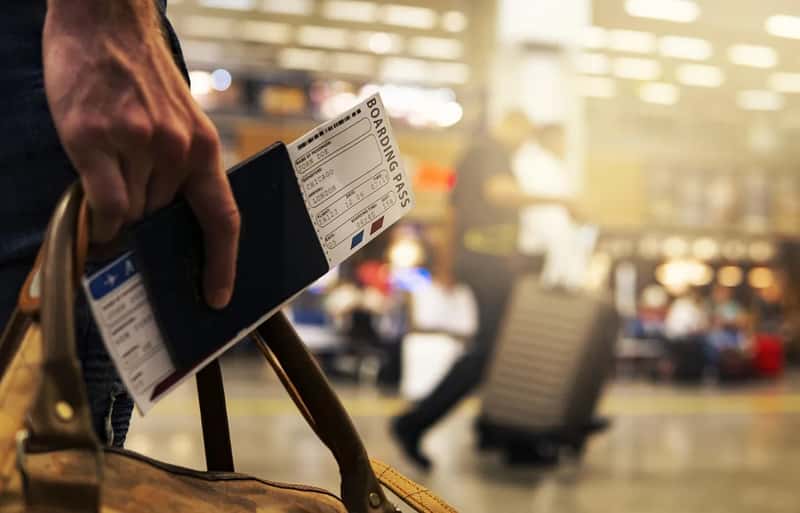
It isn’t just line-cutters and unruly passengers feeling the squeeze. Airlines have also sharpened their enforcement of boarding eligibility rules more broadly, covering everything from identification requirements to basic dress standards. Travel outlets covering 2026 policy changes have noted that gate staff now have clearer authority to act on compliance issues before a passenger ever reaches the jet bridge. As one report put it, banned items include see-through clothing, bare feet, or shirts with lewd or offensive graphics, giving staff the clear authority to deny boarding to non-compliant flyers.
Identification requirements have tightened as well, adding another layer of scrutiny at the gate. Digital ID rollouts have provisioned millions of digital credentials in some states, though not all state-issued digital IDs are accepted at TSA checkpoints, since TSA only accepts mobile driver’s licenses that conform to the strict ISO/IEC 18013-5 standard. Passport validity is under the microscope too, since airlines face their own financial exposure when they let ineligible passengers board international flights. Many overseas destinations require a traveler’s passport to be valid for at least six months beyond their travel dates, and airlines strictly enforce this buffer to avoid paying massive government fines that can reach up to $5,000 per passenger, plus mandatory repatriation costs.
What This Means for the Average Traveler
For most passengers, the practical takeaway is simple: boarding in 2026 rewards preparation and punishes cutting corners. Whether it’s arriving at the gate earlier because of a shorter cutoff window, waiting patiently for your actual boarding group instead of hovering near the jet bridge, or double-checking that your ID and documents meet the latest standards, the margin for error at the gate has shrunk considerably. Airlines that once tolerated a bit of queue-jumping now treat it as a legitimate operational risk worth engineering against.
None of this means air travel has become dramatically harder for people who follow the rules. If anything, carriers frame these changes as making the process fairer and more predictable for passengers who already play by the boarding sequence. Still, the days of casually strolling to the gate at the last minute or nudging into an earlier boarding group are clearly fading, replaced by a system with less patience for shortcuts.
A More Orderly, Less Forgiving Boarding Process
The common thread across every airline mentioned here, whether it’s American’s beeping scanners, Cathay Pacific’s earlier gate closures, or regulators handing out five-figure fines, is a shared conclusion that the old, loosely enforced boarding process no longer works at current passenger volumes. Airlines are betting that tighter structure now prevents bigger headaches later, from missed connections to safety incidents that start with frustration at the gate.
Boarding a plane was never going to become anyone’s favorite part of travel, but airlines seem determined to at least make it less of a free-for-all. If 2026 is any indication, the gate is no longer the loosely supervised waiting area it used to be. It’s become one more part of the journey where the rules are enforced, tracked, and, increasingly, backed by real consequences for those who ignore them.