Most travelers treat curbside check-in like a glorified conveyor belt: hand over the bag, get a tag, shuffle inside. But regular fliers over 60 who slip the skycap a few dollars every single trip know something the rest of the terminal hasn’t figured out yet – that small gesture buys a completely different experience than the one everyone else gets standing in the indoor line.
It’s not about buying special treatment so much as unlocking it. Curbside workers have more discretion than most people realize, and a modest, consistent tip is usually the thing that opens the door. Here’s what longtime skycaps, seasoned travelers, and airport insiders actually say happens once that cash quietly changes hands.
#12 – They Quietly Move You Past the Line Everyone Else Is Stuck In
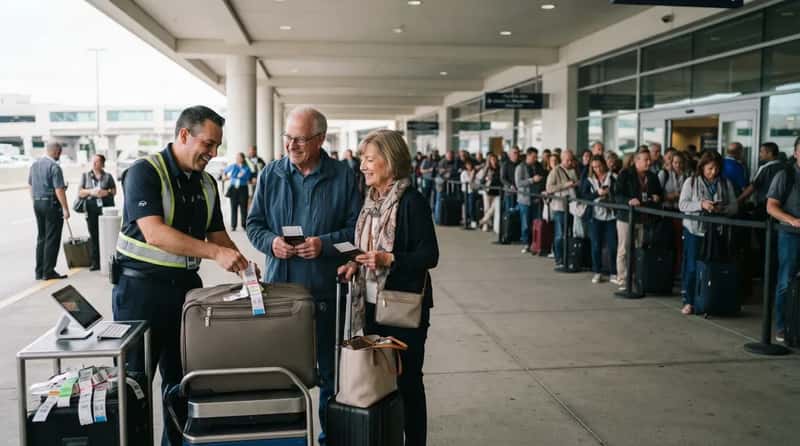
The biggest thing a tip buys at the curb isn’t extra baggage help – it’s time. For older travelers who don’t want to sprint through a terminal with a rolling suitcase, that matters more than almost anything else. The whole curbside exchange typically takes three to five minutes, start to finish.
Compare that to twenty or forty minutes in an indoor check-in line during a busy departure window, and the math explains why regulars keep coming back to the same curb. Travelers who tip well and show up with their ID and boarding info ready tend to get waved through even faster, because skycaps remember exactly who makes their job easy.
#11 – They’re Not Actually Airline Employees, and Almost Nobody Realizes It
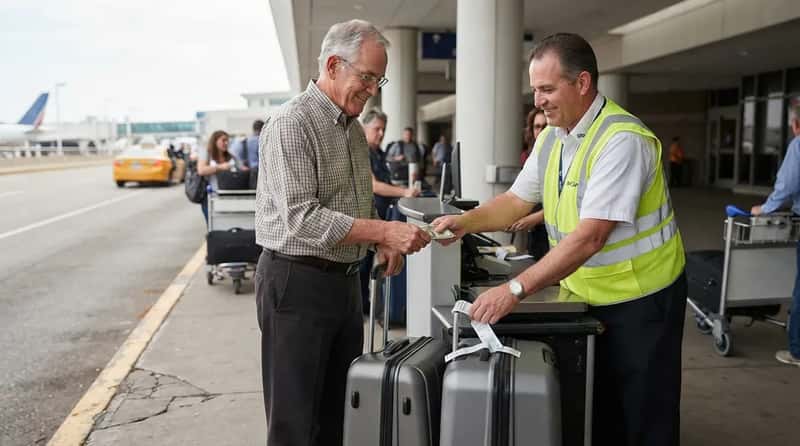
Here’s the part that surprises even frequent fliers: the person tagging your bag at the curb usually doesn’t work for the airline at all. Skycaps are typically independent contractors or third-party staff who work the curb specifically because tips are part of the deal, not a bonus on top of it.
That single fact changes the entire relationship. A senior who understands this – and tips accordingly – gets treated less like a stranger passing through and more like someone who actually knows how the system works. It’s a small piece of insider knowledge that instantly separates a regular from a rookie.
#10 – Tips Aren’t a Nice Extra for Them, They’re Most of the Paycheck
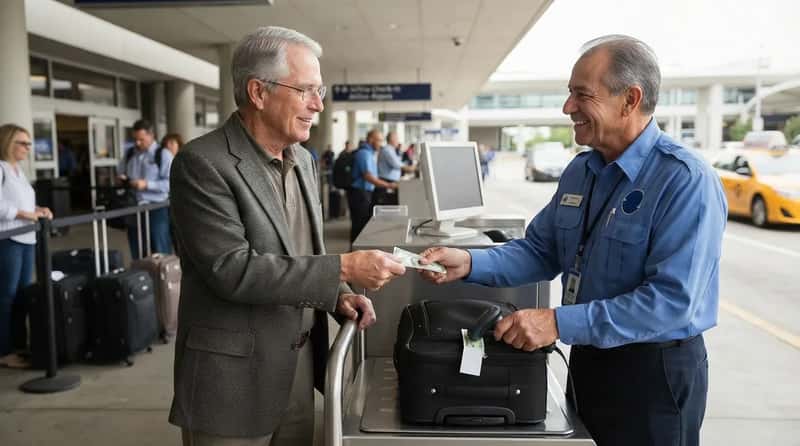
Unlike a hotel bellhop who’s mostly working for a base wage plus extras, curbside staff at many airports are counting on that cash to make the shift worth it. Skycap stations depend heavily on tip income, which is exactly why arriving with a few small bills ready changes how smoothly the whole exchange goes.
For a traveler over 60 who tips consistently every trip, that reliability gets noticed and remembered. It tends to come back as a little extra patience, a little extra care, and a lot less friction the next time that same traveler rolls up to the curb.
#9 – They’re Doing a Job That Predates Commercial Flight Itself
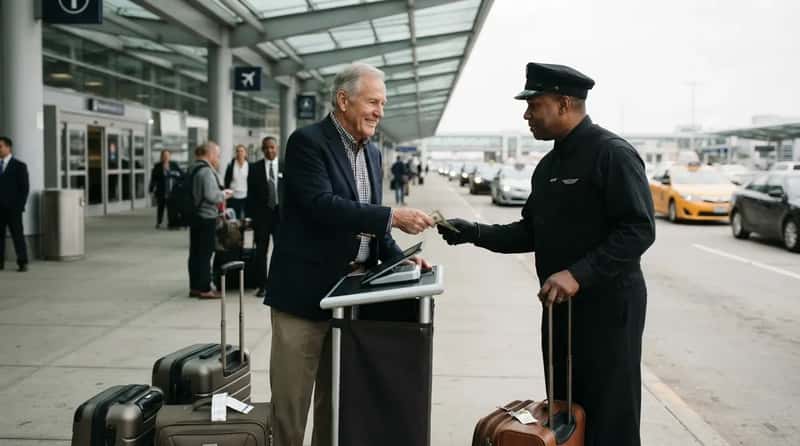
The person helping you at the curb is carrying on a tradition older than jet travel itself. The whole role was borrowed directly from railroads: airlines adapted the concept from railway “redcaps,” the porters who handled luggage at train stations in exchange for tips, and the word “skycap” itself entered common use sometime between 1940 and 1945.
For travelers over 60, that history isn’t just trivia – it’s a reminder that curbside tipping isn’t some modern airline cash grab. It’s a century-old exchange of service for gratitude, and skycaps who sense a passenger understands that history often respond with a warmer, more personal touch.
Fast Facts
- The word “skycap” entered common use sometime between 1940 and 1945.
- Airlines borrowed the idea from railway “redcaps,” porters who moved luggage for tips at train stations.
- The tip-for-service model has survived nearly a century of changes in American travel.
#8 – They’ll Help You Rearrange Bags on the Spot to Dodge a Fee
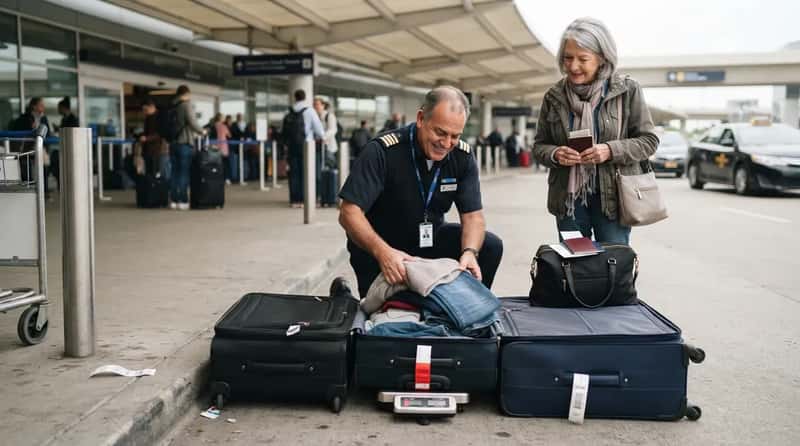
Nobody wants a surprise overweight charge sprung on them right before boarding, and this is one of the quiet ways a good curbside relationship pays off. Skycaps know the exact weight cutoffs down to the pound for every airline they serve.
When a bag comes in a few pounds over, a traveler is normally stuck paying the fee on the spot or repacking in a panic. But a skycap who’s been tipped well is far more likely to take an extra minute to help shuffle items between suitcases instead of just pointing at the scale and the fee. It’s a small kindness that can save real money.
Quick Compare
- Typical overweight bag fee: roughly $100 to $200 per bag, depending on the airline.
- Typical curbside tip: about $5 to $10 total for the whole exchange.
- The math: a few dollars in goodwill can head off a fee worth well over ten times that.
#7 – They Sort Out the Wheelchair Confusion Before It Becomes a Problem
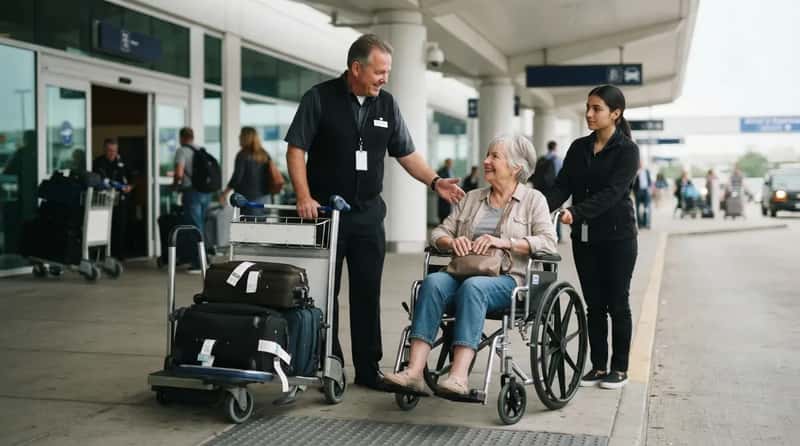
One of the most common mix-ups at the curb trips up seniors constantly: the wheelchair attendant and the skycap are often two completely different people, with two completely different tipping expectations. Mixing them up leads to a lot of awkward moments and, occasionally, an accidental double-tip.
A skycap who’s built a rapport with a returning traveler will often quietly flag exactly who needs what, sparing an older passenger the discomfort of guessing wrong in front of a line of strangers. It’s a small courtesy that saves a genuinely embarrassing moment.
#6 – They’ll Steer You Away From a Mistake Before It Costs You Your Flight
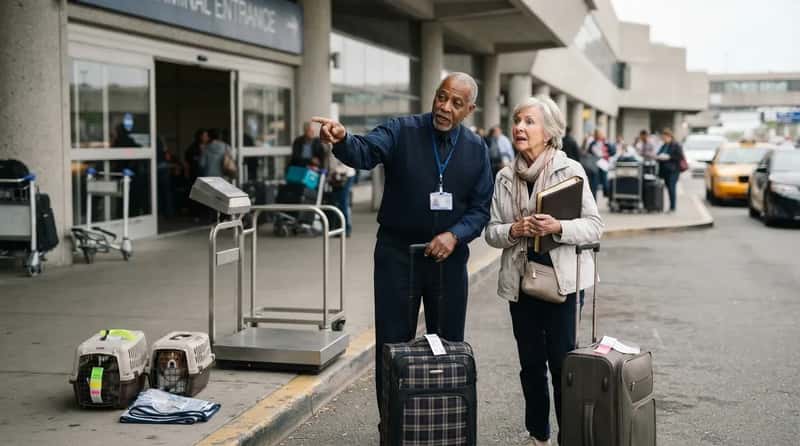
Not everything can be handled curbside, and a good skycap will tell you that before you waste precious minutes standing in the wrong spot. There are hard limits on what happens outside the terminal doors – passengers checking unaccompanied minors, firearms, ammunition, or live animals have to process those at the indoor ticket counter, no exceptions.
For a senior traveling with a service animal or a firearm in checked luggage, that heads-up is the kind of tip a skycap volunteers only when they’re genuinely motivated to look out for you. A rushed, unpaid interaction is far more likely to end with a traveler discovering the hard way, mid-line, that they’re standing in the wrong place entirely.
Worth Knowing
- Unaccompanied minors must be checked in at the indoor ticket counter, not curbside.
- Firearms and ammunition require indoor processing and paperwork, no exceptions.
- Live animals traveling as checked cargo also need the indoor counter.
- A good skycap will flag this before a traveler wastes time standing in the wrong line.
#5 – They Work Outside in Every Kind of Weather the Sky Throws at Them
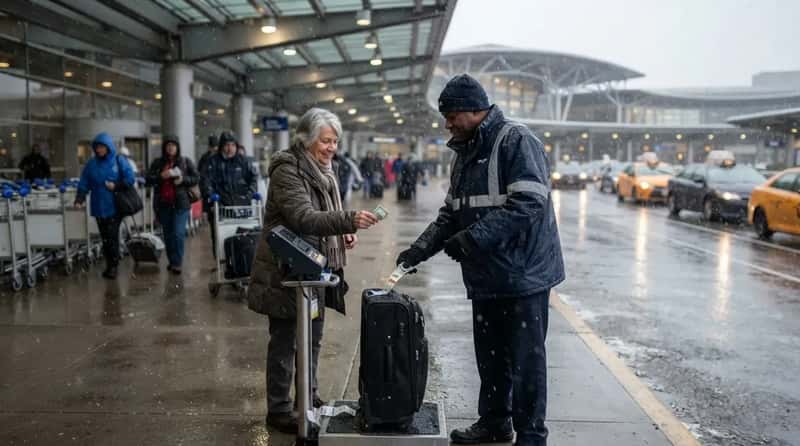
It’s easy to forget, standing at the curb for thirty seconds, that the person helping you is out there for their entire shift. Skycaps work outside in freezing sleet, blistering summer heat, and everything in between, with no indoor break room a few feet away.
That detail matters more than it seems. A senior who tips generously during a miserable weather day – instead of rushing off apologetically without a dollar to spare – tends to become the kind of regular that curbside staff genuinely remember and look out for on the next trip.
#4 – They’ll Physically Carry What Most People Assume They Won’t
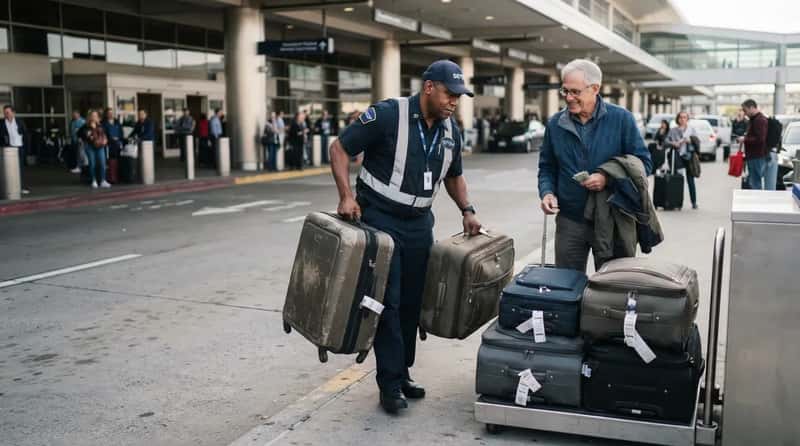
Curbside check-in isn’t just tagging bags – for the right traveler, it’s full-service hauling. One frequent flier described tipping around ten dollars specifically because a skycap schlepped nearly 200 pounds of luggage from the car to the check-in area, and said it was worth every bit of it.
That kind of effort isn’t guaranteed for everyone. Most skycaps have access to luggage carts and are willing to help with wheelchairs, strollers, and oversized items, but a traveler over 60 with heavy bags and a fair tip in hand is far more likely to see that extra muscle put to use without having to ask twice.
#3 – Some of Them Are Quietly Being Replaced, and Loyal Tippers Are Part of Why They’re Still There
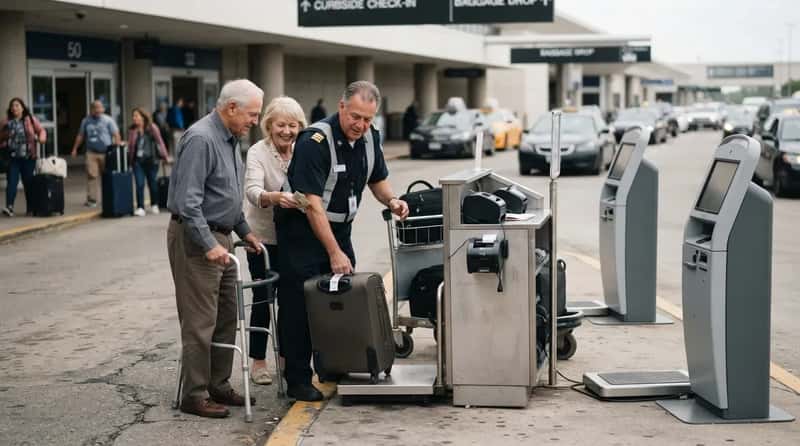
Here’s an uncomfortable truth many regular fliers haven’t caught onto yet: the human at the curb is slowly disappearing at some airports. Several major U.S. airlines have shifted in-house skycap staff toward third-party vendors and self-service kiosks at select locations as a cost-cutting move.
For older travelers who rely on real human help – someone who can lift a bag, answer a real question, or sort out a wheelchair mix-up – a consistent, generous tip is arguably one of the few things keeping that job viable at a given terminal. It’s a quietly controversial idea, but frequent fliers who’ve watched a favorite curbside stand vanish tend to agree that tipping habits play a real role.
At a Glance
- Several major U.S. airlines have shifted curbside staffing toward third-party vendors at some airports.
- Self-service check-in kiosks have replaced traditional skycap stands at select terminals.
- Frequent fliers who’ve watched a favorite curbside stand disappear say loyal tipping habits help keep the human option alive elsewhere.
#2 – They Remember the Regulars, and the Regulars’ Bags Seem to Travel Better
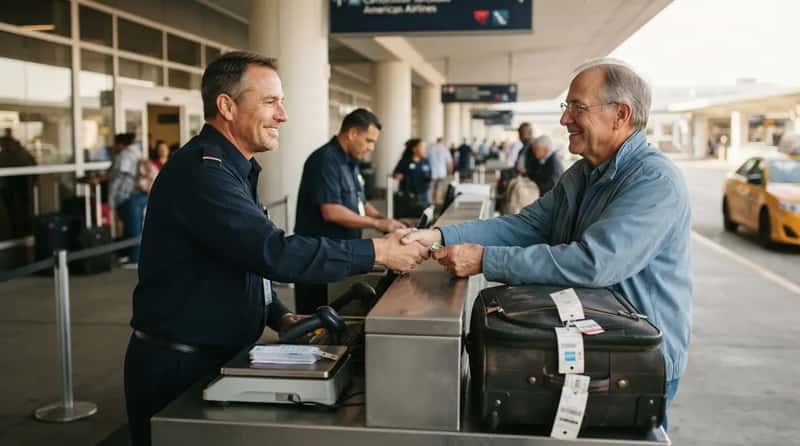
Ask any longtime skycap traveler and you’ll hear some version of the same story: their bags simply don’t get lost. One frequent flier said that across years of flying, they’ve only had a bag delayed twice and never once lost, and they credit the people at curbside check-in for that streak.
It’s not superstition so much as attention. A skycap who recognizes a returning face – someone who’s tipped well and treated them decently trip after trip – has every incentive to double-check that tag before waving the bag onto the belt. It’s the kind of small, repeated care that never shows up on a receipt but absolutely shows up at baggage claim.
#1 – The Real Secret Is That They Take Care of the People Who Take Care of Them
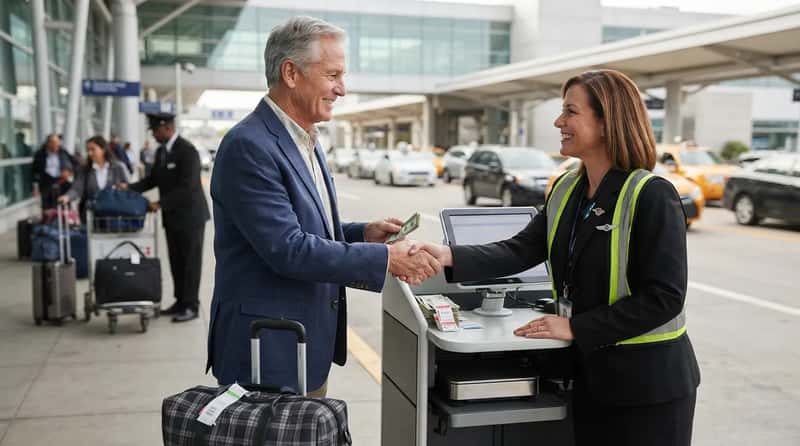
Every item on this list circles back to the same quiet truth. It isn’t about buying favors – it’s about a relationship built trip after trip, between two people who both show up and both put in a little effort.
I’m nice. I take care of them, they take care of me… it works out for both of us.
Longtime traveler describing curbside tipping habits
For travelers over 60 who fly the same routes year after year, that’s the entire game. A modest, consistent tip isn’t a bribe – it’s an investment in a relationship with someone who has real discretion over how your travel day goes, and the travelers who understand that tend to have noticeably smoother trips than the ones who treat curbside check-in like just another kiosk.
None of this is about spending big. The travelers who get treated best at the curb aren’t the ones handing out twenties – they’re the ones who show up prepared, tip a little every single time, and treat the person tagging their bags like a human being instead of a machine.
In an industry quietly shifting toward self-service kiosks, that small habit might be worth more than most people ever realize.