The dream of retiring in Florida has always felt like the American promise. Sunshine every day, beaches a short drive away, no state income tax draining your pension. For decades, retirees packed their lives into moving trucks and headed south, ready to embrace the endless summer. Yet something strange is happening beneath the palm trees. More and more of these hopeful retirees are leaving the Sunshine State faster than they arrived, often within just 18 months of making the move.
It’s not what they expected. The reality of Florida living in 2026 clashes sharply with the postcard fantasy sold for generations. Rising costs, relentless weather threats, and unexpected lifestyle challenges are driving people away from what they thought would be their paradise. The numbers tell a story that tourism brochures won’t, and honestly, it’s one that might make you rethink everything you thought you knew about retirement destinations.
Housing Costs Have Spiraled Beyond Recognition

In just half a decade, the median price of a single-family house in Florida rose $150,000, or 60%, with the average cost jumping from approximately $250,000 in March 2018 to $409,700 in July 2024. That’s not a gradual increase you can plan for. That’s a financial earthquake that shakes the foundation of retirement budgets built on careful calculations.
Retirees who sold homes in other states, expecting their equity to carry them through retiremen,t are finding Florida’s housing market brutally expensive. As of March 2025, the median home price in Florida hovers around $412,500, though this masks stark differences, with Miami’s median home price currently at $655,000, while smaller cities like Ocala offer median prices closer to $275,000. The gap between expectation and reality creates an immediate financial strain that many simply can’t sustain.
HOA fees vary widely, but in 2025 they averaged between $400 to $600 per month in luxury or resort-style communities. These costs pile on top of mortgages or cash purchases, eating into fixed retirement incomes faster than anticipated. For someone on a pension or living off retirement savings, these hidden expenses become deal breakers within the first year or two of Florida living.
Insurance Costs Are Crushing Retirement Dreams

Here’s where things got truly shocking. Insurify predicted that home insurance premiums in Florida rose to an average of $15,460 annually by 2025, up from $14,140 in 2024. Think about that for a moment. That’s nearly five times the national average, and it represents a monthly expense that can rival a mortgage payment itself.
According to financial data firm Intercontinental Exchange (ICE), property insurance rates average $6,225 a year in Miami, $3,675 in Houston, and $3,602 in Tampa, compared to a national average of $2,290. Retirees on fixed incomes watch helplessly as these costs devour their carefully planned budgets. In higher-risk areas, these costs are becoming really substantial for people, and it makes sense that if you’re thinking about where to live and you’re on a fixed income, insurance costs are an important source of uncertainty.
The situation has become so dire that some choose to go without coverage entirely. Recent studies show that about 15 to 20 percent of Florida homeowners are uninsured, a risky trend that is a direct result of the state’s property insurance market crisis. When insurance becomes unaffordable, retirement security vanishes, and the decision to leave becomes not just logical but necessary.
Extreme Weather Creates Constant Anxiety
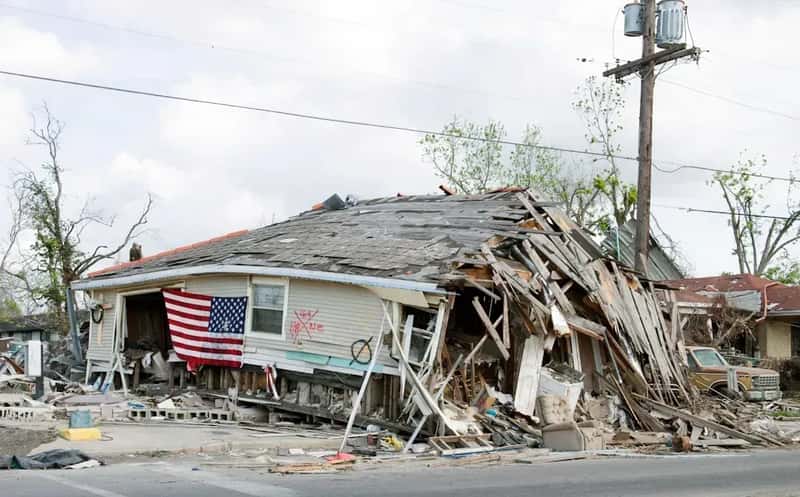
The 2024 hurricane season featured above-normal activity and matched five other years with respect to the most hurricanes to make landfall during a single season. Living through even one major hurricane changes people. Two in a single season? That’s when the Florida dream starts feeling more like a nightmare that repeats itself every summer and fall.
The Florida Climate Survey found that 36 percent of statewide residents had moved or were considering moving in part or fully due to weather hazards, a finding that comes one year after the state was impacted by Hurricane Helene and later Hurricane Milton during the 2024 season. These aren’t casual thoughts about relocating. These are serious conversations happening at kitchen tables across the state, often within the first year or two of retirement.
Ten times more people left Florida in 2023 for “change of climate” than moved there for the same reason. That statistic alone should tell you something profound about the disconnect between expectation and lived reality. The weather that seems idyllic in December becomes oppressive by July, and the hurricane anxiety that builds each season takes a psychological toll that early retirees didn’t anticipate.
The Cost of Living Extends Beyond Housing

Retirees should budget for estimated monthly utility costs, including electricity, gas, water, garbage and internet, which on average hovers around $639.25 in 2025. Florida’s warm climate means air conditioning runs constantly, pushing electricity bills higher than what many northern retirees are accustomed to paying. Those savings from not heating a home in winter? They disappear in summer cooling costs.
Expensive housing isn’t the only thing repelling retirees from the state, as inflation and stock market dips have also negatively impacted their financial situation, prompting seniors to seek more affordable places to call home. Everything costs more than expected. Groceries, dining out, entertainment, even pest control services add up differently when you’re on a fixed income in a tourist-driven economy.
Many are moving to places like Limestone County, Alabama, the fastest-growing county in the state, which boasts lakefront property, warm weather and low property taxes, making it a substitute for The Sunshine State. Retirees are discovering they can get the warm weather experience without the Florida price tag, and that realization often comes within the first 18 months of experiencing the true cost of Sunshine State living.
The Reality Doesn’t Match the Marketing

Significantly fewer retirees moved last year, just under 266,000, compared to nearly 340,000 in 2023, with rising home prices and high mortgage interest rates among the likely reasons. The Florida retirement migration story is changing dramatically, and those who do make the move are increasingly likely to reverse course quickly. The 18-month window represents the point where lease terms end, home sales can be executed, and the harsh reality of miscalculation becomes undeniable.
Housing-related factors played a role, with 8.3 percent moving for cheaper housing and 7.2 percent seeking new or better housing, while other reasons included changes in marital status and climate preferences, showing that while retirement remains a major driver, health, family, and financial considerations are shaping how and where retirees choose to move. Florida is still attracting retirees, but it’s also losing them at rates that suggest the golden age of Florida retirement migration may be ending.
The dream hasn’t died completely, but it has definitely been recalculated. Retirees who leave within 18 months aren’t failures. They’re realists who recognized when a dream became a financial liability. Florida will always have its appeal, but in 2026, that appeal comes with a price tag and risk profile that more Americans are deciding they simply can’t afford. What do you think? Is Florida still worth it for retirement, or has the Sunshine State lost its shine?