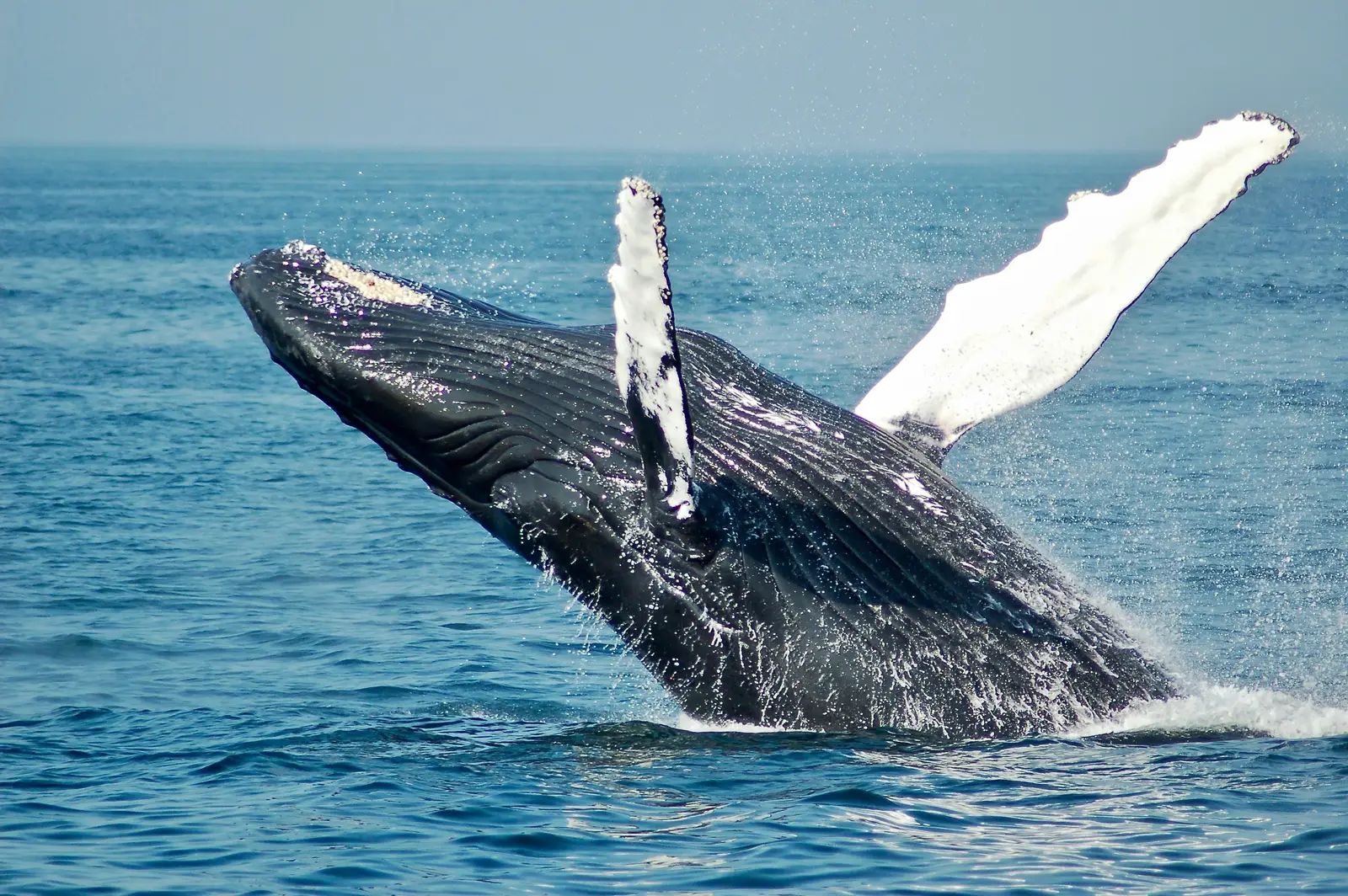
Whale watchers and marine scientists have long noted something unusual about the humpbacks that live year-round in the Arabian Sea. These animals skip the long migrations that define nearly every other population of their kind. A fresh genetic study now suggests the group has lived apart from other humpbacks for tens of thousands of years and may represent a distinct subspecies. ([1])
Life Without Migration
Most humpback whales travel thousands of miles each year between warm breeding grounds near the equator and rich feeding areas near the poles. The Arabian Sea population stays in tropical and subtropical waters throughout the year. That fixed range sets them apart from the three subspecies currently recognized by science: the North Atlantic, Southern Hemisphere, and North Pacific groups.
Researchers collected tissue samples from whales along the coast of Oman and compared them with DNA from more than two thousand other humpbacks worldwide. The Arabian Sea animals showed clear genetic differences. Their mitochondrial DNA, passed from mothers to calves, revealed a long period of separation rather than recent mixing with other populations.
Ancient Split, Limited Options
The study estimates the Arabian Sea lineage split from other humpbacks between 43,000 and 113,000 years ago. That timeline points to a stable, isolated existence through changing ocean conditions. Because the group never mixes with outsiders, its gene pool has stayed small.
Scientists recorded the lowest genetic diversity of any humpback population examined. Low diversity can limit a species’ ability to adapt to new threats such as shifting prey availability or disease. The same isolation that created their unique traits now leaves them with fewer tools to respond to change.
Conservation Stakes
Lead author Rita Amaral of the Wildlife Conservation Society described the population as an enigma whose ecology differs from every other known humpback group. The new genetic findings mark an important step in understanding how that uniqueness developed. Still, the work also highlights vulnerability.
Because the whales remain in one relatively small region, any local pressure affects the entire group. Shipping traffic, fishing gear, and coastal development already pose documented risks in the Arabian Sea. A distinct subspecies with limited genetic variation faces higher stakes if those pressures increase.
Next Steps for Protection
Further research will examine nuclear DNA and track individual movements to refine population estimates. International cooperation among countries bordering the Arabian Sea will be essential for any management plan. The genetic evidence alone already strengthens the case for treating these whales as a separate conservation unit.
Protecting the population means safeguarding both the animals and the waters they have occupied for millennia. Their story shows how long-term isolation can produce remarkable biological differences while also creating urgent protection needs.