You watch the carousel spin. Then it stops turning, and your bag is nowhere in sight.
Most people’s minds jump straight to the worst version of the story – lost forever, swallowed by some warehouse of unclaimed suitcases. That story is almost never true.
The moment your bag misses its flight, a massive, mostly invisible recovery operation switches on. The ramp agents and baggage handlers working in the noise and jet-blast below the terminal already know exactly what happens next – and it’s nothing like what passengers imagine.
1. The Moment Your Bag Misses Its Flight, the Clock Starts Immediately
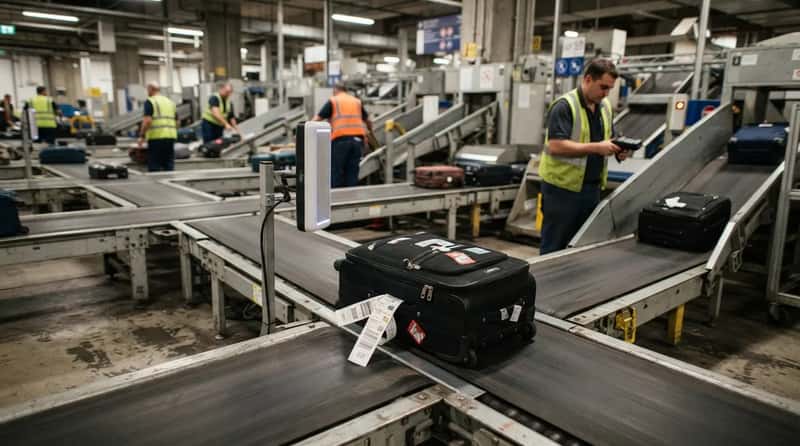
Most passengers picture a missed bag sitting forgotten on a dusty conveyor belt somewhere. The reality is almost the opposite.
A bag that misses one flight is usually delayed, not automatically lost. Mishandled bags can be reflighted separately from the passenger during recovery.
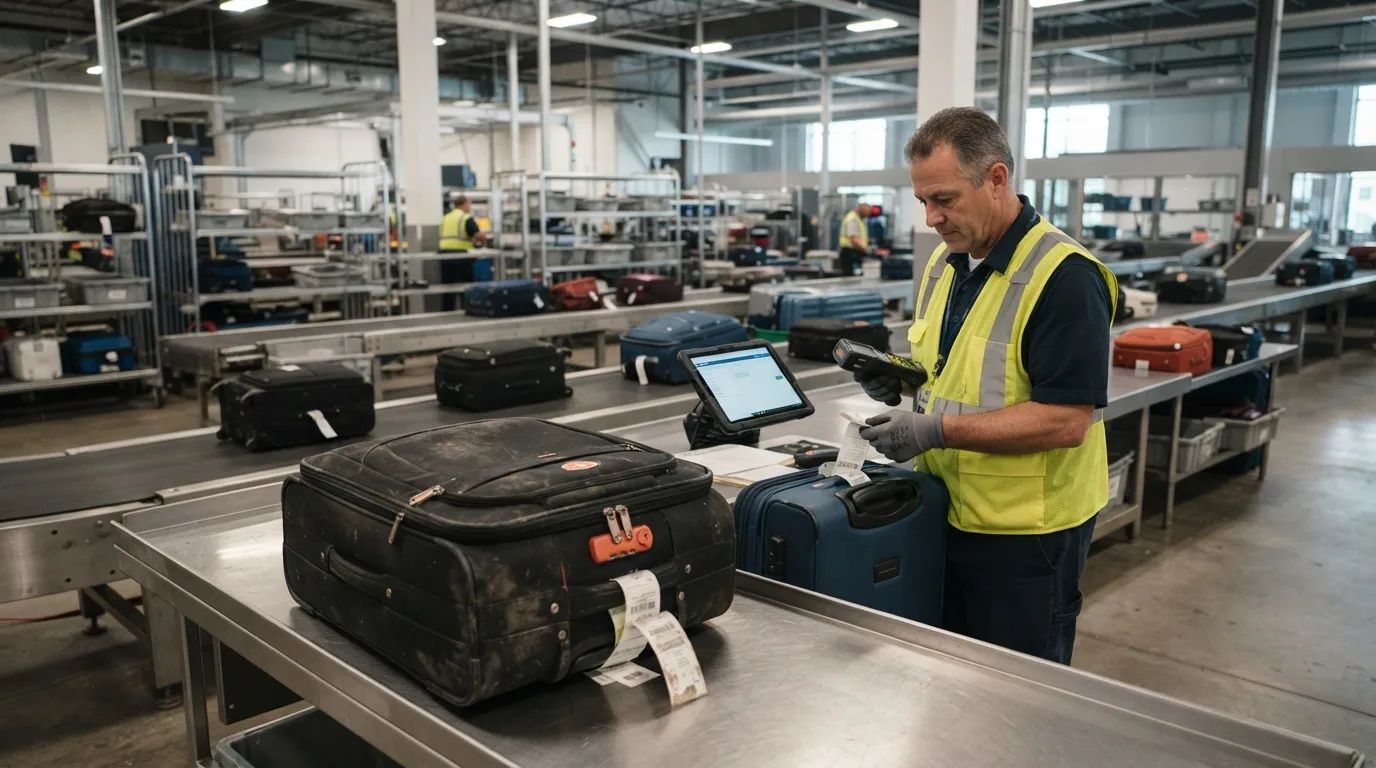
The process starts with your bag’s barcode or RFID tag. At bag drop, an electronic message called a BSM – a baggage source message – is generated at the same moment as your baggage tag, and it’s sent instantly to airport IT systems responsible for processing the bag.
Once the bag is identified, the next step is timeliness: is it early, on time, or late? That single detail decides where the bag goes next. Early bags go to storage until the correct release time.
So from the second something goes wrong, the system already has a record of your bag’s intended route, its tag number, and its status. Handlers aren’t hunting blind – they’re working from data generated before you even boarded.
But knowing where a bag should be and knowing where it actually is are two very different things. That gap is where the real story starts.
2. Transfer Connections Are Where the System Actually Breaks Down
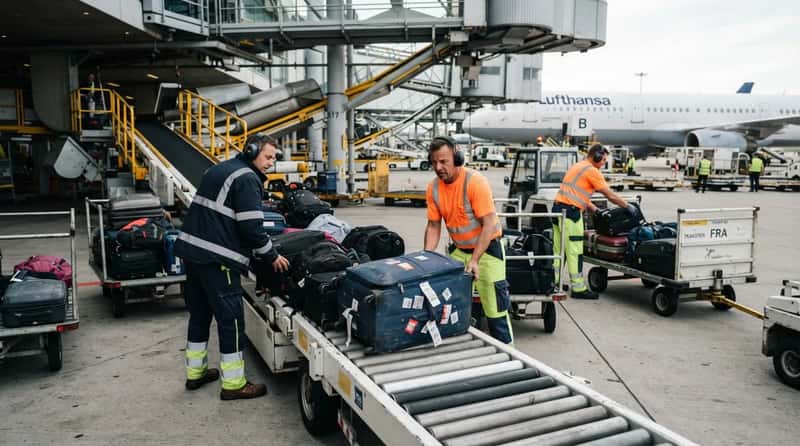
If you assume your bag is most likely to vanish on your origin flight, you’re wrong. The real danger zone is the connecting airport.
Transfer mishandling is the single most common reason bags go missing, accounting for 41% of all mishandled bags globally in 2024.
Bags have to be unloaded, re-sorted, and loaded onto a different aircraft – sometimes in under an hour.
That window, occasionally as tight as 30 to 45 minutes between landing and departure, is where bags get left behind. A delayed inbound flight, a slow tug driver, or one jammed conveyor segment is all it takes.
International and connecting journeys involve more handlers, more systems, and tighter windows, which makes them the biggest risk factor for mishandling by far.
Here’s something most travelers never realize: airlines actually prioritize connecting bags over local ones during loading. Luggage moving from one plane straight to another jumps the queue ahead of bags staying at that airport. Even with that priority, tight connections still beat the system regularly.
Fast Facts
- Transfer mishandling causes 41% of all mishandled bags worldwide.
- Connection windows can be as tight as 30 to 45 minutes.
- Connecting bags get loading priority over local check-ins at busy hubs.
What happens after that missed transfer is where the baggage handler’s real job begins – and it’s far more procedural than most people imagine.
3. International Flights Have a Security Rule That Changes Everything
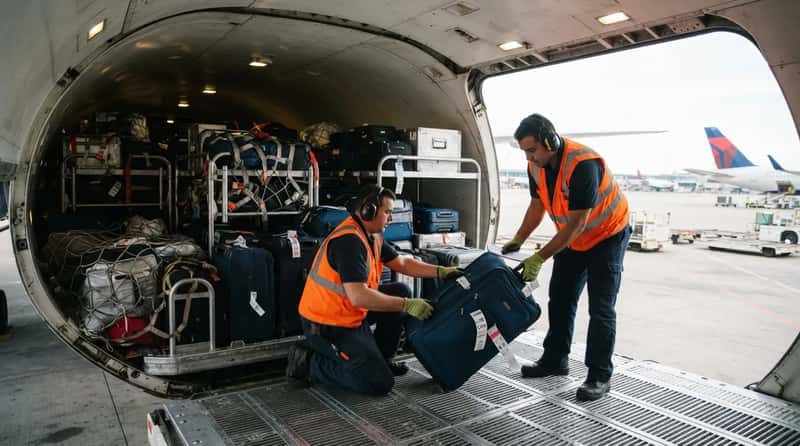
Here’s something almost nobody knows: if you miss an international flight after checking your bag, the airline is legally required to pull your bag back off the plane before it can leave.
Federal regulations for international flights, known as Positive Passenger Bag Match (PPBM), require airlines to off-load checked bags if the passenger isn’t onboard.
The rule exists for an obvious reason – an unaccompanied bag on an international flight is a serious security risk. For the passenger, though, it usually means a significant delay.
If you’re missing for an international flight with a checked bag, expect that delay, since the airline has to manually pull your bag from a fully loaded cargo hold.
Domestic flights work differently. If you miss a domestic flight after checking a bag, the airline should be able to transfer it to any other domestic flight, since every domestic bag is already screened.
On international routes, this means handlers are sometimes racing the clock, physically hunting down one specific bag inside a packed cargo hold before the aircraft can push back. That’s not a quick job – it’s a real reason international misconnects can cascade into hours-long delays for everyone else on board.
Once the bag is finally pulled, a different set of decisions kicks in, and they don’t always end where you’d hope.
4. The Bag Gets Rerouted – But Not Always to Where You Think
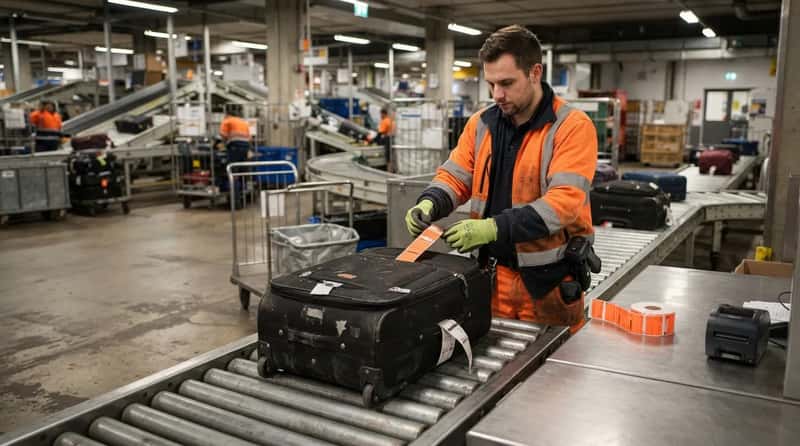
When a bag misses its flight, ground staff work through a decision tree, and it doesn’t always end with your suitcase heading straight to your final destination.
First, they locate the bag by scanning its tag. Then handlers pull it off the plane it was slated for.
Next comes the real fork: reroute it onto a later flight going to your destination, or send it back to the airport of origin. What actually happens depends on the airline, the destination, and how fast you communicate your situation.
That’s exactly why calling the airline the moment you realize you’ve missed a connection matters so much. It isn’t a formality – it can change where your bag physically ends up.
Without passenger contact, ground crews default to standard airline policy, and that default isn’t always the most convenient outcome for you. Most major carriers reroute a rebooked passenger’s bag to the new flight’s final destination, but timing is always the deciding factor.
The physical rerouting is just the visible part. Behind it, a much bigger paper trail is already spinning up – one that spans hundreds of airports worldwide.
5. A Property Irregularity Report Opens a Global Search File
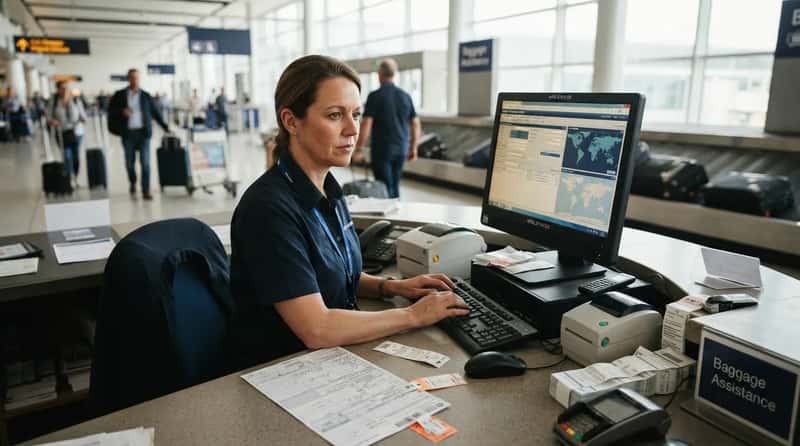
The moment you walk up to the baggage service desk and report your bag missing, something specific happens on the other side of that counter that most passengers never see.
Filling out a Property Irregularity Report (PIR) is essential for tracking your bag and claiming compensation. Most airlines run this through a system called WorldTracer.
The PIR isn’t just a complaint form. It opens an active case that pings every airport in an international network simultaneously.
Whenever an unclaimed bag is found anywhere, it gets registered as “on-hand baggage” and is automatically matched against every open missing-bag file. When a likely match appears, the airport that registered your missing bag receives an alert.
Matching doesn’t rely on the tag alone. Itinerary, surname, suitcase type, and your description of the contents all get compared too – so even a bag with a torn or missing tag can still be traced back to you through the details you gave at the desk.
The scale of this system surprises almost everyone who hears about it. And the timeline it runs on is longer than most passengers wait before giving up hope.
6. WorldTracer Is Tracking Your Bag Across 2,800 Airports for Up to 100 Days
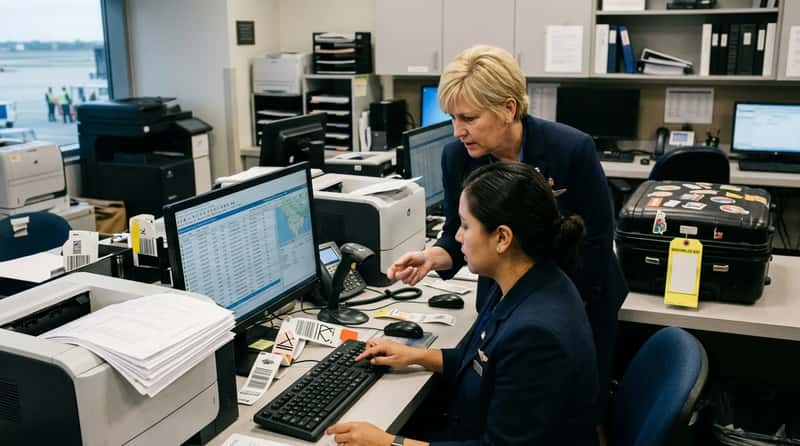
WorldTracer is the system most passengers have never heard of, and it may be the most consequential piece of infrastructure in aviation that isn’t the plane itself.
Launched in 1991, it’s a centralized, shared database used by more than 500 airlines and 2,800 airports for real-time baggage monitoring from check-in to final delivery.
WorldTracer tracks and follows a bag for up to 100 days. That’s a three-month active search window most passengers have no idea they’re entitled to.
According to SITA, about two-thirds of bags mishandled in 2024 were resolved and closed within 48 hours. The vast majority of “lost” bags are found fast – the system is that effective when it has data to work with.
The status screen tells its own story. “On hand at [airport]” means the bag has just been scanned somewhere. “In transit” means it’s already on a plane heading toward you. “Matched” means the description lines up. “Delivery arranged” means a courier is already booked.
That level of granularity is now routine, and it’s driven mishandling costs down significantly over time. But even the best system can’t rescue every bag – especially once the tag itself is gone.
7. A Missing Bag Tag Is the Worst-Case Scenario for Handlers
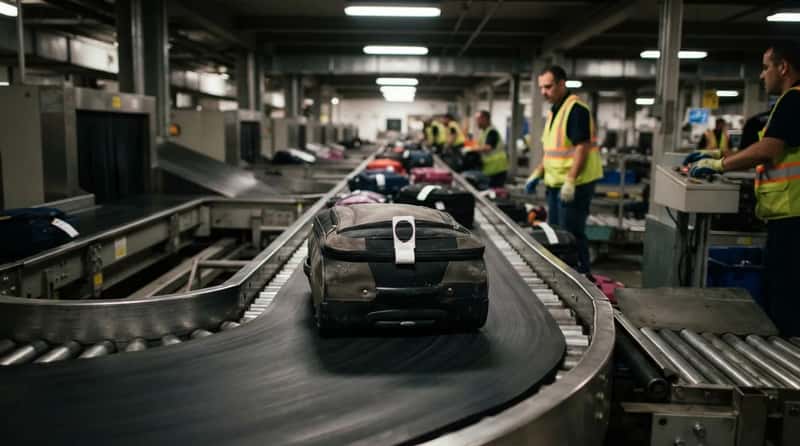
Baggage handlers will tell you the single most dangerous thing that can happen to your bag isn’t a rough toss onto the cart – it’s losing the paper tag.
The tag isn’t just a label. It’s how your bag is tracked through every stage of its journey, and without it, the automated systems reading miles of conveyor belts have nothing to scan.
Bags are identified and security-screened using barcode scanners, or increasingly RFID chips. When a tag tears off, that link breaks entirely.
This is exactly why the PIR description you file at the desk becomes the fallback plan. WorldTracer’s matching runs on itinerary, surname, suitcase type, and contents too – meaning agents can still cross-reference a tagless bag against your written report.
There’s also a digital trail. The BSM generated at check-in still exists in airport systems even if the physical tag is gone, depending on how far the bag got before it disappeared.
Experienced handlers recommend placing a second ID label inside your bag, not just on the outside handle.
Baggage handler advice, industry standard practice
That internal label becomes the last line of defense if the external tag disappears. It’s a small habit that has reunited more bags with their owners than most people realize.
8. Handlers Physically Search Bags When All Else Fails
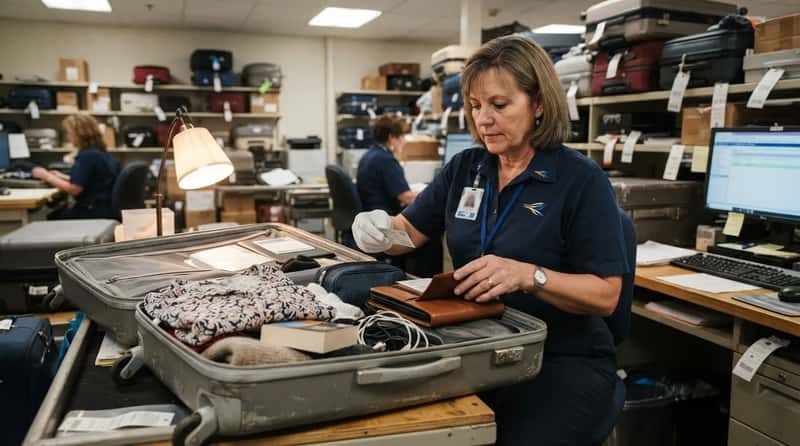
If automated matching fails and a bag sits unclaimed for several days, the search goes analog – and that means someone actually opens it.
Unclaimed bags eventually get routed to the airline’s central baggage tracing office. Agents there open the luggage and dig through it looking for tags, business cards, personal documents, prescriptions – anything that identifies an owner.
This step catches a lot of passengers off guard. Most assume their bag is sitting sealed somewhere waiting to be claimed, not being physically searched by airline staff.
If agents still can’t identify the owner, a full description of the bag and its contents goes into WorldTracer, which functions as a shared lost-and-found for over 400 airlines and ground handlers worldwide.
This physical search is actually one of the most effective recovery methods in the industry, because travelers routinely pack things with their name and address on them without thinking twice – medication bottles, printed hotel confirmations, loyalty card inserts. Handlers are trained to spot exactly these things.
What happens once the bag is matched and located is where most people expect the story to end. It doesn’t. Getting identified is only half the battle – getting home is the other.
9. Once Found, Your Bag Usually Travels Back Without You
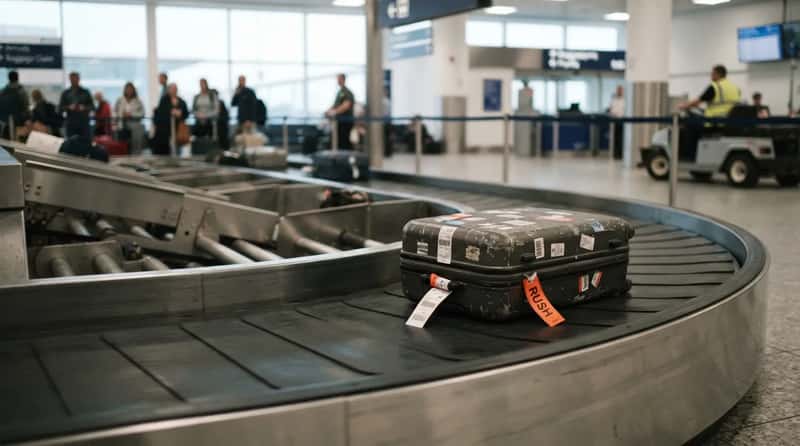
Here’s the part that surprises most people: once a delayed bag is finally matched to its owner, it doesn’t wait around for you to come get it. It travels on its own.
Once matched, the bag is classified as a “rush bag” – one that must move without its owner – and it’s typically booked on the first available connection, then handed to a courier for delivery to your home or hotel.
In most cases, the airline foots the bill for that courier delivery entirely.
WorldTracer’s Auto Reflight function has sped this up dramatically. It automatically reflies 70% of mishandled bags, and 60% of all mishandled bags get returned within just 1.6 days.
Worth Knowing
- Auto Reflight automatically rebooks 70% of mishandled bags without manual intervention.
- 60% of all mishandled bags are back with their owner within 1.6 days.
- Airlines typically cover the full cost of courier delivery to your door.
That’s a remarkable turnaround at the scale of global aviation. The majority of delayed bags are back in passengers’ hands within about two days when the system works as designed.
But what about the ones that don’t make it back that fast? What about the bags that sit for weeks? That’s where airline policy diverges sharply, and where compensation rules start to matter.
10. Airlines Are Now Legally Required to Refund Bag Fees After a Delay Threshold
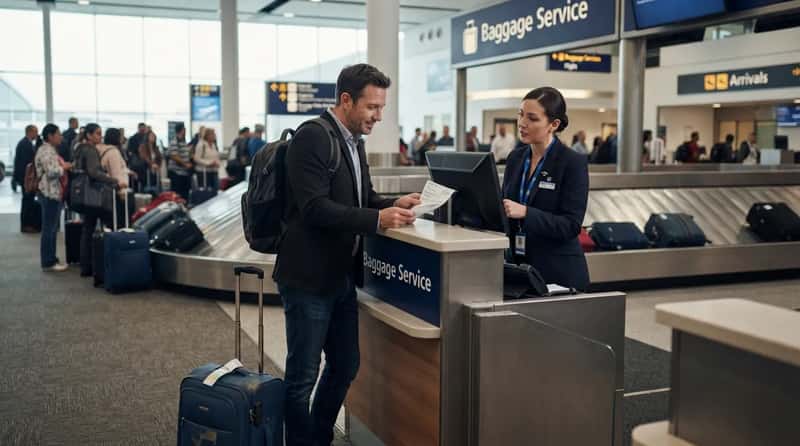
Most travelers don’t know this: paying a checked bag fee and then having your bag delayed doesn’t just give you a right to complain anymore. Since a rule that took effect in late 2024, it gives you an automatic right to a refund.
Under the DOT rule from October 2024, if your bag is delayed more than 12 hours on a domestic flight – or 15 to 30 hours internationally – the airline must automatically refund your baggage fee. The burden is on the carrier to process it once that threshold hits.
International compensation is governed by treaty, not just airline goodwill.
Under Article 22(2) of the Montreal Convention, a carrier’s liability for lost, damaged, or delayed baggage is capped at 1,519 Special Drawing Rights per passenger – a limit that rose about 18% when it took effect on December 28, 2024.
Quick Compare
- Domestic delay refund trigger: more than 12 hours
- International delay refund trigger: 15 to 30 hours
- Montreal Convention liability cap: 1,519 Special Drawing Rights per passenger
Airlines also have to cover reasonable, verifiable, incidental expenses you rack up while your bag is missing, up to those liability limits.
Keep every receipt for anything you buy to replace delayed essentials – toiletries, a change of clothes, a phone charger. These are almost always reimbursable, and the 2024 DOT rules tightened enforcement considerably. The problem is, most passengers still never file the claim they’re owed.
11. Most “Lost” Bags Are Never Actually Lost
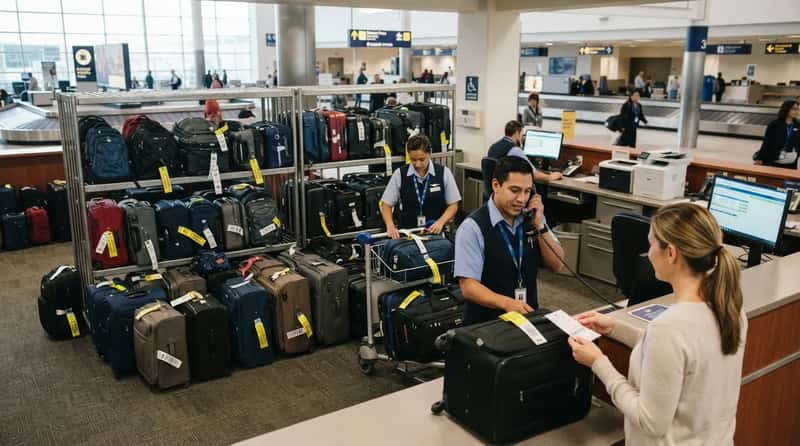
Here’s the finding that contradicts almost everything passengers believe: the overwhelming majority of bags that go missing are not lost. They’re delayed.
SITA’s 2024 data showed roughly 74% of mishandled bags were delayed and later delivered, 18% were damaged or pilfered, and only 8% were truly lost or stolen.
The permanently lost rate across all checked luggage is estimated at less than 0.5%.
That’s a remarkable number. Less than half of one percent of every checked bag on earth is permanently gone. For context:
- In 2024, 33.4 million bags were mishandled globally – a rate of 6.3 per 1,000 passengers.
- Baggage mishandling dropped nearly 60% between 2007 and 2022, largely thanks to better luggage tracking technology.
Most travelers are still mentally stuck in pre-2007 aviation, when losing a bag really did often mean losing it for good. The system has quietly changed underneath them.
The bags that never come back – the true permanent losses – are the ones that exhaust the entire system. What happens to them at the very end is something almost no passenger has ever considered.
12. Unclaimed Bags Get Donated, Sold, or Auctioned After 90 Days
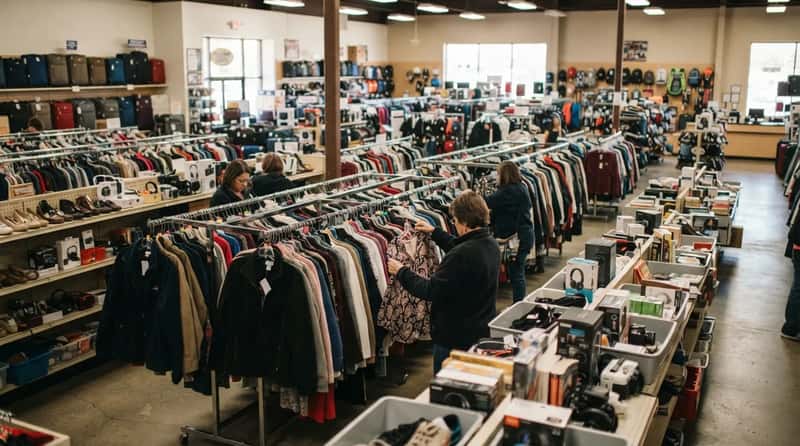
When every tracing effort fails and a bag is never reunited with its owner, it doesn’t vanish into an airline warehouse forever. There’s a defined endpoint, and it arrives faster than most people would expect.
WorldTracer files expire after 90 days. After that, airline agents unpack the bag, donate usable items like clothing to local charities and shelters, and dispose of the rest.
Some U.S. airlines sell unclaimed bags and their contents through dedicated channels – most famously the Unclaimed Baggage Center in Scottsboro, Alabama, which has spent decades selling the contents of bags airlines could never reunite with their owners.
The active search window runs roughly 21 days from the moment you file your PIR. Most airlines officially declare a bag lost somewhere between day 14 and day 21 without recovery.
From days 21 to 90, passive tracing continues quietly in the background – even after compensation has already been paid out. If the bag turns up during that window, the airline may still try to return it.
The total cost of all this searching, courier delivery, and compensation is staggering, and it says a lot about how seriously airlines actually take the problem, even when passengers assume otherwise.
13. The Cost of a Single Missed Bag Is Enormous
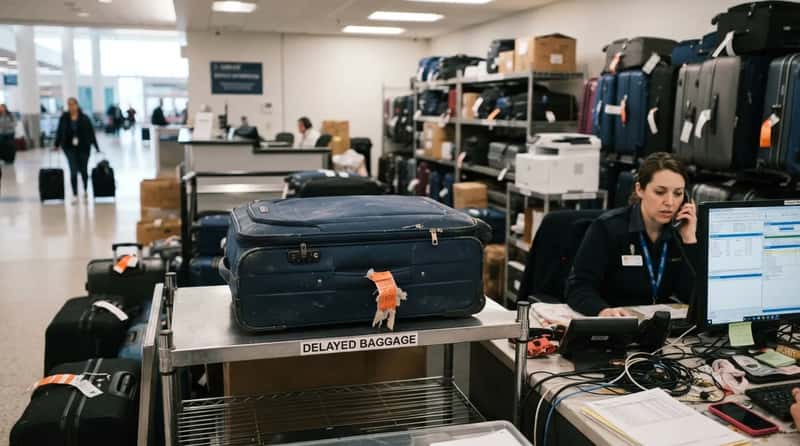
Travelers tend to think of a lost bag as an inconvenience for the passenger. Airlines see it very differently – as one of the most expensive operational failures in the business.
Mishandling still costs the airline industry $6.3 billion, equal to roughly 15% of total airline industry profit in 2025.
Lost bags are rarer than delayed ones, but they’re the most expensive per incident at $635 a bag, hitting both the balance sheet and the brand.
SITA estimates each mishandled bag costs airlines about $150 in added expense – staffing service desks, running manual searches, dispatching courier vehicles, paying for compensation, processing claims, and sometimes even covering hotel stays for stranded travelers.
- 33.4 million bags were mishandled worldwide in 2024.
- SITA estimates baggage mishandling cost the industry roughly $5 billion that year, including courier delivery, customer service labor, compensation claims, and lost productivity.
Airlines with the worst mishandling records pay the steepest price for it. American Airlines mishandles roughly 8.71 bags per 1,000 on average, and over the three years leading up to 2024 the airline lost or delayed more than 1.7 million bags out of over 200 million handled.
The financial pressure alone has done more to improve baggage recovery rates than any passenger complaint ever could. The system that handles a missed bag isn’t run on goodwill – it’s run on economics.
14. Apple AirTags Have Quietly Changed How Bags Get Recovered
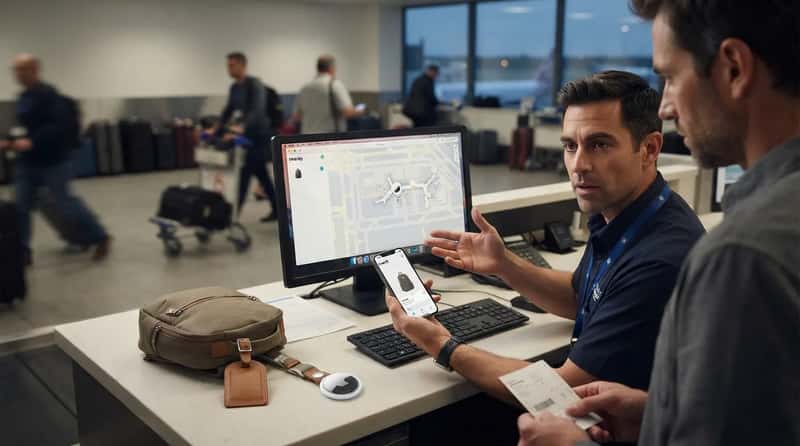
One development that no industry report fully anticipated is how much consumer tracking technology now shapes airline baggage recovery – and it matters more than most people realize.
Integrating Apple AirTag and Find My Share Item Location technology with SITA WorldTracer lets airlines recover bags earlier while giving travelers real visibility into the process.
If your bag is delayed, you can generate a secure link in Find My and hand it to the airline. Their team can then view your bag’s exact location directly inside the trace record, narrowing the search area instantly.
This is a genuine shift in how the job gets done. Handlers who once had to rely solely on WorldTracer’s tag-based data can now get a GPS-accurate pin from a passenger’s own device – meaning a bag sitting in a corner of a sorting facility three airports away can be found in minutes instead of days.
Why It Stands Out
- Passengers can share a secure Find My location link directly with airline staff.
- GPS-accurate tracking can pinpoint a bag in minutes instead of days.
- AirTags supplement official airline tracking rather than replace it.
To be clear, passenger-owned trackers supplement airline tracking, they don’t replace it. An AirTag is an extra layer, not a substitute for filing your PIR and staying in contact with the airline.
Still, the technology has tilted the odds meaningfully in the passenger’s favor. Travelers who know how to share that location link are genuinely better off than those who don’t.
Put all of this together, and something emerges that almost nobody standing at an empty carousel would ever guess is true.
15. The System Is Far More Competent Than Passengers Believe – And That’s Partly the Industry’s Own Fault
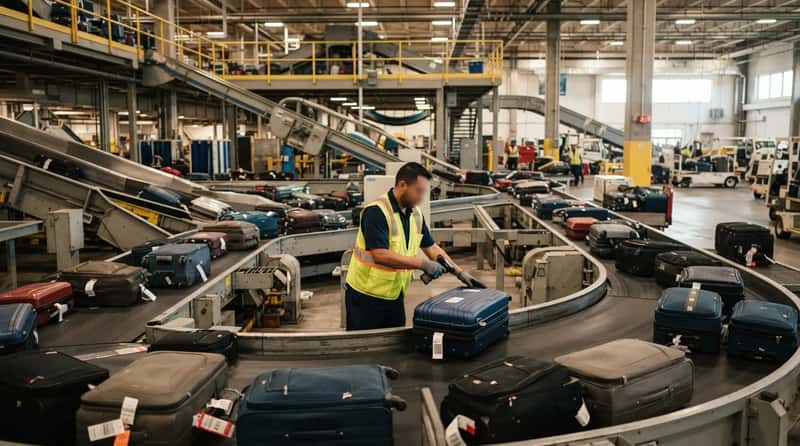
The biggest misconception about airport baggage is also the most persistent one: that when a bag disappears, nobody is really looking for it.
SITA, which runs the WorldTracer system used by more than 500 airlines and ground handlers across roughly 2,800 airports, reported about 24 million bags delayed, misrouted, damaged, or lost worldwide in 2025 – a rate of 4.9 per 1,000 passengers.
That rate means roughly 99.5% of bags arrive without a single problem. The small minority that do go wrong step into one of the most sophisticated tracing operations in global logistics.
At a major hub like Miami International Airport, baggage claim processes more than 45,000 bags a day – somewhere around 5,000 to 6,000 an hour, every hour.
The industry has just never communicated any of this well. Baggage stays a trust issue because passengers now expect the same tracking visibility they get from a package delivery app. Airlines have the data – they’ve simply been slow to show it.
When your bag disappears, the clock starts immediately. A global search network lights up, handlers physically pull bags from cargo holds, automated systems run matches across 2,800 airports, and couriers stand by to deliver it to your door.
Most passengers never find out any of that happened. They just get their bag back and move on with their trip.
The Bottom Line: Your Bag Was Never as Lost as You Thought
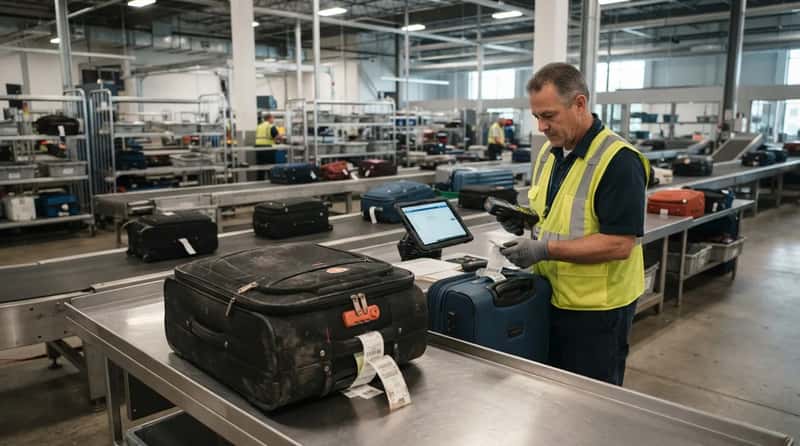
A missed bag isn’t a dead end. It’s the trigger for one of the most automated, methodical recovery operations in modern logistics.
Delayed and misrouted bags account for more than 75% of mishandling cases. Damaged bags make up roughly 18%. Permanently lost bags sit well under 1%.
The system works far better than anyone staring at an empty carousel would ever believe.
File your PIR before you leave the airport. Drop an AirTag inside your suitcase. Keep every receipt. Call the airline instead of just waiting by the phone.
Those four habits are the real difference between a bag that’s back on your doorstep in 36 hours – and one that spends the next three months quietly working its way through a tracing file you’ll never actually see.
Bonus: The Insider Trick Nobody Tells You
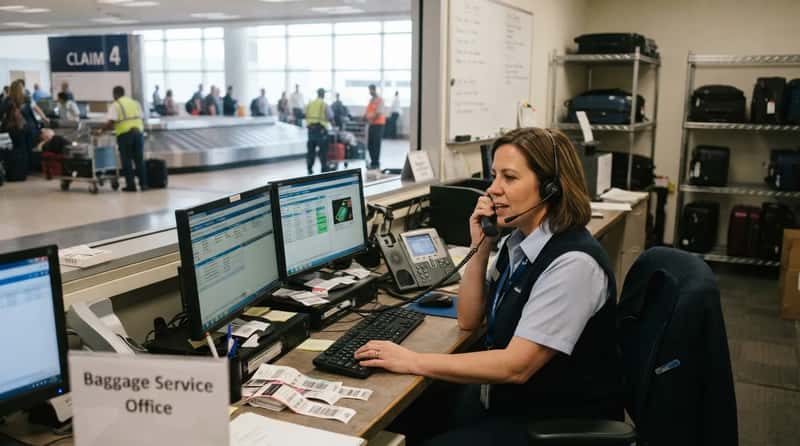
Here’s the move working handlers actually use themselves: skip the airline’s main customer service hotline entirely and call the destination airport’s local baggage service office directly.
Central call centers are almost always outsourced and cannot see live WorldTracer scans – the local baggage office at the airport can, because their terminal is the one physically pinging “on hand” status.
- Before you even land, search the destination airport’s official website for its “Baggage Service” or “Baggage Claim Office” page – most major hubs list a direct local phone number there, separate from the airline’s national line.
- Call that local number as soon as you’re off the plane, not the 1-800 line – you’ll reach someone standing near the actual conveyor and tracing terminal.
- Give them your PIR reference number right away if you’ve already filed one through the airline’s app – it lets them pull your case instantly instead of starting a new search.
- Specifically ask them to check if your bag shows as “on hand” anywhere in the system – that’s the exact WorldTracer term staff search for, and asking for it by name gets a faster, more precise answer than a general “where’s my bag” question.
This one habit routinely shaves hours, sometimes a full day, off a bag’s return time – because you’re talking to the people with hands on the actual system instead of a script.