It is hard to encapsulate Banff for the non-enlightened visitor. Some might call it a picture-perfect cathedral of wilderness; others, a dream-like mountain paradise. In any case, Canada’s most popular national park is on many bucket lists for good reason.
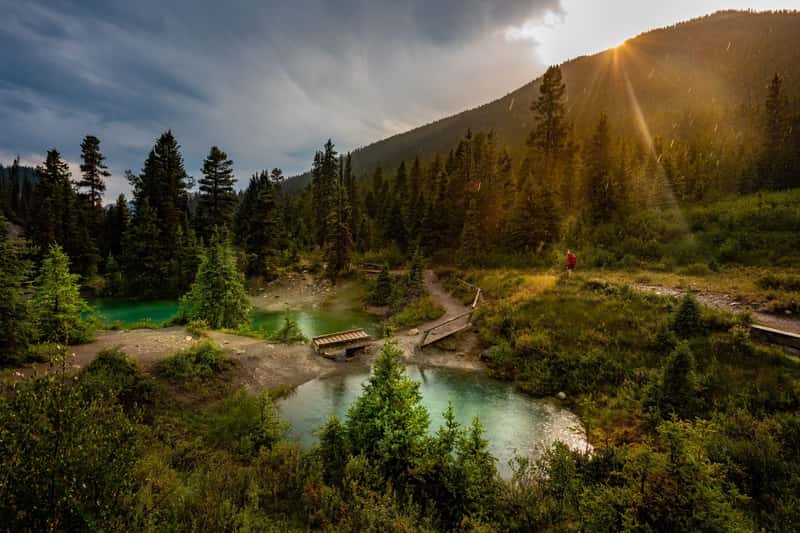
Banff’s iconic tooth-shaped limestone peaks, its many breathtaking glacial valleys, and its almost surreal blue lakes attract scores of people each year. The region has always attracted adventure sports enthusiasts in all seasons. However, it’s during the summertime when Banff starts creaking under the weight of tourism.
Canada’s Ice-Covered Crown Jewel

One might think Banff is becoming Canada’s Yellowstone National Park, though the locals might not be pleased about such a moniker. Made even more popular by Kevin Costner’s hit series, skeptics might describe Yellowstone National Park as being more like a wilderness theme park during summer months.
Drew Magary wrote for Outside in 2024 about the behaviors he experienced there and summarized these in his visitor review. He was not impressed by the sheer volume of people and how some of them behaved. “When I went to throw away my bag of Cheetos, the garbage can was full,” he writes somewhat allegorically. “Every garbage can at the visitor center was.”
In recent years, some Banff locals fear a similar fate may befall their beloved mountain community, a proud symbol of Canada’s great outdoors.
Car Trouble
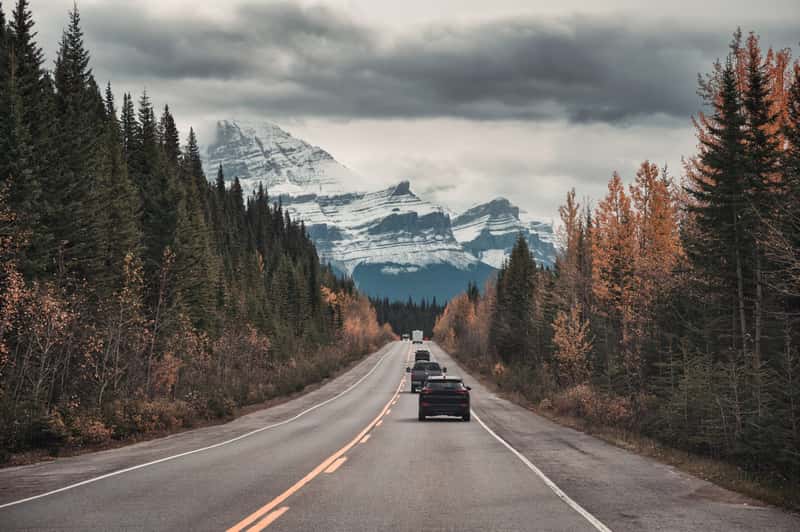
“Are Cars to Blame for Banff’s Summer Crowds?” asks a recent Avenue Calgary Magazine entry from Lynda Sea. Her article demonstrates how the UNESCO World Heritage member is the victim of its own success.
Sea’s interview with Banff Mayor Corrie DiManno confirms the answer to the headline’s question. “Banff has one economy and that’s tourism,” says DiManno. “The reason that this town was incorporated was to serve as a visitor centre for the park.”
The mayor assesses that Banff isn’t experiencing a car problem; it’s a car parking problem. There is a difference between car overcrowding and general overcrowding, though lifelong residents may still beg to differ.
A Secret Impossible to Keep
Canada’s National Park authority, Parks Canada, revealed early in 2025 how numbers at Banff National Park have increased by 31% in a decade. “Banff National Park saw 4.28 million visits in 2023/24, the busiest year on record,” the report reads. “The Lake Louise area has seen an even more pronounced increase in visitation.”
However, while statistics for the 2024 tourist year are high, Banff’s 2025 will likely dwarf its predecessor, thanks to a nearby catastrophe.
This Year Will Be Big
Its neighbor to the north, Jasper National Park, suffered devastating forest fires in 2024. As well as wiping out one-third of the town, the Jasper Complex Fire ravaged 32,722 hectares of pristine wild land.
As a consequence, it has lost 20% of its tourist traffic in 2025, according to CBC News. Therefore, Banff’s visitor numbers for 2025 will likely break more records when the statistics come in. Like Yellowstone National Park, there are no limits on Banff’s visitor quotas.
The Issues at Hand
Of course, with such high numbers expected, the effects on both the town and its surrounding nature have been palpable. Cathy Ellis of Rocky Mountain Outlook shared some of these in a recent discussion piece on the situation:
- Congestion on roads, streets, and trails;
- Quality of life for residents;
- A degraded visitor experience;
- The ecological strain on the environment;
- Housing density and overdevelopment concerns;
- Unclear plans for managing the growing numbers.
Of course, this influx can be overwhelming for any year-long residents, including Banff’s wild residents. Sara King-Abadi of The Narwhal claims that species, such as grizzly bears, are becoming more nocturnal because of humans infringing on their land.
Economic Pressures in Times of Hardship
The major difference between the Yellowstone and Banff national parks is that the former doesn’t have as many inhabitants living nearby. Banff’s population of roughly 8,000 people must balance dealing with the effects of mass tourism and bringing in revenue.
Nonetheless, Canada is becoming more expensive for businesses to survive, and while there are many issues present, the town can’t survive without visitors. A report from Abacus Data sums up the current cost-of-living concerns pushing many to the brink. Naturally, those concerns extend even further to Banff business owners.
Charting a New Course
Tourism research group DestinationThink has shared a review of solutions for Banff’s current tenuous situation. “Banff National Park attracts over 4.5 million visitors every year, but its success depends on keeping the other half of its mandate,” the article states. That promise is preserving its world-famous environment for future generations to enjoy.
Its post shares an interview with Banff & Lake Louise Tourism’s (BLLT’s) President and CEO, Leslie Bruce. Her vision, entitled “Lead Tourism for Good,” revolves around several key components with a more holistic treatment, including:
- Environmental stewardship;
- Community and park wellbeing;
- Indigenous tourism;
- Traffic management.
Being Different to Stay the Same
“We have to change the way people arrive here,” Bruce argues. “We have to change the way people move about and the way they consume, the way they live.” The main thrust of Bruce’s argument is that Banff needs to make big changes in order to stay the same.
With the right foresight, Banff can remain the same for years to come, and it would be a shame for the authorities to limit visitor numbers. There are dozens of amazing Banff itineraries one can follow; maybe choosing off-peak seasons is the way forward.
Banff National Park is firmly one of Canada’s most prized possessions and deserves its place on every must-see list.