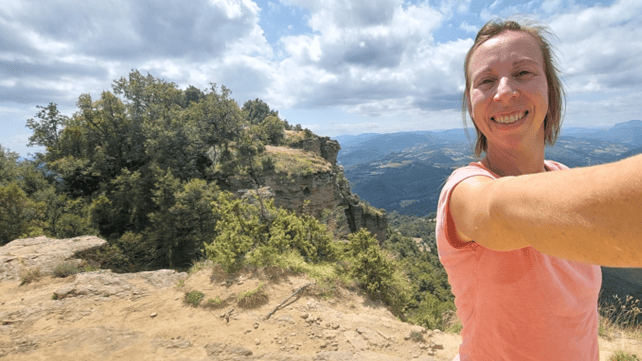
The Via degli Dei, a 130-km route that can be walked or cycled, crosses the Tuscan-Emilian Apennines, in central Italy, a region that remains largely untamed—rough around the edges, historically a land of passage and resistance. It’s not a popular trail in the conventional tourist sense, and that is precisely what makes it compelling. The Via degli Dei is decidedly indie, meant for those in the know, for travelers who genuinely enjoy walking and moving through landscapes that make no effort to please everyone. You won’t find views designed to impress at first glance, but rather landscapes that reveal themselves only to those willing to slow down and accept the rhythm of the trail.
In recent years, the route has gained attention precisely because of this alternative, independent positioning. The forests and mountain landscapes between Emilia-Romagna and Tuscany carry a deeply evocative quality—the kind of quiet magic that belongs to places that don’t give themselves away easily. The trail is highly flexible, adaptable to the time you have, your level of fitness, and even your budget. I chose to get an initial sense of it by walking two stages—roughly the stretch between Sasso Marconi and Monzuno—on two separate days, spending the night in the Apennines.
The Atmosphere Along the Trail
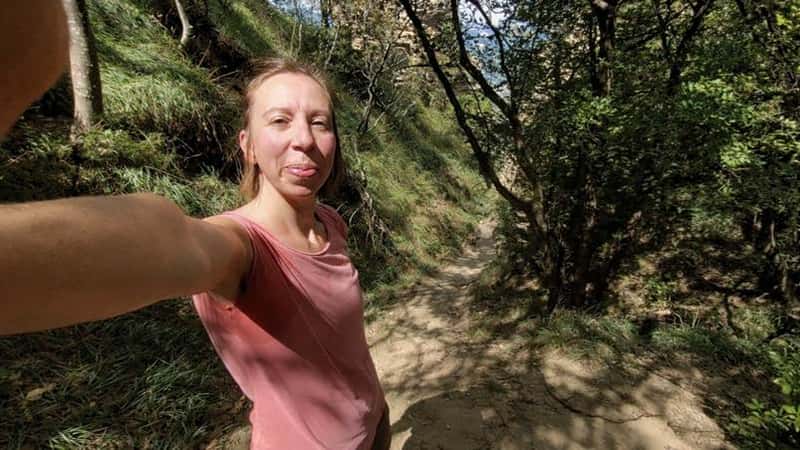
One of the most distinctive and enjoyable aspects of the Via degli Dei is its atmosphere. People who live along the route greet walkers, offer water, directions, and sometimes a short conversation. Nothing feels staged or artificial; this is spontaneous, everyday hospitality, and it reinforces the sense of moving through a living territory rather than a curated outdoor attraction.
A sense of community also forms quickly among walkers themselves. You cross paths multiple times during the day, exchange tips, share fatigue and breaks. When needed, help comes without hesitation. This is why the Via degli Dei is often compared to a smaller Camino de Santiago or a Via Francigena, that stretches not so far away). The comparison helps frame the experience, but it’s important to be clear: there is nothing religious about it. This is a trail with its own history, geography, and identity.
An Ancient Route, between Rome and the Resistance
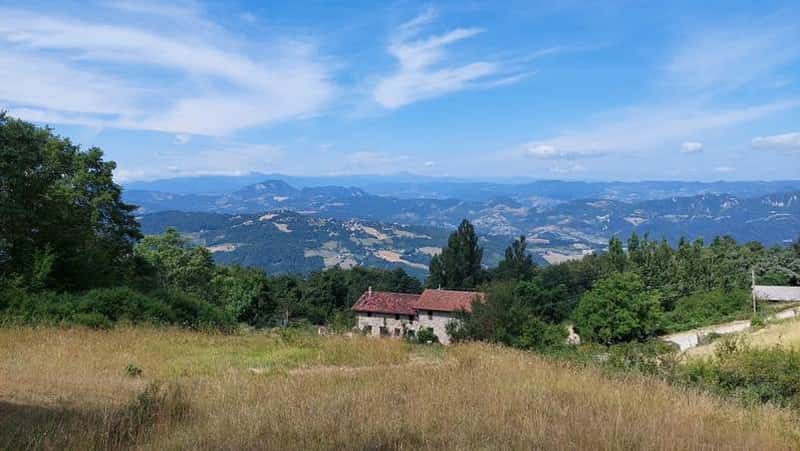
The Via degli Dei originated as a connection route long before it became a hiking trail. It was already used by the Etruscans and Romans and remained active throughout the Middle Ages as a passage for merchants and travelers. A significant portion of the route follows the Flaminia Militare, a Roman road built in 187 BC. In some sections, you still walk directly on the original stone paving, remarkably well preserved.
Layered onto this ancient past is a more recent chapter. During World War II, the Apennines were a strategic territory, crossed by the Gothic Line and marked by partisan resistance. Small monuments, plaques, and memorials appear along the trail without fanfare, fully integrated into the landscape. Walking the Via degli Dei also means physically crossing a memory that has never been turned into decoration.
A Trail Born to Walk (and Eat)
The Via degli Dei, as we know it today, actually began in a far less solemn way. The modern route was shaped by a group of Bologna-based hikers from the Italian Alpine Club who called themselves Dû pâs e ’na gran magnè—“two steps and a big meal” in the local dialect. Their idea was simple: walk across the Apennines from Bologna to Florence, ending the journey with a well-earned Florentine steak.
That light-hearted, concrete approach remains embedded in the trail’s DNA. This is not a pilgrimage and carries no religious meaning. It’s a nature-based travel route that blends a love for walking with an appreciation for territory and food—an approach that feels entirely appropriate for this part of Italy.
The Six Stages, Without Rushing
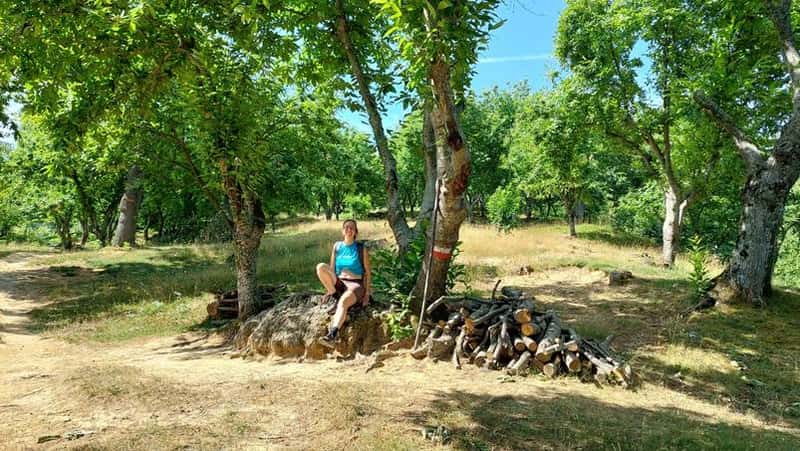
The route is about 130 km long and is typically divided into six stages. It starts in the heart of Bologna, in Piazza Maggiore, and the tone is set immediately on day one with the long climb to the Sanctuary of San Luca under its famous portico. Leaving the city behind, the trail follows the Reno River through Casalecchio and Sasso Marconi, reaching Badolo or Brento depending on pace.
The central stages best express the character of the Apennines. The ascent to Monte Adone is one of the most iconic moments, with open ridgelines and wide views. The route passes through Monzuno and Madonna dei Fornelli, a key hub for walkers, before reaching the Passo della Futa—the highest point of the trail and the boundary between Emilia-Romagna and Tuscany. From there, the landscape gradually shifts: the light changes, the terrain softens, and via San Piero a Sieve, Bivigliano, or Vetta le Croci, the trail finally descends toward Florence through Fiesole. The contrast between forest and city is sharp—and it works.
The Landscape you Walk Through
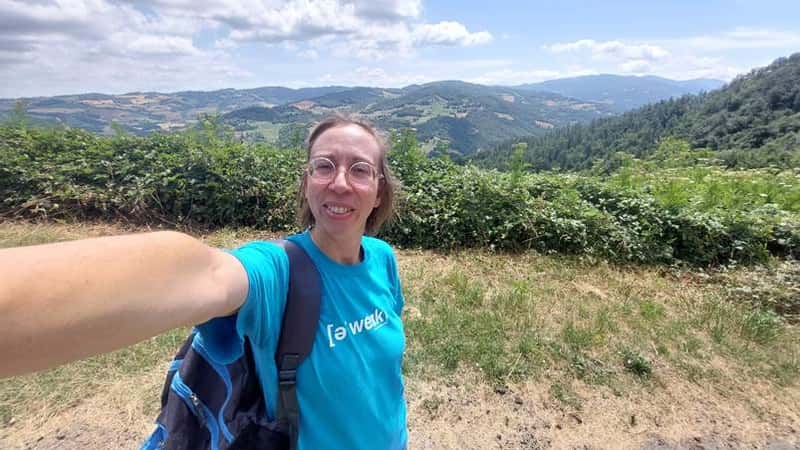
The Via degli Dei crosses a wide variety of terrain. Dense chestnut and oak forests alternate with open fields, cultivated land, small canyons, exposed ridges, and gentler rolling sections. Trails shift between wide, well-maintained paths and narrower tracks, without technical difficulty.
The climbs are steady but never extreme, and the constant change in scenery keeps the experience engaging. This variety makes the trail accessible to anyone with basic fitness, while still offering depth for more experienced walkers looking for a complete, layered experience.
Eating and Sleeping: Simple, Well Organized
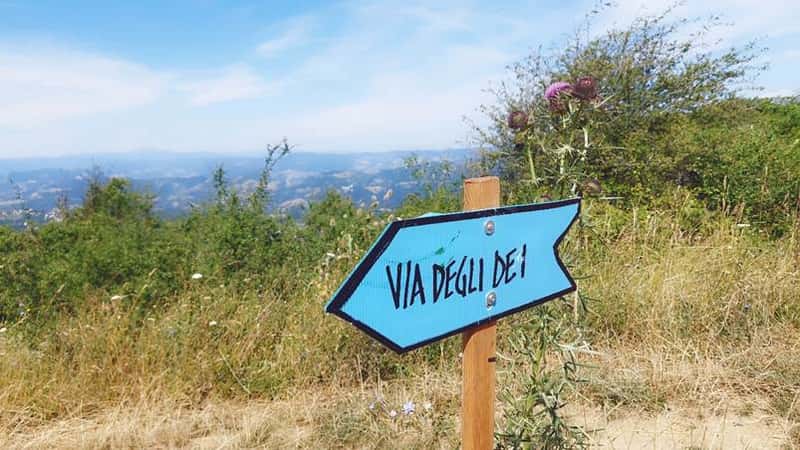
One of the trail’s greatest strengths is its distributed organization. There are no large resorts, but instead a dense network of B&Bs, guesthouses, small hotels, farm stays, and hostels. Accommodations are simple and comfortable, often run by people who live there year-round. Booking ahead is essential.
Food follows the same philosophy. Apennine cuisine is hearty and straightforward: filled pasta, soups, meat, cheeses, good bread. Meals naturally become moments of shared experience among walkers.
For practical planning, the official Via degli Dei website www.viadeglidei.it remain the best references.
Practical Notes: Preparation Matters
The Via degli Dei is rated as moderately difficult, but it shouldn’t be underestimated. Continuous elevation gain requires some training. Proper hiking shoes are essential, as is a paper trail map—cell phone reception can be unreliable, even though an official app is available and useful.
The route also has a credential, a kind of walker’s passport stamped along the way. It is not mandatory, but it adds continuity and memory to the journey. Given the trail’s growing popularity, careful planning is recommended, especially during peak months.
A Gentler Way of Living
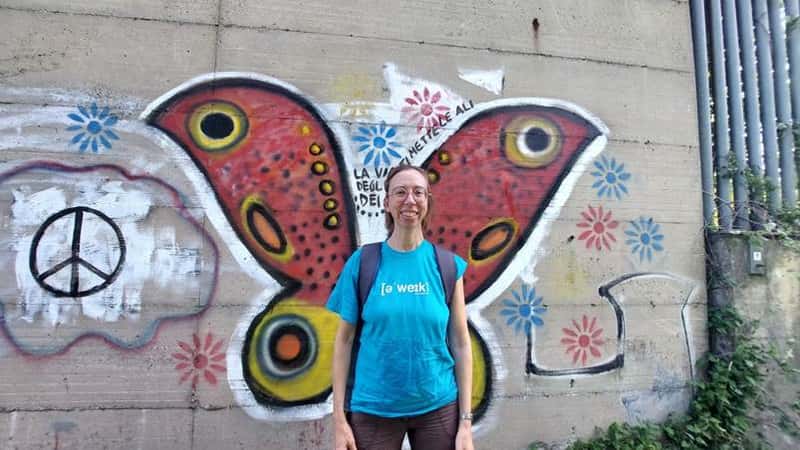
The Via degli Dei connects cities, nature, and history—but above all, it connects people. From the very first steps of the walk, something shifts: a more caring, gentle, and collaborative way of relating to those you meet kicks in almost naturally. Try it and see. Need help? You ask, and you offer it in return. And when you finally arrive at your destination, in one of Florence’s most beautiful squares, the sense of arrival is not only physical but symbolic. Perhaps a kinder, more empathetic way of living is possible after all.