Ask most travelers to name a Brazilian destination and they will say Rio de Janeiro, maybe the Amazon, perhaps a beach town along the northeast coast. São Paulo rarely makes the list, yet it quietly runs the country’s economy, its art world, and increasingly its kitchens too.
The city does not sell itself on postcard views. It sells itself on density, energy, and a kind of restless creativity that only shows up once you are standing in the middle of it.
A city built on a scale most visitors underestimate
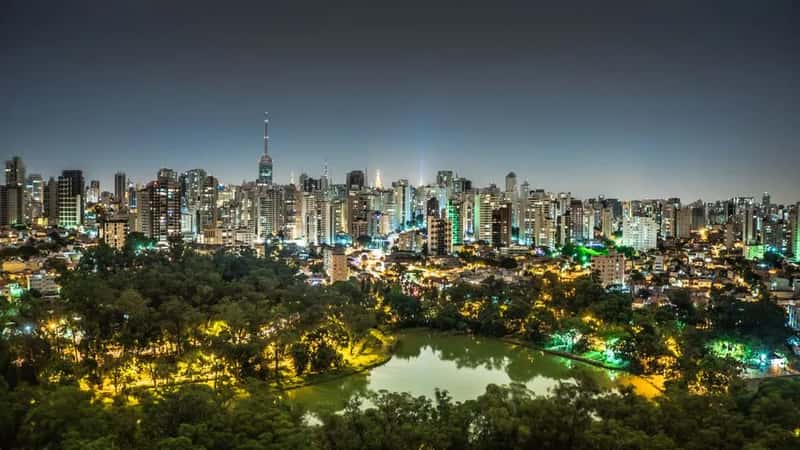
Numbers alone struggle to capture São Paulo, but they are a reasonable place to start. The municipality itself holds somewhere around twelve million residents, while by the broader Complexo Metropolitano Expandido definition, greater São Paulo is the third largest city in the world with more than 27 million residents.[1] That places it ahead of most national capitals on earth, tucked into a single metropolitan sprawl in the Southern Hemisphere.
The growth story is fairly recent in historical terms. The population, which hovered around 240,000 in 1900, surpassed one million by the 1930s and never looked back.[2] That kind of compressed expansion explains why the city feels less like a place with a fixed identity and more like one still actively becoming something, decade after decade.
Avenida Paulista, the pulse of the city
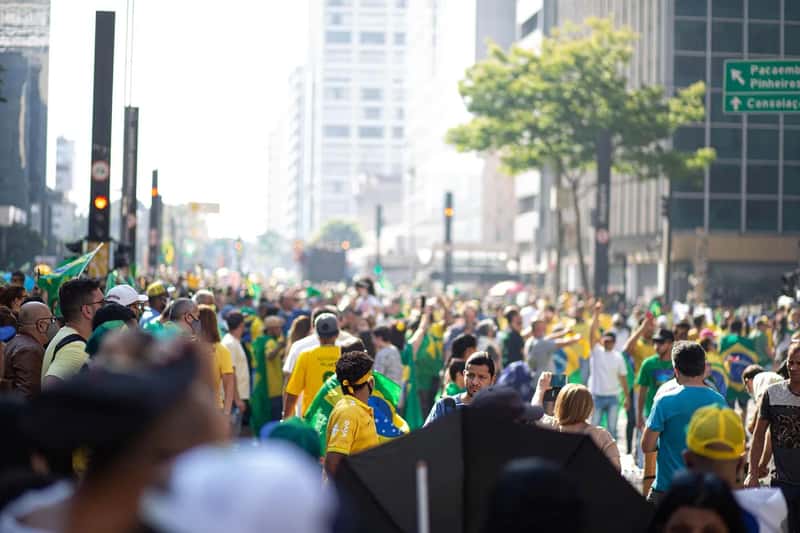
If São Paulo has a single artery, it is Avenida Paulista, a wide corridor of banks, museums, and shopping centers that cuts through the city’s core. Standing on a rooftop nearby, the concrete horizon never ends, with skyscrapers fading into a gray haze that stretches dozens of kilometers, punctuated by helicopter traffic overhead.[2] It is not a subtle introduction to the city, and it is not meant to be.
The avenue closes to cars on Sundays, turning into a public stage for skateboarders, street musicians, and families out for a walk. It is also ground zero for many of the city’s biggest public gatherings, from protests to parades, which makes it as much a civic space as a commercial one. Few streets in South America carry that dual identity so comfortably.
Ibirapuera Park, the city’s green lung
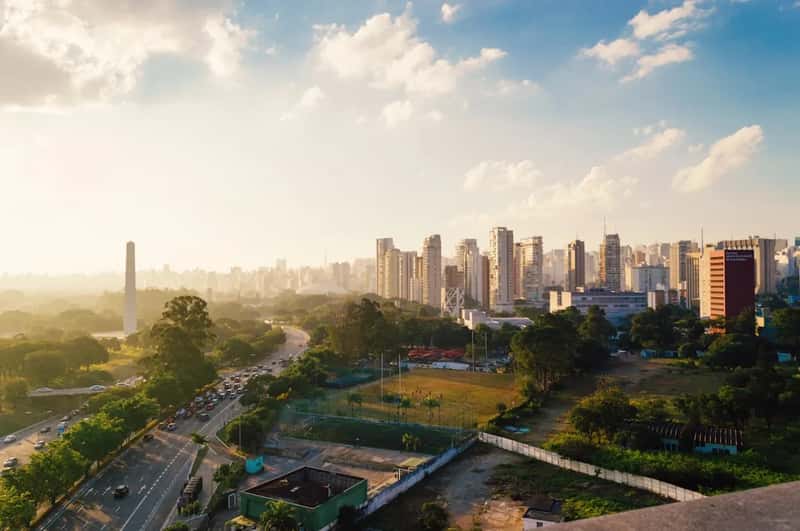
For a city known for concrete, Ibirapuera Park offers a genuine surprise. This urban park is one of the largest in all of Latin America, and its importance to São Paulo is similar to that of Central Park to New York or Golden Gate Park to San Francisco.[3] Designed with landscaping by Roberto Burle Marx and buildings by Oscar Niemeyer, it manages to feel both wild and deliberately composed.
Inside its borders sit several museums, a planetarium, lakes, and cycling paths that draw joggers at dawn and picnickers by afternoon. There is an Afro-Brazil Museum dedicated to showcasing the cultural achievements of Africans in Brazil, and a Japanese Pavilion with its own tea room and garden where visitors can feed the carp.[4] Few parks anywhere pack that much cultural range into a single afternoon walk.
A world class food scene that is finally getting its due
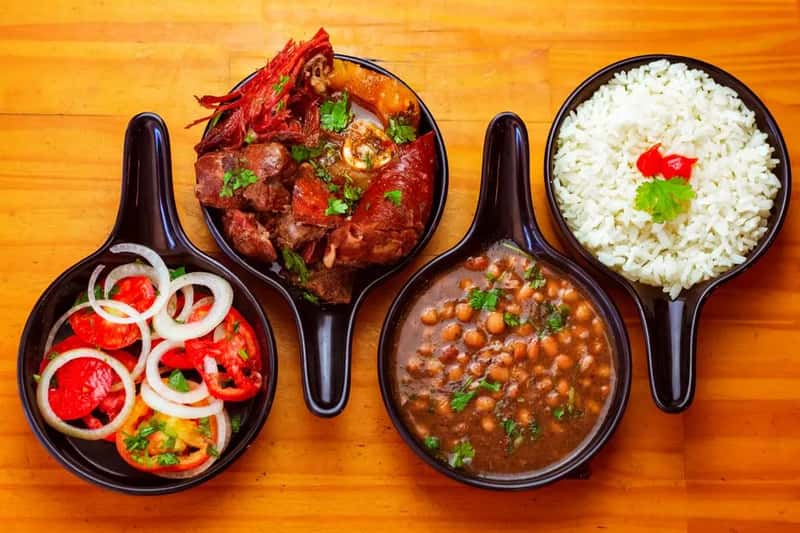
São Paulo’s dining reputation used to live mostly among Brazilians. That has changed fast. Few places can rival São Paulo’s sheer number and variety of restaurants, with over 30,000 establishments offering 81 types of cuisine.[5] The city absorbed waves of immigration over the past century, and that history now shows up on plates rather than just in neighborhood names.
The Michelin Guide has taken notice too. São Paulo proudly holds 17 MICHELIN Stars, and it is also the only Latin American city with three restaurants awarded Two Stars.[5] In 2026, the recognition climbed even higher, as the Guide awarded the coveted Three MICHELIN Stars in the region for the first time[6], a genuine milestone for Brazilian and Latin American gastronomy as a whole.
Liberdade and the largest Japanese community outside Japan
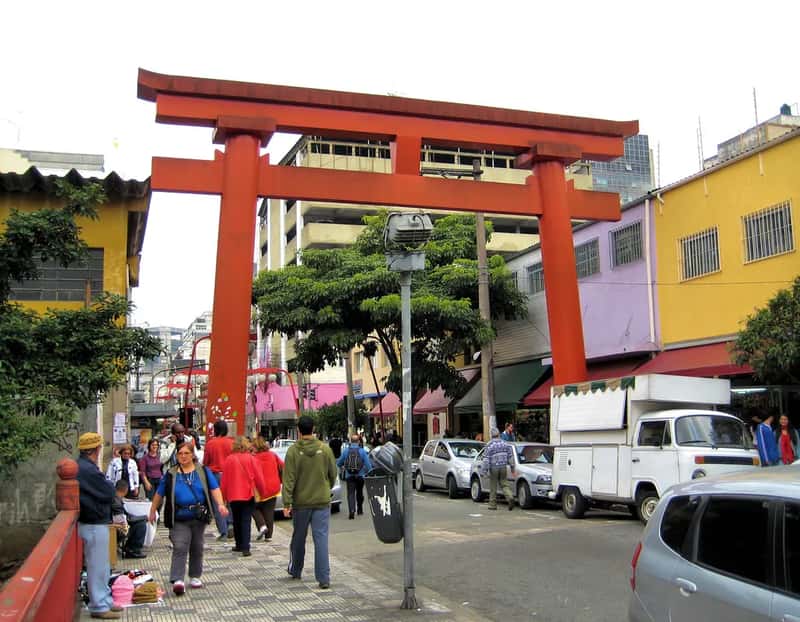
Few neighborhoods anywhere illustrate immigration’s long tail as clearly as Liberdade. Red lanterns line the main street, izakayas sit beside Brazilian bakeries, and weekend street fairs sell everything from mochi to grilled skewers. Sao Paulo has the world’s largest Japanese population outside Japan[4], a legacy of migration waves that began more than a century ago and never really stopped shaping the area.
What makes Liberdade worth a visit now, rather than just as a historical curiosity, is how alive it still feels. The Sunday market draws locals as much as tourists, and younger generations of Japanese-Brazilians continue to open new restaurants and shops rather than let the neighborhood settle into nostalgia. It reads less like a themed district and more like a living community that happens to have deep roots elsewhere.
Vila Madalena and the art of Beco do Batman
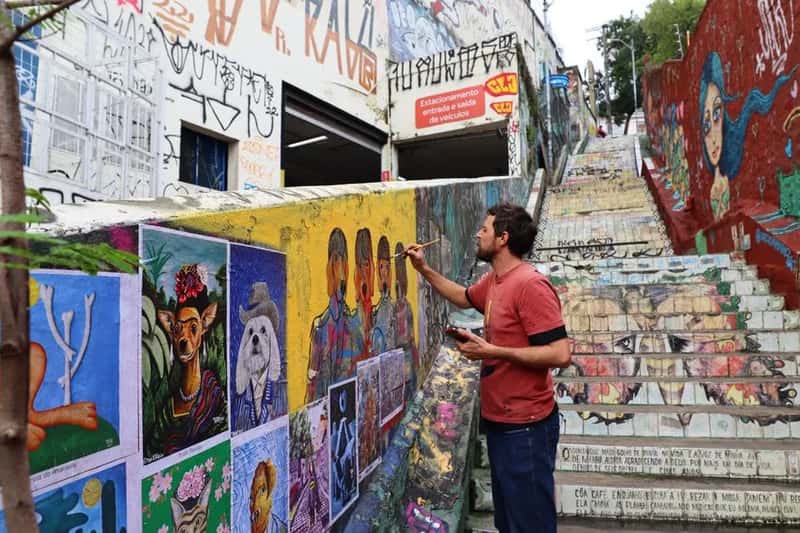
A short ride from the Paulista corridor sits Vila Madalena, a bohemian pocket of the city known for its bars, independent galleries, and one particularly famous alley. Visitors typically stroll Beco do Batman in Vila Madalena before heading elsewhere for food.[7] The alley’s walls are repainted constantly by local and international street artists, so no two visits ever look quite the same.
The neighborhood beyond the alley is worth lingering in too. Narrow streets wind past small design shops and casual restaurants, and the area tends to fill up in the evenings with a mix of students, artists, and neighborhood regulars. It is one of the few parts of São Paulo that rewards simply wandering without a fixed plan.
MASP, the Pinacoteca, and a museum culture that runs deep
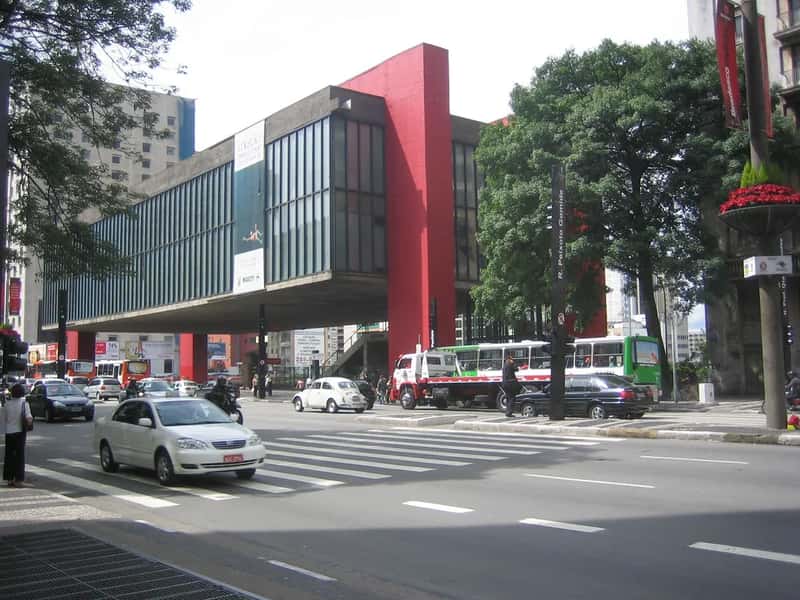
Art in São Paulo is not confined to galleries and alleyways. Art lovers are typically pointed toward MASP, the Pinacoteca, and the museums inside Ibirapuera Park.[7] MASP in particular is instantly recognizable, its main building suspended above an open plaza on massive red support beams, a piece of architecture that doubles as a public landmark.
The Pinacoteca, housed in a converted early twentieth century building, focuses on Brazilian art history in a way that gives context to everything else the city produces today. Together these institutions suggest a city that treats culture as infrastructure rather than an afterthought, something built into daily life rather than reserved for special occasions.
The Bienal and a legacy of contemporary art
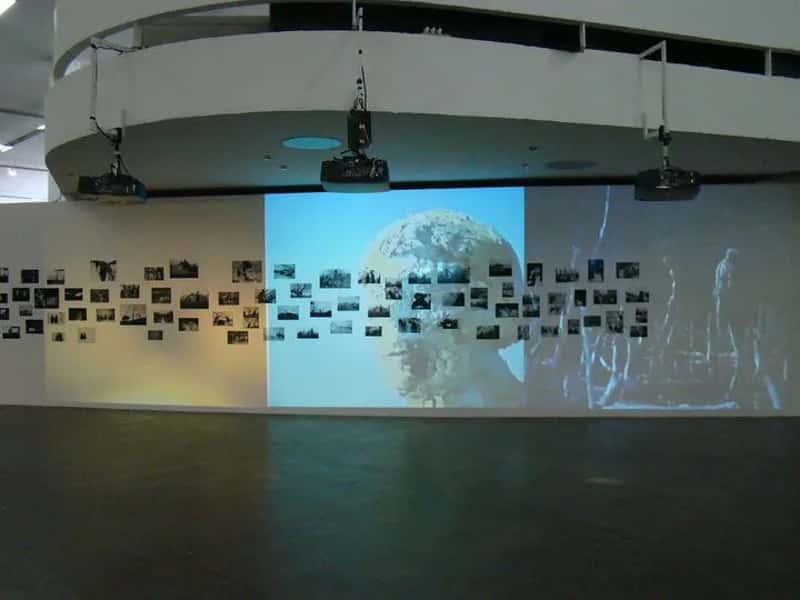
São Paulo’s relationship with contemporary art runs deeper than any single museum. The Bienal de São Paulo has shaped the Southern Hemisphere’s artistic discourse for more than seventy years, and remains one of the very few major international biennials with free admission.[8] It was a genuinely early mover in this space, too.
São Paulo was actually the second city in the world to host a biannual art exhibition, starting in 1951, only after Venice.[3] The event still takes place inside Niemeyer’s Bienal pavilion in Ibirapuera Park, and its most recent edition ran from 6 September 2025 through 11 January 2026[8], drawing artists and visitors from across the globe into a single free public event.
The world’s largest Pride Parade
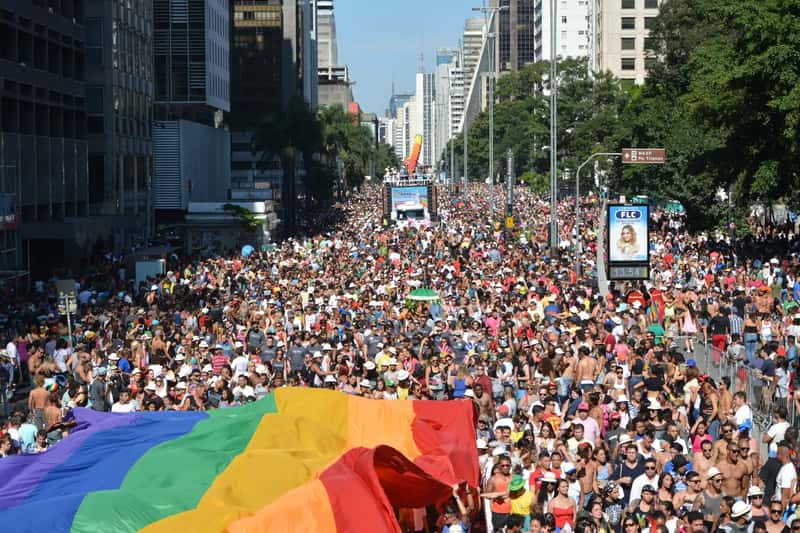
Among São Paulo’s annual events, one stands out by sheer scale. São Paulo hosts the largest gay pride parade in the world[1], an event that transforms Avenida Paulista into a sea of color each June. It is recognized as the largest pride parade in the world, drawing millions to advocate for equality.[9]
Beyond its size, the parade functions as a genuine economic and cultural event for the city, not just a celebration. According to SPTuris, the LGBT Pride Parade occupies first place in the ranking of events that attract the most tourists to the city.[10] For a single day, the avenue that usually hums with financial district energy turns into one of the most visible civil rights demonstrations anywhere on the planet.
Virada Cultural, a 24-hour party for everyone
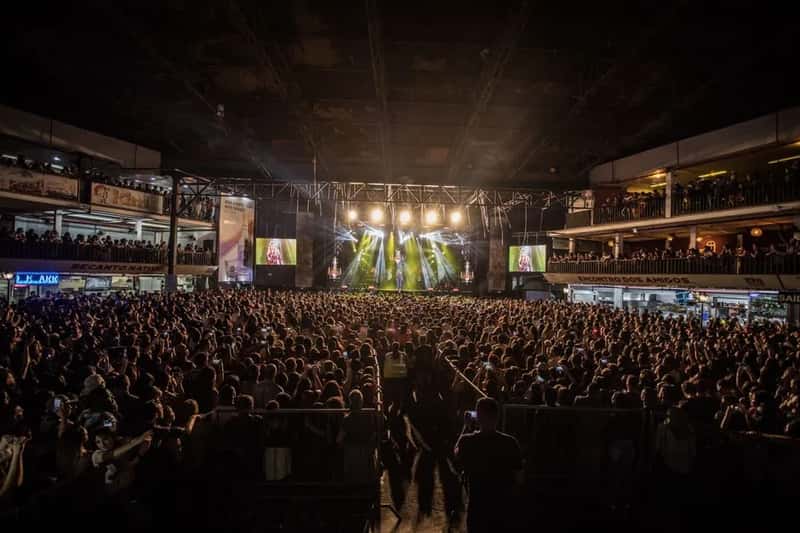
If Pride shows off the city’s scale, Virada Cultural shows off its stamina. This is São Paulo’s annual 24-hour cultural marathon, where Ibirapuera Park serves as one of the main stages for concerts, performances, and other activities.[11] The event has been running for two decades now and has become something of a civic tradition rather than a niche festival.
What makes it distinctive is its reach. All performances are free, and the program reaches every corner of the city, from iconic sites like Avenida Paulista to lesser known neighborhoods.[12] For one full night and day each year, the entire city effectively turns into a stage, with no ticket required to watch.