
Most of us come back from a trip with a magnet, a scarf, or a bag of local snacks. Some travelers also notice something less portable: how people in other places eat, move, and spend their days. Those routines often say more about a country’s health than any tourist attraction does.
Rankings of the world’s healthiest countries shift depending on the source, the year, and what gets measured. Life expectancy is the most common yardstick, though it’s only one piece of the picture. The countries below show up repeatedly near the top, and each offers a habit worth borrowing.
Japan: Walk Everywhere and Eat Seasonally

Japan sits near the top of nearly every longevity table. Its 2025 life expectancy rose to 81.35 years for men and 87.33 for women.[1] Daily movement seems to be part of the story, since one comparative study found Japanese men averaged about 9,055 steps a day, against 7,878 for American men.[2]
The traditional diet, called washoku, leans on seasonal foods such as fruit, vegetables, rice, fish, soy, green tea and seaweed, with little meat and dairy.[3] Researchers also point to gardening, a sense of purpose known as ikigai, regular health check ups and strong social ties.[3] You can take home the walking and the variety without changing your whole kitchen.
Spain: Olive Oil, Nuts, and a Slower Table
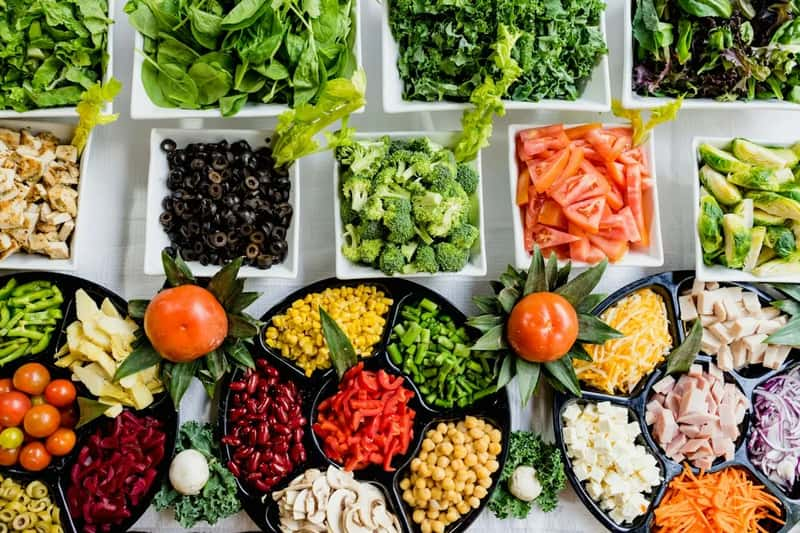
Spain lands in the global top ten, with a 2026 life expectancy of 84.1 years, according to UN projections.[4] The country also anchors much of the research on the Mediterranean diet. A bibliometric review found that Spain led all countries in publications on the diet and metabolic syndrome.[5]
The evidence is fairly specific. In high risk patients from the PREDIMED trial, the diet, especially with extra virgin olive oil or nuts, significantly reduced stroke and type 2 diabetes.[6] A handful of nuts and olive oil as your default fat is an easy habit to carry home.
Italy: Treat the Mediterranean Diet as Medicine
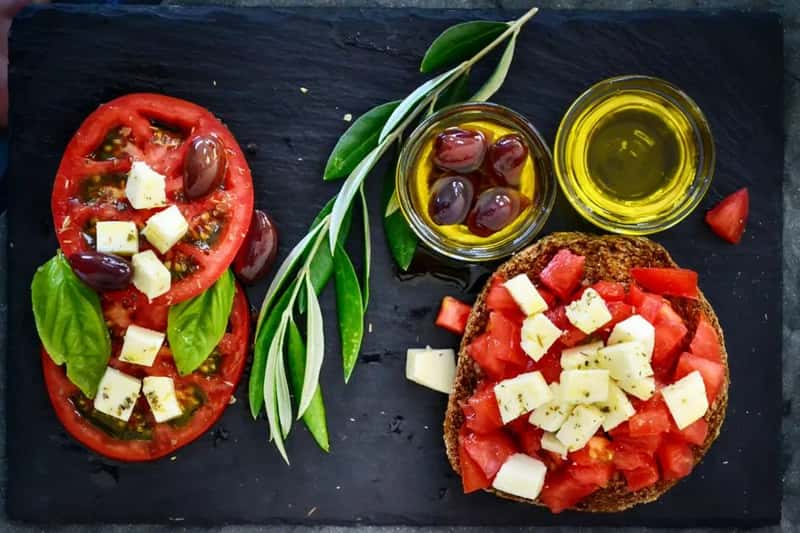
Italy shares the top tier with Japan and Switzerland. World Bank data for 2024 put Italian life expectancy at 84.0 years.[7] What’s interesting is how seriously Italian health bodies now treat food as prevention.
In 2025, Italian scientific societies and the National Institute of Health published national guidelines. They advise that higher adherence to the Mediterranean diet may help reduce all cause mortality in the general population.[6] They also acknowledge that many Mediterranean countries, Italy included, have drifted away from the diet, contributing to overweight and obesity.[8] So the habit is worth borrowing, but even Italians are working to keep it.
Greece: Eat Together, Not Just Well

Greece has a long place in nutrition history. The famous Seven Countries Study, which began in the 1950s, examined diet, lifestyle and heart disease in the U.S., Italy, Greece, Finland, the Netherlands, the former Yugoslavia and Japan.[9] Greek eating patterns helped shape what we now call the Mediterranean diet.
More recent work looks at the social side of the table. The MINOA study followed 436 Greek adults over 65[10] and found that higher adherence to the diet correlated with improved wellbeing and self care.[10] It’s a correlation, not proof of cause, yet it fits the idea that shared meals and good food tend to travel together.
The Netherlands: Let the Bike Do the Work

The Dutch don’t treat exercise as a separate chore. More than a quarter of all trips in the country are made by bike.[11] That’s supported by infrastructure, including more than 35,000 km of cycle lanes.[11]
A widely cited 2015 study in the American Journal of Public Health estimated the payoff. It concluded that cycling prevents about 6500 deaths each year, and adds half a year to Dutch life expectancy.[12] Those are modeled estimates, but the principle is simple: short daily rides add up. Swapping one short car trip a week for a bike ride is a realistic start.
Switzerland: Strong Prevention, Everyday Mobility

Switzerland regularly sits near the summit of life expectancy charts. World Bank data for 2024 show 84.4 years.[7] The OECD also identifies it as one of the countries with fewer than 140 avoidable deaths per 100,000 people.[13]
Pinning that on one habit would be a stretch, because health system quality and income play big roles. Still, Switzerland is widely known for its dense public transport network and walkable towns, which keep daily movement built in. Choosing the train and a short walk over the car is a habit that travels easily.
South Korea: Vegetables on Every Plate
South Korea has climbed to the top ranks of longevity. The OECD puts Korean life expectancy at 83.5 years, with treatable mortality of just 45 per 100,000, one of the best readings in the OECD.[13] That points to a health system that catches problems early.
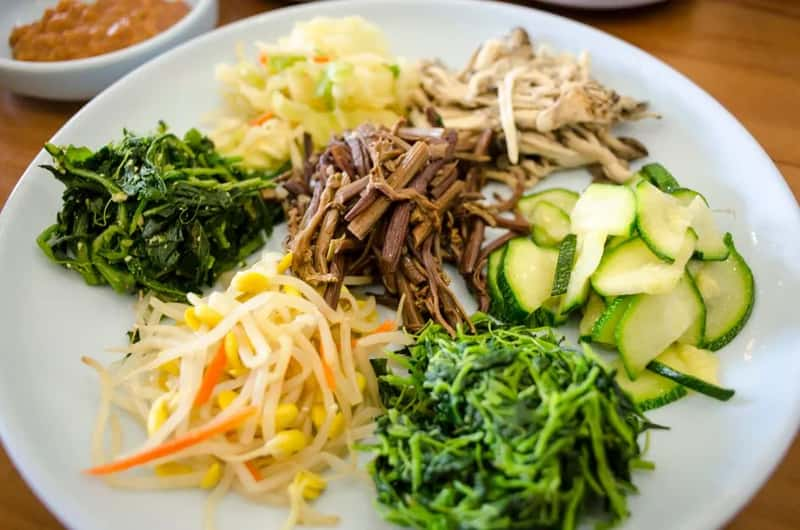
On the plate, a traditional Korean meal usually comes with rice, soup, and several small side dishes, many of them vegetables or fermented foods like kimchi. Eating this way makes it easy to fit several vegetables into one sitting. You don’t need a recipe, just the habit of filling the table with small, varied dishes.
Norway: Make Time for the Outdoors

Norway combines long lives with strong public health capacity. The OECD puts Norwegian life expectancy at 83.1 years, above the OECD average.[13] The country also spends heavily, with current health expenditure at 9.92 percent of GDP in 2021 according to WHO.[13]
Money isn’t the only factor. Norwegians have a cultural idea called friluftsliv, loosely meaning open air living, which treats time outside as a normal part of life in any weather. A walk or ski after work, instead of a screen, is a modest import with real benefits.
Sweden: Use the Right to Roam
Sweden is consistently among the longest lived nations in Europe. World Bank data for 2024 place Swedish life expectancy at 84.1 years, just behind Switzerland.[7] That’s a notable result for a country with long, dark winters.
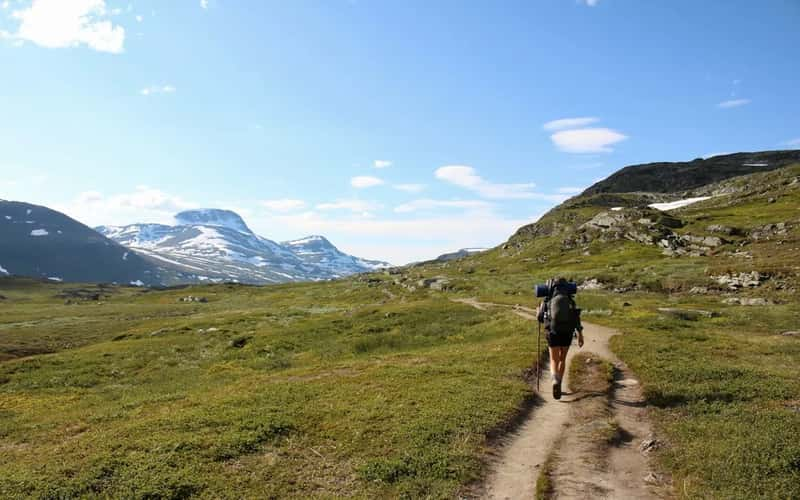
Part of the culture is allemansrätten, the public right of access that lets people walk, camp, and pick berries on much open land. It makes spending time in forests and by lakes an ordinary weekend plan. Whether you live near a forest or a city park, a regular outdoor outing is the habit to keep.
Singapore: Make the Healthy Choice the Easy One

Singapore is a small, dense city state with a surprisingly strong health record. UN projections for 2026 put its life expectancy at 84.1 years, placing it in the global top ten.[4] Few countries have shaped daily choices as deliberately.
The government’s Health Promotion Board runs the Healthier Choice Symbol, a label that helps shoppers spot better options on supermarket shelves and in food courts. The takeaway is about environment more than willpower. Reading labels and picking the better default at the counter is a habit you can start at home.
Small Habits to Pack in Your Carry On

Across these ten countries, the common thread is routine rather than extremes. People walk or cycle for errands, eat mostly plants, and make time outdoors and at shared tables. Strong health systems play a role too, so lifestyle isn’t the whole explanation.
Start with one change you can repeat, such as a daily walk, olive oil in place of butter, or a bike ride for a short trip. Pick the habit that fits your week and keep it going.