For decades, heading south meant one thing for most Canadians: the United States. That has changed dramatically over the past year and a half. Frustrated by tariffs, “51st state” rhetoric, and a political climate that feels increasingly hostile, Canadian travelers have redirected billions of dollars away from American hotels, theme parks, and shopping malls toward destinations that feel warmer in more ways than one.
This isn’t a quiet, temporary dip either. It’s one of the most sustained and statistically documented travel boycotts in recent memory, and the money hasn’t disappeared, it’s simply gone somewhere else. From the Caribbean to the Canadian Rockies, entire tourism economies are now feeling the ripple effects of a shift that started as political protest and turned into a genuine reshaping of how Canadians vacation.
Why Canadians Pulled Back So Hard

The roots of this boycott trace back to early 2025, when President Trump’s tariffs on Canadian goods and repeated comments about annexing Canada as a “51st state” set off a wave of nationalist backlash north of the border. Canadians are exercising this political defiance in opposition to U.S. President Donald Trump’s trade war with Canada, and Leger polling suggests 67 percent of those who decided to boycott travel to the U.S. in 2026 have done so because of the political climate and tensions between the two countries.[1] It wasn’t a passing mood swing, either.
Industry veterans say they’ve never witnessed anything quite like it. Amir Eylon, President and CEO of Longwoods International, said that in his 37 years in the travel industry, he had never seen anything like what Canadians have pulled off, and roughly six in ten Canadians report U.S. government policies, trade practices and political statements have made them less likely to travel to the U.S. in the next 12 months.[2] A weaker Canadian dollar against the greenback only reinforced the decision, since an expensive U.S. dollar also makes it easier to say no.[1]
Home Sweet Home: The Domestic Travel Boom

Rather than staying put out of frustration, huge numbers of Canadians simply started exploring their own backyard. Analysis from the Bank of Canada notes that between early 2024 and late 2025, Canadians increased their spending on domestic travel and tourism by around 10 percent, with a corresponding rise in the number of trips taken within Canada, aligning with polling that finds many of those skipping U.S. travel intend to replace it with trips inside Canada, boosting destinations from Atlantic beach towns and Quebec cities to the Rockies and coastal British Columbia.[3] Domestic flight searches have followed the same pattern, with Canadians loving Canada in 2026, feeling extra patriotic with domestic flight interest up 12 percent compared to 2025.[4]
The federal government has leaned into this momentum rather than fighting it. From June 19 to September 7, 2026, daily admission is waived at all national parks, historic sites, and marine conservation areas managed by Parks Canada, with a 25 percent reduction applying to camping and roofed accommodations.[5] The timing is hardly a coincidence, since this move is rapidly gaining the attention of international travellers as the United States has raised its park fees for foreign visitors.[6] Banff, Jasper, and Quebec’s historic districts are absorbing crowds that might once have gone to Yellowstone or the Grand Canyon instead.
The Caribbean Is Cashing In
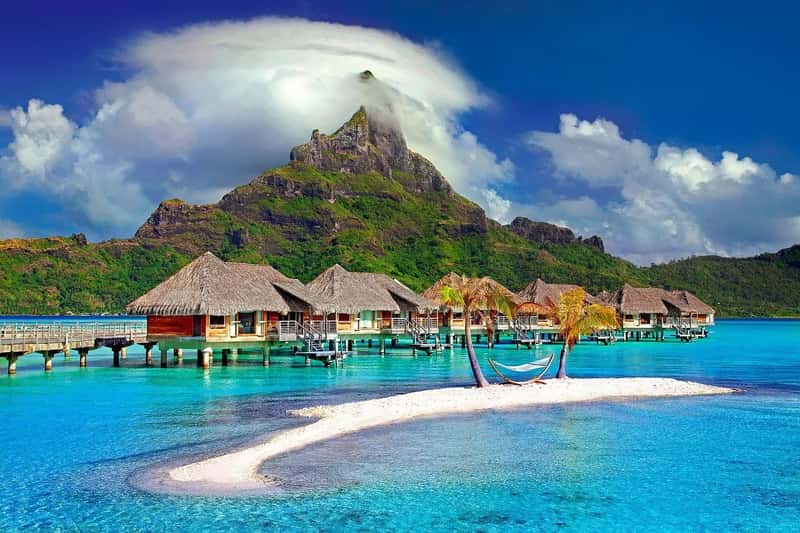
Warm-weather seekers who once flocked to Florida have found a ready substitute in the islands. The Caribbean is the biggest immediate winner of the shift, with Turks and Caicos up 350 percent and Saint Lucia up 116 percent year-over-year, according to Flight Centre Canada.[7] These aren’t marginal gains, they represent a fundamental reordering of where Canadians choose to spend their winter escape budgets.
Search data backs up the booking numbers. Skyscanner’s 2026 Canada Travel Trends Report confirms Saint Kitts up 170 percent and Saint Lucia up 160 percent in Canadian searches, with direct flights, all-inclusive value, and zero political friction being the draws.[7] For snowbirds who used to think of Fort Lauderdale or Myrtle Beach as automatic choices, the Caribbean now offers a similar sun-and-sand formula without the border-crossing headaches or political baggage attached to a U.S. trip.
Mexico Keeps Its Crown for Sun Seekers
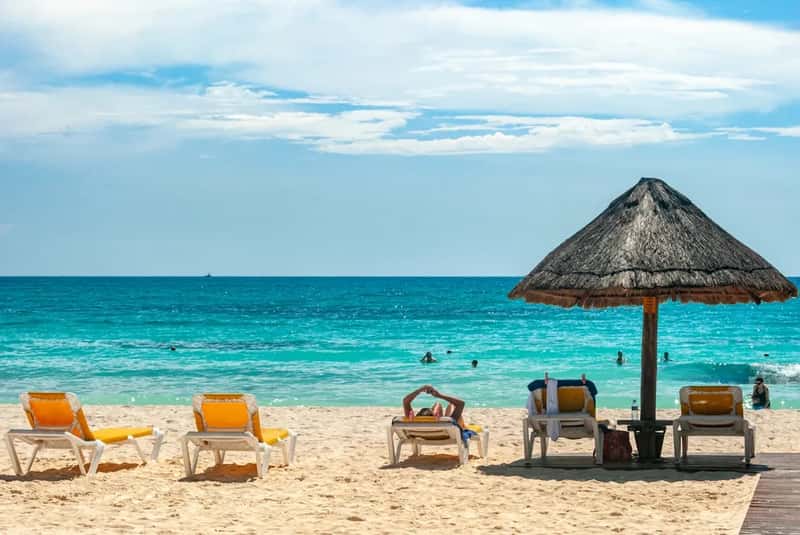
Mexico hasn’t just held onto its Canadian fanbase, it has strengthened its position as the go-to warm-weather alternative. Mexico has long been a favorite for Canadians seeking warm weather, and it continues to grow in popularity, with affordable all-inclusive resorts, stunning beaches, vibrant culture, and excellent cuisine offering everything sun-seekers love about Florida and California but often at a lower cost.[8] Cancun and the Riviera Maya in particular have become the default swap for travelers who used to book Florida beach weeks.
Beyond the beach resorts, Mexico’s cities are pulling in a different kind of traveler too. Cancun and the Riviera Maya rival Florida’s beach destinations, while Mexico City offers a lively urban experience that can compete with major American metropolises.[8] Regional dips tied to isolated incidents have occurred, but the overall trajectory for Mexican tourism among Canadians remains firmly upward, aided by a currency that stretches further than the U.S. dollar ever did.
Europe Becomes the New Winter Getaway

For Canadians willing to cross an ocean instead of a border, Europe has emerged as the single biggest international draw. Europe now ranks as the top international choice for Canadians, with 25 percent naming it their number one destination for 2026, according to Flight Centre’s national survey.[7] Travel advisors on the ground are seeing this play out in real bookings, not just survey answers.
One Toronto-based advisor described the shift bluntly, noting that she has so many retired clients who are used to spending the winter in the U.S., but due to the current political climate, they are choosing to go to Europe instead.[9] Spain, Portugal, and southern France are leading the charge, and Europe’s perceived stability, cultural depth and wide-ranging experiences are helping sustain strong demand heading into the peak summer season, despite geopolitical tensions and rising travel costs.[9] Even lesser-known spots are cashing in, with Lyon, France, up 99 percent in Canadian searches, while Portugal’s Azores topped Skyscanner’s trending list with a 209 percent spike.[7]
Japan and Asia Ride the Wave of Interest

Long-haul destinations that once felt out of reach for a quick vacation are now firmly on the radar. Nearly 580,000 Canadians visited Japan in 2024, while 48,000 Canadians traveled there in January 2026, a 13.5 percent increase compared to January 2025.[10] Affordability plays a big role in that surge.
Flight prices have made the trip far less intimidating than it used to be. Skyscanner data shows the average round-trip flight price to Tokyo in 2026 is $1,183, ranking it among the top 10 cheapest destinations globally that year, suggesting Japan is no longer viewed as a prohibitively expensive long-haul destination.[11] Beyond price, the appeal runs deeper than a bargain fare. Culture and food remain central draws, with travellers drawn to everyday experiences such as neighbourhood ramen shops and izakayas, alongside historic temples, contemporary architecture and design-forward districts.[11] Value-focused travelers have noticed the broader regional trend too, since Asia is where Canadians are currently seeing the biggest win in 2026 with an overall 10 percent drop in airfare.[4]