Most people assume a plane is ready to fly the moment it rolls up to the gate. It isn’t – not even close.
Before a single passenger steps on board, a small army of ground crew has already run through a ruthlessly specific set of checks most travelers never hear about. Some of these procedures exist only because skipping them has brought planes down before.
Others are so routine that crews run them in the dark, in the rain, on a 30-minute turnaround between flights. Here’s what actually happens between the last landing and the moment that boarding door swings open – starting with a document most passengers don’t even know exists.
#15 – Reviewing the Aircraft Technical Log
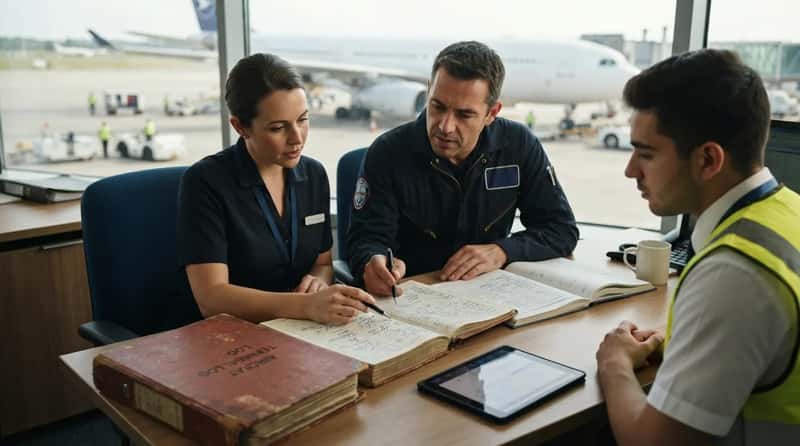
Before anyone physically touches the plane, ground crew and maintenance personnel sit down with the aircraft’s technical log. It’s a legal document that records every fault, repair, and deferred item from every previous flight the airframe has flown.
Crew scan the log for recent issues or deferred maintenance items and cross-check everything against the MEL – the Minimum Equipment List. The MEL is the regulatory document that spells out exactly which systems can be inoperative while the aircraft still remains legally airworthy.
Ignoring a deferred item in the tech log has directly contributed to serious incidents. Ground personnel aren’t reading it out of curiosity – if the log shows an unresolved defect that falls outside MEL limits, the aircraft simply cannot legally depart, no matter how tight the schedule.
This step sets the whole turnaround in motion. Everything that follows is filtered through what the log reveals, which is exactly why it has to come first.
But that’s nothing compared to the physical scrutiny that starts the moment someone steps outside to check #14…
#14 – The Full Exterior Walkaround
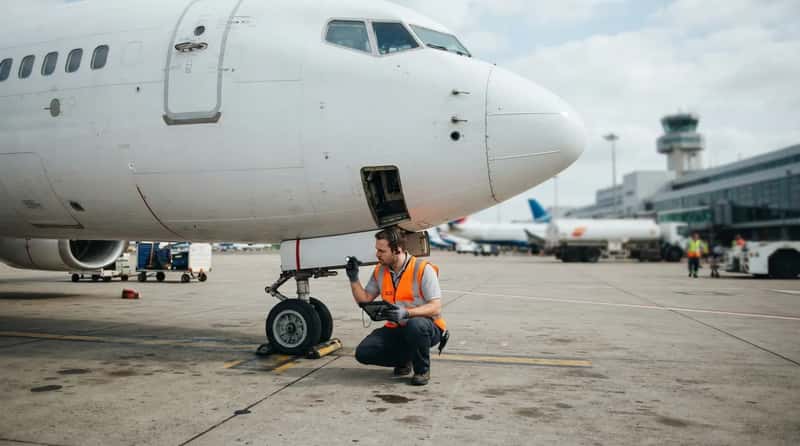
The exterior inspection exists to make sure the overall condition of the aircraft – and every component visible from the ground – is genuinely safe for flight. This is not a casual stroll around the tarmac; it follows a precise, predefined route around the entire fuselage.
Technicians follow that fixed route and log every issue found to make sure corrective action happens fast. On a commercial jet, that route typically covers the nose, fuselage, both wings, engine nacelles, belly, and tail section, always in the same order.
Personnel scan from a distance first, looking for obvious abnormalities like leaks or structural damage, before moving in close for a detailed look at specific components. A seemingly minor dent or scrape flagged during this walkaround can prevent a catastrophic structural failure at altitude.
A thorough walkaround gets completed before every single departure to catch structural damage, fluid leaks, foreign object debris, and system irregularities. Skipping or rushing one is a leading contributing factor in preventable aviation accidents.
Fast Facts
- Route always follows the same order: nose, fuselage, wings, engines, belly, tail.
- Inspectors scan from a distance first, then move in for a close-up look.
- Every flagged issue gets logged on the spot so it can be fixed fast.
- A rushed or skipped walkaround is a known factor in preventable accidents.
But there’s one specific thing they’re hunting for on that walkaround that most passengers have never even heard of – coming up at #13…
#13 – Checking for Leaks: Fuel, Oil, and Hydraulic Fluid
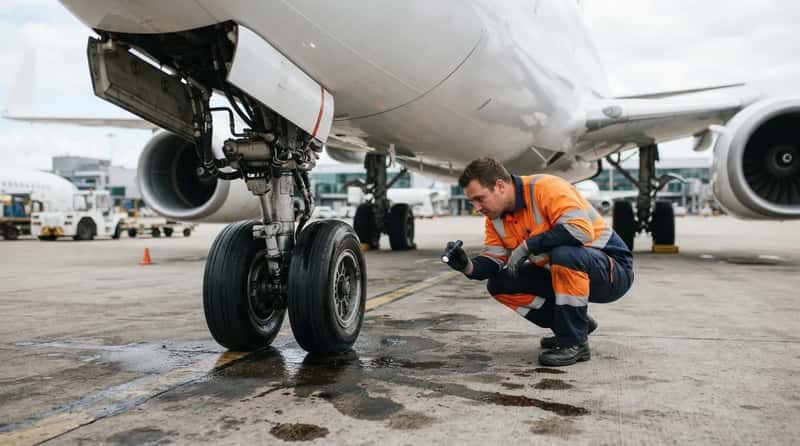
Crew check for signs of fuel, oil, or hydraulic leaks at multiple points during the walkaround. They examine the ground beneath the aircraft just as carefully as the aircraft’s surfaces themselves.
Fuel stains on the wings, along rivet lines, or anywhere the tanks are mounted can signal a leak. Even a slow seep at a single rivet line is taken seriously, because fuel systems on commercial jets operate under pressure – a slow leak on the ground can turn into a fast one at cruising altitude.
Hydraulic fluid leaks get the exact same level of attention. Hydraulic systems power the brakes, landing gear, and flight control surfaces – a low or contaminated system can compromise all three at once, which is a genuinely terrifying combination in flight.
Maintenance personnel perform a visual inspection of the entire exterior specifically hunting for damage, fluid leaks, or loose components. Most passengers have no idea how many fluids are actually running through the systems beneath their feet.
But what’s even less obvious – and more dangerous when missed – is what ground crew look for right at the very tip of the aircraft’s nose. See #12…
#12 – Pitot Tube and Static Port Inspection
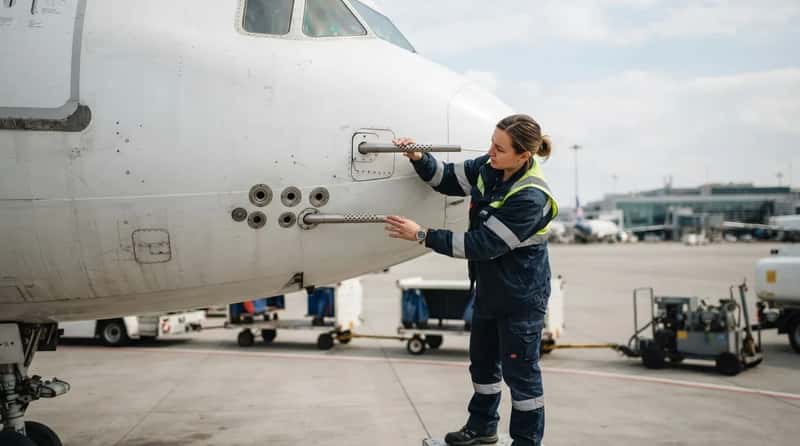
The pitot tube is the small forward-facing probe that measures airspeed. Block it with a cover, a wasp nest, or even a leftover strip of tape, and the flight deck gets completely false speed readings – with potentially catastrophic consequences.
Personnel make sure the pitot tubes, static ports, and angle-of-attack sensors are clean, unobstructed, and undamaged. These sensors feed directly into the aircraft’s most critical flight instruments, and they get checked by eye and by hand before every single departure.
Non-removal of a labelled pitot cover has caused airplane crashes before – the covers exist specifically to keep insects and debris out of the airspeed sensors between flights. The 1996 Aeroperú Flight 603 disaster, which killed 70 people, was caused by tape left over a static port during cleaning.
It remains one of aviation’s most sobering reminders of why this exact check is completely non-negotiable. One small obstruction, one catastrophic outcome – ground crews know that better than almost anyone else on the ramp.
But pitot tube checks are only part of a much broader sweep for something called FOD – and #11 reveals just how seriously the industry takes it…
#11 – Foreign Object Debris (FOD) Sweep
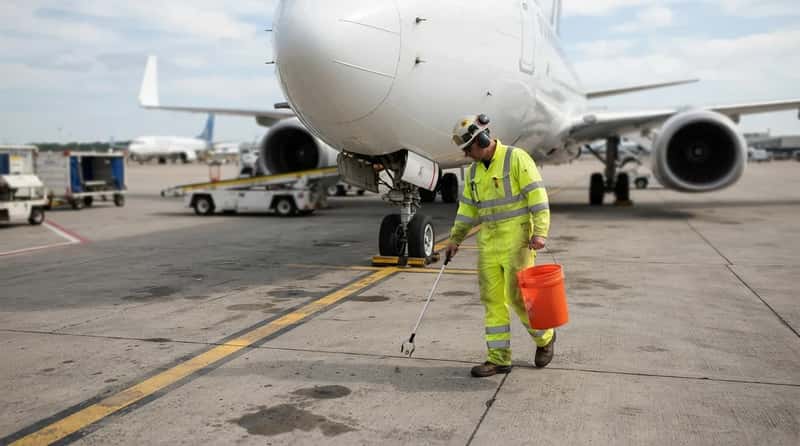
FOD – foreign object debris – is any material on or near the aircraft that simply shouldn’t be there. Think a bolt near an engine intake, a cleaning cloth wedged in a wheel well, or a stray luggage tag near the nose gear.
Any single one of them can bring a plane down. Crew treat clearing the ramp as a mandatory step before pushback, every time, without exception.
On commercial ramps, this often means a dedicated FOD check of the entire gate area, not just the aircraft itself. The 2000 Concorde crash in Paris was triggered partly by a titanium strip – FOD from another aircraft – sitting on the runway.
Ramp personnel are trained to treat any object out of place as a potential flight hazard, no matter how insignificant it looks at first glance. Walk-around procedures specifically call out foreign objects right alongside structural damage and abnormal wear.
A clean ramp is just as important as a clean aircraft. Once the area is clear, crews turn their attention to one of the most mechanically complex components sitting closest to the ground – see #10…
#10 – Landing Gear and Tire Inspection
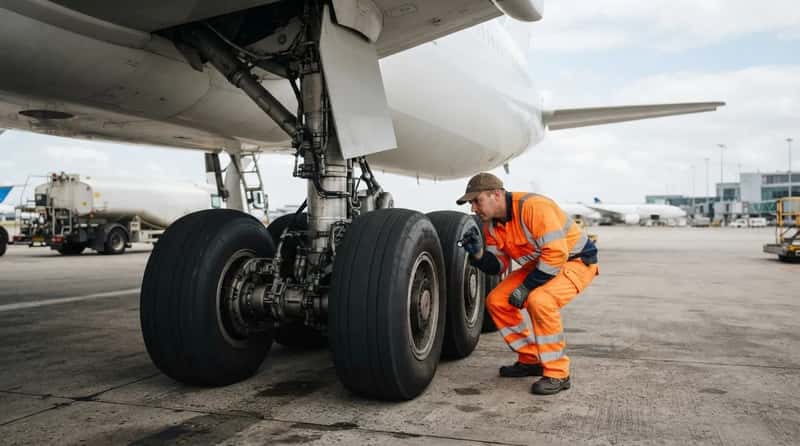
Commercial aircraft tires take an extraordinary beating. A fully loaded widebody hits the runway at roughly 150-180 mph on landing, and those tires absorb the entire kinetic energy of impact, sometimes several times a day.
Crew check each tire for inflation, flat spots, bulges, cracks, and uneven wear, and make sure no cord is showing anywhere. Exposed cord means the tire is structurally compromised and has to be replaced before the aircraft moves again.
Brake pads and discs get inspected for thickness, rust, and grooving. The parking brake must be set to ON during the walkaround specifically so the flight crew can check the brake wear indicators properly.
A single failed main gear tire at takeoff speed can cause a blowout that shreds wheel well wiring and hydraulic lines. Inspectors also check the landing gear structure itself for any visible defects or leaks before clearing it.
The landing gear check is one of the most time-intensive parts of the entire walkaround. But while that’s happening outside, a completely separate team is running a check inside the wings themselves – and #9 explains what they’re actually doing up there…
#9 – Fueling and Fuel Quality Check
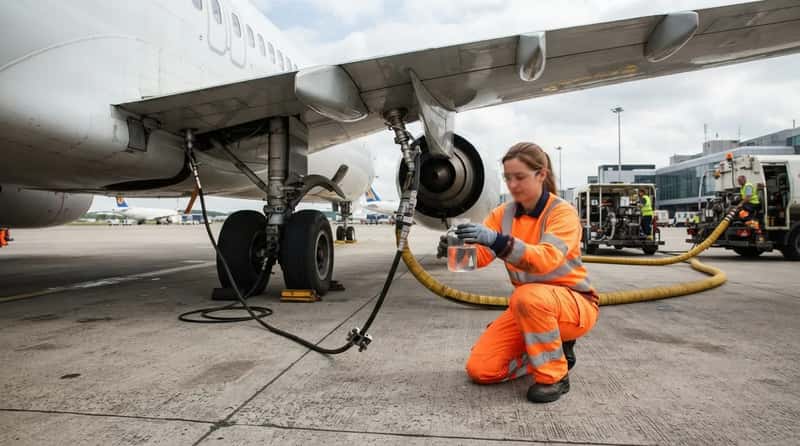
Fueling a commercial aircraft is nowhere near as simple as pulling up a truck and filling a tank. It’s a precisely coordinated process governed by grounding requirements, contamination checks, and detailed load calculations.
Refuelling precautions include bonding – ensuring electrical continuity between the aircraft and the refueling vehicle – and grounding, which discharges static electricity safely into the earth. Static discharge during fueling has caused fires before, which is exactly why the bonding wire is mandatory before any fuel starts flowing.
Crew verify the integrity of the fuel caps and drain any water or contaminants out of the tanks. Water in aviation fuel doesn’t burn – it can cause engine flameout at the worst possible moment.
Technicians sump each fuel tank, drawing a small sample into a clear tube to check for water contamination and correct fuel grade before every departure. Contaminated fuel gets disposed of under strict protocol, never simply dumped out on the ramp.
Worth Knowing
- The bonding wire connects aircraft and fuel truck before fuel ever starts flowing.
- Grounding discharges static electricity safely into the earth during the process.
- Every tank gets sumped and sampled to check for water or contamination.
- Contaminated fuel is removed under strict protocol, never dumped on the ramp.
Fuel quantity and quality are now confirmed. But none of that matters if what happens at #8 isn’t also right – because you can have absolutely perfect fuel and still depart dangerously…
#8 – Weight and Balance Calculation
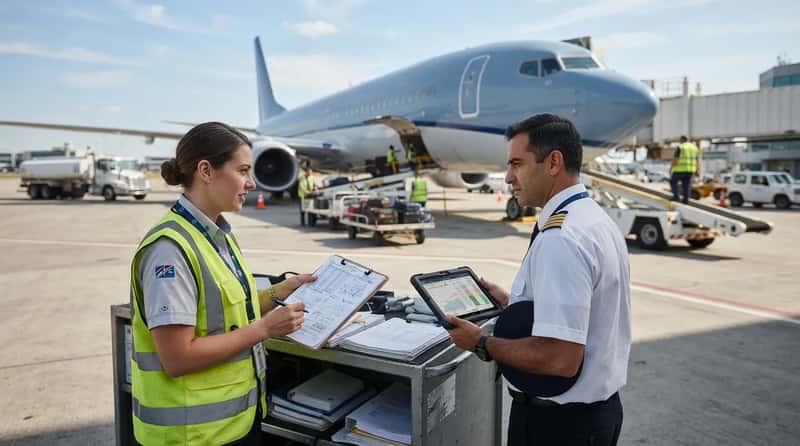
Every commercial flight departs with a legally signed load sheet proving the aircraft sits within its certified weight and balance envelope. Get this wrong, and the plane can become genuinely uncontrollable on takeoff or at cruising altitude.
Weight and balance calculations account for passenger weights, baggage loads, and the actual fuel quantity on board. Crews use current documentation to verify the aircraft stays within approved limits for the entire flight, not just at departure.
The flight crew works with ground workers to finish these calculations alongside the ramp team handling baggage. In 1997, a Fine Air cargo flight crashed on takeoff from Miami because of an incorrectly documented load – the aircraft was rear-heavy and pitched uncontrollably.
The weight and balance sheet is one of the last documents signed before boarding actually commences. Fuel burn has to be factored in too – an aircraft balanced correctly at takeoff can shift outside limits as fuel burns off unevenly during the flight.
The next check makes sure all that cargo stays exactly where the load sheet says it does – and #7 shows exactly how that’s enforced…
#7 – Cargo Hold Inspection and Load Security
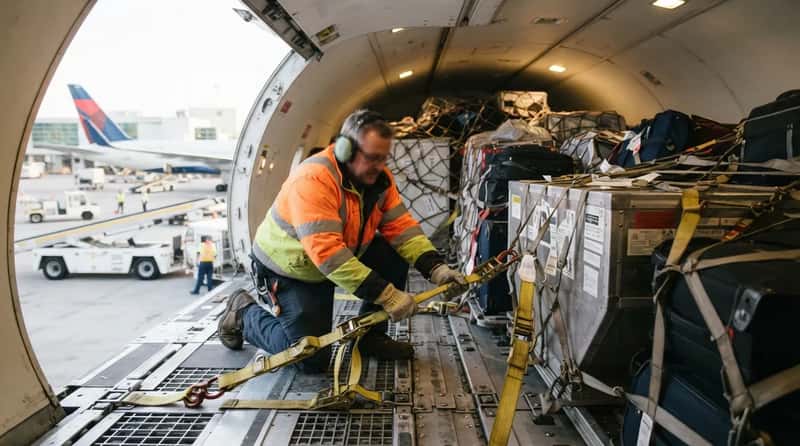
Once baggage and cargo are loaded, the holds don’t just get sealed up and forgotten. Ground crew physically confirm every container and loose item is correctly restrained before the doors ever close.
ULDs (Unit Load Devices) must be restrained against movement, and loose baggage has to be positioned according to the specific loading configuration for that flight. The goal is to stop the contents from shifting in flight and to keep the aircraft’s mass exactly where the load sheet says it should be.
After loading, IATA’s standardized procedure calls for a final hold check and completed loading documentation. Cargo that shifts in flight has caused fatal accidents – including the 2013 National Air Cargo Boeing 747 crash in Afghanistan, where improperly secured military vehicles broke loose on takeoff.
IATA holds ramp supervisors responsible for ensuring baggage is scanned correctly and that any left-behind bags are properly dealt with. Once that’s done, the holds get sealed and the load sheet gets signed.
Now attention shifts to what’s happening on the outside of the fuselage – because #6 covers a check almost nobody in the passenger cabin ever thinks about…
#6 – Door and Seal Inspection
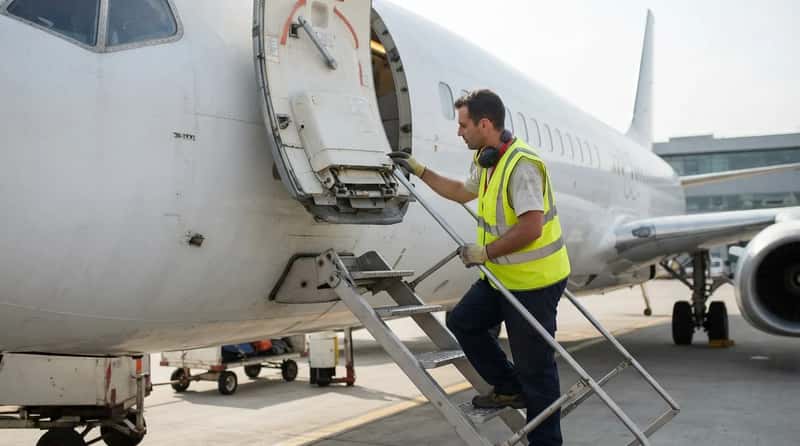
An aircraft door is not simply a door. It’s a pressure vessel plug that holds the cabin at breathable pressure at 35,000 feet, and every seal, latch, and hinge on it has to be verified before departure.
Missing aerodynamic seals, service doors, or access panels get checked against the CDL – the Configuration Deviation List found in the Flight Manual. Some panels can legally fly with minor deviations; most absolutely cannot.
Crew confirm every service door, access door, panel, fuel cap, and brake or landing-gear servicing cap is present and properly secured. A pressurization failure caused by a poorly sealed door or access panel can deprive the cabin of oxygen within minutes at cruising altitude.
This is not a check that ever gets rushed. Doors sealed and verified – but there’s one safety system built directly into those same doors that gets its own separate inspection.
It’s the one that could save every single life on board if everything else goes wrong. That’s #5…
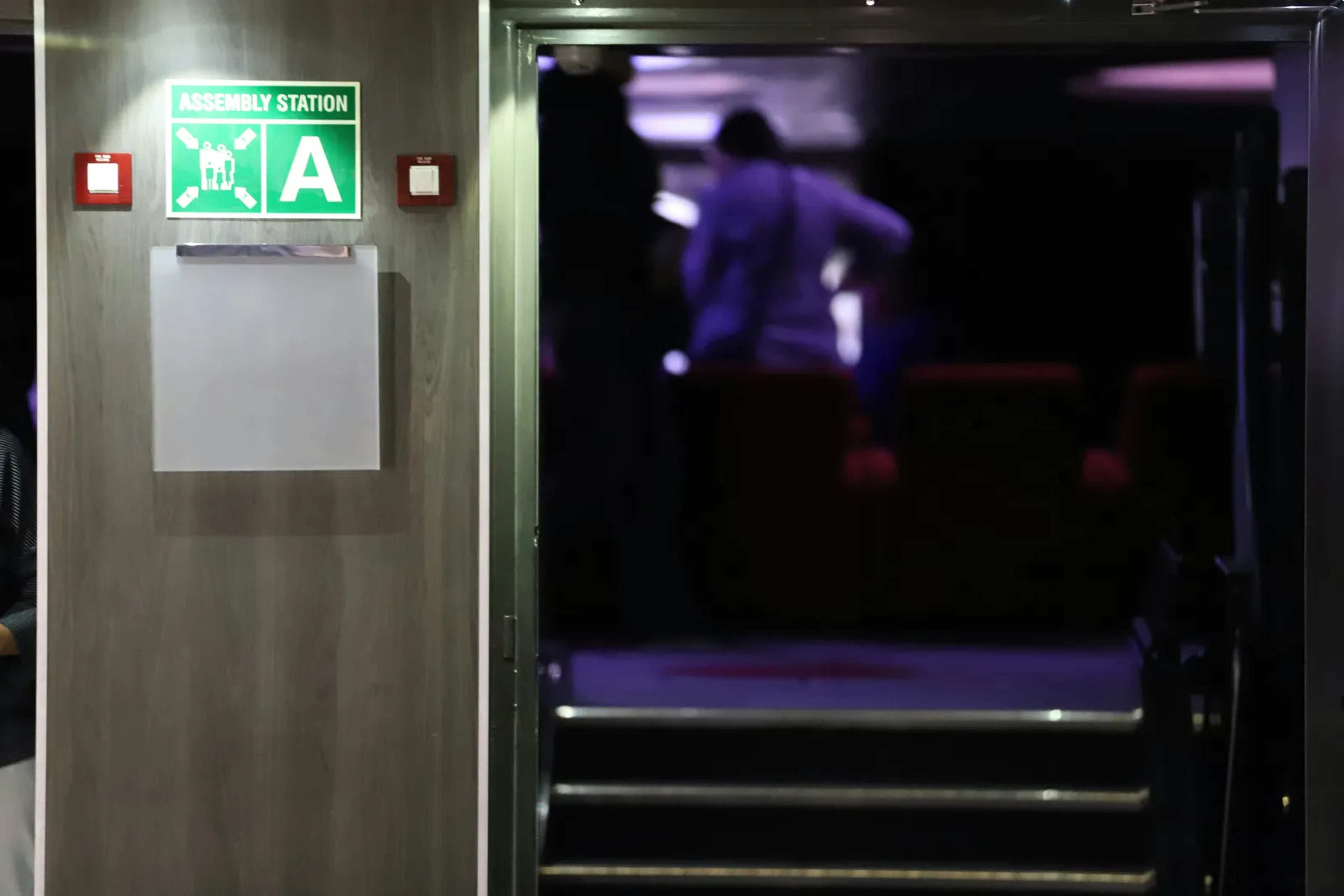
#5 – Emergency Exit and Evacuation Slide Check
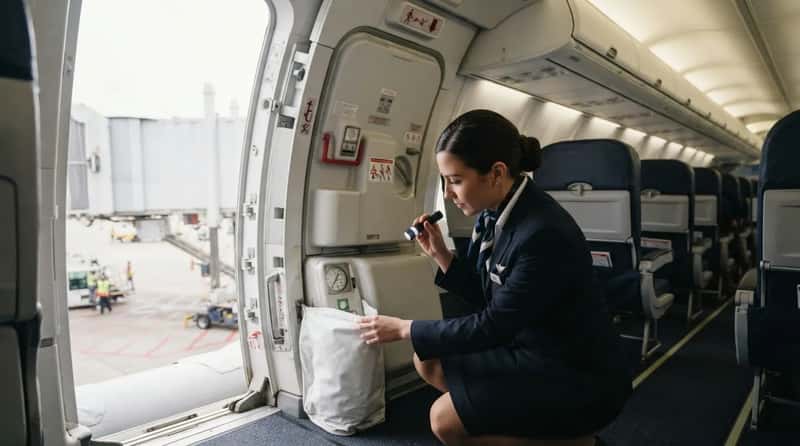
Every passenger door on a commercial aircraft doubles as an emergency exit, and most of them have an inflatable evacuation slide attached. Ground crew verify both the physical condition of the doors and the readiness of those slides before boarding even opens.
Cabin crew check the slide pressure gauge on their assigned door. A low-pressure reading means the slide may not deploy fully in an emergency – which could trap passengers right at the exit during an evacuation that’s supposed to last under 90 seconds.
Cabin inspection also covers fire extinguisher serviceability, first aid kit contents, and emergency lighting system operation. FAA regulations require all passengers to be evacuated within 90 seconds, and a failed slide cuts directly into that window.
Every single second counts when a plane full of people needs to get out fast. Exit checks done – now comes a check that operates in complete silence.
It’s one that passengers can’t see, can’t hear, and can’t feel, but which is running every moment the aircraft sits on the ground. Find out what it is at #4…
#4 – Engine Inlet and Exhaust Inspection
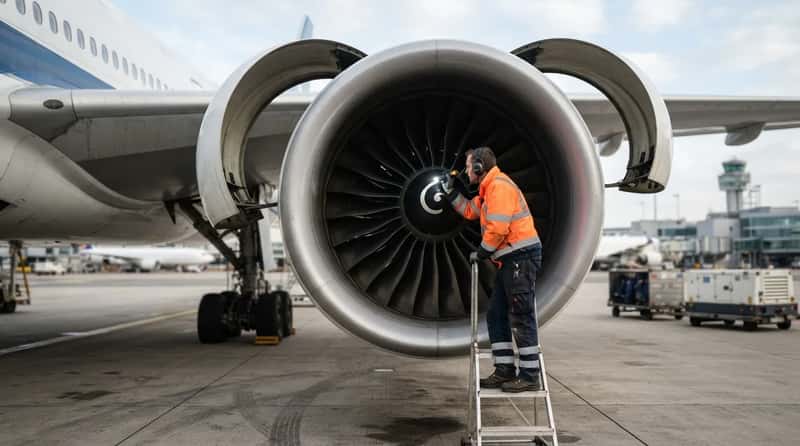
Jet engines are essentially enormous vacuum cleaners. At idle or during startup, they can draw in almost anything left on the ramp nearby, which is exactly why the area around them stays restricted.
That’s why engine inlet checks are taken so seriously. Crew inspect each engine, checking that the air intakes are completely free of debris before the aircraft ever moves.
On widebody jets, this means physically shining a light into each nacelle and examining the fan blades for nicks, cracks, and impact damage. The exhaust pipe gets checked too, for oil residue or black buildup that can signal internal combustion issues.
Bird strike damage to fan blades is far more common than most passengers realize – the FAA’s wildlife strike database logs over 10,000 reported strikes per year in the United States alone. A cracked or missing fan blade can cause catastrophic engine failure at the worst possible moment.
Engines cleared and verified. But there’s one set of checks that directly governs whether pilots will actually be able to fly the plane at all – and it happens in the cockpit, not on the ramp.
#3 reveals what’s going on up front before you board…
#3 – Flight Control Surface Check
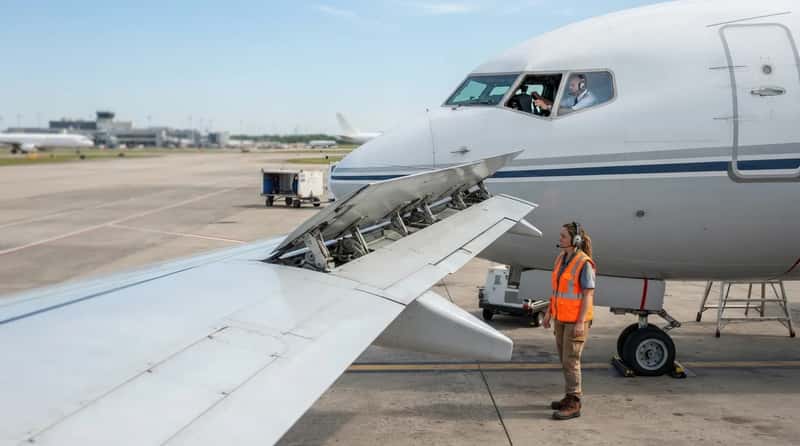
Ailerons, elevators, rudders, spoilers, and flaps are the surfaces that physically control the aircraft in the air. If any one of them is jammed, disconnected, or moving the wrong way, the aircraft is unairworthy – full stop, no exceptions.
A thorough check confirms the ailerons and flaps move freely and that every hinge and control surface is intact and unobstructed. Ground personnel visually verify the movement while flight crew operate the controls from the cockpit – one person watching, one person moving.
Rigged controls are tested for free movement with no chafing, the control lock has to be physically removed, and every hinge fastener gets confirmed secure. A reversed aileron connection – where the control input produces the opposite roll – has caused fatal crashes, including the 1979 Japan Air Lines cargo incident.
The rudder’s movement gets tested too, along with the tension of its control wires. Control surfaces confirmed – one check left before the truly final verification.
And #2 is the one that every regulatory body on earth requires to be documented in writing before the aircraft can push back…
#2 – Safety Equipment and Cabin Readiness Verification
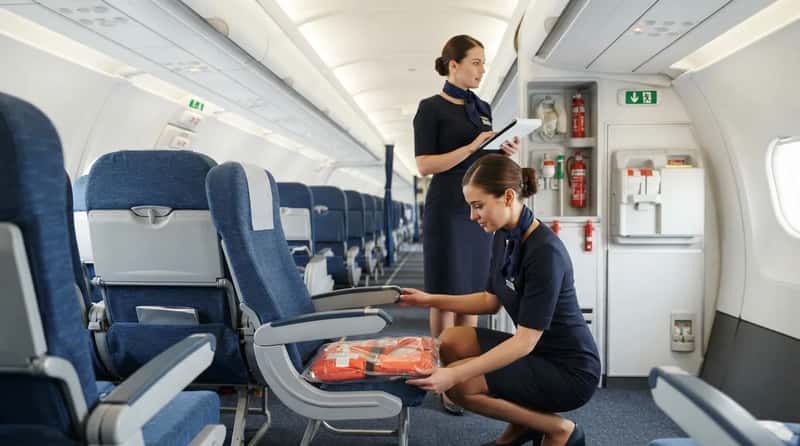
With the external checks complete, ground crew and cabin crew converge on an internal check spanning fire suppression, oxygen systems, emergency lighting, and passenger safety equipment. Nothing gets a pass based on yesterday’s inspection, no matter how routine the route.
Safety equipment gets checked before every single flight, and cabin crew know exactly where every piece is located, how many pieces there are, and what individual checks each one requires. Count matters here – a missing life vest under a seat is a missing life vest in a water emergency.
Crew walk the cabin scanning in a circular motion to confirm nothing has been left behind that shouldn’t be there. The PA system, evacuation alarm, and emergency lights all get tested to confirm they’re actually working.
A PA system that fails during an evacuation means passengers don’t hear crew instructions – with potentially fatal results. Once every check is complete, the Senior Cabin Crew Member reports directly to the flight crew that the cabin is ready.
At a Glance
- Fire suppression, oxygen systems, and emergency lighting are checked before every flight.
- Life vests, first aid kits, and extinguishers are verified by exact count, not estimate.
- The PA system and evacuation alarm are tested to confirm they actually work.
- The Senior Cabin Crew Member gives the final “cabin ready” sign-off to the flight crew.
That sign-off leads straight to the final check – and #1 is the one that legally authorizes the entire aircraft to depart…
#1 – The Pre-Departure Crew Briefing and Final Sign-Off
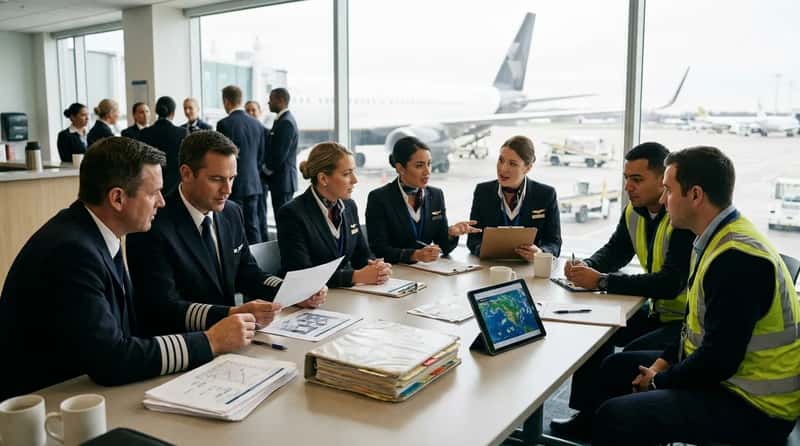
Every check on this list feeds into one final moment: the pre-departure briefing and coordinated sign-off, where ground operations, maintenance, and flight crew formally confirm the aircraft is ready. This is the check that wraps around every single one before it.
Before boarding, the entire crew – pilots, cabin crew, and ground support – convenes for a briefing that aligns everyone on their roles. They cover passenger numbers, special needs, cargo details, expected weather along the route, potential turbulence, and any last-minute changes to the flight plan or airspace restrictions.
Flight attendants attend a safety briefing with the pilots and purser covering emergency checklists, boarding particulars, and anticipated weather conditions. No aircraft can legally depart without maintenance sign-off confirming airworthiness – and without the captain’s own final review and acceptance of that documentation.
Only once the captain gives approval can passenger boarding actually begin. The Senior Cabin Crew Member liaises with the pilot and ground personnel on exactly when to open the door.
That moment – the one passengers experience as simply “the door opening” – is actually the conclusion of one of aviation’s most rigorous safety processes.
The Bottom Line
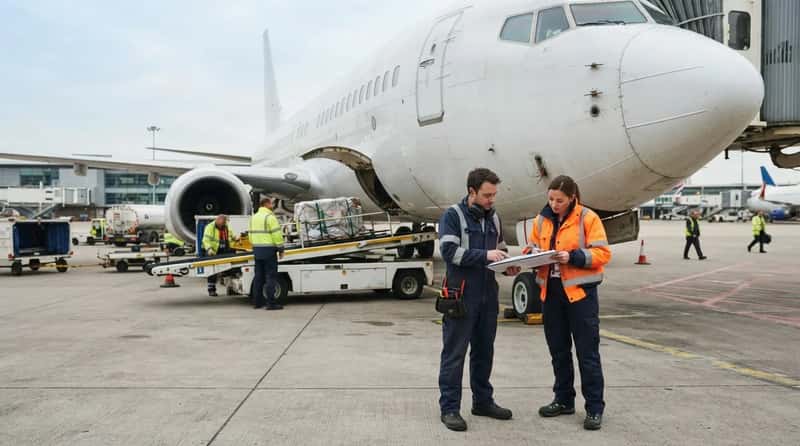
Most passengers step onto a plane thinking the pilots are the ones getting it ready. In reality, a coordinated team of ground crew, maintenance engineers, and cabin staff has already run through a legally mandated sequence of checks – from the technical log to the final crew sign-off – before a single boarding pass is scanned.
The most sobering reality? Skipping even one of these checks has brought aircraft down. Pitot covers left in place, shifted cargo, contaminated fuel, reversed control surfaces – these aren’t hypothetical risks.
They’re documented accident causes, which is exactly why the industry treats every single check as if it’s the first time it’s ever been done. Next time you’re sitting at the gate watching ground crew work, you’ll know they’re not just loading bags.
They’re the last line of defence between a normal flight and a catastrophic one. Which of these 15 checks surprised you most – or is there one your aviation-insider friends would add?
Bonus: The Insider Trick That Lets You Check Your Plane’s Safety History Before You Board
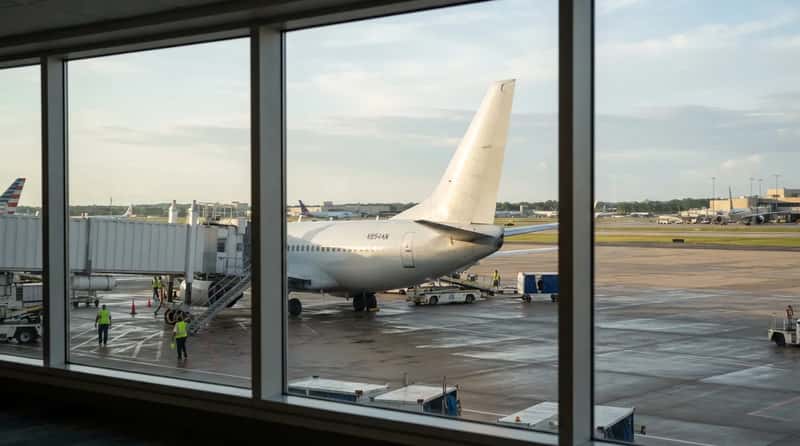
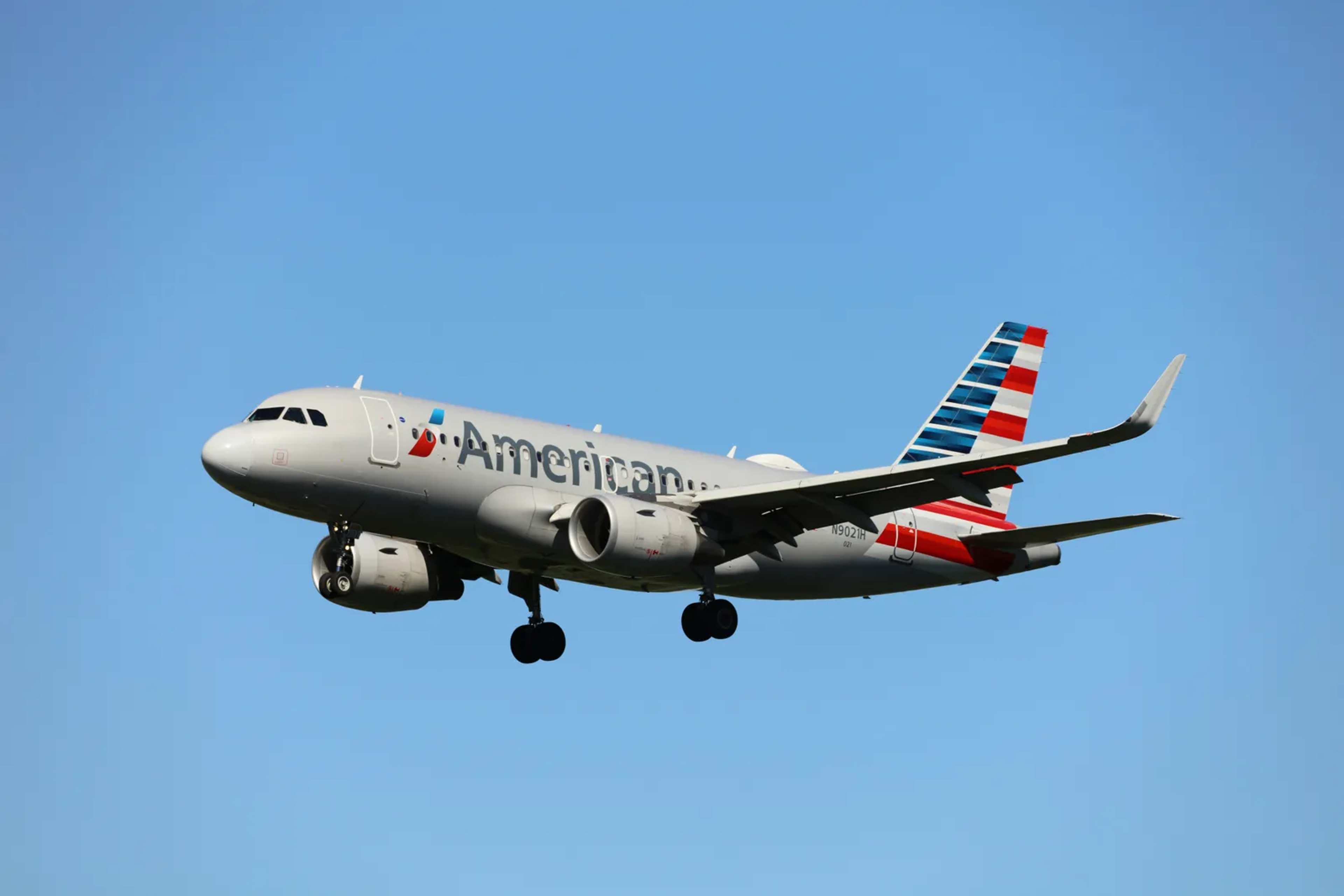
Every U.S.-registered aircraft has a unique tail number – always starting with the letter N – painted near the rear of the fuselage. You can usually spot it from the jet bridge or through the terminal window while you’re waiting to board.
That single string of letters and numbers unlocks the aircraft’s entire public history in about 60 seconds on your phone. Here’s exactly how to use it before your next flight.
- Snap a photo of the tail number as you walk down the jet bridge, or check the gate screen if your airline displays it.
- Search that tail number on the FAA registry at registry.faa.gov to confirm the aircraft’s age, model, and registered owner.
- Cross-check the same tail number on a free tracking site like FlightAware or Planespotters to see its recent flight activity and how frequently it’s been flying.
- If the aircraft is unusually old for its type or has been sitting unused for an extended stretch before this flight, it’s not a red flag on its own – but it’s exactly the kind of detail seasoned frequent flyers quietly check.
This isn’t about second-guessing the crew – every aircraft that reaches the gate has already passed the 15 checks above. It’s simply the same curiosity that keeps ground crews so meticulous, now available to you in the time it takes to board.