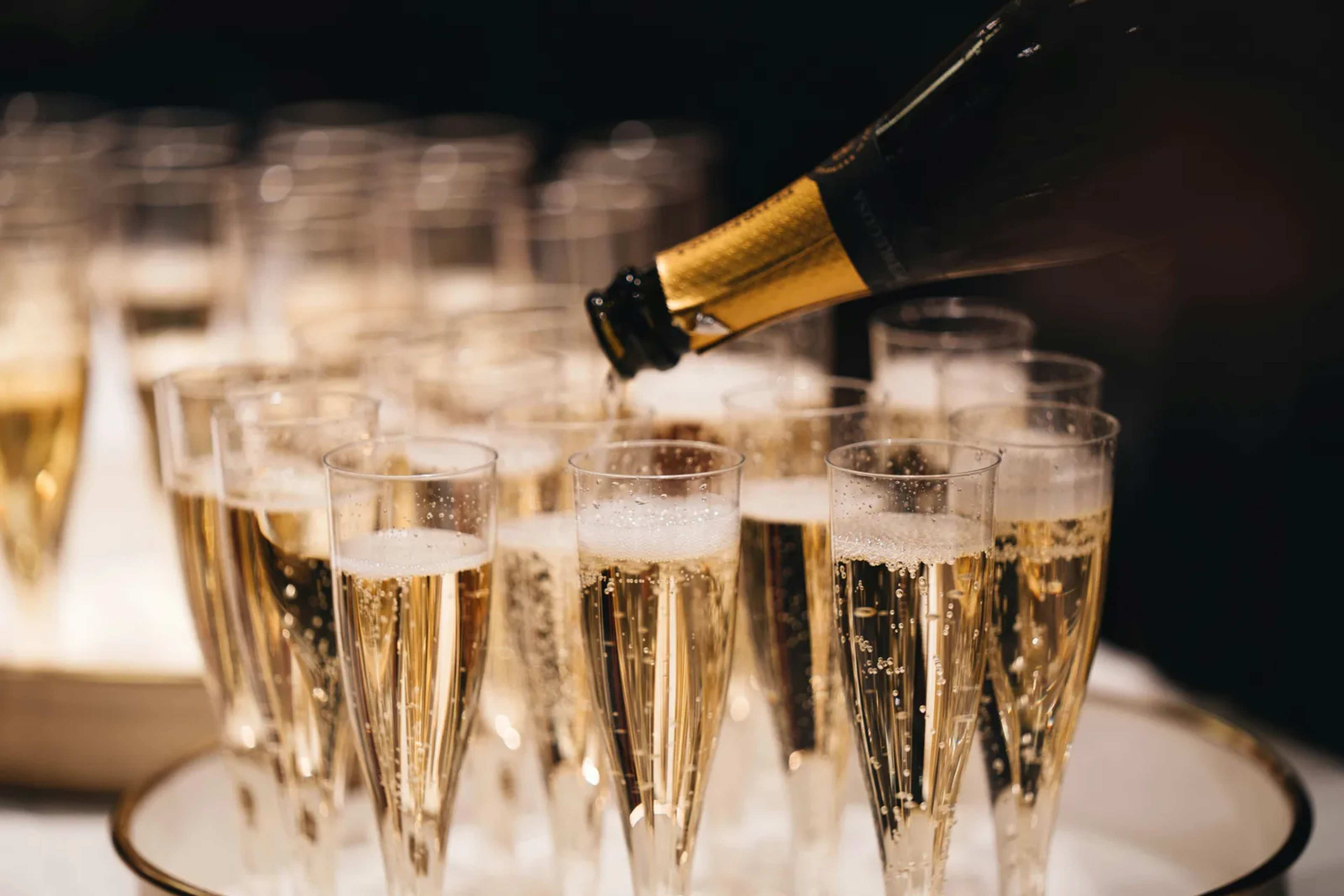
A bottle of Champagne often sits forgotten in a cabinet or on a shelf, prompting questions about whether it remains worth opening. Producers provide clear guidance on how long the wine holds its character, and those recommendations focus on quality rather than any fixed cutoff. The details vary by house and by whether the bottle has been opened, yet the core message stays consistent across sources.
Windows for Unopened Bottles
Non-vintage Champagne carries the shortest recommended periods among the major houses. Moët and Ruinart both point to a maximum of 24 months for a standard 75-centiliter bottle once it reaches the market. Laurent-Perrier extends that range to three or four years, while Taittinger suggests drinking within three to five years from the bottling date. Vintage bottles receive longer allowances. Moët, Ruinart, and Veuve Clicquot indicate seven to ten years after purchase or more, depending on the specific vintage. Laurent-Perrier lists five to ten years or beyond for its vintage expressions, and prestige cuvées can reach up to twenty years under ideal conditions. These figures represent drinking windows rather than expiration dates, and the starting point for the clock differs by producer. Half bottles tend to age more quickly than standard sizes, while magnums hold their qualities longer. The Comité Champagne notes that all Champagne undergoes extended maturation before release, which is why bottles arrive ready to enjoy yet can still improve or hold steady for additional time in proper storage.
Opened Bottles Lose Fizz Quickly
Once the cork comes out, the timeline shortens dramatically. A Champagne stopper combined with refrigeration keeps the wine lively for one to three days according to most producers. Veuve Clicquot reports about two days of good quality, Ruinart up to forty-eight hours, and the Comité Champagne one or two days with an airtight cap. Without a proper stopper the bubbles fade even faster. Ruinart states that a poorly sealed bottle retains effervescence for less than twenty-four hours. The Comité Champagne explicitly dismisses the common spoon-in-the-neck trick as ineffective and recommends a dedicated sparkling-wine stopper instead. Flat Champagne is not considered unsafe, though it has simply moved past its ideal window for freshness.
Storage That Protects Quality
Steady conditions matter more than any single temperature. Moët and Ruinart recommend 45 to 65 degrees Fahrenheit, while the Comité Champagne and Veuve Clicquot favor 50 to 59 degrees. Humidity above 70 percent helps keep corks moist, and light exposure should be avoided because Champagne is particularly sensitive to it. Rapid temperature swings accelerate changes in flavor and color. Producers advise against long-term refrigerator storage because the cold can dry corks over time, though a few hours in the fridge before serving works well. An interior closet away from heat sources and direct sunlight offers a practical alternative for homes without a cellar. Bottles may rest upright or on their sides, though several houses prefer the latter to maintain cork moisture.
When Quality Has Changed
Age and poor storage produce noticeable shifts rather than sudden failure. A darker color, more pronounced taste, and weaker effervescence signal that a bottle has moved beyond its recommended window. High heat speeds these changes, and very low humidity paired with warmth can dry the cork and alter the wine more rapidly. A strong vinegar or sour aroma, a leaking bottle, or a protruding cork points to a more serious issue. In such cases the bottle is best set aside. A mushroom-shaped cork after several years of storage does not affect quality, according to the Comité Champagne, and labels carry no required expiration date under U.S. rules. The guidance from producers underscores that Champagne remains a pleasure to open within the stated periods when stored carefully. A bottle that has passed its window may still suit cooking or cocktails, yet the sparkle that defines the wine fades first.