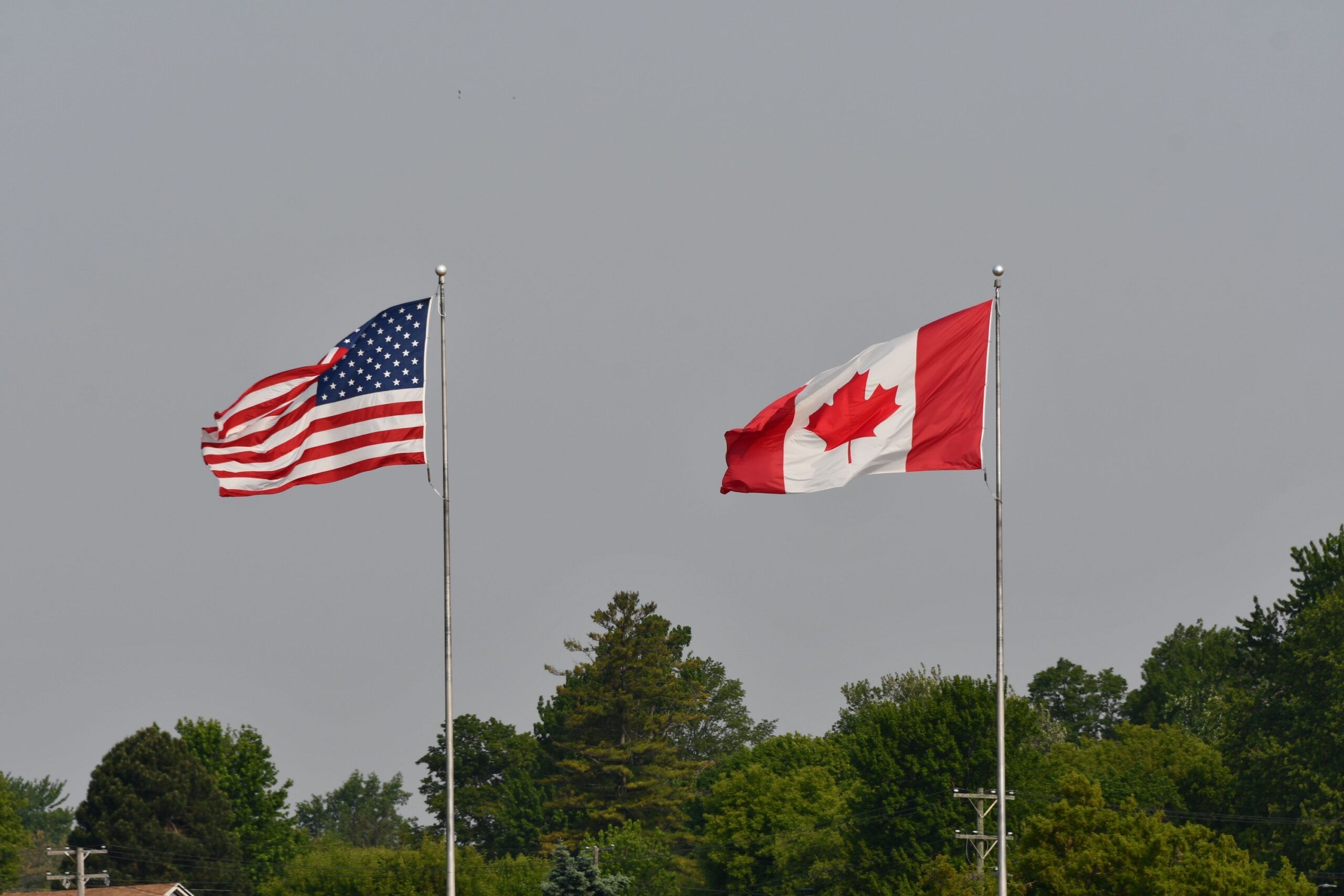
If you have a trip across the Canada-U.S. border on your calendar, you may have noticed something odd lately: fewer flight options, pricier hotel packages, and a general sense that crossing that once-easy border has gotten a little more complicated. That is not your imagination. A trade dispute that started with tariffs on steel and lumber has quietly spilled over into travel, reshaping everything from airline schedules to currency exchange rates.
What began as a political spat over tariffs has grown into one of the most disruptive trade conflicts between the two countries in decades. Understanding how this fight is playing out at airports, hotels, and border crossings can help you plan smarter, whether you are a Canadian eyeing a Florida getaway or an American hoping to explore Banff or Toronto.
The Trade War Has Escalated Sharply in 2026

This dispute is not a fading headline from early 2025. It has intensified. The United States imposed 50% tariffs on a broad range of Canadian goods that took effect August 22, 2026, impacting products including dairy, alcohol, and a wide range of items across numerous industries from electronics and building materials to apparel and agricultural goods.[1] Notably, the tariffs apply even to CUSMA-compliant goods and have no expiry date.[1]
Canada did not sit still. Canada announced new tariffs of up to 50 percent on hundreds of American goods in retaliation, with tariffs on American steel and aluminum doubling to 50 percent starting September 8.[2] Canadian Prime Minister Mark Carney announced retaliatory tariffs meant to match Washington’s new tariffs dollar for dollar after intense negotiations broke down, following a 50 percent U.S. levy on Canadian goods.[3] This tit-for-tat pattern has become the defining feature of the relationship, and it is precisely this kind of prolonged uncertainty that tends to ripple into travel budgets on both sides of the border.
Canadians Are Simply Not Flying South Like They Used To
The most visible sign of trouble is a dramatic pullback in Canadian travel to the United States. Visits by Canadians to the U.S. in 2025 fell roughly 25%, resulting in billions less in tourism spending, with Canadians spending $13.3 billion in the U.S. last year, down from nearly $15 billion in 2024.[4] That is not a blip. Statistics Canada says Canadians’ return trips from the U.S. declined year over year for 11 consecutive months in 2025, the longest sustained decline outside the pandemic since digital records began in 1972.[5]
Even in 2026, the trend has been slow to reverse. In May, Canadian residents returned from 2.6 million trips to the U.S., a nearly 10% increase from a year earlier, according to Statistics Canada, marking the second straight month of year-over-year growth after 15 consecutive months of declines.[6] Still, the overall picture remains grim for cross-border tourism, and travel spending on visits to the U.S. fell to C$18.8 billion, down from C$22.1 billion in 2024.[5]
Airlines Are Quietly Shrinking Their Transborder Networks
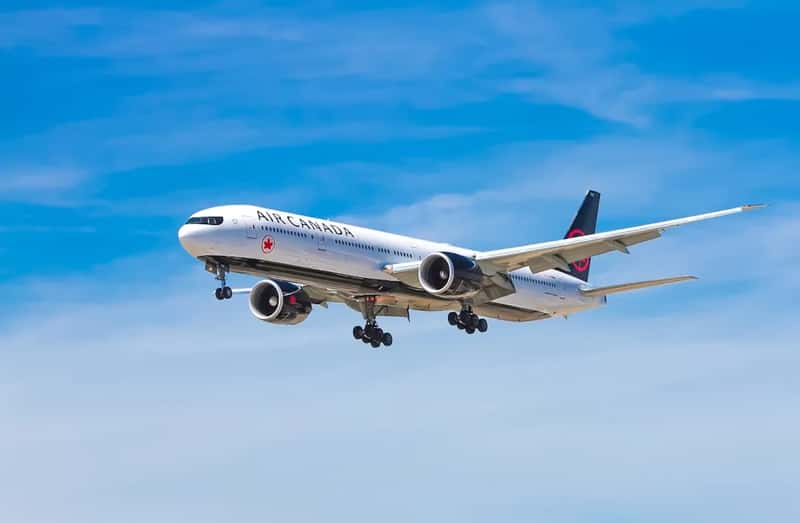
When demand drops this sharply, airlines respond by cutting capacity, and that is exactly what has happened. Canada-based carriers reduced US-bound seat capacity by roughly 10% compared to the first quarter of 2025, according to reporting from The Globe and Mail.[7] Some carriers went further. WestJet announced it would exit ten nonstop routes between the U.S. and Canada, reducing its transborder seat capacity by over a quarter for the month of July, with cuts including service to Raleigh/Durham, Chicago O’Hare, San Francisco, Seattle/Tacoma, Orlando, Los Angeles, Boston, Nashville, and San Diego.[8]
Air Transat has taken the most dramatic step of all. Canada’s Air Transat will end all flights to the United States by June 2026, cutting its final routes to Florida amid declining Canadian travel demand.[8] Meanwhile, Air Canada, the largest carrier on these routes, has not been spared either. In the 12 months to May 2026, Air Canada’s US traffic fell by 17% compared to the prior 12 months, a reduction more than for the entire Canada-US market at -12% and for WestJet at -21%.[9] Fewer flights on a route typically means less competition on fares, which is rarely good news for travelers looking for a deal.
Fewer Seats Usually Means Higher Fares on Popular Routes
Route cuts do not happen in a vacuum. Airlines operating between the two countries collectively cut 320,000 seats between March and October of 2025, according to OAG data cited by The Guardian.[10] That kind of capacity reduction, especially on leisure-heavy routes to Florida, Las Vegas, and other sun destinations, tends to concentrate remaining demand onto fewer flights, which can push prices upward for travelers who still want to fly those corridors.
Some airlines are also pointing to rising operating costs as a factor compounding the demand slump. Air Canada announced it would suspend flights from Montreal and Toronto to New York’s John F. Kennedy International Airport for five months, and between Toronto and Salt Lake City until 2027, citing higher jet fuel costs.[10] When fuel costs and tariff-driven economic uncertainty combine, airlines tend to prioritize their most profitable routes and either raise prices or eliminate service entirely on marginal ones, leaving travelers with fewer and pricier options.
A Weaker Loonie Is Making American Trips Cost More

Currency swings are one of the most direct ways this trade war touches your wallet. The USD/CAD exchange rate rose to 1.3900 on August 28, 2026, with the Canadian dollar weakening to 1.38 per USD from a three-month high of 1.376 as a greater deterioration to trade with the US hampered the outlook on growth.[11] For Canadians, that math is simple and unforgiving: every American hotel room, theme park ticket, or rental car now requires more Canadian dollars than it did just weeks earlier.
The currency link to tariffs is well documented by analysts. Perhaps no single factor has dominated the USD/CAD conversation in 2026 quite like tariffs, since the threat and implementation of tariffs between the United States and Canada create significant risk for currency stability, affecting everything from wholesale rates to the prices consumers pay.[12] Some forecasts see this pressure persisting. By the end of 2026, USD/CAD could rise to 1.4100, with some analysts expecting the pair to reach the 1.4300 to 1.4400 range.[13] A weaker loonie effectively acts as a tax on every Canadian traveling to the United States, on top of whatever fare or hotel price increases the trade war produces.
Everyday Travel Purchases Are Getting Pricier Too

It is not just plane tickets and hotel rooms feeling the squeeze. The tariffs are hitting a surprisingly broad basket of consumer goods that intersect with travel and hospitality. Some dairy products, including milk and cream, will carry 50% duties, while grated, powdered, processed and blue-veined cheese will all face 25% tariffs.[14] Even hospitality furnishings are affected, since most wooden and metal furniture is subject to 50% tariffs, with impacted items including desks, workstations, cabinets, beds, dressers and nightstands.[14]
Those categories matter more to travelers than they might initially seem. Hotels, resorts, and short-term rentals regularly replace furniture, restock breakfast buffets, and stock minibars, and rising input costs for cross-border businesses often get passed along through room rates or resort fees over time. It is a slower, less visible mechanism than an airfare hike, but it adds up in the same direction: higher costs for the traveler at the end of the chain.
Tourism Hotspots Are Feeling a Real Financial Hit

Some of America’s biggest tourism draws are already counting the cost of fewer Canadian visitors. Tour operators report a 30 percent drop in bookings for US Disney holidays from Canadian travellers.[15] Sun destinations have been hit especially hard, with Florida and Las Vegas notably affected, while airlines look to reallocate capacity elsewhere.[7]
The scale of the financial hit is substantial across the industry. In 2024, Canadian visitors brought about $20.5 billion into the U.S. economy, but visits fell by roughly 22 percent in 2025, translating to an estimated $4.5 billion in lost spending.[16] For destinations that have long counted on Canadian snowbirds and shoppers, that kind of drop forces difficult choices, whether that means raising prices for remaining visitors to cover fixed costs or scaling back amenities and services altogether.
Canadians Are Rerouting Their Vacation Dollars Elsewhere

Perhaps the most interesting shift is not that Canadians have stopped traveling, but that they have redirected their spending. In 2025, Canadians shifted outbound leisure-related travel plans away from the United States, down 21.5% or 3.2 million visits, in favour of overseas options, up 12.2% or 1.1 million visits.[17] Domestic travel got a boost too, since domestic travel by Canadians rose by 5.1 million, a boon to the country’s economy.[4]
This substitution effect is reshaping demand patterns across the industry in ways that could keep prices elevated on remaining U.S.-bound routes. International travel from Canada is up 5% year over year, with strong demand for Europe, Mexico, and domestic trips within Canada, with cities like London and destinations like Disneyland Paris and Mexican beach resorts seeing the shift firsthand.[16] Airlines have responded in kind, and increased capacity to Costa Rica, up 15%, and Mexico, up 5%, likely reflects a shift in leisure travel demand from traditional U.S. sun destinations.[18]