You picture your cruise starting with a gangway, a welcome drink, and a cabin key. But by the time you wheel your suitcase up to the terminal, a small team has already spent hours fixing problems you will never see. Passport glitches, headcounts that won’t add up, and money questions all get handled out of sight.
Most ships now call the desk “guest services” or “reception,” but the purser’s old job is still there. It covers passports, headcounts, money, and medical logistics. Some of the 13 situations below are almost boring. A few could decide whether a family sails at all. And the last one comes down to a single decision made far above the check-in counter.
#13 – Your Name Reaches Border Officials Before You Reach Your Cabin
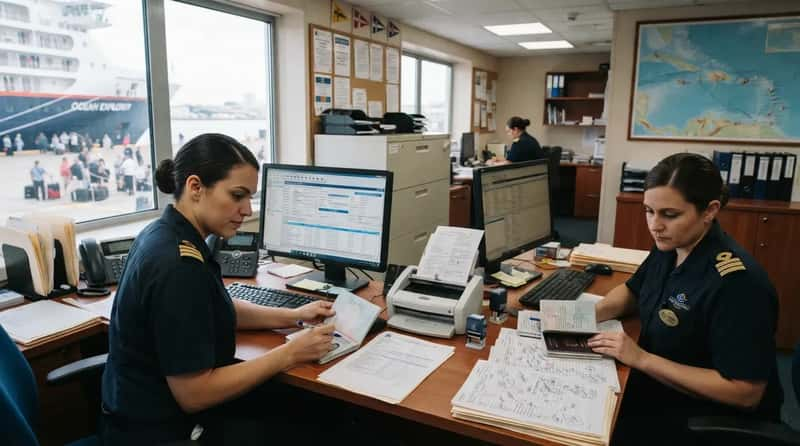
The guest list is a government document long before it becomes a party list. The purser’s office handles passengers’ and crew members’ visas and passports. It also prepares the papers for every port and customs service along the route. While you’re standing in the terminal holding a coffee, the ship is already dealing with border paperwork.
Most passengers think check-in is a formality. In fact, your details are being packaged for customs and the port agent before you ever scan your boarding pass. Documentation staff send arrival manifests to the corporate office, customs, and the port agent. One typo in a name or passport number can ripple through all of it. And that’s when the phone calls start…
At a Glance
- Who’s covered: both passengers and crew
- What’s prepared: visas, passports, and port paperwork for every stop
- Who gets the manifests: the corporate office, customs, and the port agent
- Biggest risk: one typo in a name or passport number
#12 – A Missing Passport Number Sets Off a Quiet Chase Before Boarding
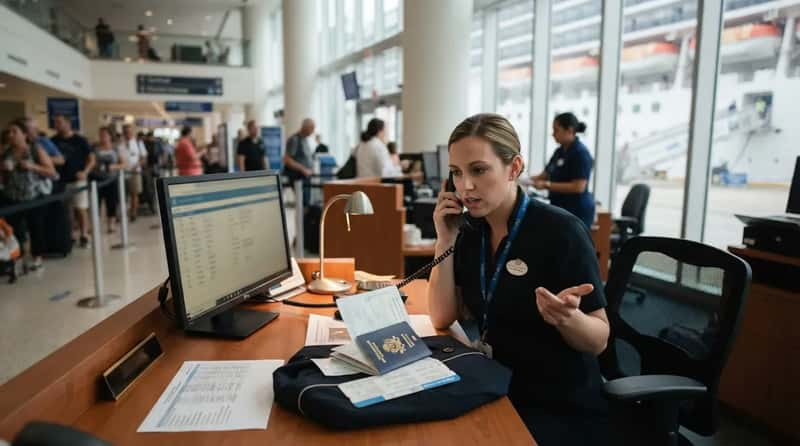
If your documents are incomplete, someone is coming to look for you. A documentation purser audits the immigration information that pier staff entered into the system. Then they collect any missing details by contacting guests directly. Nobody announces this at check-in.
The surprise is how routine it is. Chasing down incomplete guest data is a listed job duty, not a rare emergency. Most travelers assume the cruise line either has everything or turns them away. In reality, there’s a quiet middle step where staff try to fix the gap first.
And that’s before the shore team gets involved, which brings us to #11.
#11 – The Terminal Team Gets Briefed Before the Doors Open
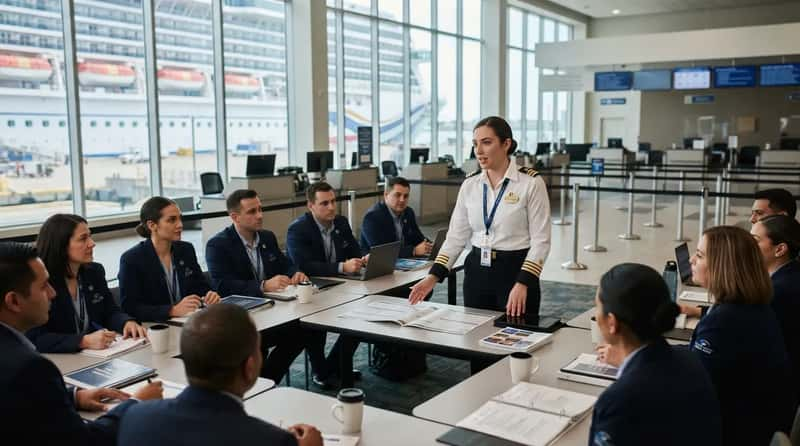
The ship and the pier are supposed to work as one machine. An assistant purser job listing says staff meet the shoreside embarkation teams beforehand to give documentation guidance and reference materials. The people checking you in have already been coached.
Staff don’t always stay on the ship, either. They’re also expected to be in the terminal during embarkation and disembarkation to help check-in supervisors. The “ship’s office” is partly a pier operation. That’s why a tricky document question can sometimes get settled on the spot instead of turning into a scene at the counter.
But none of that matters if the numbers don’t add up, as #10 shows.
#10 – One Missing Name Can Freeze the Whole Departure
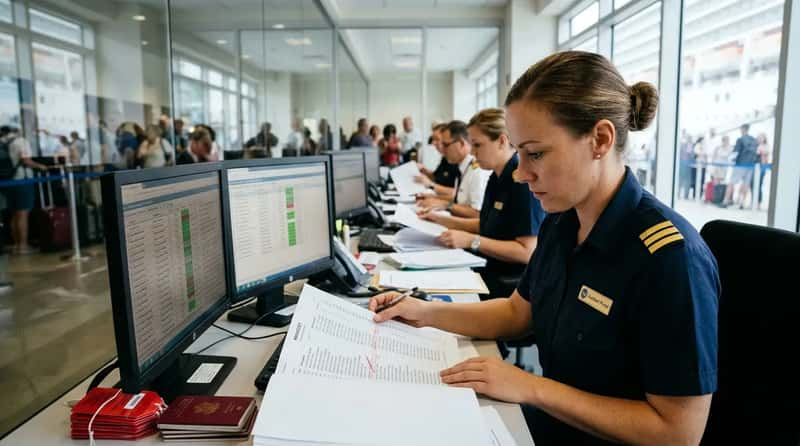
A cruise ship is a floating city that has to know exactly who is aboard. Documentation staff are responsible for making sure the passenger count is balanced. If it isn’t, the paperwork stops.
Guest and crew totals matter, too. The assistant purser listing says staff advise onboard and shore teams on guest and crew counts before sailing. One missing or extra name can hold up the whole sequence. It’s dull work, and it holds every other part of the departure together.
Then there’s a group of guests whose paperwork needs extra care. That’s #9.
#9 – International Guests Get a Paperwork Plan of Their Own

Not every passenger arrives with the same needs or speaks the same language. The same listing says purser staff handle international guest details that require translated materials. It’s a small thing, but it can decide whether a family understands a form or panics over it.
Foreign passports get special attention, too. Once the ship is cleared to embark new passengers, the documentation purser goes to the terminal to gather foreign passports. They also confirm that every guest has proper documents and visas. Some passports are physically collected while you wait. Most U.S. travelers never see it, because they’re not the ones handing theirs over.
Worth Knowing
- Translated materials are part of the job for some international guests.
- Collection happens at the terminal, after the ship is cleared to embark passengers.
- Staff confirm both documents and visas for every guest.
- Requirements vary by destination and nationality, so no single rule fits everyone.
Now for the money side, which is where the arguments start…
#8 – Your Onboard Tab Is Open Before You Spend a Dollar
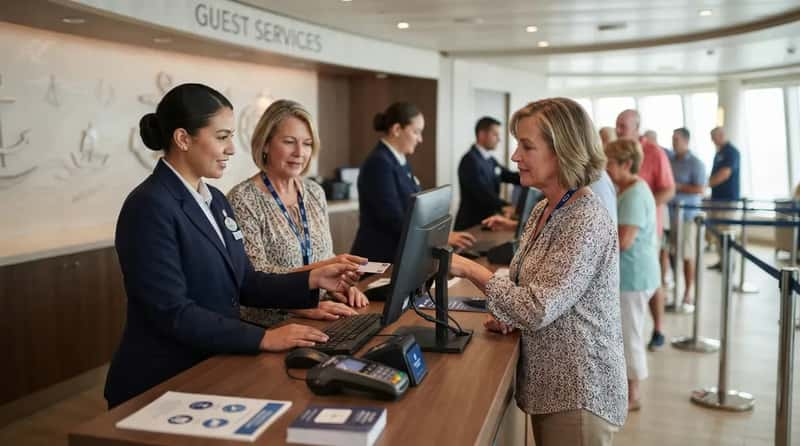
Your cruise card is basically a tab with your name on it. Passengers who don’t use a card are handled differently. Princess says guests paying by traveler’s checks or cash must leave a cash deposit with Guest Services at the start of the cruise. That deposit is a safeguard for the ship’s books.
Cashless doesn’t mean costless. Everything you charge piles up on one account, and the settling happens at the desk. That’s why the line at guest services on the last morning can feel endless.
And one line on that account might surprise you, because you never asked for it.
#7 – A Daily Tip You Never Chose Is Already on Your Bill

You didn’t pick it, but it’s probably there. Most major cruise lines add daily gratuities or service charges to passenger bills, typically around $14 to $25 per person, per day. If you don’t prepay, the charge simply starts adding up each day.
Cruise lines keep adjusting these rates, and Carnival is among those that have raised theirs. On a 7-night trip for two, that flat fee can run into the hundreds of dollars. Critics call it a stealth fare increase. Fans say it’s simply how crew pay works. Pick a side in the comments.
But the daily fee isn’t the only automatic add-on, and the next one hides in your drinks.
#6 – Every Cocktail Costs More Than the Menu Says
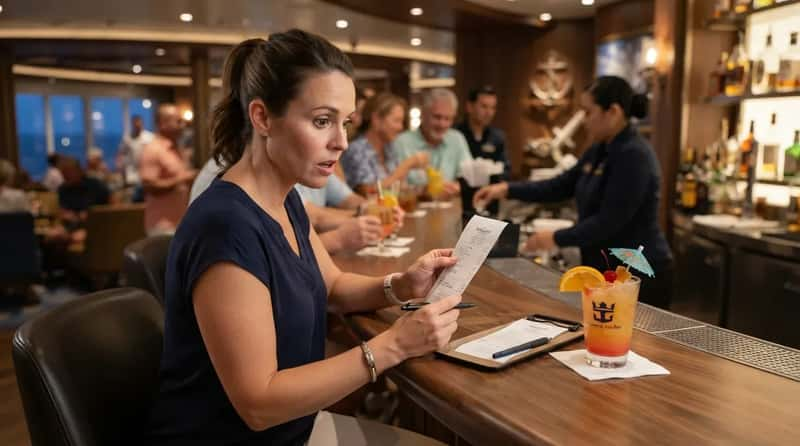
The daily tip is only half the story. Additional automatic gratuities are often applied to bar, restaurant, and spa bills, usually between 15% and 20%. Those stack on top of the daily charge.
The specifics vary by line. Royal Caribbean adds 18% automatically to bar and beverage purchases, separate from the daily gratuity. That cocktail’s real price is higher than the menu shows. It’s a classic gripe among first-timers, and it usually gets sorted out at the desk when someone does the math on day four.
Quick Compare
- Daily gratuity: $18.50 per guest per day in a standard Royal Caribbean stateroom, $21 in a suite
- Bar and beverage add-on: 18% automatically, charged separately from the daily fee
- Typical range across lines: 15% to 20% on bar, restaurant, and spa bills
- Real-life math: a $10 drink with an 18% charge lands at $11.80
Money problems are annoying. Medical ones are a different level, starting with #5.
#5 – A Medical Device Needs Power, and the Ship Needs to Know Early
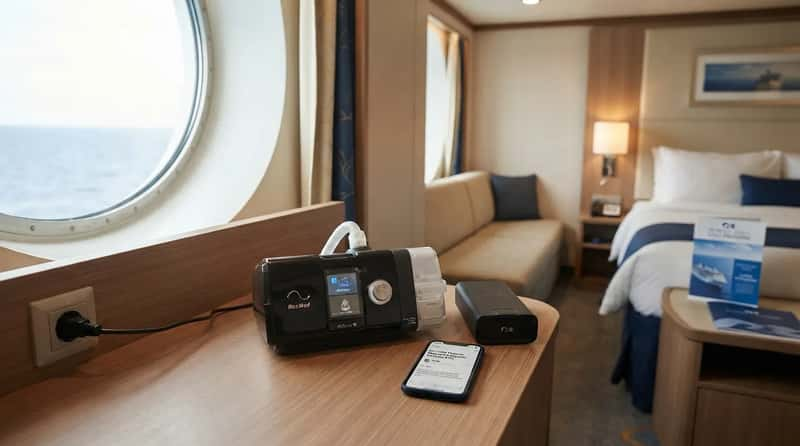
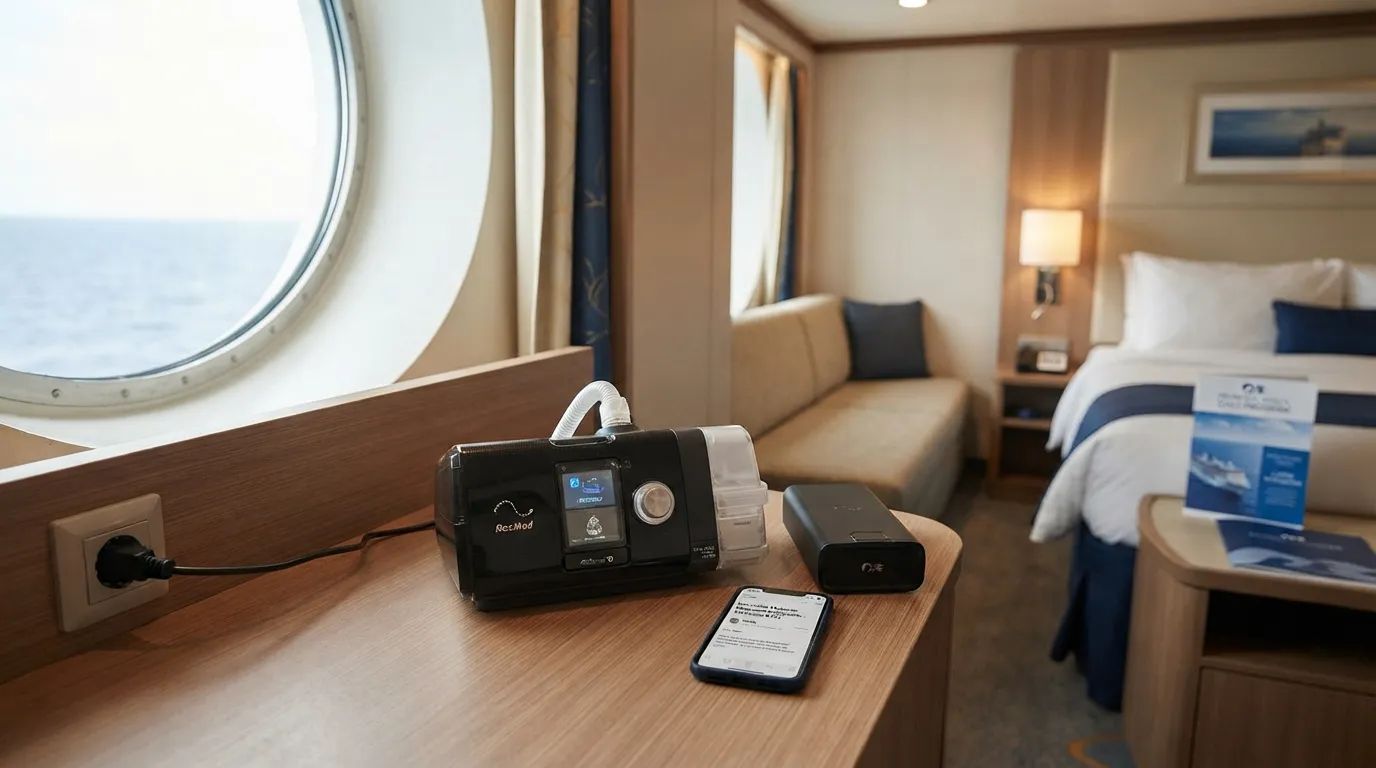
Medical devices don’t care that you’re at sea. Princess says that if you rely on equipment needing power, you should notify the cruise line in advance so appropriate power access is available in your stateroom. Waiting until you’re aboard is the wrong move.
There’s a backup rule, too. Princess advises that devices needing power should have fully charged batteries or a backup that doesn’t require electricity. A cabin outlet isn’t a guaranteed medical solution. The desk can help, but it works best when it’s told early.
Bigger medical problems get handled in a different way, and that’s #4.
#4 – The Ship’s Medical Center Is Not a Hospital

The sign says medical center, but the limits are real. Carnival says its ships have trained physicians and nurses running medical centers. But they aren’t full-fledged hospitals, so some guests and crew must be evacuated to shoreside facilities. That’s an honest line, and it gets skipped over a lot.
Fast Facts
- Carnival’s medical centers are run by trained physicians and nurses.
- They are not full-fledged hospitals.
- Some guests and crew must be evacuated to shoreside facilities.
Administrators plan for this before sailing. A documentation purser’s duties include coordinating with the port agent whenever there is a medical emergency. The paperwork side of an emergency is built into the job. Those quiet logistics help decide how quickly someone gets from the ship to a hospital.
Then there’s one safety rule that applies to every single person aboard, and it can hold the ship at the dock.
#3 – The Ship Can’t Leave Until the Muster Count Is Done

The safety briefing isn’t a suggestion. Carnival states that the ship cannot embark on its voyage until all guests are accounted for in the muster drill process. Plenty of passengers think they can skip it and head straight to the buffet.
The format has changed. Some ships now have guests watch a short video, around five or six minutes, then report to where their muster group assembles. A few missing people can delay departure for everyone. Many travelers consider the drill a pointless hassle. The rule itself shows who wins that argument.
And the biggest gate of all swings open before the first guest steps aboard.
#2 – The Ship Itself Has to Be Cleared Before You Can Come Aboard
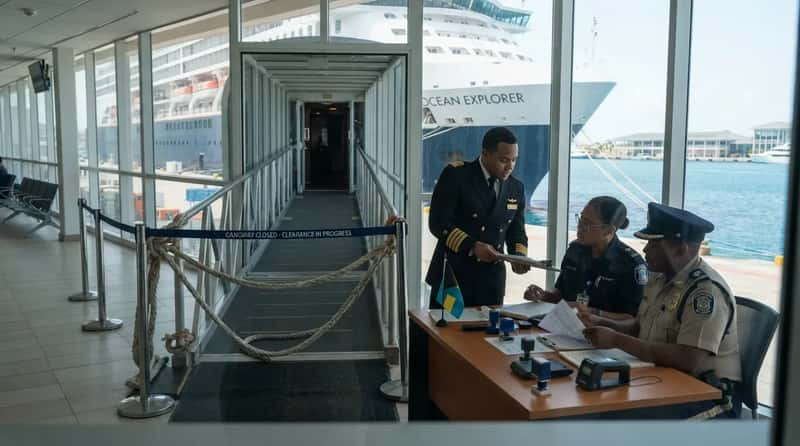
Boarding doesn’t just begin when you arrive. The documentation purser assists the port agent and customs and immigration officials with the ship’s clearance. Until officials approve it, the door stays shut.
Once that happens, the news travels fast. After clearance, the purser informs the Hotel Director, Guest Services Manager, Housekeeping, and Inventory. Your cabin turnover and the ship’s approval are linked. A delay in paperwork can become a delay in your room, which is why early arrivals sometimes end up waiting.
But the most dramatic call of all comes down to a single document.
#1 – A Guest With the Wrong Papers Becomes a Decision for Senior Officers
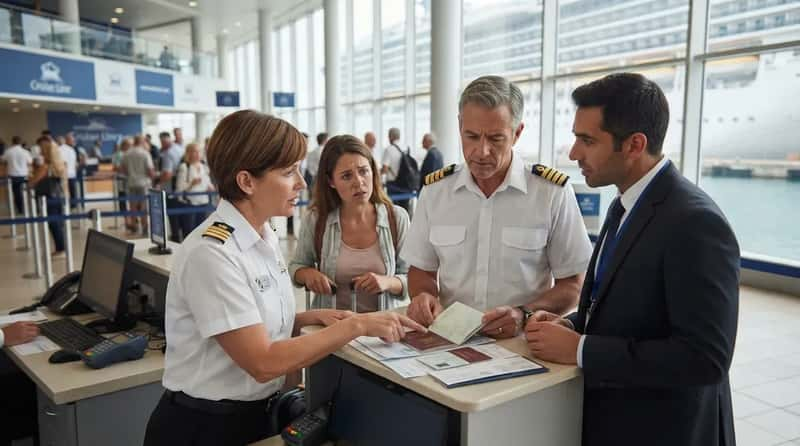
This is the scenario everyone dreads at the pier. Staff don’t improvise when it happens. If guests lack proper documents, the documentation purser must inform the Hotel Director and the Port Agent for their approval or denial. The call goes up the chain.
That detail changes how the whole process looks. The decision to let you sail can rest with senior officers and a local agent, not the person at the counter. It’s one reason experienced cruisers check passports, visas, and name matches weeks ahead. Travel requirements, as Princess notes, vary by destination and nationality, so no single rule fits every guest.
Most of what happens before departure is built to stay invisible. When it works, you only notice a smooth boarding and a ship that leaves on time. When it fails, every item on this list suddenly matters.
The most surprising part isn’t any single rule. It’s how much of your cruise gets decided before you arrive. Border manifests, balanced headcounts, medical logistics, and a final yes-or-no on missing documents are all handled out of sight. Even the purser’s old title has quietly vanished from the door, while the work behind it carries on. Which of these surprised you most? Drop it in the comments.