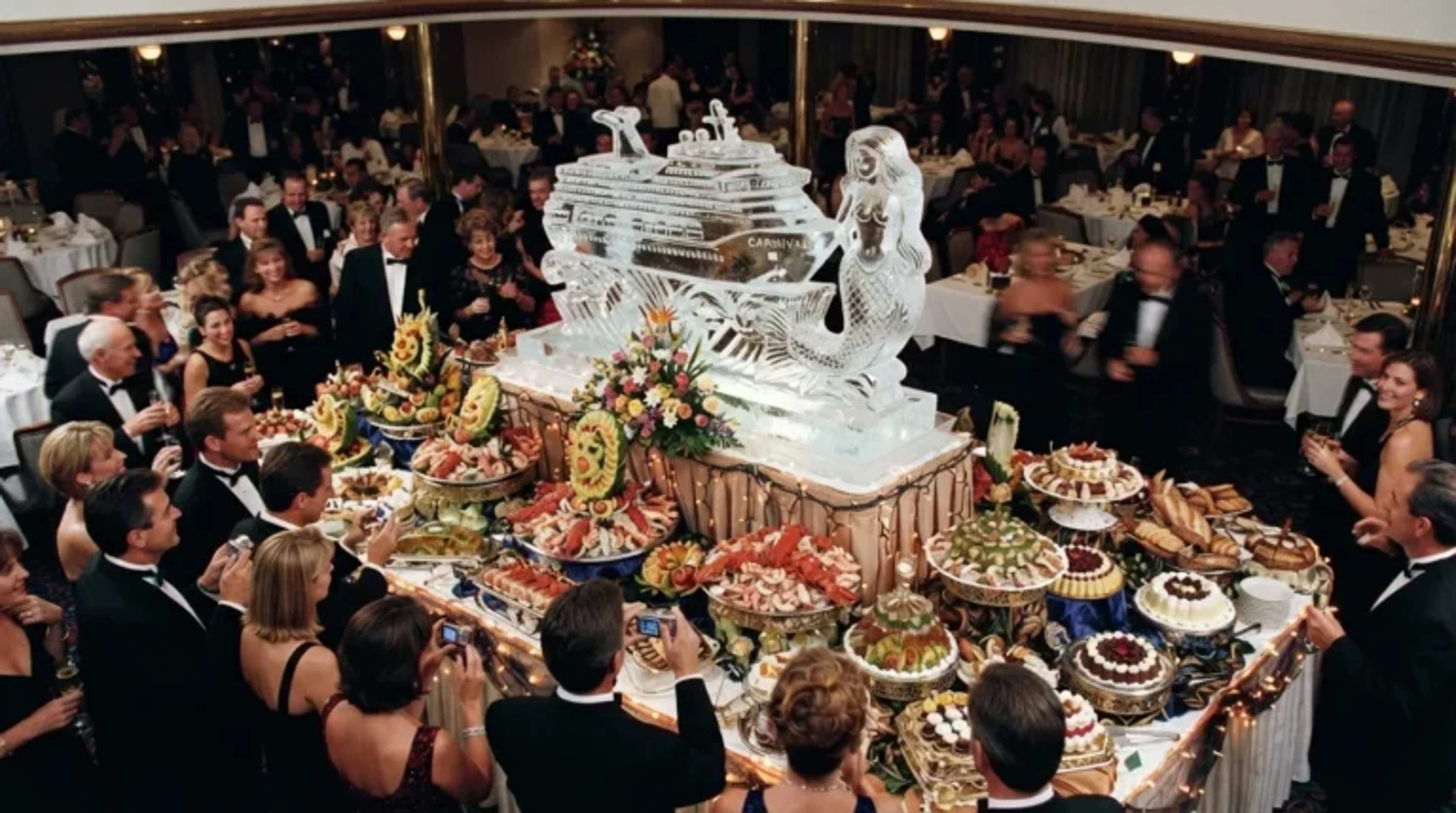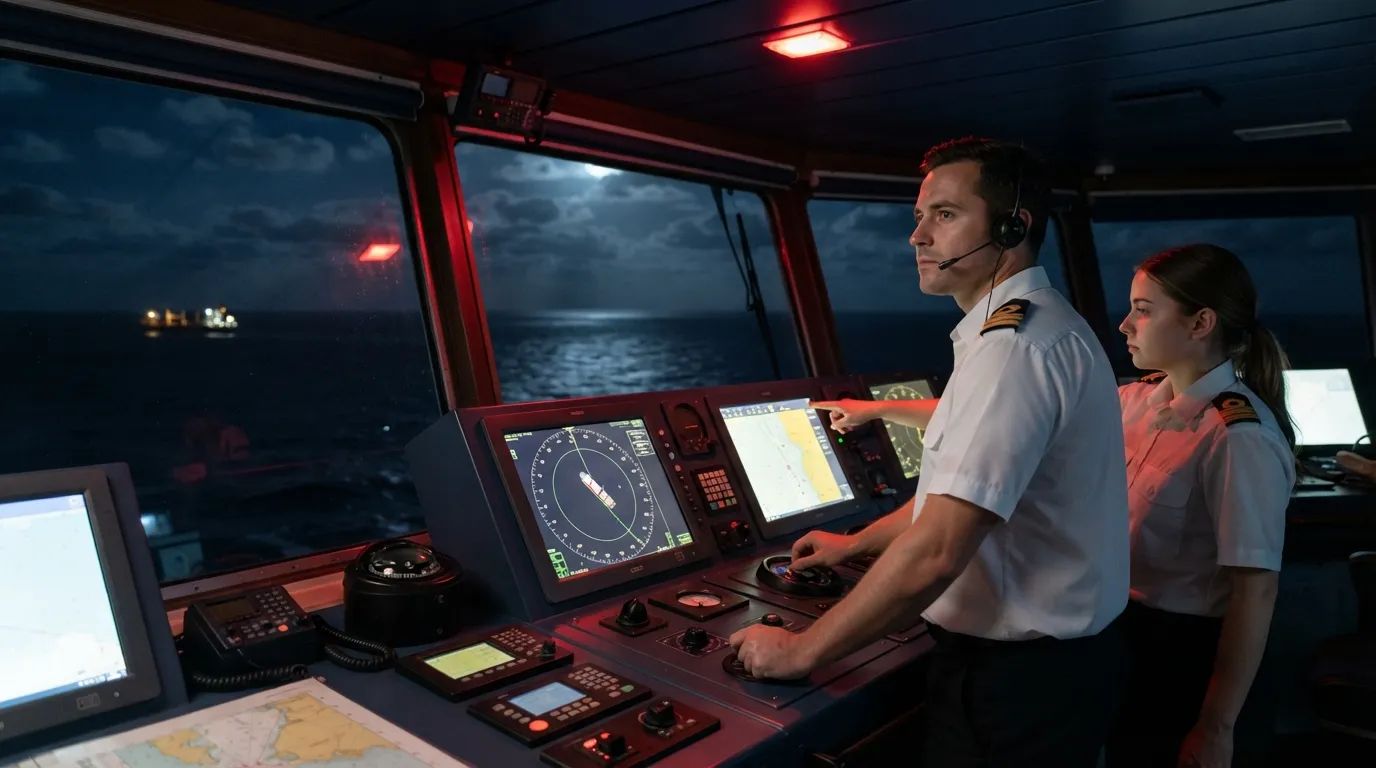
You’re on a sunny deck with a coffee in your hand. The water looks like glass, and your biggest worry is whether the good loungers are taken. That calm is real, but it’s also built. Deck officers, the people behind navigation, safety gear and watchkeeping, spend their days fixing problems you will never hear about.
Most of these aren’t movie-style emergencies. They’re quiet corrections made hours early, checks nobody applauds, and judgment calls that sound boring until you picture the alternative. By the time you reach number one, you may never hear a ship announcement the same way again.
#17 – The Route That Gets Rewritten Before You Even Board
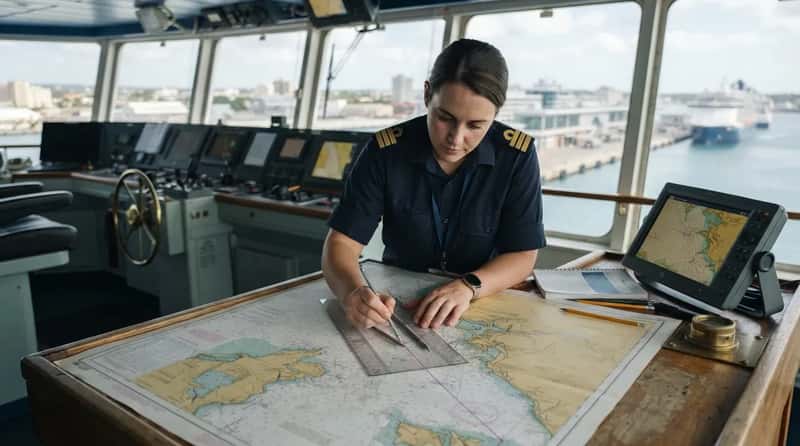
Your smooth sailing started days before the ship left the pier, on a chart table. Deck officers build a voyage plan before departure, and it’s far more than a line drawn between two ports. On many ships, the second officer prepares and updates that plan and looks after the charts and navigation equipment.
The route gets checked against depth, hazards and forecast weather before it’s approved. A path that looks obvious on a screen can be redrawn because of one shallow patch or one closed channel. Guests see a departure time. Officers see a stack of decisions that were already made and verified.
That’s only the paperwork. Wait until the sky starts to look wrong…
#16 – The Storm That Was Dodged Without a Single Announcement
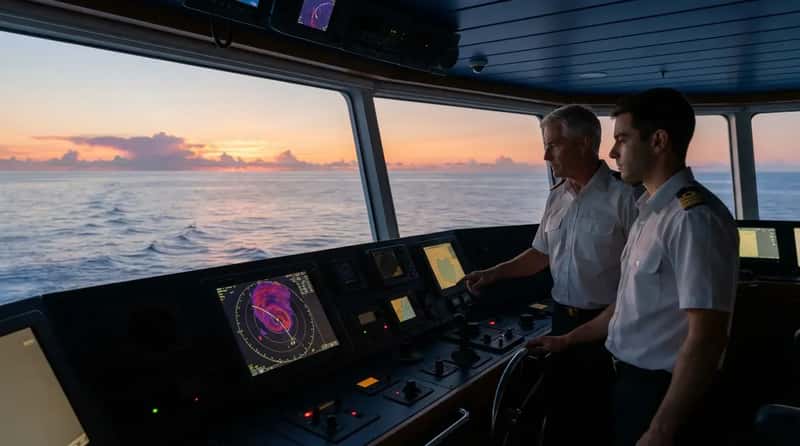
Most people don’t realize a ship can sidestep bad weather with barely a ripple on board. Officers watch weather information constantly, and the captain can adjust course or speed long before conditions turn ugly. Weather data is part of the voyage preparation from the very start.
The best version of this is invisible. A small speed change hours ahead can mean you never feel what the ship avoided. You just see a pretty sunset and assume the ocean behaved itself.
Still, the radar screen tells a stranger story than the weather does…
#15 – The Radar Blip That Wasn’t Real
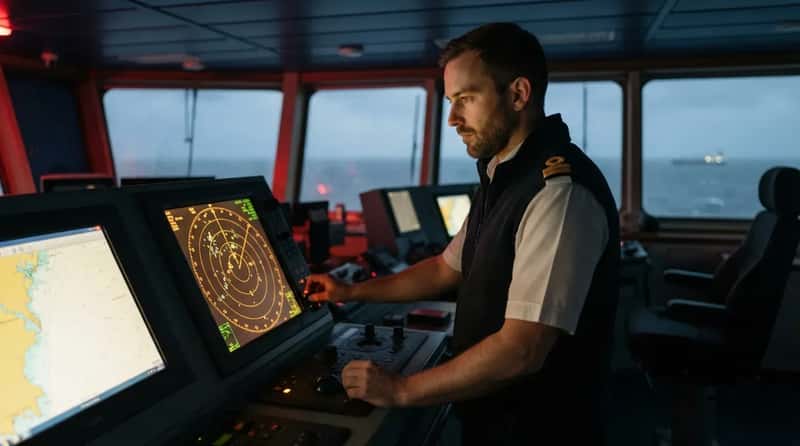
Every screen on a bridge can lie a little. Radar can pick up clutter from waves or heavy rain, and officers have to decide what’s a real target and what’s noise. That’s why experienced watchkeepers rarely trust a single display.
They compare radar, electronic charts and what they can actually see out the window. Collision avoidance leans on radar, AIS and plain visual lookout working together. On a ship full of screens, the window is still a primary instrument, and that’s the part tech fans often get wrong.
And the smallest boats cause some of the biggest headaches…
#14 – The Fishing Boat Nobody on Deck Ever Notices
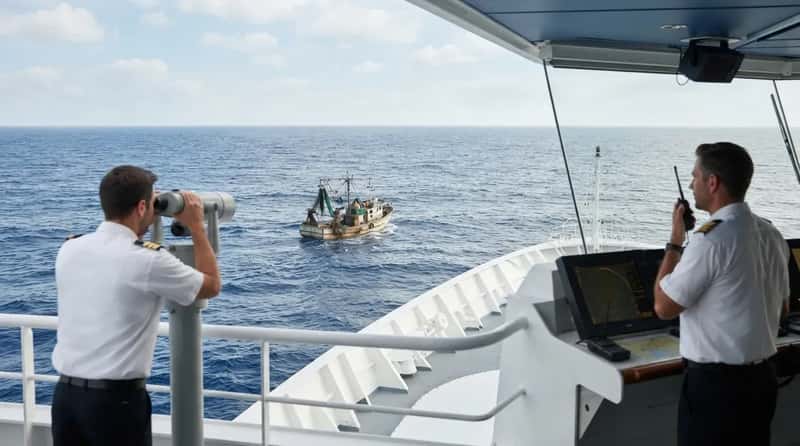
Out at sea, the ocean isn’t empty. Fishing boats, sailboats and workboats can turn up in the path of a huge ship, and they don’t always behave predictably. Deck officers spot them early and plan around them while guests are still lining up for lunch.
The ship’s size works against it here. A vessel this large can’t stop or turn on a dime, so the decision has to come early. That’s why officers act before a situation feels tense, not after it does.
Fast Facts
- Rule 5 of the international collision rules (COLREGs) requires a proper lookout by sight and hearing, plus all available means.
- Rule 6 ties a ship’s safe speed to visibility, traffic density and how well the vessel can maneuver.
- Rule 8 calls for avoidance action that is positive, made in ample time and big enough for the other vessel to notice.
- Small wooden or fiberglass boats can show up weakly on radar, especially in choppy water.
Closer to land, a different problem waits at the door of the ship…
#13 – The Gangway That Changes Shape Every Hour
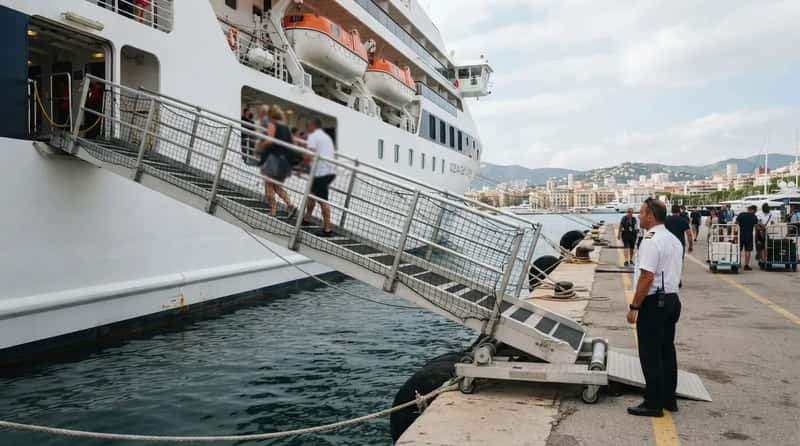
It’s the walkway guests cross without a second thought. In port, tides and swell keep changing the angle of the ramp and the gap between ship and pier. Officers monitor it, adjust it and keep watching while people walk across.
In port, deck officers may support gangway safety, tender operations and maneuvering. The ramp you strolled across at 9 a.m. may have been adjusted several times that morning. Guests only notice if something feels off, which means the job is going well.
But the gangway is the easy version of a harder job…
#12 – The Tender Stop Canceled for One Unpopular Reason
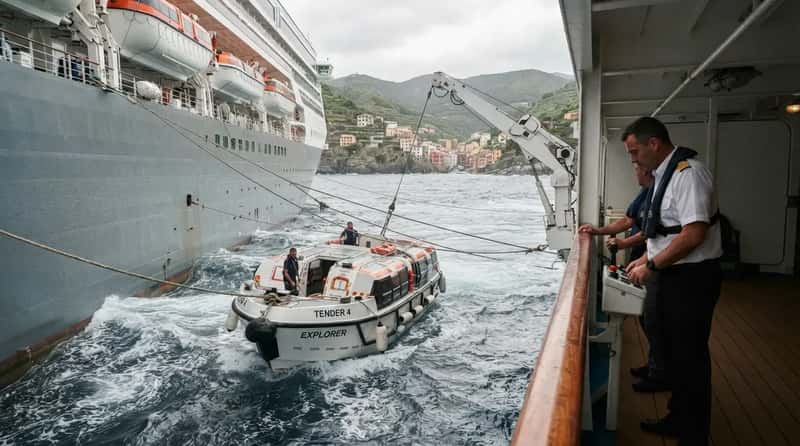
Some ports have no pier big enough for a cruise ship, so guests ride small boats ashore. Officers judge sea conditions, boarding safety and how the ship sits in the water. When a tender stop gets canceled, many travelers blame the cruise line.
It’s an unpopular call, and it’s a safety call. Moving hundreds of people between a rolling ship and a bobbing boat is not a small task, and a canceled port is often the cautious choice rather than a careless one. Cruise line job listings, including Royal Caribbean’s, describe mooring and tender operations as part of a second officer’s duties.
What happens behind the lifeboat doors is even less visible…
#11 – The Lifeboat Inspection Nobody Watches
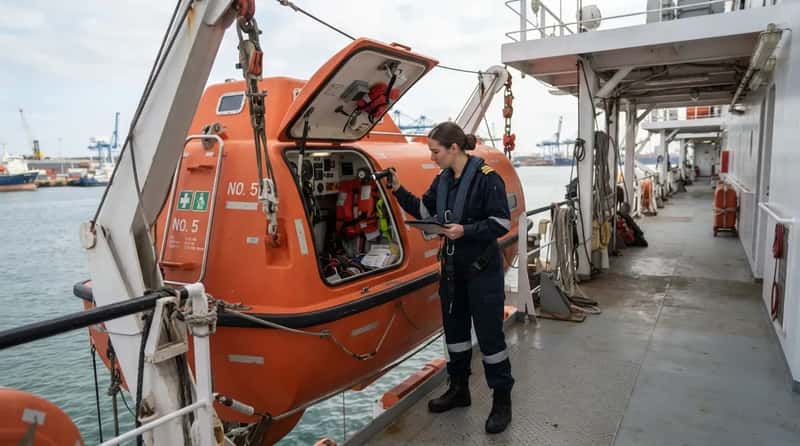
Lifeboats hang there like part of the scenery, but someone is always inspecting them. The third mate’s main duty is typically safety, which includes inspecting lifeboats, gear lockers and related equipment. It’s routine, repeated and almost entirely out of guests’ sight.
The whole point is that the equipment works on the one day it’s needed. Most of the inspection effort goes into gear everyone hopes will never leave its cradle. That quiet repetition is exactly what you’re paying for.
Fire gets the same silent treatment…
#10 – The Fire That Never Gets a Chance to Start
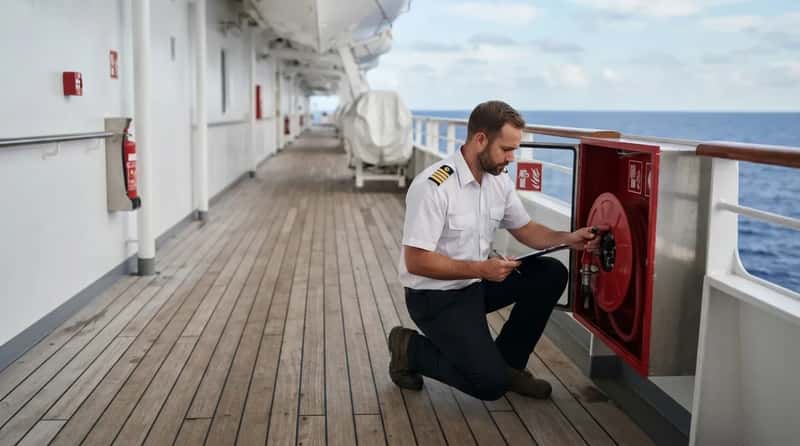
You’ll never see the fire patrols, but they exist. Deck officers take part in safety rounds and help keep firefighting equipment in working order. A chief mate’s duties include maintaining life-saving and firefighting appliances.
The routine feels boring, and boring is the goal. The most successful fire plan is one where nobody ever learns it was used. Crews train and rehearse so a small problem stays small.
Then there’s the moment the ship meets the dock…
#9 – Docking Is a Team Sport You Can’t Hear
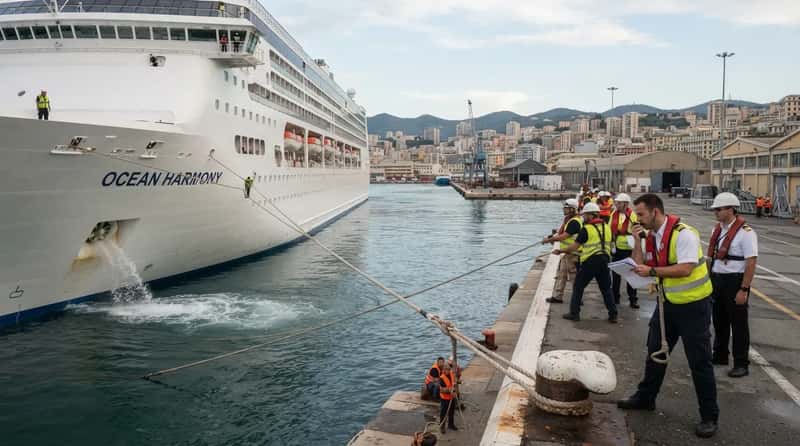
The ship glides into the berth like it’s on rails. It isn’t. Wind, current and a tall hull all push on the vessel, and several teams coordinate by radio. The third mate may direct line handlers and anchor details while the bridge keeps the big picture.
From the pool deck it looks effortless. A slight breeze matters more than you’d think when a ship has that much surface for the wind to catch. That’s why officers read the conditions before a single rope goes ashore.
And sometimes a stranger comes aboard to help…
#8 – The Pilot Who Gets Questioned Politely
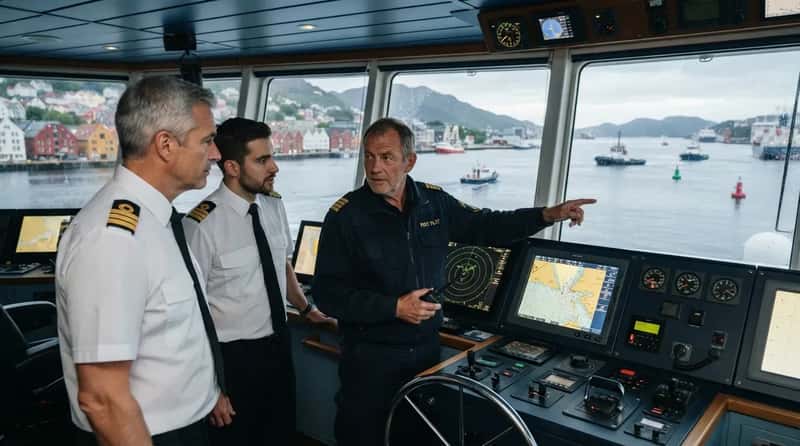
In many ports, a local pilot boards to guide the ship in. Guests might notice a small boat alongside, and that’s about it. Up on the bridge, the ship’s own officers still have to stay sharp.
The pilot brings local knowledge, but the ship’s team stays responsible for monitoring what’s happening. Modern bridge teams are trained to speak up if something doesn’t match the plan. Officers work closely with pilots, tugs and vessel-traffic services, so it’s a conversation rather than blind trust.
Quick Compare
- The pilot: knows the local channels, currents and berths.
- The bridge team: knows how this particular ship handles, turns and stops.
- The captain: generally keeps overall responsibility for the ship, even with a pilot aboard.
The next one is about what happens when the person watching the screen runs out of energy…
#7 – The Tired Watchkeeper Problem
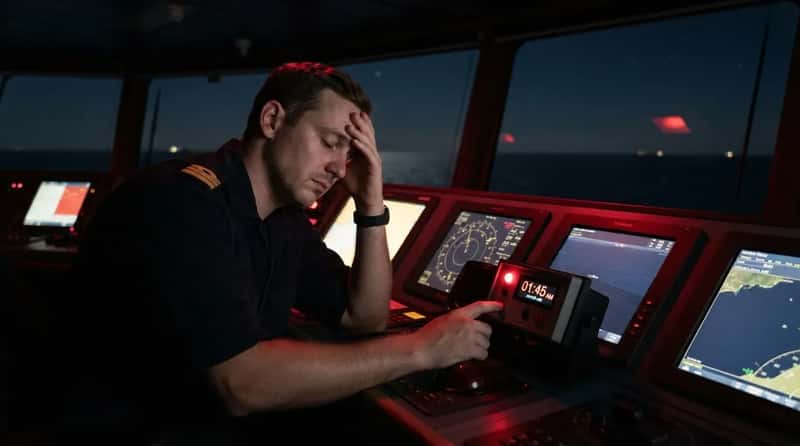
Nobody wants to think about it, but fatigue is a real concern at sea. Officers stand set watches, and the rules around rest exist for a reason. The system is designed so that one drowsy moment doesn’t go unchecked.
Many bridges have an alarm that triggers if there’s no sign of activity from the watch officer. It’s called the Bridge Navigational Watch Alarm System, or BNWAS. If the first alert is ignored, it can escalate to other officers, because the design assumes humans get tired.
But the quiet hours aren’t the only time a ship needs watching…
#6 – The Anchor That Might Be Slipping
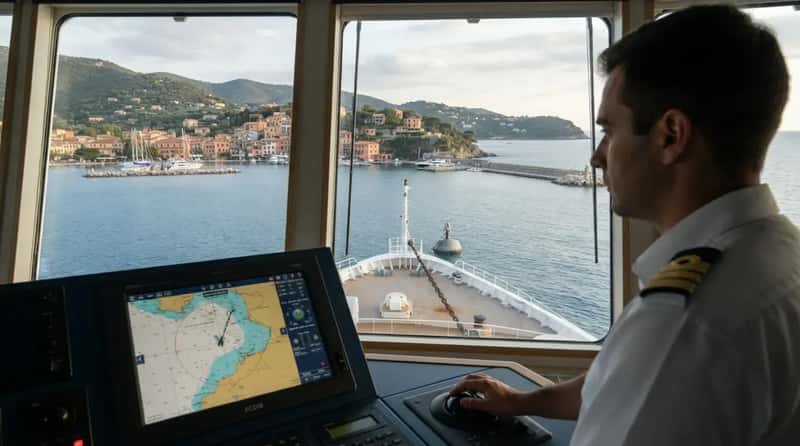
Anchored off a pretty harbor, the ship seems stuck in place. It isn’t always. Wind or current can tug on the anchor, and officers keep an eye out for drift.
The third mate may direct anchor details, and the bridge keeps checking position even when nothing seems to be happening. Even at rest, the ship is monitored as if it might move. That’s why the bridge doesn’t go empty just because the engines are quiet.
Now for the strangest sound of the whole trip…
#5 – The Odd Announcement That Isn’t Odd at All
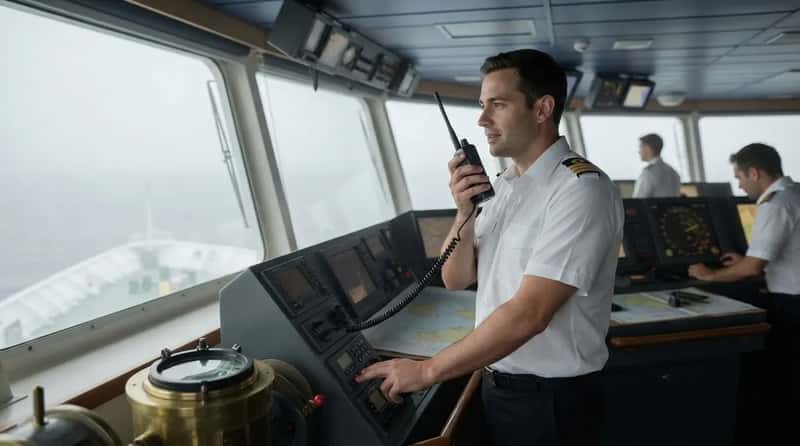
Many cruise lines use coded phrases for internal alerts so guests aren’t alarmed. Each company has its own wording, and crew members know exactly what each phrase means. Guests hear a harmless-sounding message and carry on with their day.
This isn’t secrecy for its own sake. A clear code lets the crew react fast without sparking panic among thousands of people. It’s one of those details most passengers never think to question.
But the real test of a crew is fog…
#4 – Fog Rolls In and the Ship Slows Down Without Telling You
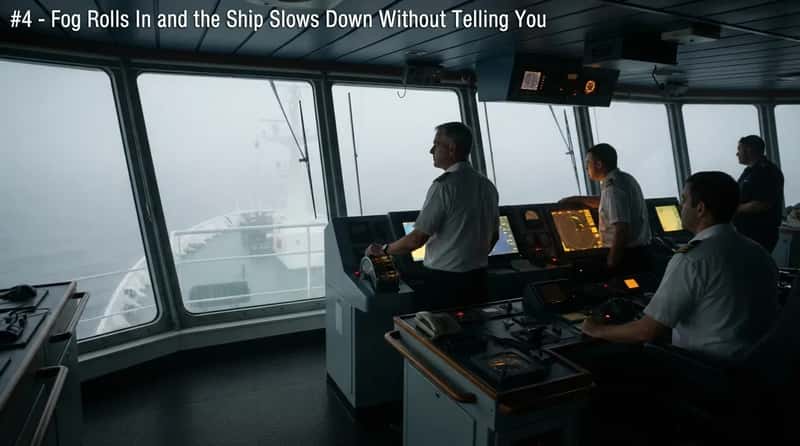
When visibility drops, the rules change. Officers may reduce speed, post extra lookouts and use sound signals. The bridge gets quieter and tighter, with more eyes on fewer things.
Many guests only notice a foghorn and a gray window. The ship’s speed can change without most passengers feeling a thing, while the officers work harder than the view suggests. It’s one of the clearest cases of a calm cabin hiding a busy bridge.
Technology helps, until it doesn’t…
#3 – A Screen Goes Dark and Nobody Tells You
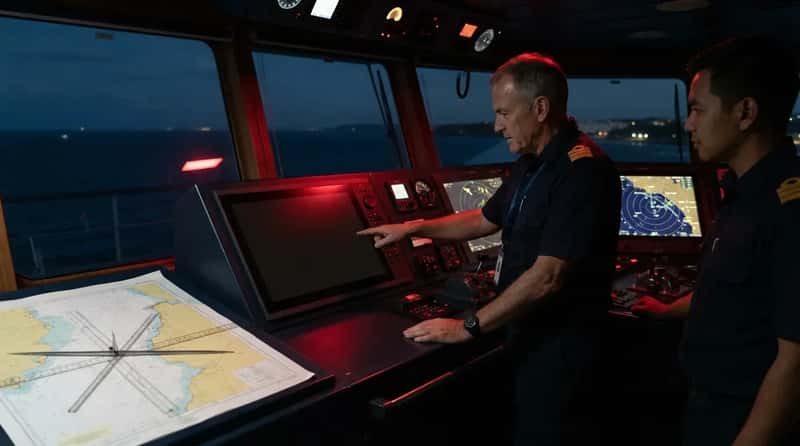
Electronics fail, even on big modern ships. Bridges are built with backups, and officers train for losing a system. A good navigator is expected to be able to cross-check without a favorite gadget.
That means paper skills, compass checks and a second system ready to take over. The ship can lose a key display and still hold a safe course. Meanwhile, passengers keep eating dessert.
At a Glance
- International safety rules (SOLAS) require ships to carry a magnetic compass that works without ship’s power.
- Ships of 3,000 gross tons and up must carry two radars, so one can cover for the other.
- Electronic chart systems need a backup, either a second system or up-to-date paper charts.
- Officers routinely cross-check GPS positions against radar ranges and visual bearings.
Which brings us to the invisible backbone of the whole operation…
#2 – The Chain of Command Steps In Before Anyone Needs It
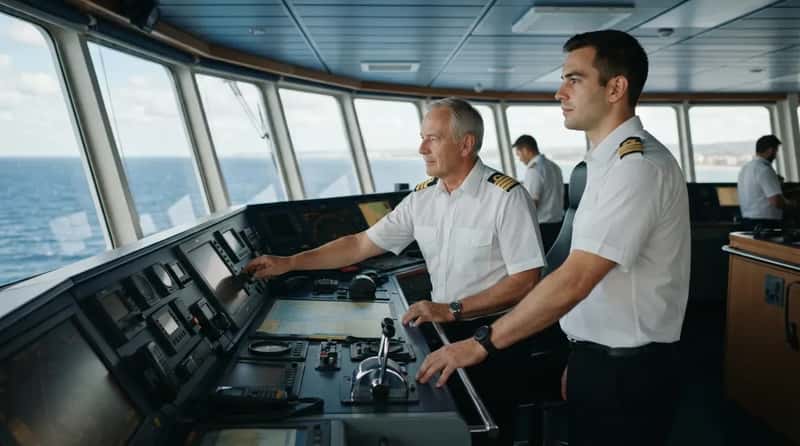
On a ship, someone is always ready to take over. The chief officer assumes command of the whole vessel if the master is absent or incapacitated. It’s a quiet reassurance built right into the structure.
This isn’t only about emergencies. It’s why decisions don’t stall when one person is unavailable. Passengers see a captain’s welcome speech, but the hierarchy behind it is what keeps things running.
But nothing tops the thing that never happens…
#1 – The Collision That Never Happened
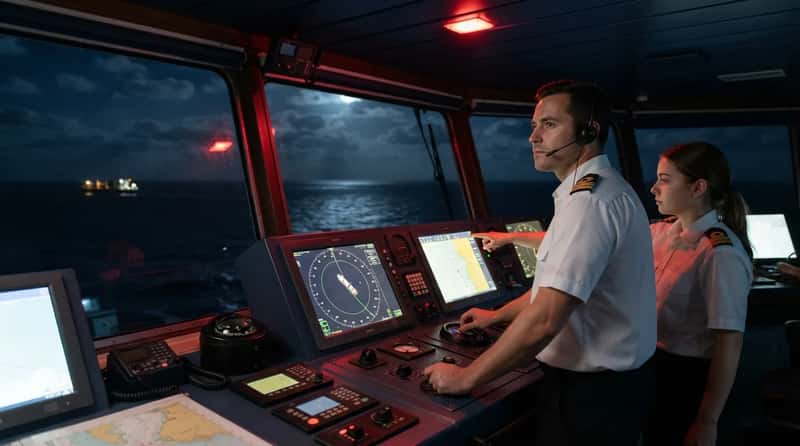
This is the problem officers solve most often, and passengers never feel it. Ships follow international collision rules, known as COLREGS, and officers are expected to act early. The officer on watch has to make sure the ship complies with them.
That means decisive, early moves, not last-second swerves. The best collision avoidance happens so early that nobody on board ever knows there was a risk. The same idea runs through every item on this list.
Calm at sea is built, not given. Much of an officer’s job is preparation, verification and teamwork, long before anything goes wrong. From dodged storms to quiet backups, the best work happens before guests have any reason to worry.
So the next time the ship feels perfectly, boringly smooth, remember that someone on the bridge made it that way. And the better they do, the less anyone notices.