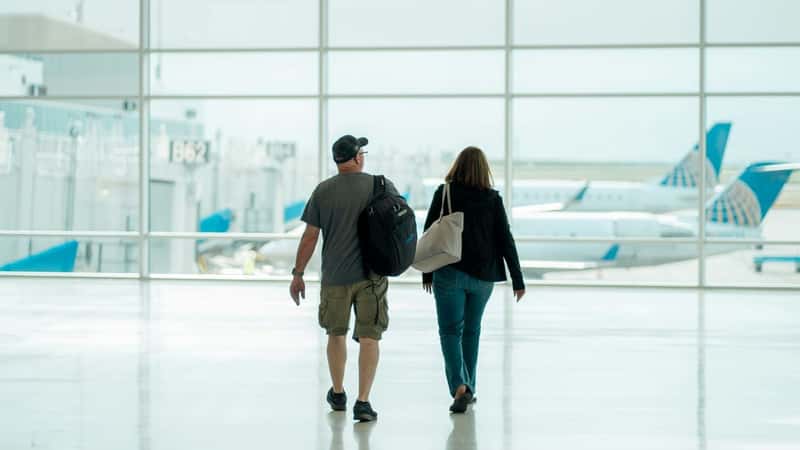
Denver airport to add underground passenger walkways between concourses – Image for illustrative purposes only (Image credits: Unsplash)
Denver International Airport is preparing to convert portions of its long-idle underground baggage tunnels into pedestrian walkways that would link the main terminal with the concourses. The move would give travelers an alternative to the airport’s automated train system, which has experienced occasional mechanical issues despite running reliably most of the time. Officials see the project as a practical step toward handling the steady rise in passenger traffic at one of the nation’s busiest hubs.
Persistent Train Disruptions Prompt New Options
The airport’s train network, known as the Automated Guideway Transit System, carries passengers from the Jeppesen Terminal to concourses A, B and C. While the system operates without glitches more than 99 percent of the time, even brief outages have forced the use of shuttle buses and created platform crowding. A mechanical problem in May 2026 required temporary bus service between concourses, highlighting the need for backup routes. Planners considered several alternatives, including bridges between concourses, but rejected them because of cost and construction complexity. Ziplines were floated in jest during workshops but never taken seriously. The tunnel conversion emerged as the most feasible approach after airline partners and airport staff reviewed the options.
Repurposing Infrastructure Built for a Failed Baggage System
The tunnels in question date to the airport’s original construction and were intended for an automated baggage-handling system that contributed to a 16-month delay in the facility’s 1995 opening. Large sections have sat largely unused since then, leaving behind concrete corridors that now require significant upgrades. Converting the space would involve removing old equipment, installing proper flooring and walls, adding heating and ventilation systems, and possibly including moving walkways. Vertical circulation – getting passengers down from concourse level and back up again – remains one of the more technically demanding aspects of the plan. The tunnels are already wide enough to accommodate two-way foot traffic once finished.
Airlines Back the Plan as a Reliability Upgrade
Denver’s three largest carriers have expressed support for the pedestrian walkways. United Airlines, the airport’s biggest operator, described the addition as a meaningful investment that would give connecting passengers more choices. Southwest Airlines, which operates its largest hub at DEN, called the walkways a tremendous addition that would improve flexibility and operational resilience alongside other recent enhancements such as touchless ID technology. American Airlines noted that the new routes would add reliability for customers on connecting flights. Denver Mayor Mike Johnston framed the project as a clear win for travelers, while also acknowledging the airport’s long-standing reputation for underground intrigue. He suggested passengers might finally get a closer look at the tunnels and decide for themselves what stories hold up.
Cost Estimates and Construction Timeline
Early projections place the total cost between $300 million and $700 million, a broad range that reflects the conceptual stage of planning. Once detailed designs are complete, construction could begin as early as 2027. The work forms part of the airport’s broader Vision 100 initiative, which includes a $75 million upgrade to the existing train fleet and infrastructure. The project is expected to complement, rather than replace, the train system. Travelers would still have the option of riding between concourses, but the new walkways would provide a consistent backup during any future disruptions. Airport officials continue to review the details before moving into final engineering phases.