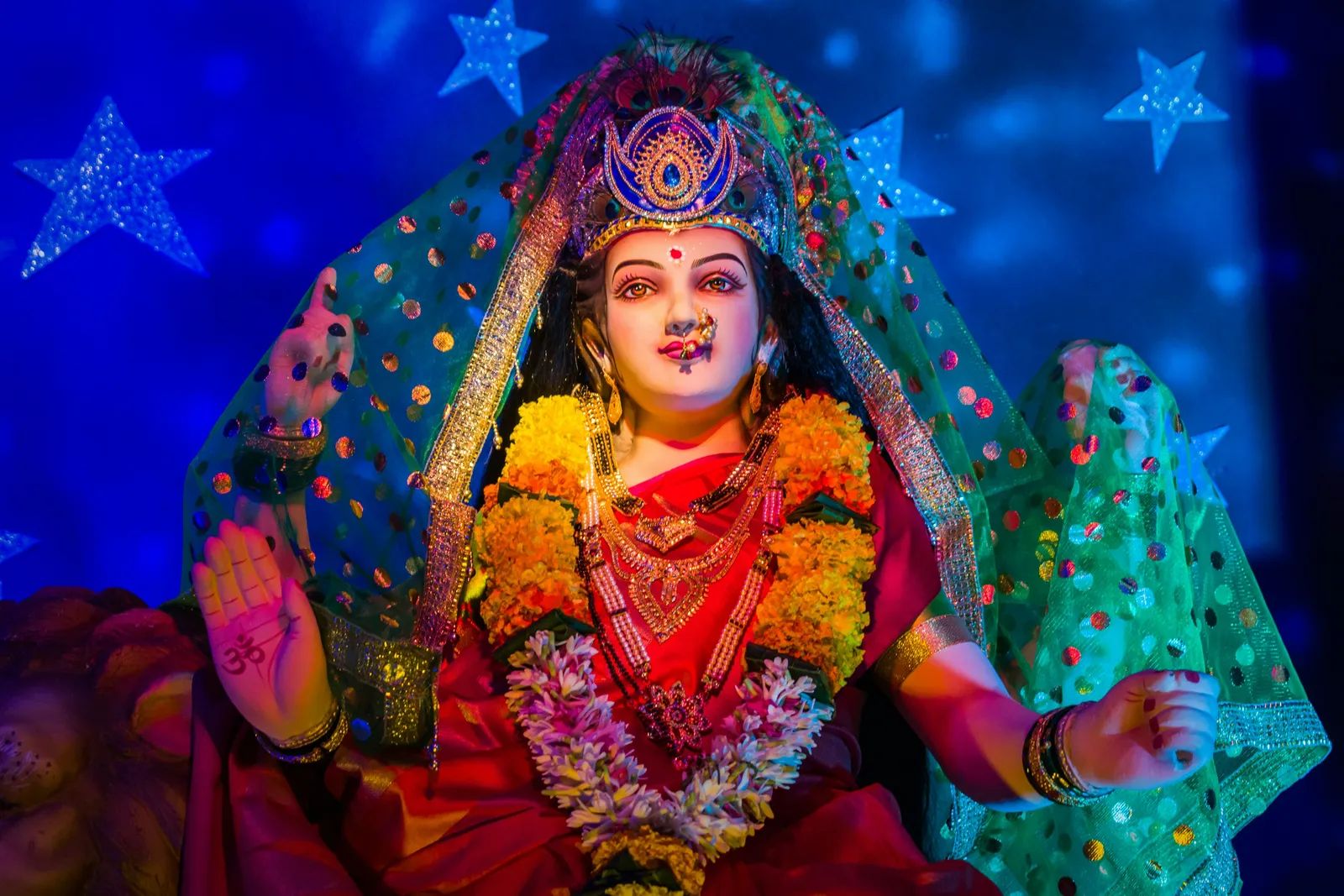
Dewas derives its name from Devi Vasa, meaning the place where the goddess resides. The hill known as Dewas Tekri rises above the town in central India and hosts the Raktapeetha dedicated to Chamunda Devi. Decades after E.M. Forster described the setting in his memoir The Hill of Devi, the site continues to attract those interested in both its religious significance and its literary associations. ([1])
The Name That Signals Divine Presence
The etymology of Dewas points directly to its identity as a seat of the goddess. Local tradition holds that the word combines elements meaning Devi and residence, underscoring the long-standing association between the landscape and Chamunda Devi. This linguistic root frames the hill not merely as a geographic feature but as a location defined by its sacred occupant. Travelers who reach the summit encounter a temple complex that embodies this connection. The designation Raktapeetha, attached specifically to the Chamunda shrine, distinguishes the site within the broader network of Devi temples across the region. The name itself invites reflection on the layered meanings attached to such places of worship.
Forster’s Account and the Enduring Hill
E.M. Forster’s memoir The Hill of Devi records his impressions of the area during his time in the region. The book places the temple and its surroundings within a personal narrative that blends observation with cultural encounter. Readers who follow the text to its source find a landscape that has changed little in its essential character since the author’s visit. The memoir’s focus on the hill elevates Dewas Tekri beyond a standard pilgrimage stop. It supplies a documented outsider’s perspective that later visitors can compare with their own experience. The literary link therefore functions as an additional layer of interest for those who arrive already familiar with Forster’s work.
Visiting the Raktapeetha Today
Access to the temple involves an ascent that rewards the effort with panoramic views and a direct encounter with the shrine. Devotees and sightseers alike note the quiet intensity of the setting, where the goddess is understood to reside. The physical structure remains modest, consistent with many hilltop sanctuaries that prioritize location over elaborate architecture. Practical considerations for visitors include appropriate attire and respect for ongoing rituals. The site operates within the rhythms of local worship, so timing a visit to avoid peak ceremonial periods can allow for a more contemplative experience. Those drawn by the Forster connection often combine the climb with reflection on how the place has persisted across generations.
Why the Connection Still Resonates
The combination of ancient religious meaning and twentieth-century literary documentation creates a distinctive profile for Dewas Tekri. Few hilltop shrines in India carry such a specific published record of an outsider’s encounter. This dual identity keeps the location relevant for travelers seeking both spiritual sites and places with documented cultural history. The Raktapeetha of Chamunda Devi therefore stands as more than a destination; it represents a point where language, belief, and personal narrative intersect. Visitors who arrive with knowledge of its name and its memoir leave with a clearer sense of how certain places retain their significance across time.