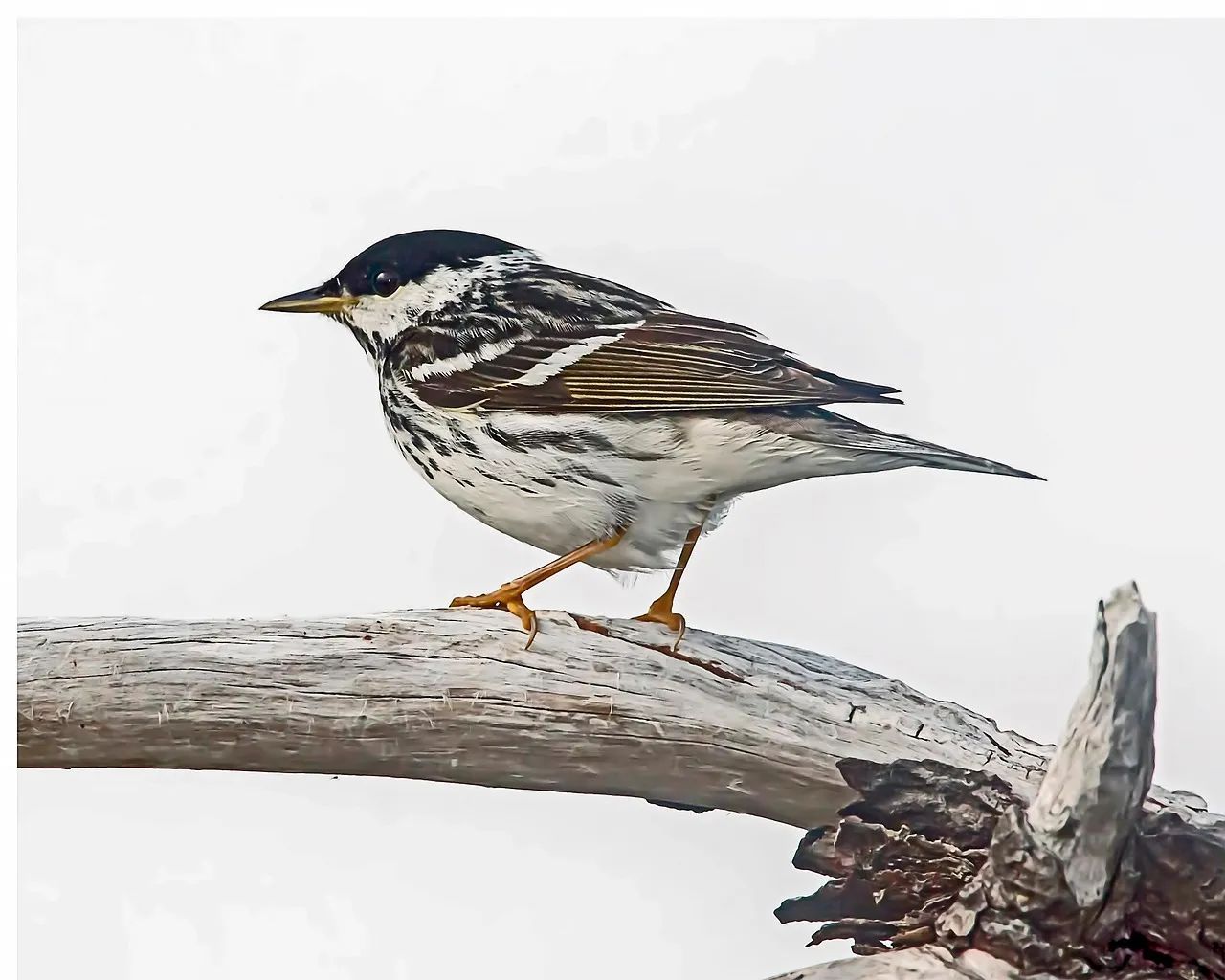
The Farallon Islands sit roughly 27 miles off the California coast and draw an unusual number of birds that stray far from typical routes. A new study published this month uses chemical signatures in feathers to examine where several warbler species originated before reaching the islands. The findings suggest these visitors may represent more than random errors in navigation. ([1])
Why the Farallones Stand Out
Researchers have documented 446 bird species on the small Southeast Farallon Island alone, a total that exceeds most other sites in the United States. The islands host the largest seabird colony in the contiguous states, yet they also serve as a reliable stop for landbirds that normally breed east of the Sierra Nevada. Between 2016 and 2022, roughly nine percent of birds banded there belonged to species considered vagrants in western California.
That concentration creates one of the few places where scientists can gather enough data on these rare appearances to test long-standing ideas. Migration ecologist Benjamin Van Doren of the University of Illinois Urbana-Champaign described the location as the “holy grail” for such work.
Testing Old Ideas With New Tools
Earlier observations raised the possibility that some warblers carry a genetic “mirror-image” orientation that sends them southwest instead of southeast each fall. Experiments in the 1970s showed blackpoll warblers captured on the islands preferred to depart in that direction when placed in orientation cages. Other factors such as solar storms, magnetic anomalies, and weather systems can also displace migrants.
Warblers are too small for reliable GPS tags, so the recent project turned to stable isotope analysis of feathers. Different regions produce distinct ratios of hydrogen isotopes in rainwater that plants and insects pass along the food chain. Feathers grown on the breeding grounds therefore carry a geographic signature that researchers can measure in the lab.
Western Origins Stand Out
Scientists collected feathers from 127 vagrant warblers of six species netted on the islands and compared them with museum specimens. The species included blackpoll, Blackburnian, palm, Tennessee, chestnut-sided, and magnolia warblers, all of which normally nest in Canada’s boreal forest and migrate through eastern or central North America.
If vagrancy were purely random, most individuals should have come from the more populous eastern parts of their ranges. Instead, the isotope data pointed to the western edges of those breeding areas. Similar patterns have appeared in other studies, hinting that birds at range margins may be more prone to explore new directions.
What the Pattern Could Mean
The results raise the possibility that some vagrants act as scouts testing new migratory paths or wintering sites. If orientation traits are heritable, offspring of successful explorers could establish new populations. Palm warblers have already formed a small wintering group in California, and comparable shifts have been noted in other species elsewhere.
Climate change and habitat loss are altering traditional ranges, so the ability to locate new suitable areas may become increasingly important. Ecologist Alexander Lees, who was not involved in the study, noted that birds must shift as conditions change or face serious trouble. The Farallon data do not prove every vagrant is an intentional pioneer, and many factors likely contribute to these appearances.
What matters now
- Isotope results favor western breeding origins over random eastern sources.
- Genetic or behavioral traits at range edges may encourage exploration.
- Long-term monitoring on the islands can track whether new populations form.
The study leaves open questions about how often these birds survive to breed elsewhere and whether the pattern holds across more species. Continued work at the Farallones should help clarify which visitors represent one-time mistakes and which ones mark the leading edge of broader shifts.