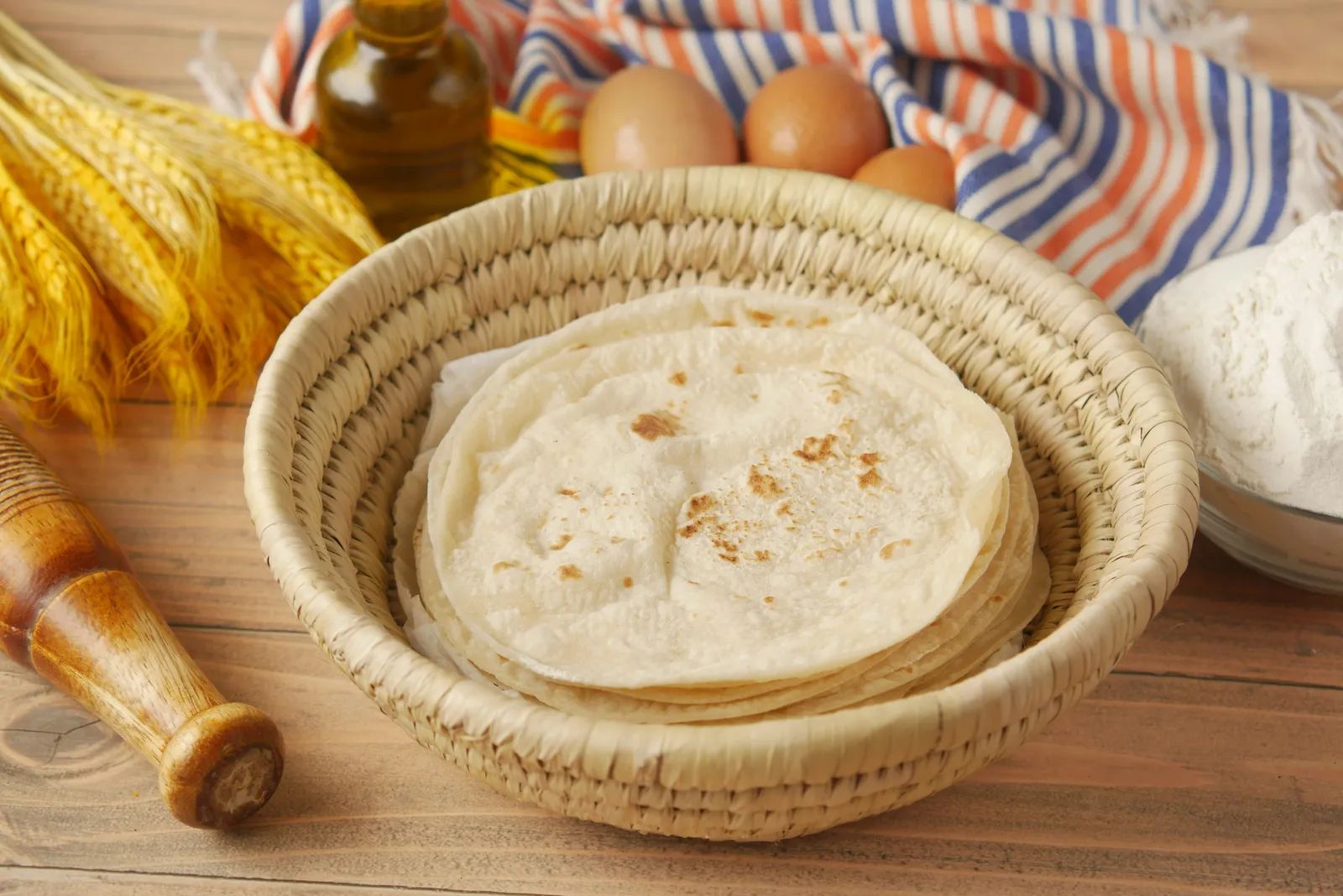
A pack bought for taco night often outlasts the meal by weeks or months. Some tortillas end up in the pantry, others in the refrigerator, and a few turn stiff at the edges just as the printed date comes and goes. Shelf life depends on whether the tortillas are flour or corn, how they are stored and whether the package has been opened. A guide from ([1])pulls together the published storage tables and offers practical advice for everyday kitchens.
How long flour tortillas keep
Flour tortillas generally last longer than corn. New Mexico State University and the University of Nebraska-Lincoln both list about 3 months in the pantry, and both give 6 months in the freezer. The Nebraska table also puts flour tortillas at 3 months in the refrigerator once opened. Nebraska labels its freezer column as a guide to quality only, not a safety limit.
These figures are broad estimates rather than promises for every product. NMSU notes that storage times can vary with the ingredients in a given tortilla. Siete Foods, which makes its own preservative-free tortillas, gives much shorter windows of 21 days refrigerated unopened and 7 days once opened. Those numbers apply to that brand only, so they should not be stretched to every bag on the shelf.
Corn tortillas have a shorter window
Corn tortillas do not keep as long as flour in the same tables. NMSU’s 2025 edition lists 1 to 2 months in the pantry and 2 to 3 months in the refrigerator, and it leaves the freezer entry blank. The Virginia Cooperative Extension, in its October 2025 guide, gives 25 to 45 days in the pantry and 60 to 90 days in the refrigerator. The two sources differ in detail, but both place corn tortillas well below flour.
The gap matters for anyone who buys a large pack of corn tortillas for a single week of tacos. Neither source gives a freezer time for corn, so a home cook has no published guidance on how long to hold them frozen. Following the package label is the safest course until more information is available.
Opened packages and the refrigerator
Once a package is opened, NMSU recommends refrigerating the tortillas. Older pages sometimes quote much shorter times, and the reason is a change in the NMSU guide. A February 2020 edition listed 2 weeks in the refrigerator, while the 2025 table gives 3 months for flour. Shorter figures on older sites may simply reflect that earlier edition.
Because the sources do not agree on every detail, the package remains the best guide. If it lists a use-within time, follow that number. If it lists none, contacting the manufacturer is more reliable than assuming the longest estimate applies. A practical habit is to press out the air, seal the bag tightly and keep it cold, since a loose seal can dry tortillas out quickly.
When to throw tortillas out
Mold is the clearest reason to discard. USDA advises throwing away bread and baked goods that show mold, because porous foods can be contaminated below the surface and mold roots may run deep. USDA’s mold guidance does not name tortillas specifically, so applying it to them is a reasonable judgment rather than an official ruling. Cutting off a visible spot is not recommended, and USDA also warns against sniffing moldy food.
- Fuzzy, discolored or spotted areas on any tortilla
- Mold on one tortilla in a stacked bag, which calls for discarding the package as a precaution
- An off smell or appearance that seems wrong, since USDA notes that some harmful germs cannot be seen, smelled or tasted
- Filled tortillas with meat, cheese or other perishable ingredients left out more than 2 hours, or 1 hour when it is above 90°F
The last item is a different kind of risk. The concern lies mainly with the filling, not the tortilla itself. USDA’s leftover guidance says refrigerated leftovers keep for 3 to 4 days, while frozen leftovers hold for 3 to 4 months for quality.
Related Stories From Travelbinger



Stiff does not always mean spoiled
A tortilla that has dried out is not necessarily unsafe. An industry technical paper on tortilla shelf life says staling makes tortillas crumbly and drier over time, and it names mold as the main spoilage organism. A stiff tortilla without mold or an off odor is a texture problem. Warming it briefly under a towel can restore some softness, and cooking it into strips for soup is another option.
Dates also deserve context. USDA explains that a best if used by date signals peak quality rather than safety. A sealed package a few days past its date, kept cold, is worth inspecting rather than discarding on sight. Freezing extends quality for months, and thawing in the refrigerator, still wrapped, helps prevent drying.
For most households, the answer comes down to a few checks: the type of tortilla, the storage method, whether the package has been opened and a close look for mold. A quick inspection can prevent an unnecessary trip to the trash, and it can also catch the one bag that needs to go.