Most people think the hard part of an all-inclusive trip is picking the resort. It isn’t. The real mistakes happen after you click “book,” when the glossy photos stop doing the talking and the 90-minute transfer, the sold-out restaurant, and the brown beach take over.
People who return to the same resorts year after year don’t start with the pool photo. They check a very different set of details, and a few of them can quietly make or break your week. We’ll start with the one that decides who gets the good drinks, and end with the check that can make “all-inclusive” the pricier option.
#13 – The “Premium Liquor” Fine Print That Changes Your Whole Bar Tab

“Unlimited drinks” rarely means every bottle on the shelf. Many resorts pour a house-brand tier for everyone and save the name brands for a higher room category or an upgrade package. Repeat guests look for the brand list before booking, not at the swim-up bar when the first pour tastes off.
Plenty of resorts also keep certain drinks behind an upcharge, such as champagne, rare tequilas, or room-service bottles. Two guests at the same resort can pay very different prices for what looks like the same “all-inclusive” stay. If the website only says “premium brands,” ask which brands, in writing, before you pay a deposit.
But that’s nothing compared to the dinner problem waiting at #12…
#12 – The Restaurant Reservation Scramble Nobody Warns You About

A resort can list eight restaurants and still leave you eating at the buffet. Specialty restaurants often have limited seats, and some resorts cap how many you can book per stay. Repeat guests check how reservations work before they book: when they open, whether you can reserve from home, and whether there’s a limit.
Reviews are full of this complaint. Guests line up at the lobby desk or tap an app the moment booking opens, because the popular tables fill early. A long restaurant list on the website can hide the fact that only a few meals per stay are guaranteed. Some guests argue that a resort with fewer, better restaurants beats a dozen that need a booking strategy.
Wait until you see what’s missing from the price tag at #11…
#11 – The Fees That Sit Outside the “All-Inclusive” Price

The word “inclusive” doesn’t cover everything. In Mexico’s Quintana Roo, home to Cancún, Playa del Carmen and Tulum, international visitors owe a separate tourist tax called Visitax. It isn’t on your hotel bill. You pay it online, on its own, and it runs roughly $15 per person.
That’s only one extra. Spa treatments, motorized water sports, some excursions, and gratuities are often separate too, depending on the resort. A family of four can owe a tourist tax before they’ve even ordered a drink. The smart move is to read the “not included” list on the resort’s own site, because that’s where the real costs hide.
And the biggest hidden cost isn’t a fee at all. It’s the one we found at #10…
#10 – The Airport Transfer That Eats Half Your First Day

Your resort may say “Cancún” while sitting a long drive from the airport. Maps make this easy to miss. Repeat guests check the actual drive time before booking, because a slow transfer after a long flight can wipe out your first afternoon.
Check how the transfer works too. Some packages include a shared shuttle with several stops, while others are private and cost extra. A “shared” shuttle can turn a short drive into a tour of other people’s hotels. Many returning guests now argue that saving $60 on a cheaper resort far from the airport isn’t a deal once you count the lost hours.
Quick Compare
- Shared shuttle: Usually the cheapest option, but every extra drop-off adds time to your ride.
- Private transfer: Costs more, but it typically goes straight to your resort.
- The question to ask: Get the drive time in minutes, not a vague “close to the airport.”
Next up is a mistake that follows you through the whole trip, and it starts with a room number…
#9 – The Room Location That Makes or Breaks Your Sleep

Two rooms with the same category name can feel like two different resorts. Rooms over the nightly entertainment stage, next to the lobby bar, or beside a service corridor are common sources of noise complaints. Repeat guests request a quiet building before they arrive, not after the first sleepless night.
Distance matters just as much on a big property. A room at the far edge can mean a long walk to every meal, and many guests only notice when they’re hauling beach bags in the heat. Most resorts will note a request, though they usually can’t promise it.
But the best clues about your room are hiding in plain sight, at #8…
#8 – The Review Dates That Reveal What’s Changed

A five-star average can be years old. Resorts change owners, kitchens and management, and a glowing review from long ago may describe a different place. Repeat guests sort reviews by newest first and read the latest batch before anything else.
They also look for patterns instead of single rants. If three different guests in one month mention the same broken air conditioning or the same slow service, that’s not bad luck. Pay attention to whether management replies, and what the replies say. Defensive answers tell you almost as much as the complaints do.
Now for something the photos almost never show honestly, coming up at #7…
#7 – The Beach That Looks Perfect in Photos but Isn’t for Swimming

A beachfront resort isn’t always a swimming resort. Some Caribbean stretches have rocky entries, strong currents, or reef right at the shoreline. Repeat guests check recent traveler photos and read reviews for “can you actually swim” language before booking.
There’s another surprise in Mexico, where beaches are federal property. The sand in front of your resort can usually be reached by non-guests, which catches people who expect a private beach. The “private beach” idea is often just marketing, because the pool is the only space that truly belongs to guests. If you want calm water, look at which way the shoreline faces and read recent reports.
Fast Facts
- Mexican beaches are federal property, so “private beach” rarely means guests-only sand.
- Rocky entries and shoreline reef can make a pretty beach a poor swimming spot.
- Resort gallery photos are chosen for looks, so traveler photos from recent months are a better guide.
- Reviews that mention swimming, waves, or shoe-worthy entries are worth a closer read.
The next one is about the crowd you’ll be sharing it all with…
#6 – The Crowd Mix That Decides Whether It’s Relaxing or Chaos

“Family friendly” and “adults only” aren’t just labels. They set the noise level at the pool, the type of entertainment, and who’s at the bar at 2 p.m. Repeat guests choose the crowd first and the resort second.
Big resorts also bring chair-saving battles. Guests have been known to leave towels on loungers at dawn and not return until noon, and some resorts have written policies against it. Ask how the resort handles it, and whether it hosts large wedding or group blocks during your dates. Some travelers say adults-only is overrated when a resort feels too quiet and stiff for their taste.
But the real shocker about pool days is waiting at #5…
#5 – The Day Passes and Group Blocks That Quietly Fill the Place
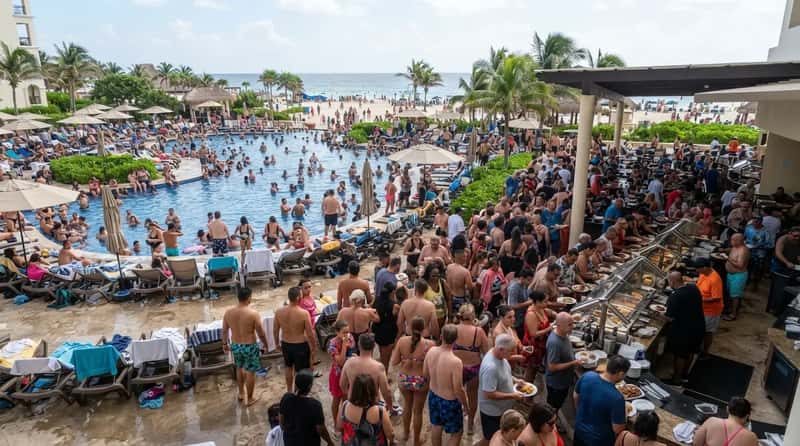
Your resort might be sharing its facilities with far more people than you think. Some properties sell day passes to non-guests, and others host large conferences, school groups, or events. Repeat guests ask about both before they pay, since they change how crowded the pool and buffet feel.
The catch is that these details rarely appear on the booking page. A resort can look half empty on the website and run at full capacity by the time you arrive. A short email to the front desk asking about group bookings during your dates often gets a straight answer. Recent guest photos of the buffet line or pool deck can tell you a lot too.
At a Glance
- Ask: Does the resort sell day passes to non-guests?
- Ask: Are any weddings, conferences, or group blocks booked for your dates?
- Ask: Do day-pass guests share the same pool and buffet as overnight guests?
- Look: Find recent photos of the lunch rush, not the empty-pool hero shot.
Now we’re getting to the part where the details start to cost real money, at #4…
#4 – The Renovation Notice Hiding Behind the Pretty Pictures

Photos on a resort page can be older than the construction on site. Renovation work can close restaurants, pools, or whole wings, and the booking site often doesn’t say so. Repeat guests look for recent photos and reviews that mention scaffolding, drilling, or closed areas.
Sometimes the work is huge. After Hurricane Melissa, the owners of some Hyatt Inclusive Collection properties in Jamaica chose more extensive renovations rather than simply repairing individual damaged areas. That means a resort you remember from a few years ago may be partly or wholly different now. Always ask what’s open on your travel dates, not just what exists.
But construction is nothing compared to what’s washing up on some beaches at #3…
#3 – The Seaweed Season That Can Turn a Postcard Beach Brown
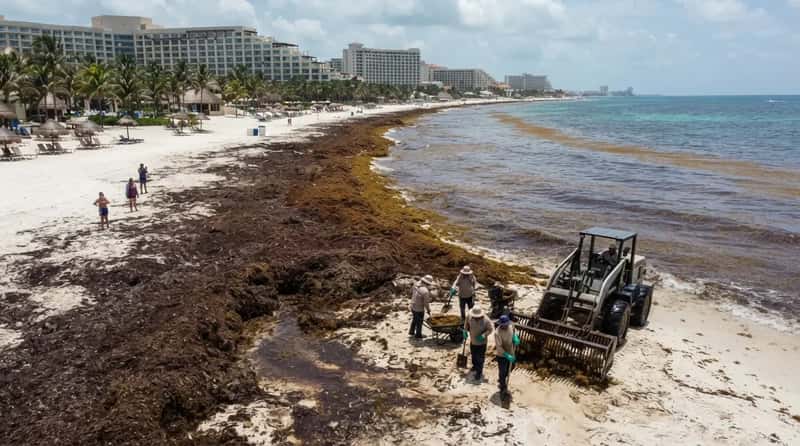
Sargassum is a floating seaweed, and it can change a beach in a matter of days. The University of South Florida’s College of Marine Science said in early 2026 that the year was on track to be a record Sargassum year. If you’ve booked a beach resort in the Mexican Caribbean, you want to know this before you pay.
Timing matters. Sargassum season in Cancún runs April through October, peaking June to August, and the clear-water window is November through March, though conditions can flip in 48 hours. Even a five-star resort can’t control what the ocean delivers overnight. Many repeat guests now pick their travel months around this, or choose resorts with active beach-cleaning crews.
And if seaweed worries you, wait until you see what a storm can do at #2…
#2 – The Hurricane Clause Hiding in Your Booking
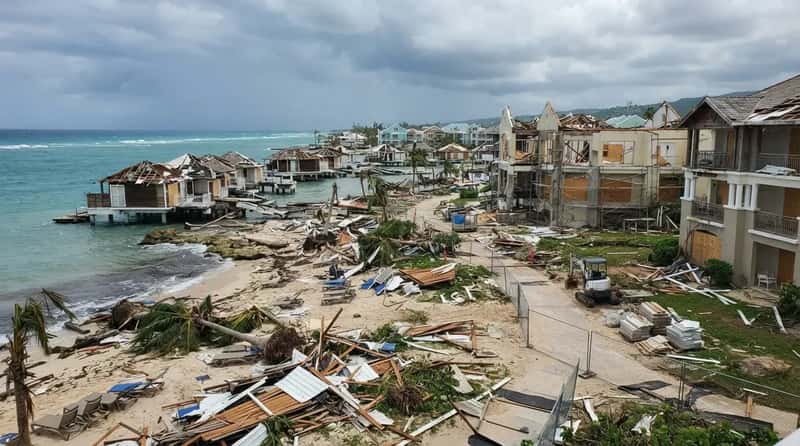
Hurricane season in the Atlantic runs from June 1 to November 30, and the cheap summer and fall rates exist for a reason. The risk isn’t just a rainy week. In October 2025, Hurricane Melissa hit Jamaica as a Category 5 storm and caused devastating damage across parts of the island.
The recovery was uneven. Five Sandals and Beaches resorts in Negril and Ocho Rios reopened on Dec. 6, but the Sandals Montego Bay, Sandals Royal Caribbean and Sandals South Coast resorts weren’t set to reopen until May 30. Two resorts under the same brand, on the same island, had reopening dates about six months apart. Repeat guests read the weather and rebooking policy before paying, and some consider travel insurance for stormy months.
But the number one thing repeat guests check first has nothing to do with weather at all…
#1 – The Break-Even Math That Can Make “All-Inclusive” the More Expensive Choice

This is the one most first-timers skip. An all-inclusive price only wins if you actually use what’s included. If you’re a light drinker, skip the late-night food, and spend your days on excursions, a regular hotel plus meals out can cost less. Repeat guests do the math first, and some of them still choose a room-only stay.
The math flips for heavy eaters, frequent drinkers, and families with hungry kids. The resort bets that most guests will eat and drink less than the price assumes, and often it’s right. Compare the all-inclusive rate to the room-only rate at the same property, then add your realistic daily spending on food and drinks. If the gap is small, the package is the safer choice. If it’s big, it may be an expensive habit.
That’s the final check, and it’s the one that decides whether the rest even matters.
The glossy resort page tells you what a resort wants you to see. These 13 checks tell you what you’ll actually live with: the bar shelf, the dinner reservations, the transfer, the room, the beach, the crowd, the construction, the seaweed, the storm clause, and the math.
Repeat guests aren’t pickier than everyone else. They just learned, usually the hard way, that the best week of the year is built on the details nobody puts in the photo.