You found a cruise fare that looks like a steal. Then the real bill shows up: daily tips, drink charges, Wi-Fi fees and a cabin that sounds like a construction site at 6 a.m. Veteran cruisers have seen that movie, and the 13 checks below are what they run before they ever click confirm.
None of them sit on the big, bright price banner. Some are fees that crept up in 2026. One is a cabin spot that sounds romantic and wakes you at dawn. And one is a public record most travelers never think to look up.
#13 – The Daily Tip That Keeps Creeping Up

That “small” daily service charge isn’t staying small. Automatic gratuities now generally run about $17 to $24.50 per passenger, per day, and several lines raised them in 2026. Carnival moved to $17 for standard cabins and $19 for suites, Celebrity increased its rates to between $19.50 and $24.50, and Royal Caribbean charges $18.50 to $21.
Veterans look up this number before they compare fares, because it hits every person in the cabin, every single night. And it isn’t the whole story. On Celebrity, a 20 percent gratuity is also added to drinks, minibar, spa and salon services on top of the daily charge. Prepaying can protect you from later increases, so when you pay matters too.
But the drink math at #12 is where plenty of budgets really come apart.
#12 – The Drink Package Many Veterans Quietly Skip

The most hyped add-on is the one regulars question the hardest. Prices range from roughly $10 a day for soda to $100 or more for alcohol, often with an additional service charge. For two adults on a weeklong voyage, the most inclusive packages can top $1,200, which is about the price of another cruise. Many experienced cruisers argue it’s the most overrated purchase on the ship, especially for light drinkers.
Then comes the fine print. Some lines add a mandatory gratuity of up to 20% on top of the package, and many require every adult in the cabin to buy in. Check where the package stops working, too. One report says that since March 1, 2026, an NCL drink package no longer works once you step onto the line’s private island.
But that’s nothing compared to what’s creeping onto the menu at #11.
#11 – The “Free” Meals That Now Have a Price Tag

Pizza, room service and fancy dinners are the new fine print. Paid sit-down pizza and room service fees are spreading across the industry. For a product people still think of as “food included,” that’s a big shift, and it often surprises first-timers at the exact moment they’re hungry.
Norwegian’s newer room service rule has stirred debate. The line says it reduces food waste and speeds up deliveries, but many passengers see it as another quiet cutback. Specialty restaurants are a different kind of math. Royal Caribbean’s three-meal dining package starts around $135, and five meals begin near $225. Veterans only buy those bundles if they’d have eaten at those restaurants anyway.
Worth Knowing
- Royal Caribbean’s three-meal package starts around $135, which works out to about $45 per dinner.
- The five-meal package begins near $225, which is also roughly $45 per meal.
- The bundle only pays off if you’d really book those restaurants anyway.
- Check pizza and room service rules before sailing, not when you’re hungry.
Next up is a charge that can cost more than your home phone plan.
#10 – The Wi-Fi Bill That Sneaks Up on Everyone

Staying connected at sea is priced like a luxury. In one pre-cruise price listing, a Value Wi-Fi plan cost $23.80 per passenger per day. For two people over seven nights, that’s roughly $333 just to check email and scroll.
Veterans decide ahead of time who actually needs to be online. Many download shows, maps and boarding documents before they leave home, then treat port days as the time to use their regular phone service or free cafe Wi-Fi. Bundles can make sense, but only if you’d genuinely use every piece of them. Otherwise you’re paying for a feature that sits idle while you’re ashore.
Now for the check that has nothing to do with money, and everything to do with sleep.
#9 – The Deck Above Your Cabin Decides How You Sleep

The cheapest cabin can turn into the loudest one. Cabin noise is among the most common complaints from cruise passengers, yet it’s mostly avoidable. Veterans read the deck plan above and below their room first. Cabins under the pool deck are probably the most common noise complaint on cruise ships, because lounge chairs get dragged across the floor early in the morning and the scraping carries straight into your ceiling.
The safest pick is what cruisers call the “cabin sandwich,” with other cabins both above and below you. Watch for these trouble spots:
- Pool decks and sports courts directly overhead
- Theaters, clubs, bars, elevators and stairs nearby
- Rooms under the buffet, where carts roll and clatter before dawn
But the loudest wake-up call of all doesn’t come from the pool, as #8 shows.
#8 – The Front-of-Ship Cabin With a Dawn Alarm

A view over the bow sounds like a dream. The reality can be a jolt. Forward cabins on the lowest passenger decks sit right next to or above the chain locker, and anchor handling is one of the most intense noise events on a ship. One travel writer described being awakened at the crack of dawn every day by the anchor noise as the ship arrived in port.
The back isn’t safe either. Aft cabins can suffer from engine vibration, even with their sweeping wake views. Many experts argue the romantic aft balcony is overrated if you’re a light sleeper. A commonly cited sweet spot is midship on decks 7 to 9, though deck numbers vary by ship.
And the doors at #7 can be even more revealing than the walls.
#7 – The Doors That Turn Your Cabin Into a Hallway

Not every wall is really a wall. Veterans avoid interconnecting cabins unless they’re traveling with the people next door, because sound carries through those doors far more than through solid walls. You end up hearing everything: conversations, alarms, a stranger’s late-night TV.
Service areas are the other culprit. Experienced cruisers steer clear of rooms opposite laundries, crew access doors or service corridors, where foot traffic and noise can be constant. Ice machines matter too. Some ships hide them in crew-only spaces, while others keep them open for self-service, and spotting which is which takes about thirty seconds on a deck plan.
- Skip connecting doors unless you know the neighbors
- Avoid cabins across from laundries and “Crew Only” doors
- Check where the ice machine really is
Quick Compare
- Midship, between other cabins: the commonly cited sweet spot for sleep.
- Forward, low decks: anchor noise near the chain locker.
- Aft: pretty wake views, but possible engine vibration.
- Under the pool deck: dragged lounge chairs at dawn.
But the sneakiest cabin trap isn’t a location at all, as #6 reveals.
#6 – The “Guarantee” Fare That Hides Your Real Room

The cheapest cabin deal is also the biggest roll of the dice. With a guarantee fare, you buy a category and the cruise line picks the actual room later, sometimes only days before sailing. Guides for travelers say to avoid gambling with guaranteed fares and to know exactly where on the ship you want to be.
That means you could land in any of the problem zones from #9, #8 and #7. Some bargain hunters swear by the strategy, hoping for a bonus upgrade. Many veterans say the savings rarely justify a week of bad nights. If you value sleep, paying a little more to choose a specific cabin number is the safer play.
Next comes a stop on your itinerary that may not be what it looks like.
#5 – The Port Stop That Mostly Means Waiting

A famous destination on the itinerary doesn’t guarantee a full day there. Some ports are tender ports, where the ship anchors offshore and small boats shuttle passengers in. That’s also why forward cabins can wake you early when the anchor drops. It means lines, ticketing and delays before your feet touch land.
Veterans check two things: whether a port is a tender stop, and how many hours the ship is actually in port. A “full day” can shrink fast once arrival time, all-aboard time and boat rides are subtracted. Rough seas can also complicate tender operations. People who love a destination often pick sailings with longer stays instead.
But the biggest port-day mistake happens before the ship even leaves, at #4.
#4 – The Flight That Can Sink Day One

Plenty of cruises are lost at the airport, not at the pier. Ships sail on a schedule, and they generally won’t hold the gangway for flights you booked on your own. A morning storm or a mechanical delay can leave you standing on the dock, watching a ship you’ve already paid for sail away.
That’s why veterans fly in the day before. A hotel night costs far less than chasing a ship to its next port with last-minute flights. Early arrival also means you start the trip rested instead of rattled. Skeptics call it overkill. Anyone who has watched a boarding window close would disagree.
The next check is boring, and it’s the one that matters most when things go wrong.
#3 – The Insurance Clock Most Travelers Miss

Travel insurance has a calendar, and it often starts ticking at your first deposit. Many policies require you to buy within a set window after that deposit to unlock certain benefits, such as coverage for pre-existing conditions. Windows vary by policy, so veterans read the dates before they pay anything.
They also read what counts as a covered reason. “Cancel for any reason” upgrades usually reimburse only part of your cost. Medical care and evacuation from a ship can be expensive, and many domestic health plans offer limited coverage at sea or abroad. A few minutes with the policy document beats a frantic phone call from a port.
Fast Facts
- The purchase window often starts at your first deposit.
- Pre-existing condition coverage may depend on buying inside that window.
- “Cancel for any reason” usually pays back only part of your cost.
- Your regular health plan may offer limited coverage at sea or abroad.
But the check at #2 is the one cruise lines really don’t put in their ads.
#2 – The Ship’s Outbreak Record Nobody Advertises
Cruise stomach bugs have a paper trail. By October 2025, the CDC had logged 20 gastrointestinal outbreaks on cruise ships, the most reported since 1994, the earliest year of public data. The second most came in 2024, with 18. Norovirus was behind most of them.
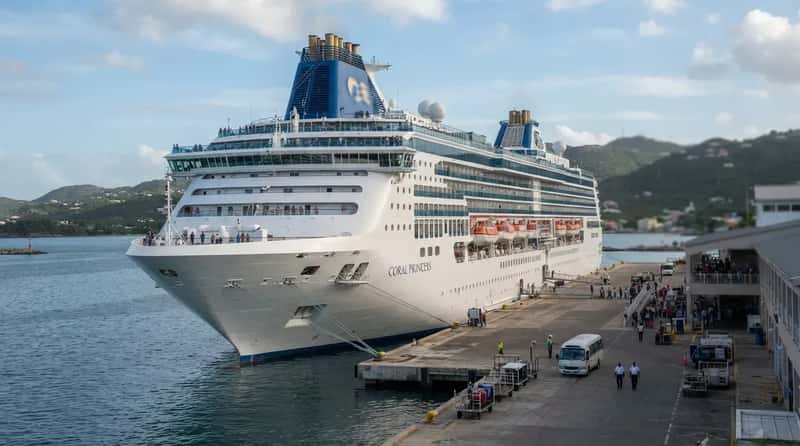
Context matters. Ships must report an outbreak when 3% or more of passengers and crew have vomiting and diarrhea symptoms, and the CDC only tracks ships that dock in U.S. ports. Most sailings never appear on the list. But some do, and the numbers can be sobering: Princess’s Coral Princess had a January 2025 outbreak with 128 passengers and 20 crew sick. Veterans look up a ship’s inspection history before they pay a deposit.
And the last check changes how you read every price on the website.
#1 – The Cheap Fare That Costs More Than the Expensive One

The lowest price on the screen is often the most expensive cruise. Analysts point out that a low base fare may cost more overall than a higher-priced cruise with extras included. In 2026, rising gratuities and charges for drinks, Wi-Fi, dining and activities can quietly add hundreds of dollars. Every item from #13 to #10 lands on that bill.
So veterans build an all-in total before they commit. They add the fare, gratuities, drinks, Wi-Fi, dining and excursions, then compare ships by that number. Even “all included” style fares don’t necessarily mean tips are included. Many longtime fans now say the classic all-inclusive feeling is gone, and the all-in number is what actually reaches your credit card.
Do that math once and the “bargain” often shrinks fast.
The biggest surprises in cruising aren’t out on the ocean. They’re hiding in the fine print and on the deck plan, in a tip rate that rose again in 2026, a drink package that can top $1,200 for two on a week-long trip, and a cabin tucked under the pool deck. Even the stomach-bug record is public: the CDC counted 20 outbreaks by October 2025, the most since 1994.
The ship will still be gorgeous and the sunsets will still look unreal. The difference is whether you spend them relaxed, or doing the math on a bill you never saw coming.