Most people treat airport security like a coin flip. You hope the line is short, the officer is in a good mood, and nothing beeps. Travelers who have been flying for decades don’t leave it to luck. They run a quiet routine they’ve polished over hundreds of trips, and what makes it work is how unglamorous it is.
Some of these habits take ten seconds. One hinges on a birthday that most people get wrong by ten years. Another involves a small star on your wallet card that can cost you $45 if it’s missing, and that one is waiting at the very end of the list.
#11 – The “Dress for the Scanner” Rule That Beats Any Packing Hack
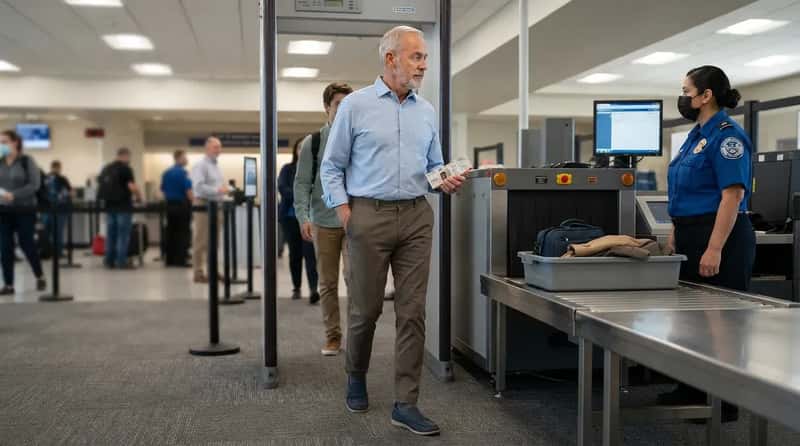
Experienced flyers dress for the machine before they dress for the weather. They skip heavy belts, big metal jewelry and anything with a lot of buckles or studs. Their watch, keys and phone are already tucked into a bag or coat pocket before they reach the checkpoint. AARP’s advice is to wear socks and slip-on shoes if you expect to take your shoes off.
Here’s the twist. TSA began letting travelers keep their shoes on at checkpoints in July 2025, so the old shoe-off scramble is mostly gone. That doesn’t make alarms go away. If something sets off a scanner, you can still be asked to remove items, step aside for more screening or get a pat-down.
So the pros dress for the worst case, not the best one. Stuffed pockets and bulky layers are classic reasons a simple walk-through turns into a long one. The next habit has nothing to do with clothes. It’s about who walks beside you.
#10 – The Travel Partner Who Speaks Up So You Don’t Have To
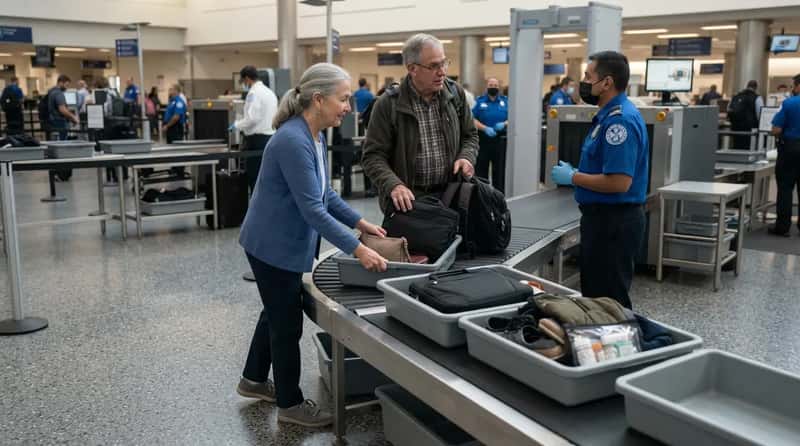
Many seasoned flyers over 60 avoid going through security alone if they can help it. A companion can help move your items onto the belt and gather them at the other end. That is where laptops, shoes, pill pouches and jackets scatter across three different bins. It’s practical backup, and it takes a lot of pressure out of those few minutes.
Worth Knowing
- Mention any medical condition or device to the officer before screening begins, not after an alarm.
- Only ticketed passengers generally go past the checkpoint, so a non-flying helper usually needs an airline-issued gate pass. Ask the airline ahead of time.
- A short written list of medications and devices, kept in the companion’s pocket, saves a lot of fumbling.
There’s a second job, too. A companion can tell TSA officers about a disability or medical condition that affects screening, such as respiratory equipment, a medical device or medications. If you can stand and walk, they can also offer a steadying arm. It’s one less thing to juggle mid-line. The next habit trips people up because it’s about a birthday perk most assume starts earlier than it does.
#9 – The Senior Perk That Doesn’t Start Where Everyone Thinks
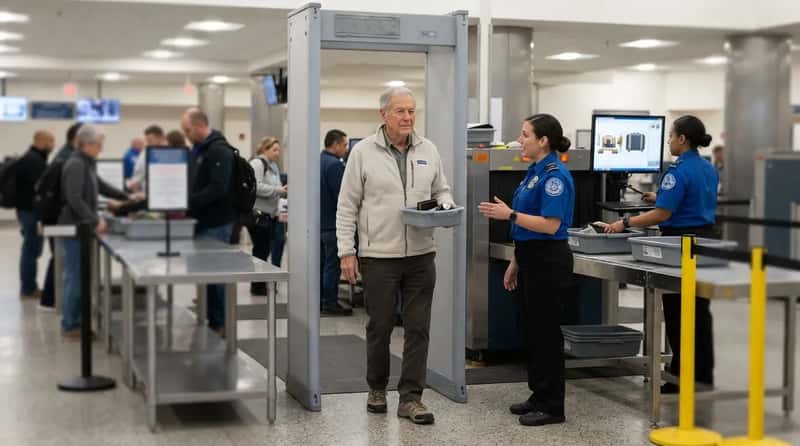
Plenty of travelers assume the senior screening break begins at 65. It actually applies to passengers 75 and older, who can keep their shoes and light jackets on. Between 65 and 74, standard rules apply. Frequent flyers know that cutoff, so they aren’t caught off guard at the belt.
Even at 75, there are limits. If a scanner alarms, officers can still require additional screening, and nobody gets a card or sticker proving their age group. So the experienced travelers keep a photo ID handy and stay calm.
Since shoes now stay on for most travelers, the 75-and-older rule matters less than it once did. But it still shows up in TSA’s published guidance, and it’s a perfect example of a rule everyone half-remembers. The next habit starts with a jar of jam.
#8 – The “Jam Test” That Saves Gifts From the Trash Can
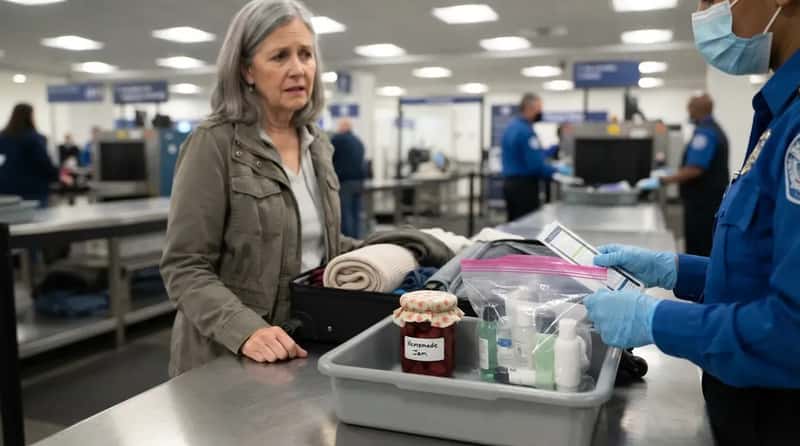
Frequent flyers coming home from a visit often carry food gifts, and they know the quiet trap. TSA treats sauces, jam, preserves and wine as liquids or gels. Anything over 3.4 ounces has to go in checked luggage. That homemade preserve in your carry-on is gone at the belt, along with whatever love went into the jar.
The pros use TSA’s own rule of thumb: if you can spill it, spread it, spray it, pump it or pour it, it has to be 3.4 ounces or less to ride in the cabin. That catches creamy cheese spreads, peanut butter and a surprising number of pantry treats. Whatever qualifies goes in one quart-size clear zip-top bag per passenger, placed in the bin.
Solid food, like a wrapped cake or a block of cheese, is a different story and generally gets through screening. There’s one big exception to the liquids rule, and it’s where experienced travelers get smart about their medicine.
#7 – Medications Ride in the Carry-On, Never Below
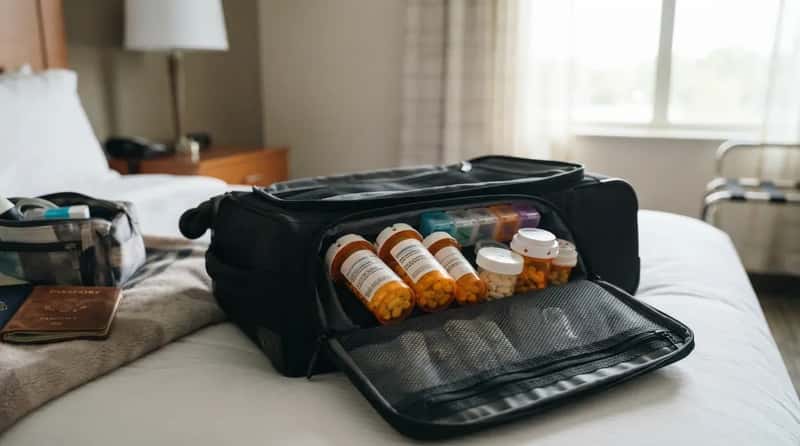
Ask a veteran traveler where the pills go and the answer is always the same: with me. TSA strongly recommends keeping medication in your carry-on in case you need it right away. A checked bag can be delayed, rerouted or lost. A missed blood pressure pill on a long travel day is a real problem.
Quick Compare
- Pills and other solids: allowed in the carry-on after screening, and not held to the liquids limit.
- Liquid medication: allowed over 3.4 ounces in reasonable quantities, but it gets extra screening.
- Checked bag: can be delayed, rerouted or lost, which is why veterans skip it for anything they need.
They also keep everything easy to identify. TSA recommends clearly labeling medication to speed up screening. Pills in solid form are allowed in carry-ons once they’re screened, and they aren’t held to the liquids limit. Prescription bottles aren’t required by TSA, but your state may have its own labeling laws. Liquids are a different story, and that’s next.
#6 – Say “Liquid Medication” Before the Bin Even Moves
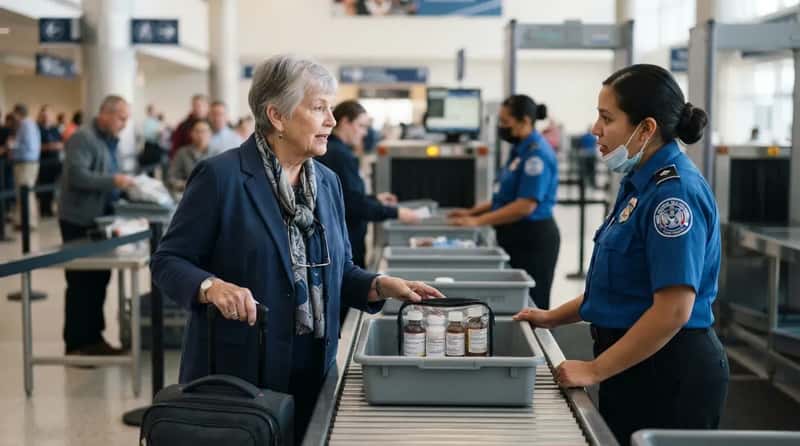
This is the habit that separates a smooth screening from an awkward one. Liquid medication over 3.4 ounces is allowed in carry-on bags in reasonable quantities for the trip. It doesn’t have to fit in the quart-size bag. But you must tell the officer about it at the start of screening. Speak up first, not halfway through.
Expect extra steps. Medically required liquids get additional screening, and you may be asked to open the containers. Ice packs used to keep medication cool must be completely solid at the checkpoint, so a half-melted pack can cause trouble.
If you’d rather not have a medication X-rayed, you can ask for a visual inspection instead. But you have to ask before it goes into the X-ray tunnel. The next habit is one many people feel awkward about, even though it’s built into the process.
#5 – The Polite Request Most Travelers Never Make: “Can I Sit?”
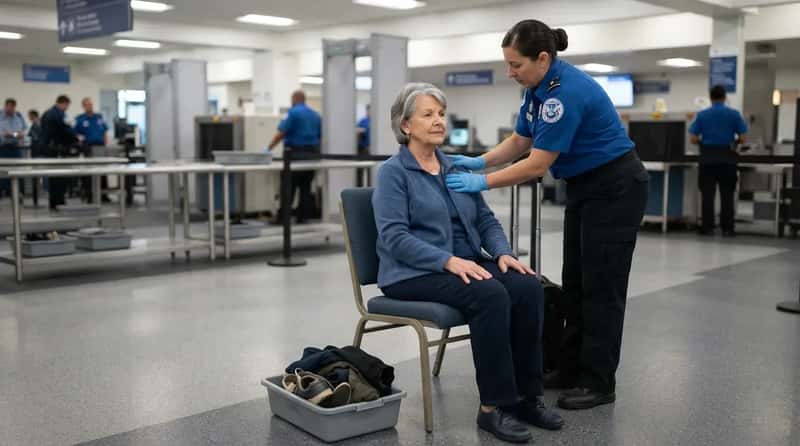
Frequent flyers know a pat-down or extra screening doesn’t have to happen standing. If an alarm goes off, you may be asked to remove your shoes or get a pat-down, and you can ask to be seated during that part. It’s right there in TSA’s guidance for older passengers.
Lifeline’s guide for older travelers puts it plainly: don’t be afraid to ask to sit down during additional screenings. You also won’t be required to remove medical devices attached to your body.
TSA also offers private screening on request, and travelers can bring a companion along for it. That’s the kind of option you only learn about by asking. The next habit concerns the gear that travels with you.
#4 – The Walker, Cane and Scooter Plan Nobody Explains Until You’re in Line
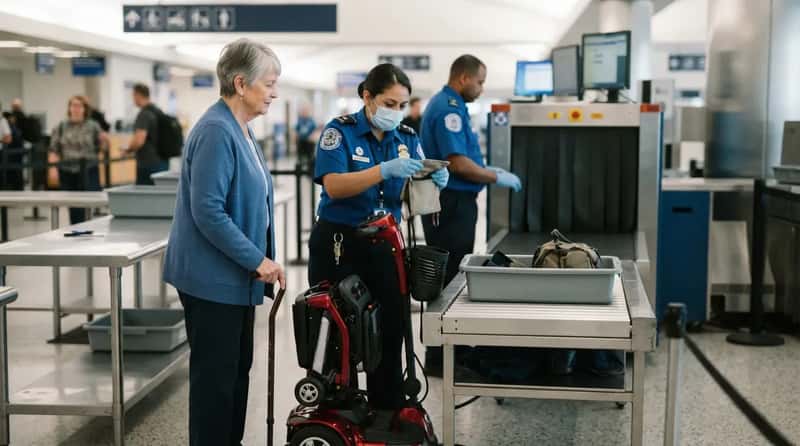
Mobility aids don’t get a free pass, and experienced flyers know it. Whatever taps, rolls or folds its way through the checkpoint gets a look, and first-timers are often caught off guard.
At a Glance
- Walkers, canes and crutches: X-rayed or hand-inspected.
- Your own scooter or wheelchair: hand-inspected, and it may be screened for traces of explosives.
- Attached bags: they come off the device and go on the X-ray belt.
- Anyone using a mobility aid: screened in some fashion.
The detail that surprises people is how much of the work lands on the bags, not the person. Veterans plan for those extra minutes. They keep the attached pouch lightly packed and easy to unclip, and they never rush a screening that’s going to happen anyway. Next comes a debate in the frequent-flyer world over whether the next item is still worth the money.
#3 – The $17-a-Year Upgrade Some Flyers Swear By (and Others Now Question)
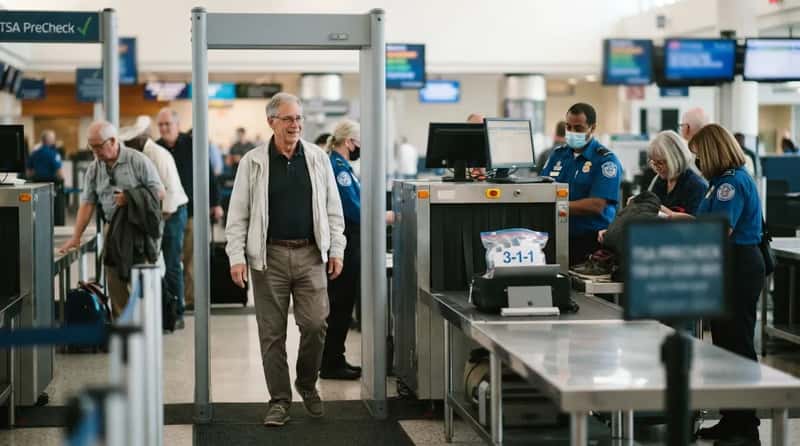
Many frequent flyers over 60 pay for TSA PreCheck. It costs between $76.75 and $85 for five years, depending on the enrollment provider. The process includes an online application and an in-person appointment for fingerprints. Many premium credit cards offer a statement credit that can cover the fee entirely.
Now for the debate. PreCheck lanes at more than 200 airports let members keep shoes, belts and light jackets on, and leave laptops and 3-1-1 liquids in their bags. But since shoes now stay on for most travelers, some flyers argue the gap has narrowed.
Fans point to the laptop and liquids perk, plus shorter lines. PreCheck isn’t guaranteed on every trip, though. Global Entry costs $120 for five years and includes PreCheck, which makes it a better deal for anyone who also flies abroad. The next habit is free, but hardly anyone uses it.
#2 – The Free Phone Call Seasoned Flyers Make 72 Hours Before Takeoff

This one is the quiet favorite among travelers with medical needs. TSA Cares, at 855-787-2227, asks you to call at least 72 hours before your trip if you need help at the checkpoint. It’s a helpline for travelers with disabilities, medical conditions and other special circumstances. You get answers before you’re standing in line with a bag full of questions.
The helpline can also set up hands-on help. Travelers can request a Passenger Support Specialist ahead of time through the same number.
Fast Facts
- Number: 855-787-2227.
- Lead time: call at least 72 hours before you fly.
- Weekday hours: 8 a.m. to 11 p.m. ET.
- Weekends and holidays: 9 a.m. to 8 p.m. ET.
Frequent flyers call early so the plan is already in place when they arrive. No scrambling, no guessing which rule applies to which device. But the habit that matters most is the one that can stop you at the front of the line.
#1 – The Star on Your ID That Can Cost You $45 and Still Not Get You Through
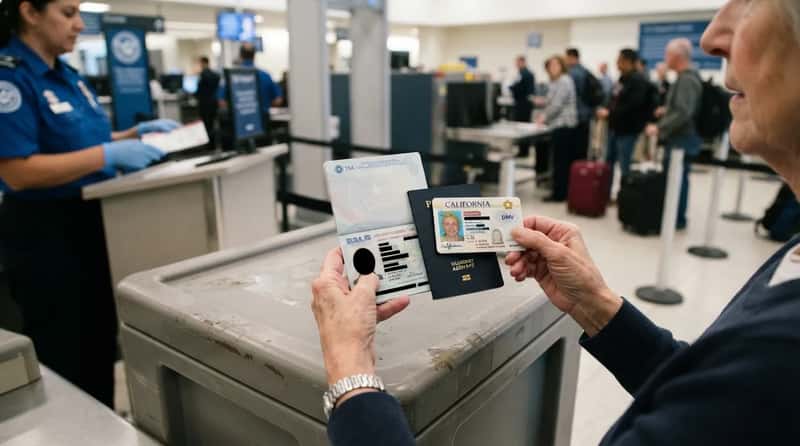
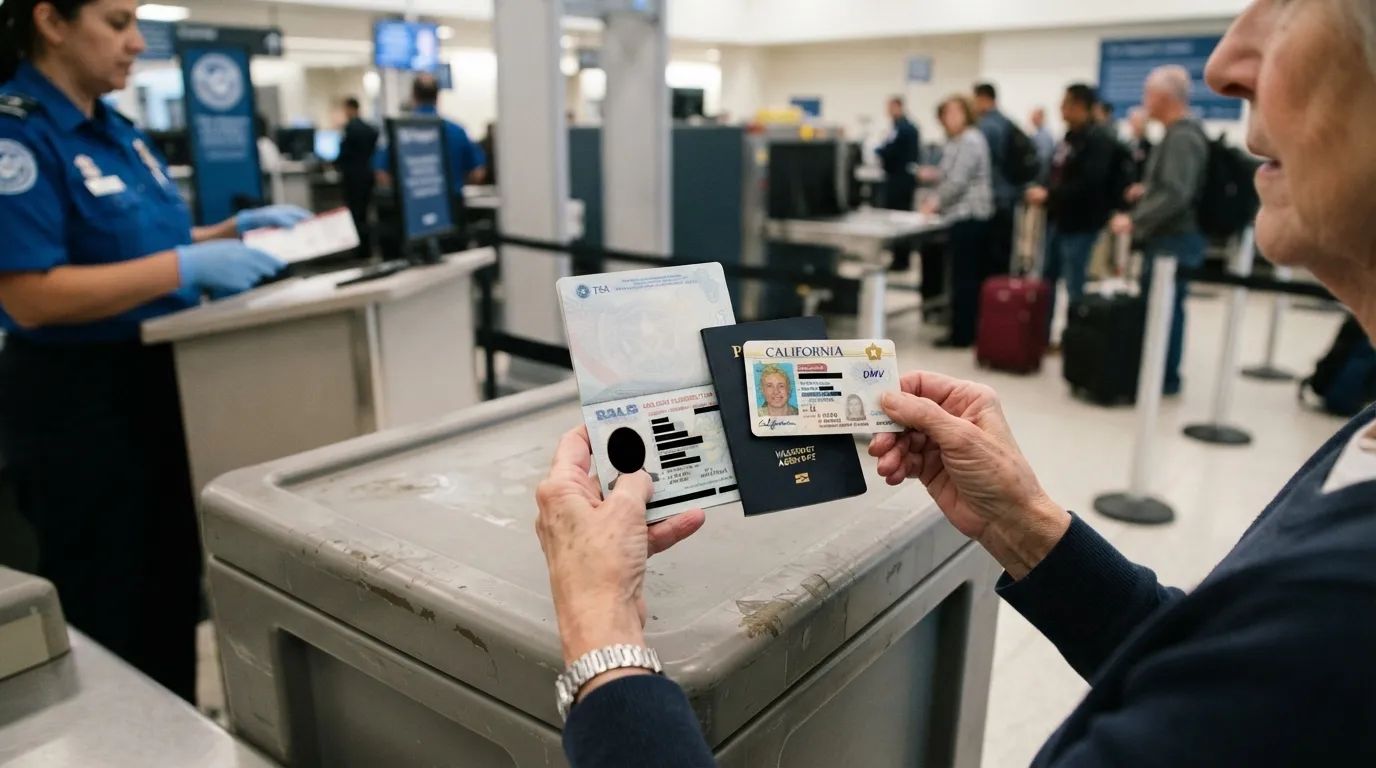
The smartest habit on this list takes place at home. Flyers check their ID before they leave. REAL ID or an alternative like a passport has been required for domestic flights since May 7, 2025. A REAL ID-compliant card has a star marking near the top. TSA has said that roughly 6% of travelers have been showing up without an acceptable ID.
The cost of skipping that check is real. Travelers 18 and older without an acceptable document must pay $45 to use TSA ConfirmID. Passengers who forgot ID used to go through a free manual check, and that option has been replaced by the fee.
Even then, verification of identity is not guaranteed. Seasoned flyers don’t leave that to chance. They turn the card over, look for the star, and fix the problem from their kitchen table instead of the security line.
Most of what frequent flyers over 60 do isn’t a hack at all. It’s a handful of small, calm habits: knowing the real age cutoff, saying “liquid medication” first, asking to sit when they need to, and calling ahead.
And the one that matters most is a tiny star on a piece of plastic, checked days before anyone leaves for the airport.