
You have the tickets, the hotel and a long-awaited itinerary. What you may not have is the boring stuff that decides whether a trip after 70 becomes a dream or a very expensive story. These are the 13 things seasoned travelers sort out before they zip a suitcase. They range from a passport rule that can stop you at the check-in desk to a Medicare gap that surprises almost everyone.
The twist is that the scariest items aren’t dramatic. They’re small assumptions made at home that fall apart at a border, a pharmacy counter or a foreign emergency room. And the one waiting at #1 is the one most retirees are certain they’ve already handled.
#13 – The Passport That Looks Fine but Gets You Turned Away
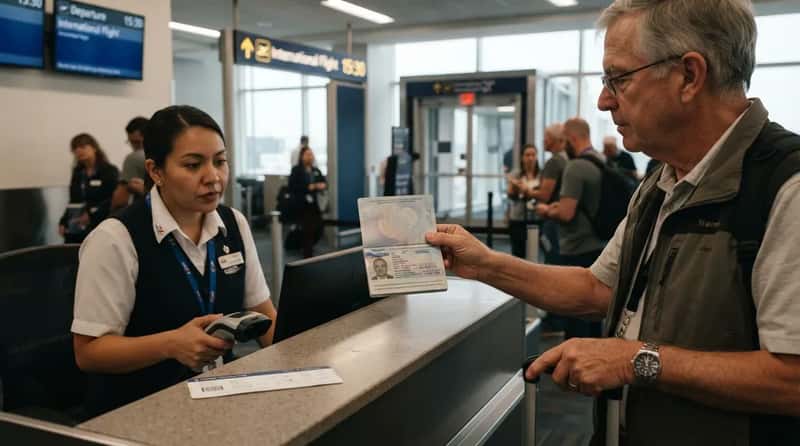
Your passport can be perfectly valid and still be useless for your trip. Some airlines will refuse to board you if your passport doesn’t meet the destination’s validity rule. The State Department notes that some countries require at least six months of validity beyond your travel dates, while others ask for only three. There’s no single rule to memorize, which is exactly why people get caught.
Adult passports last ten years, so the one you got just before retiring may be closer to expiring than you think. Processing times swing with demand, so the safe move is to renew well ahead of departure. Waiting for a “quiet” week is a gamble that can cost you a non-refundable trip.
- Look up your exact destination at travel.state.gov before you book.
- Count six months forward from your return date, not your departure date.
But Europe has a newer border headache that catches even seasoned travelers off guard, and it starts in #12.
#12 – Europe’s New Fingerprint Border (and the Fee Americans Keep Mixing Up)
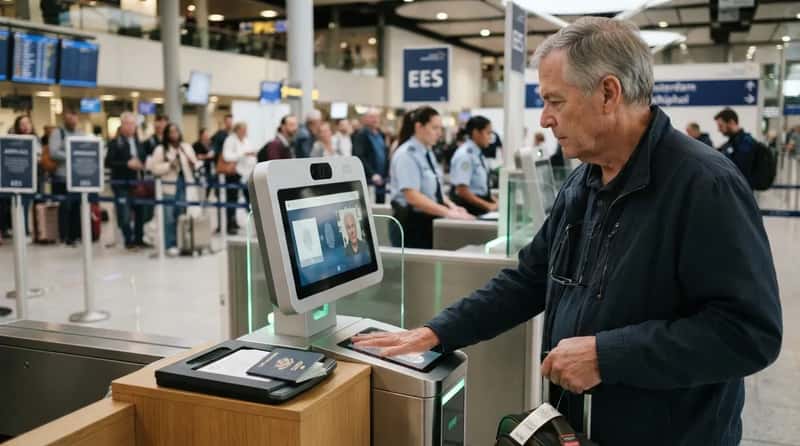
The way Americans enter Europe has changed, and the first arrival feels different. The EU’s Entry/Exit System became fully operational on April 10, 2026. It captures your fingerprints and a photo at the border and replaces the old passport stamp. There’s no advance sign-up, but a new system can mean long lines while officers get used to it.
That’s why many experienced travelers now avoid a tight connection through a big European hub on a first entry. Give yourself extra hours. Then there’s ETIAS, a separate online travel authorization with a €20 fee. It isn’t live yet, and 2027 now looks most likely. One guide reports the fee is waived for travelers over 70. Any site offering to process an ETIAS application right now is not the real thing.
Still, a free alert system can do more for your safety than any border form, and it’s next in #11.
#11 – The Free Government Alert System Most Retirees Skip

The U.S. government can only warn you if it knows you’re there. The State Department’s free Smart Traveler Enrollment Program, known as STEP, sends alerts from the local U.S. embassy about safety and security issues during your trip. It’s a simple registration, and most travelers never complete it.
You give your itinerary, passport details and an emergency contact, and the program keeps that information on file for your trip. That matters when something goes wrong fast, because embassies can push real-time security alerts and guidance to enrolled travelers. The alerts aren’t only about crises, either. They can cover strikes, severe weather and local safety notices that never make the news back home.
At a Glance
- Cost: Free to enroll.
- Run by: The U.S. State Department.
- You provide: Itinerary, passport details and an emergency contact.
- You get: Embassy alerts on safety, strikes and severe weather.
It also gives your family a clear record of where you planned to be. For five minutes of typing, that’s a strong return.
The next item has nothing to do with paperwork, and it surprises people who have managed their health for decades. That’s #10.
#10 – The Prescription Problem Nobody Mentions at the Pharmacy

Your prescription coverage stops working the moment you leave the country. Medicare Part D generally won’t cover prescriptions you fill outside the United States. If you buy medication abroad, expect to pay the full price. Plenty of retirees learn that at a foreign pharmacy counter, with a line behind them.
Experienced travelers pack for the whole trip, plus a cushion. One Medicare guide advises bringing enough medication for the entire journey plus extra in case of delays. They keep pills in original labeled containers and carry them in a bag that never leaves their side. A short letter from the doctor listing each drug and dose is cheap insurance at a border.
- Carry the generic name of every medication, not just the brand.
- Check your destination’s rules before packing anything controlled.
Yet one of the sneakiest health risks on the trip starts at 35,000 feet. It’s in #9.
#9 – The Flight Risk That Shows Up After You Land

Sitting still for hours is not as harmless as it feels. CDC guidance links long periods of immobility, especially trips of about four hours or more, to a higher chance of dangerous blood clots. Age adds to that risk. Symptoms can appear days or even weeks after you get home. That’s why a pre-trip doctor conversation matters more than the seat upgrade.
Experts commonly suggest simple habits. Walk the aisle regularly, flex your calves while seated and drink water. Ask your doctor whether compression stockings make sense for you. Swelling or pain in one leg, or sudden shortness of breath, means getting medical help right away, not waiting it out.
Fast Facts
- Risk rises on trips of about four hours or more.
- Warning signs can show up days or weeks after you land.
- Choose an aisle seat so getting up never feels like a favor to ask.
- Go easy on alcohol during the flight. It’s one of the easiest things to skip.
Before you pack a single sock, though, there’s an appointment that tells you what your destination expects of your body. That’s #8.
#8 – The Travel Clinic Visit That Changes the Whole Itinerary

Your destination may ask more of your immune system than your hometown does. The State Department’s destination pages list health information and entry rules alongside travel advisories. A travel clinic or your own doctor can then match that list to your age and medical history.
Timing is the catch. Some vaccines need weeks to build protection, and CDC guidance generally recommends seeing a provider at least a month before departure. Waiting until the week before can leave you under-protected. It’s also the moment to confirm routine vaccines such as flu are current. Heart, lung or kidney conditions can change what altitude, heat or remote locations are safe for you.
Even a perfect health plan fails without one simple backup, and travelers learn it the hard way in #7.
#7 – The Paper Trail That Saves a Lost-Passport Disaster
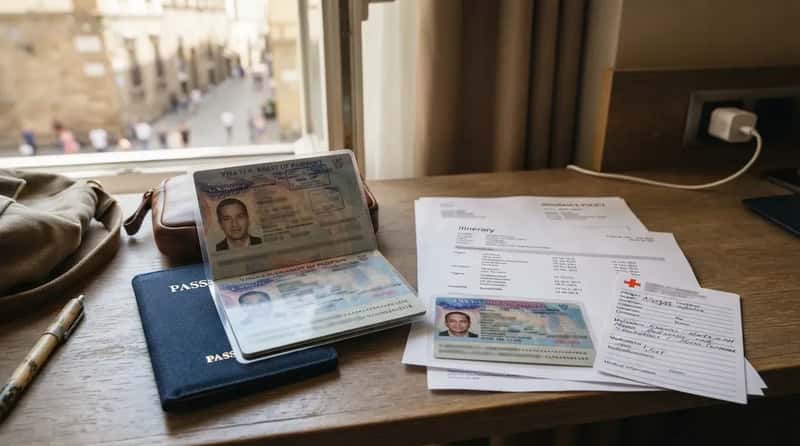
Losing a passport is annoying. Losing it with no copies is a crisis. The State Department says U.S. consular teams around the world can help if your passport is lost or stolen abroad. Having your details ready makes that process much faster and a lot less stressful.
Experienced travelers keep copies of the passport photo page, insurance policy, itinerary and emergency numbers. They store them apart from the originals, on paper and in a secure digital folder. Many also carry a small card listing allergies, conditions and medications. If you can’t speak for yourself, that card does it for you.
Worth Knowing
- Keep paper and digital copies in different places from the originals.
- Put allergies, conditions and medications on one wallet card.
- Include your insurer’s 24/7 assistance number on the card.
- Add one family contact who is awake in the home time zone.
Next up is something that can lock up faster than your passport ever could. It’s in #6.
#6 – The Card Freeze That Strands You With No Money

Your bank’s fraud system doesn’t know you’re on vacation. A card used in a foreign country can get flagged and frozen at the worst possible moment, like the hotel desk at midnight. Seasoned travelers tell their bank and card issuers their travel dates ahead of time. They also check each card’s foreign transaction fees before leaving.
The smart move is redundancy. Carry at least two cards from different issuers, stored in separate places. Add a small amount of local cash for taxis and tips, and withdraw more from bank-attached ATMs rather than standalone machines in tourist areas. Many travelers also say exchanging large sums at the airport is a waste of money.
Money is only half of staying connected. The other half fits in your pocket, and it’s #5.
#5 – The Phone Setup That Works When Everything Else Fails

A phone with no service abroad is just an expensive camera. Experienced travelers sort this out before departure. They check their carrier’s international plan or set up an eSIM, and they download offline maps and translation tools. A few minutes at home beats hunting for Wi-Fi in a taxi queue.
Quick Compare
- Carrier international plan: Easiest to turn on, so check the daily price first.
- eSIM: Set it up before you leave, and confirm your phone supports it.
- Offline maps and translation: Download on home Wi-Fi so they work with no signal.
Know your emergency number, too. The number 112 works across the European Union. Most Americans only know 911, and that doesn’t help in Paris or Prague. Save the number for your embassy and your insurer’s assistance line in your contacts, not just on paper.
- Share your live location with one family member on travel days.
- Bring a portable battery and the right plug adapter.
Now for a rule about cruise ships that has tripped up plenty of retirees. It’s waiting in #4.
#4 – The Cruise Ship Rule That Stops at an Invisible Line

A cruise can feel like staying home, but the rules say otherwise. Medicare may cover medical care aboard a ship only when it’s within six hours of a U.S. port. Beyond that line, you’re largely on your own. On most itineraries, the ship crosses it fast.
Hospital care in a foreign port, or a medical flight off the ship, can be enormously expensive. One senior-focused guide recommends $500,000 or more in evacuation coverage for evacuations from international waters. It also warns that cruise-line policies may pay back in ship credit rather than cash. Plenty of travelers argue that the cruise line’s own insurance is the worst deal on the booking page.
Then there’s a deadline buried in the fine print that decides whether your health history is covered at all. See #3.
#3 – The Insurance Clock That Starts Ticking at Your First Deposit

The most expensive insurance mistake isn’t buying too little. It’s buying too late. If a pre-existing condition needs treatment on the trip and your policy doesn’t cover it, you pay every dollar yourself. Many seniors assume that can’t happen to them because they feel fine.
Policies often offer a pre-existing condition waiver, but the window is short. One guide says it requires purchase within 10 to 21 days of your first trip payment. Some plans also require you to insure the full cost of the trip. That means a hotel deposit made in January can quietly set a deadline you never knew about.
But the bill that really alarms insurance experts isn’t a hospital stay. It’s the flight home, and it’s #2.
#2 – The Flight Home That Can Cost More Than a Car
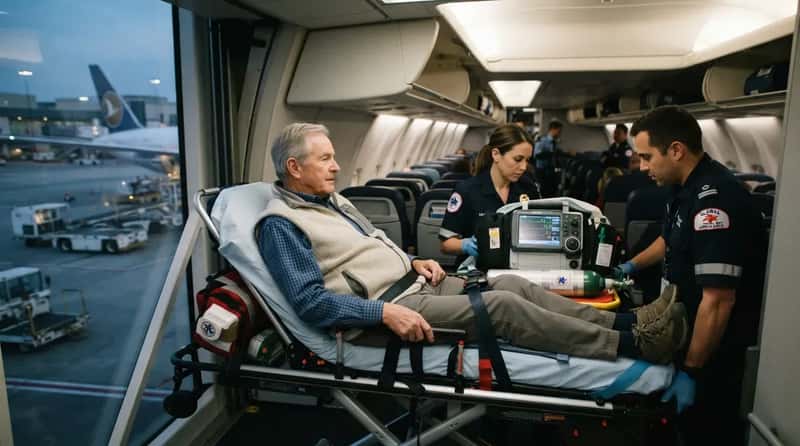
The ambulance isn’t what hurts. The plane is. One senior-travel insurance guide, citing the State Department, says a medical evacuation can cost more than $250,000. That covers specialized transport to a better hospital or back to the U.S., and you could need it after a fall or a stroke far from a major city.
Squaremouth suggests international seniors look for at least $100,000 in emergency medical coverage, $250,000 in evacuation and repatriation coverage, and pre-existing condition coverage. A policy with a low evacuation limit can look like a bargain and still leave a six-figure gap. Basic domestic-style plans are the usual culprit.
All of this exists because of one assumption that millions of retirees share, and it’s the biggest of all in #1.
#1 – The Medicare Assumption That Doesn’t Cross the Border

Most retirees believe Medicare follows them everywhere. It doesn’t. NCOA’s Ryan Ramsey says that in most cases you won’t be reimbursed for international medical bills, so you should expect to pay them out of pocket. Medicare also doesn’t pay for kidney dialysis or prescription medications outside the country.
There are narrow exceptions, like emergency care in Canada when you’re traveling between Alaska and another state and a Canadian hospital is closest. Some Medigap plans help by paying 80% of billed charges for certain emergency care abroad, but only if the emergency begins in the first 60 days of travel. A Medicare Advantage plan can disenroll you if you’re outside the U.S. for more than six months.
Foreign hospitals also aren’t required to file Medicare claims. Even care that qualifies can mean paying up front and chasing the paperwork yourself.
Look back over the list and the pattern is hard to miss. The biggest dangers aren’t in far-off destinations. They’re in assumptions made at home: Medicare that won’t pay abroad, pills that aren’t covered, a passport with months left that still gets you stopped, and an insurance waiver that can expire weeks after your first deposit.
None of this means staying home. It means packing the way people do after they’ve learned it the hard way, so the only surprises left are the good ones.