There’s a certain moment every European has experienced. You’re walking through a cobblestone square in Rome, or waiting for the metro in Paris, and somehow – before a single word is spoken – you just know. That group over there? American. It’s not a wild guess. It’s pattern recognition built on a thousand tiny cultural signals that Europeans have sharpened into a near-sixth sense.
This isn’t about mean-spirited stereotyping, honestly. It’s a fascinating collision of two genuinely different cultures, and the data to back it up has never been more solid. With millions of Americans flooding European cities each year, the behaviors that give them away are well-documented, openly discussed, and sometimes lovingly mocked. Let’s dive in.
1. The Volume Dial Is Permanently Turned Up

Let’s be real – this one tops every single list for a reason. A major survey revealed that a full 70% of Europeans agreed that Americans are typically loud, and remarkably, 69% of Americans themselves agreed with this assessment. That alignment confirms the stereotype has genuine roots in reality.
When Europeans were asked specifically why they find American tourists easy to identify, 64% said Americans are simply too loud. It goes deeper than volume, too. In Europe, public spaces – cafes, trains, restaurants – carry an unspoken social contract around quieter, more contained behavior. Americans raised on wide-open spaces and big social gatherings often haven’t absorbed that same instinct. Think about the contrast: a hushed Viennese coffee house versus a lively American diner. Those are two very different templates for “how loud is normal.”
2. Expecting Everyone to Speak English, Everywhere
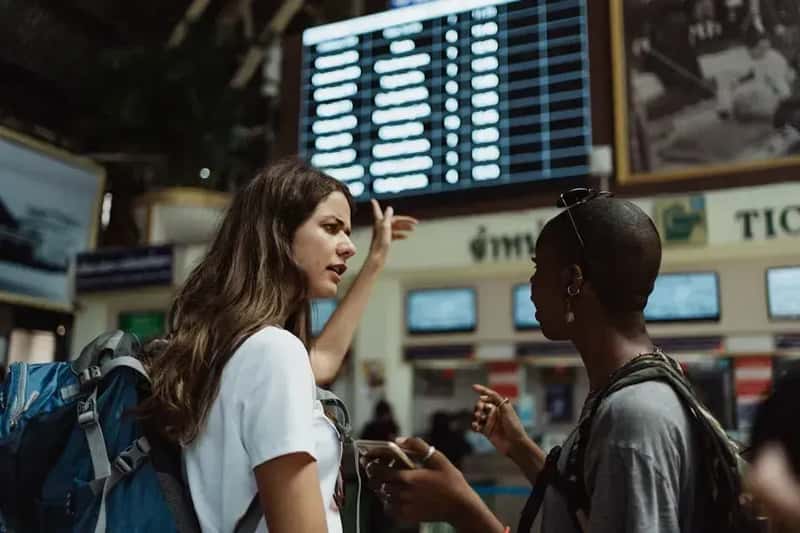
In the same survey, 61% of European respondents said they feel Americans expect English to be spoken everywhere they go. That’s nearly two thirds of Europeans flagging this as one of the most recognizable traits of American visitors. It’s not necessarily arrogance – it’s more like a blind spot born from living in a country where English dominates everything.
Europeans also noted, in the same study, that roughly 30% believe Americans have an unfortunate habit of ignoring local customs altogether. The combination of speaking English loudly and skipping the basic pleasantries in the local language – a simple “bonjour,” “grazie,” or “bitte” – creates an immediate signal to locals that someone hasn’t done their cultural homework. Honestly, even a clumsy attempt at the local language lands better than launching straight into English at full volume.
3. The Tipping Habit That Leaves Europeans Baffled

Restaurant tipping in Europe is often misunderstood by non-European visitors, with US tourists in particular applying their own generous tipping culture where it isn’t necessarily appropriate. The cultural gap here is enormous. Americans are typically accustomed to leaving at least a 15 to 20 percent tip at a restaurant, and tipping lower than that is often seen as a sign of poor service back home.
Restaurant tips are more modest in Europe than in America. Servers are paid a living wage, and tips are considered a small bonus – to reward great service or simply for the convenience of rounding the total bill to a convenient number. While American tourists often over-tip out of habit, locals generally don’t, and this over-tipping can actually contribute to rising expectations that begin to mirror the very tipping culture Europeans have long avoided. It’s one of the more quietly disruptive habits Americans bring abroad – well-intentioned, but with unintended consequences.
4. The Athleisure Uniform and the Oversized Everything

It’s long been known that American customs make US travelers stand out in Europe. Actions like wearing baseball caps, carrying giant water bottles, and going everywhere in “athleisure” clothing are giveaways of Americans that are often made fun of on TikTok and Instagram. The typical European approach to dressing for a day of sightseeing looks a lot more like what an American would consider “going out” clothes.
The large backpacks that many Americans wear are easy targets for thieves, and travel guides frequently suggest using a smaller pack worn in front, especially when taking public transportation or visiting popular tourist spots. There’s also the matter of scale – Americans tend to travel with more gear, bigger bags, and fuller hands. It’s a practical reflection of a car-based culture where you never really have to think about lugging things across a city on foot for hours at a time. European cities don’t offer that same forgiveness.
5. Demanding Comfort and Voicing Dissatisfaction Quickly

If a room in a hotel is too cold or too warm, or an entrée takes too long to come to the table, a European guest might simply endure it and move on. An American traveler, by contrast, is typically perceived as quickly voicing their dissatisfaction and demanding some sort of remedy on the spot. This isn’t a character flaw – it reflects deeply different service-industry norms. In the US, fast and attentive service is the baseline expectation. In Europe, dining is slower, more deliberate, almost ceremonial.
Unlike in the United States, where tipping is an intrinsic part of hospitality culture, it’s not so common nor expected across Europe. It also varies from country to country, and in some places it’s quite common not to tip at all. In a restaurant in Europe, tips in the range of 5 to 10 percent of the bill are quite standard – significantly lower than the American norm. A European server who brings your food slowly and never once checks in during a meal isn’t being rude. They’re giving you space – a luxury, actually. It’s just a reframe most American tourists haven’t made yet.
6. The Ice Obsession and Other Drink Quirks
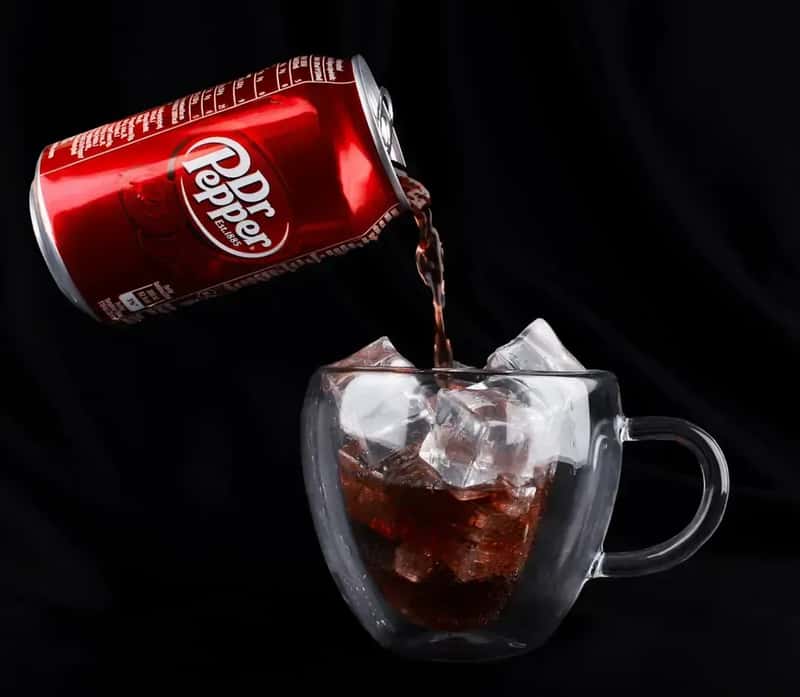
Roughly four in ten Americans will put ice in their wine, which is simply not a common sight in Europe among locals. The prevalence of enormous quantities of ice in drinks is somewhat of a rarity, and when Americans order ice for their beverage, they often receive only a cube or two. Since this is usually not enough to satisfy them, they request more – reinforcing the perception that Americans have a very particular soft spot for ice, and lots of it.
It sounds trivial, right? A few cubes of ice. Yet this tiny request sets off a chain of recognition among European waitstaff who have seen it dozens of times. It points to a broader difference in how food and drink culture works across the Atlantic. Europeans generally see things like tipping and drink customs as social bonuses or personal expressions, whereas Americans often see them as part of the standard transaction. That underlying difference in expectation – not just about ice, but about service, comfort, and pacing – is exactly what makes Americans so effortlessly recognizable from across a crowded piazza.
The Bigger Picture: Not as Bad as You Might Think

Here’s the thing that actually surprised me when digging into the research. While 73% of Americans believe they have a bad reputation abroad and over half admit to worrying about how they’re perceived when traveling, Europeans were actually quite forgiving – only 27% said they hold a negative view of American tourists, and just over a third believe Americans behave worse than other visitors. That gap between American self-perception and European reality is striking.
Beyond the noise, Europeans generally have a favorable view of American tourists. Nearly two thirds of Europeans considered US travelers to be friendly – a quality that only 44% of Americans recognized in themselves. Curiosity also stood out as a positive attribute, with 46% of Europeans saying American tourists are genuinely curious about the world around them. In fact, 72% of Europeans surveyed said they are open to interacting with American tourists, while just 8% would be reluctant to do so. So the picture is warmer and more nuanced than the loudest stereotypes suggest – even if those stereotypes do carry a very real grain of truth.
The 6 habits that give Americans away in Europe are less about flaws and more about culture clashes – two societies with genuinely different rhythms, expectations, and social codes running into each other in gorgeous historic squares. Did any of these habits hit closer to home than you expected? Tell us in the comments.