Summer crowds in Europe’s old squares and metro cars create a strange kind of intimacy. Strangers pack shoulder to shoulder, phones come out for photos, and attention drifts toward fountains, facades, and famous views. That drift is exactly what a small, highly skilled group of professionals is waiting for.
Pickpocketing in Europe isn’t random bad luck spread evenly across the continent. It clusters, sometimes with striking precision, around a handful of landmarks, transit lines, and plazas where tourists gather in dense, distracted numbers. Local residents in these cities have quietly adjusted their habits over years, and their instincts offer a useful blueprint for anyone visiting.
Barcelona’s Las Ramblas and the Gothic Quarter
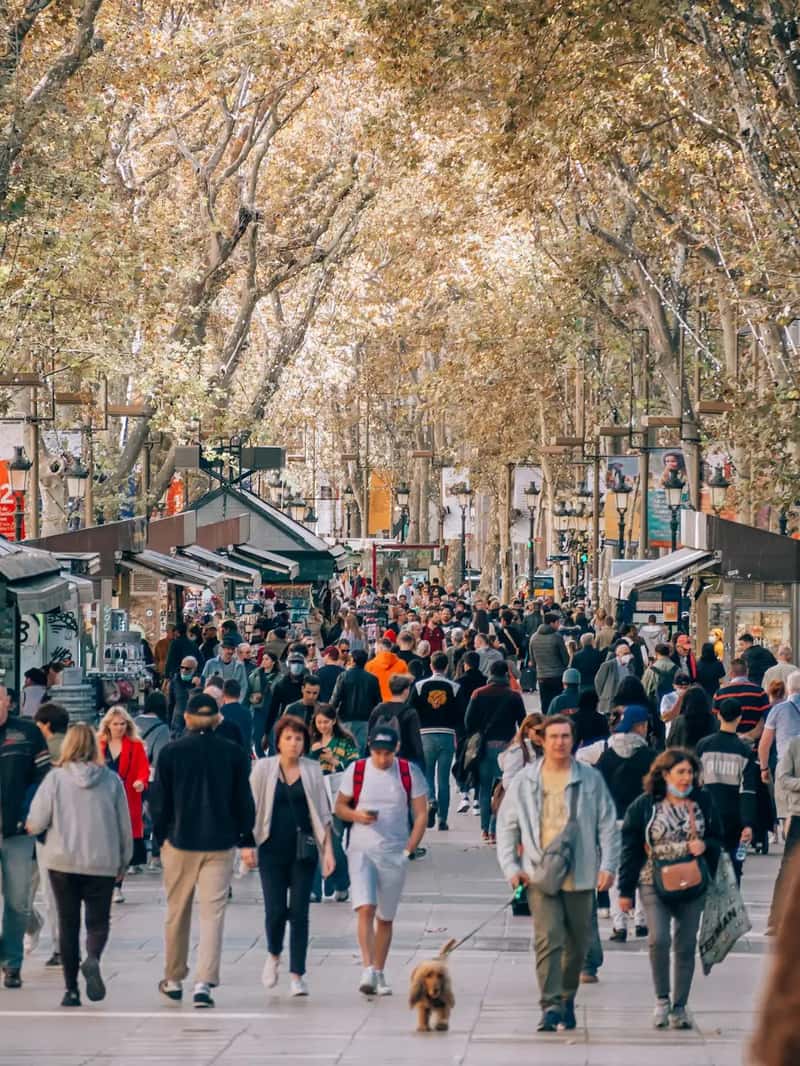
Barcelona has carried an unwanted reputation for years, and the numbers back it up. According to official statistics from 2023, pickpocketing accounted for over 48% of all crimes committed in the city, with over 100,000 incidents reported, a rise of 6.5% from the previous year. The Mossos d’Esquadra report that tourist zones like Las Ramblas, the Gothic Quarter, and metro Lines 1 and 3 account for the majority of theft complaints from visitors. Locals rarely walk Las Ramblas with a phone in hand or a bag slung over one shoulder; they know exactly which stretch of that boulevard draws the most attention from thieves.
There’s genuine progress worth noting, too. Pickpocketing in Barcelona dropped 40% in 2026 under the Pla Kanpai operation, but tourists are still the main target. According to the Mossos d’Esquadra, 85 multi-offenders with criminal records were detained between January and June 2026 alone, four times the figure from the same period in 2025. Residents still treat the lower end of La Rambla near the port with extra caution, since the pedestrian boulevard running from Placa de Catalunya down to the port is exactly the kind of street thieves love, with the lower end near the port tending to be higher risk than the upper stretch.
Rome’s Trevi Fountain and Metro Line A

Rome’s crowds have only grown denser, and so has its theft problem. The city reported a 68% increase in pickpocketing between 2019 and 2024, alongside a broader 23% rise in overall crime. The Trevi Fountain, which now draws thousands of visitors per hour, the Colosseum, Piazza di Spagna, and the area around Termini station are the most commonly cited hotspots, with Metro Line A running from the main station to the Vatican Museums also frequently mentioned by victims. Romans who commute through Termini daily tend to keep bags zipped and pressed against their bodies well before the doors even open.
Survey-based research points in the same direction. Italy continues to lead European pickpocketing statistics with 478 pickpocketing mentions for every million British visitors to Italy’s top tourist attractions, a 3% increase on last year’s figure. Thieves here often work in teams blending into monument crowds, which is why locals treat any sudden bump or commotion near a landmark as a cue to check their pockets immediately rather than assume it was accidental.
Paris’s Metro Line 1 and the Eiffel Tower approach
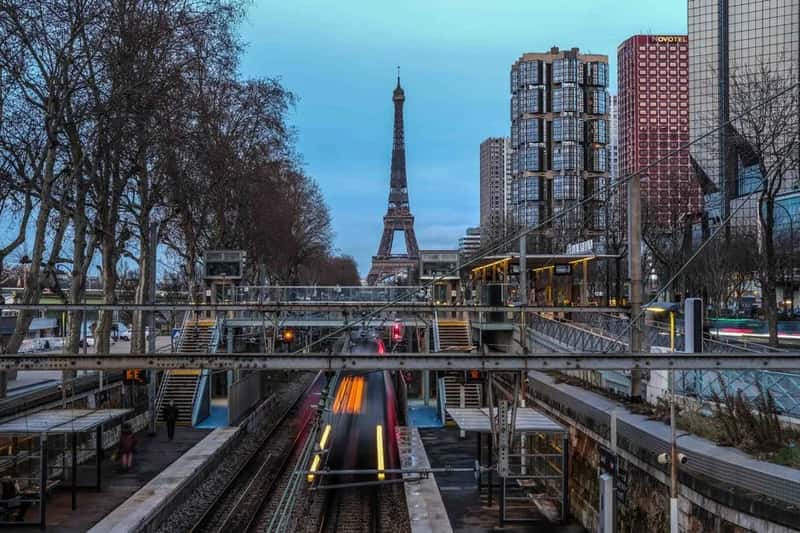
Paris tops most recent rankings outright. Paris is the pickpocket capital of the world, accounting for 16.5% of all theft-related reviews analysed in the past year. The city’s own transit network is central to the problem, since Metro Line 1 runs directly beneath the Champs-Elysees and connects Charles de Gaulle-Etoile to Chatelet-Les Halles, carrying over 750,000 passengers daily, with dense crowds creating ideal conditions for pickpockets. Parisians who ride that line regularly know to keep their phones out of sight the moment the doors open, not after.
The area around the Eiffel Tower carries its own risks despite heavy patrols. For years, pickpockets have known that a great spot to target tourists is the subway metro lines 1 and 4, but more importantly, the main stretch of pavement from the Champ-de-Mars-Bir Hakeim metro and RER station to the Eiffel Tower, where most tourists get on and off the metro to walk to the tower. Locals also point out a simpler tell: a Parisian isn’t going to approach a stranger on the street asking for directions or friendship, so anyone who does probably wants something.
Prague’s Charles Bridge and Old Town Square

Prague’s compact, walkable center concentrates enormous numbers of visitors into a small footprint. Prague ranked third on a recent list, with 6.51 combined mentions for scams and pickpockets per 1,000 reviews. Charles Bridge is the single most common spot, since the bridge is narrow and the crowds are dense, especially in summer between 10 AM and 6 PM, with people stopping to photograph statues while being pressed from both sides creating ideal conditions. Locals crossing the bridge daily tend to walk briskly and keep valuables in front pockets rather than pause mid-span.
Trams add another layer of risk that residents have learned to navigate. Tram lines 22 and 9 run through the main tourist areas and are frequently crowded, with the doors of a crowded tram during boarding and alighting being the moments of highest risk. Even so, the broader picture remains reassuring: Prague had approximately 1.2 million international visitors in 2025 and 45 reported serious crimes against tourists, meaning roughly 0.004% of visitors experienced any serious incident. Locals treat pickpocketing as an annoyance to plan around, not a reason for alarm.