Europe has a knack for making you question reality. Between the turreted castles perched on impossible cliffs, the pastel villages wrapped around glassy lakes, and the medieval towns that seem frozen in an illustrated storybook, the continent offers no shortage of places that look digitally enhanced even when you’re standing right in front of them. Some of these spots inspired the animators at Disney. Others quietly existed for centuries before social media turned them into bucket-list obsessions overnight.
What follows is a tour through nine of the most enchanting corners of Europe, the kind of places where you catch yourself wondering if a wizard or a queen might step out from behind the next corner. We’ll look at what makes each one so visually arresting, the real history behind the fairy-tale reputation, and a few practical notes for anyone hoping to see these places in 2026 without getting swallowed by the crowds that now follow wherever the “too pretty to be real” label goes.
Neuschwanstein Castle, Germany
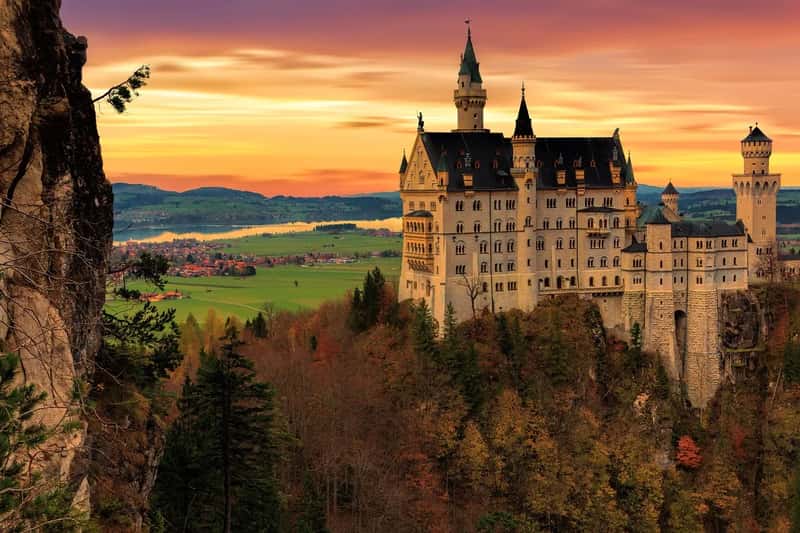
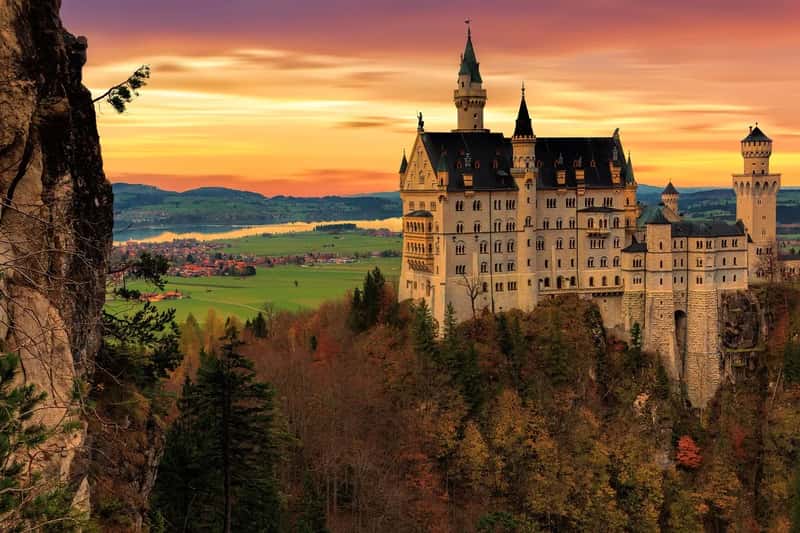
Rising from a rocky outcrop in the Bavarian Alps, Neuschwanstein is probably the single most recognizable fairy-tale silhouette on earth, largely because Walt Disney was so impressed by the interior and exterior of the castle that he used its silhouette as the logo for his company, and it is the most photographed place in Germany. It wasn’t built by some ancient dynasty defending a kingdom. Neuschwanstein is not an old castle; construction began in 1869 and remained incomplete when King Ludwig died in 1886. Ludwig II commissioned it purely as a romantic retreat, and famously lived in his “New Castle,” the original name, for only 172 days before his mysterious death.
These days the castle’s popularity has become almost as legendary as its architecture. Neuschwanstein Castle sees about 1.4 million visitors annually, and demand keeps climbing along with online chatter about its Disney connection. Travelers heading there in the coming season should know that for summer 2026 visits between June and August, tickets should be booked at least six to eight weeks in advance, since same-day tickets routinely disappear before lunchtime. Inside, guides walk visitors through Wagner opera murals, the throne hall with a mosaic of two million tiles, and an artificial stalactite cave, proof that Ludwig’s storybook obsession went far deeper than the exterior.
Hallstatt, Austria
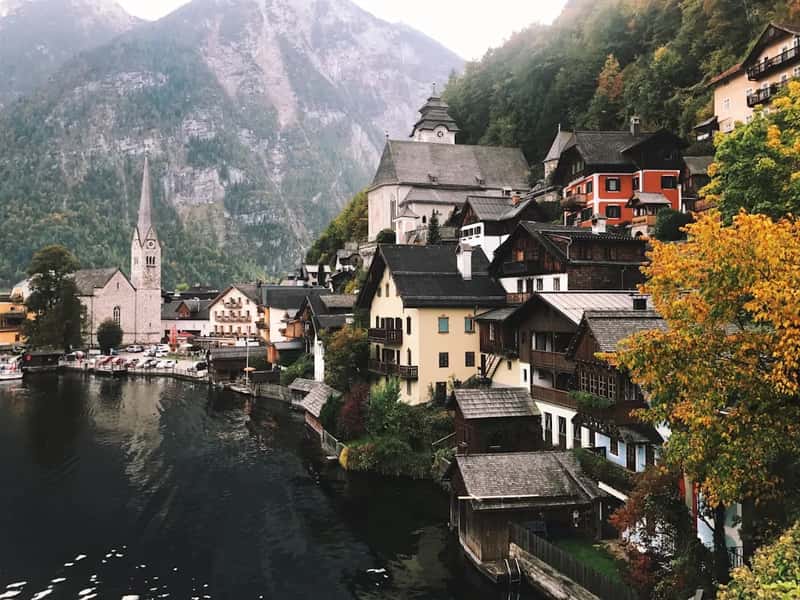
Squeezed onto a narrow strip of land between a mirror-still lake and the towering Dachstein Alps, Hallstatt looks like it was painted rather than built. The village’s UNESCO-listed church spire reflecting off turquoise water has become one of the most shared images of the Alps anywhere online, and the iconic image of the church by the lake, framed by colorful houses and dramatic mountain scenery, became one of the most widely shared Alpine motifs in the world. The fame carries a cost, though. Hallstatt is a village of around 760 residents, yet it attracts more than one million visitors every year, a ratio few places in the world can match, and on the busiest days it feels less like a quiet Alpine hamlet and more like a stage set with a live audience.
That imbalance has pushed Hallstatt into the center of Austria’s overtourism debate. On peak days, Hallstatt sees up to 10,000 tourists passing through its streets, according to deputy mayor Alfred Gamsjäger, who said “We are literally overrun.” Local officials have floated a daily visitor cap, with the town having long called for a limit of around 5,000 to 5,500 tourists per day, roughly half the current peak. Much of the modern surge traces back to rumors that Hallstatt inspired Arendelle in Disney’s Frozen, a claim that, true or not, has turned a mining village with genuine Bronze Age roots into a magnet for a whole new generation of fairy-tale seekers.
Lake Bled, Slovenia
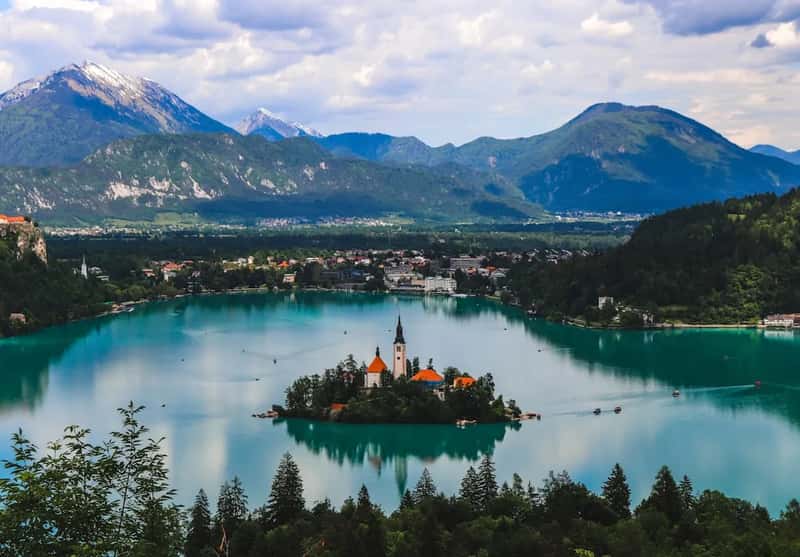
Few images capture “fairy tale” quite like Lake Bled: a tiny island church floating in glacial blue water, a medieval castle clinging to a cliff above, and the Julian Alps framing the whole scene. Blejski otok, or Bled Island, is the only natural island in Slovenia, sitting roughly 300 metres from the nearest shore, and has been a place of spiritual significance since at least the Bronze Age. Getting there is part of the magic. Visitors traditionally arrive by a wooden boat known as a pletna, a word borrowed from Bavarian German meaning “flat-bottomed boat”, rowed standing up by a single oarsman using a technique passed down for generations.
Once ashore, tradition takes over completely. Couples getting married climb a Baroque stairway dating from 1655 with 99 stone steps leading up to the church, and it is considered good luck for the groom to carry his bride up the steps before ringing the bell and making a wish inside. The bell itself carries its own legend: the church’s current bell, cast in 1534, is said to carry the power of granting wishes, and divers have periodically searched the lake floor for a legendary sunken predecessor without success. Whether or not the wishes come true, the setting alone makes the trip worthwhile.
Sintra, Portugal
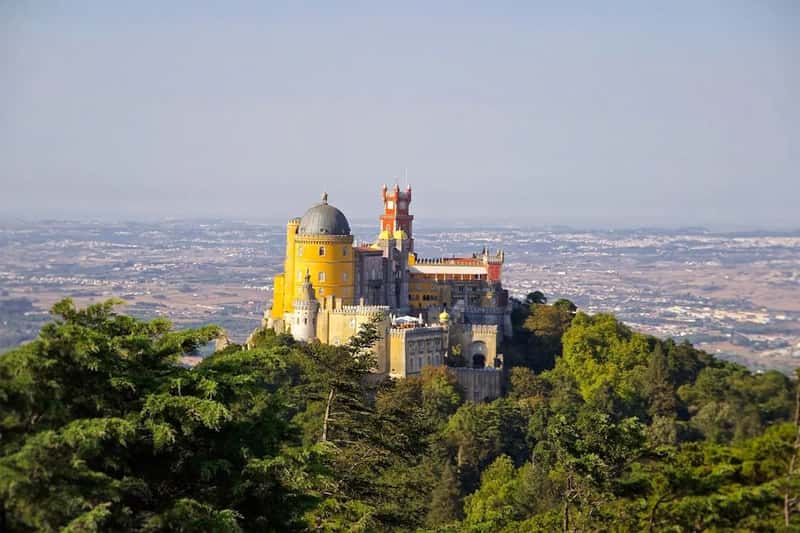
Just a short drive from Lisbon, Sintra feels like a portal into a different century entirely, wrapped in mist and dotted with palaces in every color imaginable. The crown jewel is Pena Palace, whose whimsical multi-coloured creation, sitting high on a peak among swirling mists, is part of the UNESCO World Heritage Site of Sintra’s Cultural Landscape. It wasn’t originally meant to be a palace at all. The site’s history began in the Middle Ages, when a chapel dedicated to Our Lady of Pena was built after a supposed apparition of the Virgin Mary, and centuries later a Romantic-era king transformed the ruined monastery that replaced it into the technicolor fantasy visitors see today.
The palace’s design owes an unexpected debt to Bavaria. King Ferdinand II undertook the construction beginning in 1838, with the palace built in a grand romantic style by Baron Wilhelm Ludwig von Eschwege, who took some of his inspiration from Neuschwanstein castle in Bavaria, linking two of Europe’s most famous fairy-tale buildings in a way most visitors never realize. The surrounding grounds are just as remarkable, since the Pena Park is a vast forested area completely surrounding the palace, spreading over more than 200 hectares of uneven terrain filled with trees imported from continents around the globe.
Giethoorn, Netherlands
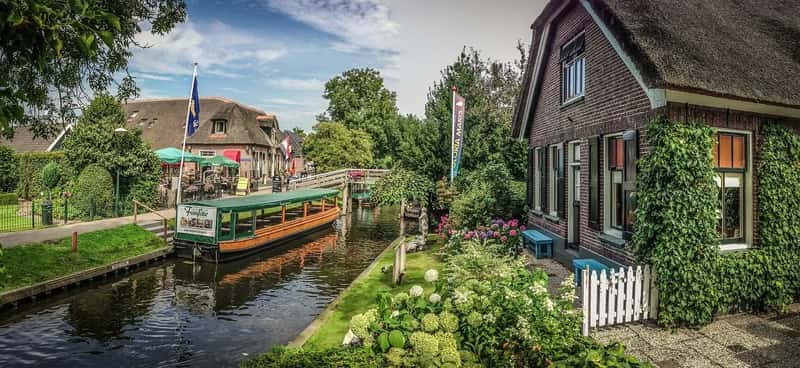
In the Dutch province of Overijssel sits a village that seems to have skipped the invention of the automobile entirely. Giethoorn is a picturesque hamlet known as the “Dutch Venice,” where the tranquility is almost dreamlike, and there’s no way for cars to get around because there are no roads in its historic core. Instead, everyone gets around the way locals have for centuries. Locals and visitors navigate in whisper-quiet ways, by bike, boat, or foot, through a collection of small peat islands connected by bridges.
The village’s watery layout wasn’t a design choice so much as an accident of geography and hard labor. The village was created 800 years ago by manually searching for peat, with locals digging by hand and creating a complete channel system, and those diggings eventually left behind the maze of canals that now define the place. It’s genuinely popular too, not just a curated tourist trap: the “Dutch Venice” nickname comes from the many canals and exactly 176 bridges the village has. Just don’t expect total solitude. Giethoorn has become one of the busiest small-village attractions in the country, and the calm, storybook photos you see online rarely capture the crowds of rental boats bumping along the narrower canals in peak season.
Bran Castle, Romania
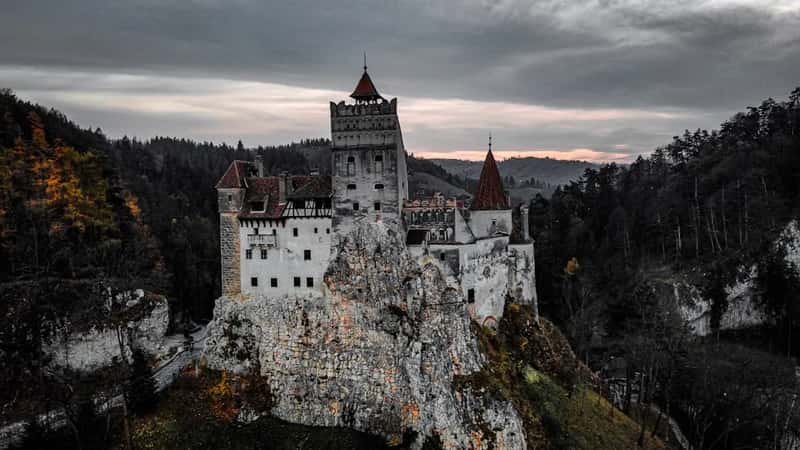
Perched on a rocky spur in Transylvania, Bran Castle has built its fame on a mix of genuine medieval architecture and a literary legend that never quite lets go. The castle’s turrets and narrow stone stairways look like something pulled straight from Bram Stoker’s imagination, and marketing over the decades has leaned heavily into the popular association between the fortress and the Dracula story, even though historians generally agree Stoker himself never visited Romania and based his descriptions on other sources. What’s certain is the castle’s genuine medieval pedigree, sitting guard over a mountain pass that once marked an important trade and defense route between Transylvania and Wallachia.
Regardless of how tenuous the vampire connection may be historically, the atmosphere does most of the work. Steep spiral staircases connect small chambers filled with period furniture, and the castle’s silhouette against the Carpathian peaks gives it a brooding, storybook quality that photographs beautifully in any season, especially with a light dusting of snow or autumn fog rolling through the valley below. It remains one of Romania’s most visited landmarks precisely because it delivers on the gothic fantasy visitors arrive expecting, whether or not Vlad the Impaler ever actually set foot inside.
Rothenburg ob der Tauber, Germany
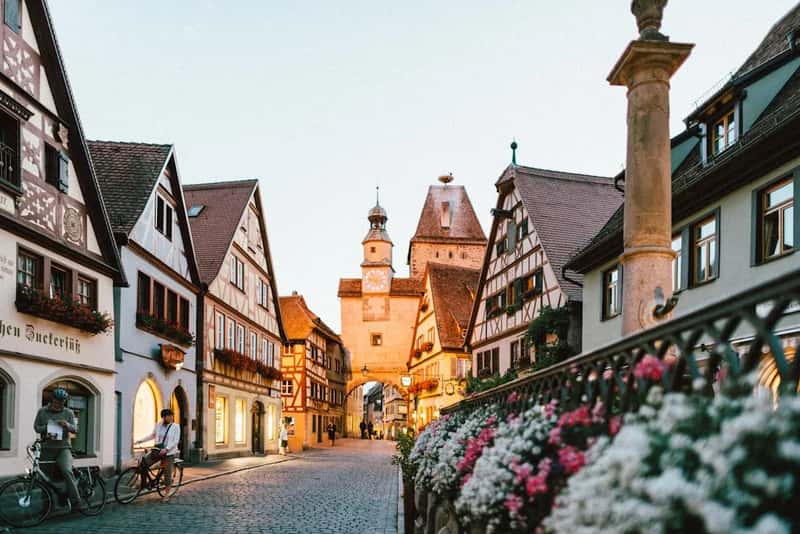
Along Germany’s Romantic Road, Rothenburg ob der Tauber looks less like a functioning town and more like a meticulously preserved film set. Its intact medieval walls, half-timbered houses in faded pastels, and cobblestone lanes have survived remarkably well, largely because the town’s economic decline centuries ago inadvertently spared it from the kind of modernization that reshaped so many other German cities. Walking the wall walk that circles the old town gives visitors an aerial view of red-tiled roofs and church spires that hasn’t changed dramatically in generations.
The town leans fully into its storybook reputation, especially around the holidays, when its year-round Christmas shop and seasonal markets draw crowds looking for the quintessential German Christmas atmosphere regardless of the calendar. The famous Plönlein, a fork in the road flanked by a half-timbered house and a stone tower, has become one of the most photographed street corners in Bavaria, often used in postcards and tourism campaigns as shorthand for medieval German charm. Like many of the destinations on this list, its popularity has grown enough that visiting outside peak summer weekends tends to make for a far more peaceful experience.
Colmar, France
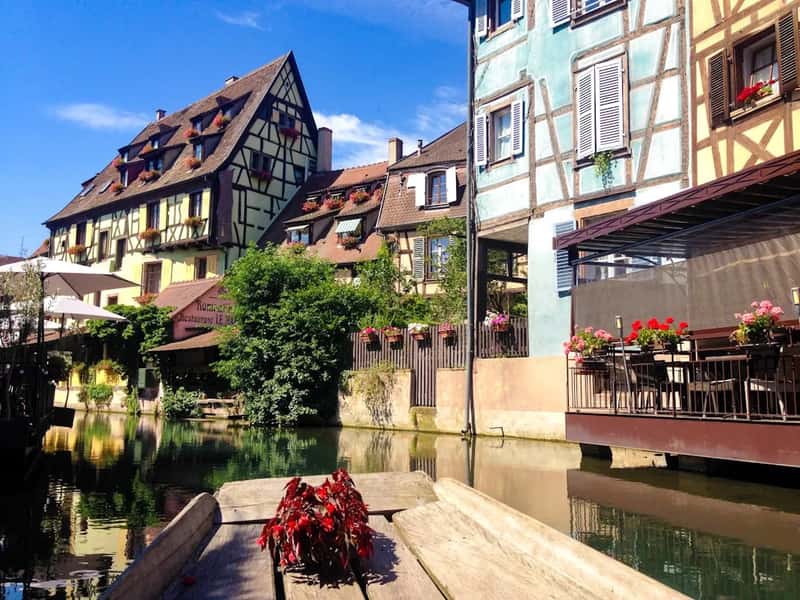
In the Alsace region near the German border, Colmar blends French elegance with distinctly Germanic half-timbered architecture in a way that feels almost too coordinated to be accidental. The district known as La Petite Venise, or Little Venice, threads narrow canals past flower-draped balconies and candy-colored facades, with small boats drifting past cafes in a scene that could easily pass for a stage backdrop. The town largely escaped the destruction of the World Wars, which is part of why its historic core has remained so remarkably intact.
Colmar’s storybook reputation has only grown as its imagery has spread online, with its patchwork of timber-framed houses in shades of pink, blue, and yellow drawing comparisons to animated fantasy towns. Whether or not any specific film studio drew direct inspiration from its streets, as is sometimes claimed anecdotally by tour guides and travel writers, the resemblance to hand-drawn animation is easy to see just by wandering the old quarter at dusk, when lanterns flicker on above the canals and the crowds thin out considerably.
Mont Saint-Michel, France

Rising from tidal flats off the coast of Normandy, Mont Saint-Michel looks like a fortress conjured by magic rather than built by human hands, its spires piercing the sky above a rocky island connected to the mainland by a causeway that disappears under Europe’s highest tides. Mont Saint-Michel is a small tidal island and commune that has come under severe pressure from overtourism, boasting a stunning natural bay, unique architecture, and Europe’s highest tides. Pilgrims have made their way here since the early Middle Ages, and the abbey crowning the summit still dominates the silhouette from miles away.
Its popularity, however, has become something of a double-edged sword. Viral social media posts and popular shows have turned the site into a cult pilgrimage destination, attracting around three million visitors annually, a volume that the narrow medieval streets were never designed to handle. This has overwhelmed the commune’s narrow medieval streets and pressured other infrastructure, with endless souvenir shops, long queues, and crowds creating a theme park feel that accelerates damage to fragile historic structures. Even so, arriving early in the morning before the tour buses roll in still delivers something close to the awe pilgrims must have felt centuries ago, watching the abbey emerge from morning mist above the bay.
A Continent Built for Storybooks
What ties these nine places together isn’t just their beauty, though there’s plenty of that to go around. It’s the sense that each one carries a story, whether that’s an eccentric king building a private fantasy in the Alps, a village slowly carved out of peat bog, or a fortress that literary fiction turned into something larger than its own history. Europe’s fairy-tale reputation didn’t happen by accident. It grew out of centuries of architecture, folklore, and geography colliding in unusually photogenic ways.
The catch, as several of these destinations now demonstrate, is that magic doesn’t scale well. Hallstatt, Mont Saint-Michel, and Neuschwanstein are all wrestling with the consequences of their own popularity, from proposed visitor caps to sold-out ticket windows months in advance. Anyone planning to see these places in person would do well to visit during shoulder seasons, book early, and remember that the “too magical to be real” quality these spots are famous for is exactly why so many other people want to see it too.