You’d think the worst moments for a flight attendant happen mid-air, somewhere over the ocean with a screaming toddler or a jammed seatback screen. Actually, the real cringe happens in the first ten minutes, while the plane is still parked at the gate and the wheels haven’t even moved yet.
Cabin crews across major U.S. airlines describe the exact same handful of habits, flight after flight, year after year. Most passengers have zero idea they’re doing anything wrong. Here’s what actually makes flight attendants wince before takeoff, and why the reasons behind it are stranger and more high-stakes than you’d expect.
#7 – Asking for Water the Second You Sit Down
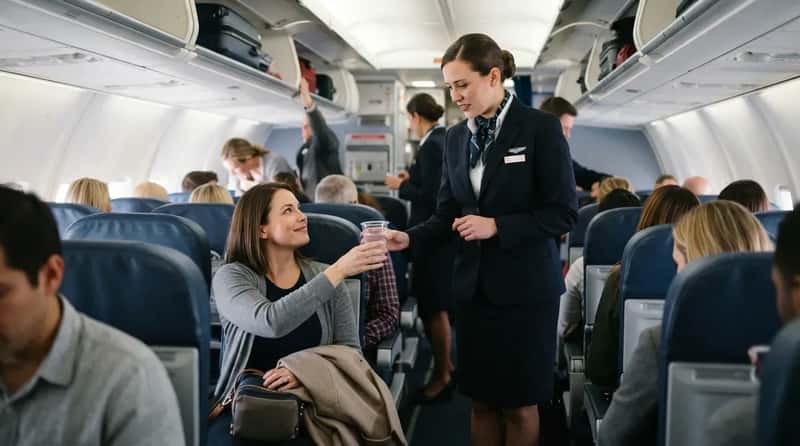
It feels harmless. You just power-walked through TSA, you’re parched, and there’s a flight attendant standing right there in the aisle. But asking for a glass of water the instant you sit down is something crews quietly dread, and it’s not about being unkind.
Federal regulation states no flight attendant may move an airplane, take off, or land while any food, beverage, or tableware they’ve handed out is still sitting at a passenger seat. That means every cup gets collected and trashed before the plane can push back, right as the crew is racing a departure clock. Once you’re airborne, they’ll happily bring you all the water you want.
Worth Knowing
- Federal rules require a completely clear cabin, no loose cups, cans, or trays, before the aircraft can push back from the gate.
- This applies even if you only ordered water and drank half of it before the crew arms the doors.
- The same clean-cabin standard gets enforced again before landing, not just at departure.
- Once wheels are up, crews say they’re glad to keep refilling your cup as often as you like.
#6 – Digging Through Your Backpack in the Middle of the Aisle
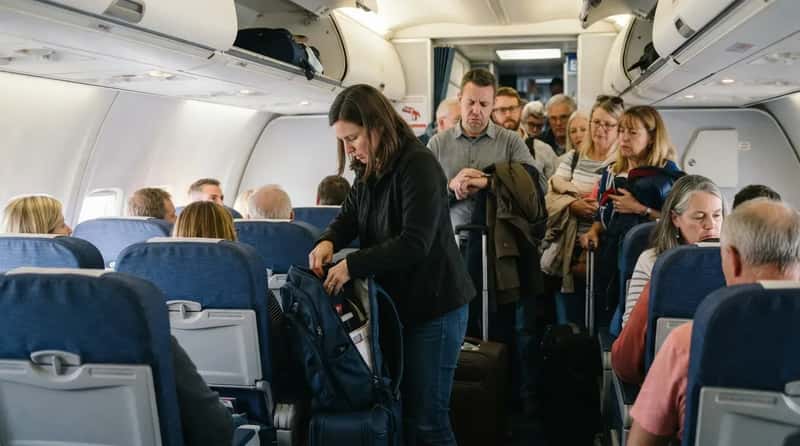
This one turns a two-minute boarding process into a ten-minute traffic jam. A passenger stops dead in the aisle, unzips three compartments, and holds up an entire line of tired travelers stacked behind them all the way back to the jet bridge.
One flight attendant’s advice is blunt: don’t stand in the aisle getting things out of your backpack. Step into your seat first, and once there’s a little more room, you can always dig through your bag or reach the overhead bin. It costs nothing, yet crews say it’s one of the most consistent slowdowns of the entire boarding process.
#5 – Switching Your Seat Without Telling Anyone
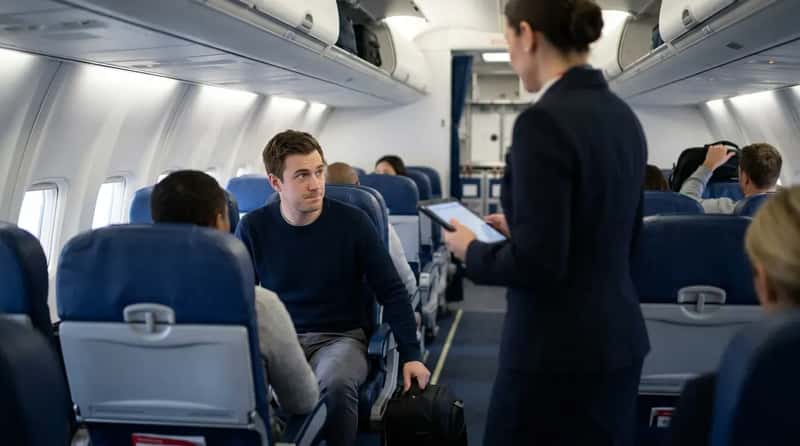
Swapping seats to sit next to your travel buddy feels like basic courtesy between strangers. Flight attendants see it very differently, and the reasoning goes far beyond politeness.
Don’t change your seat on your own – that drives everyone crazy.
Bobby Laurie, travel host and former flight attendant
Laurie, who spent a decade flying with US Airways and Virgin America, notes that crews carry a device showing exactly which seats are supposed to be empty and who paid for what, so they already know when something’s off. On smaller regional jets it’s not just about ticket revenue either. Weight and balance matter more than people assume, and while one swapped seat won’t cause a disaster, crews are still required to follow the numbers on their screen.
#4 – Sprinting to the Bathroom as the Doors Are Closing
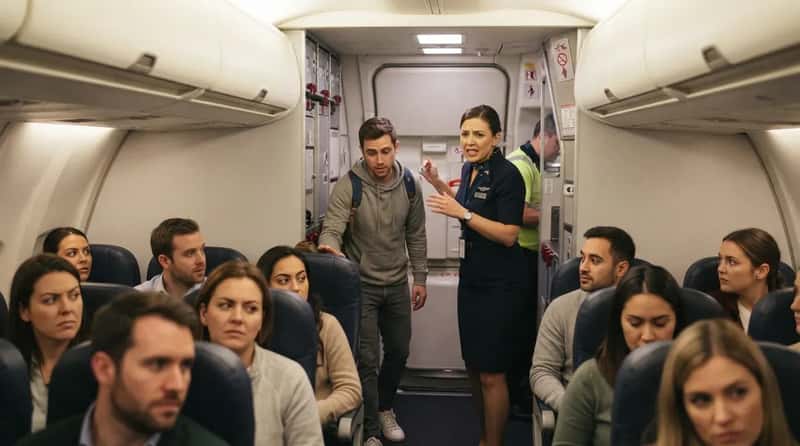
There’s a strange psychological glitch that hits almost everyone the moment they board a plane: a sudden, overwhelming urge to use the restroom, even if you just went at the gate ten minutes earlier. Flight attendants know it well, and honestly, most of them are sympathetic to it.
But sympathy only stretches so far once the doors are supposed to be shutting. The math is unforgiving: the crew legally cannot take off until every single passenger is seated, so one last-second bathroom dash can hold up an entire departure, delay connections down the line, and quietly annoy a hundred other people who did the responsible thing at the gate.
At a Glance
- The urge you feel right after boarding is often just nerves and adrenaline, not an actual full bladder.
- Federal rules require every seat buckled before the plane can push back from the gate, with no built-in exception for one more bathroom trip.
- A single last-minute dash can delay boarding for the whole cabin, plus anyone connecting through the next airport.
- Gate agents and crews consistently name the “last powerwalker” as one of the most common friction points of boarding.
#3 – Snapping Fingers or Barking Orders at the Crew
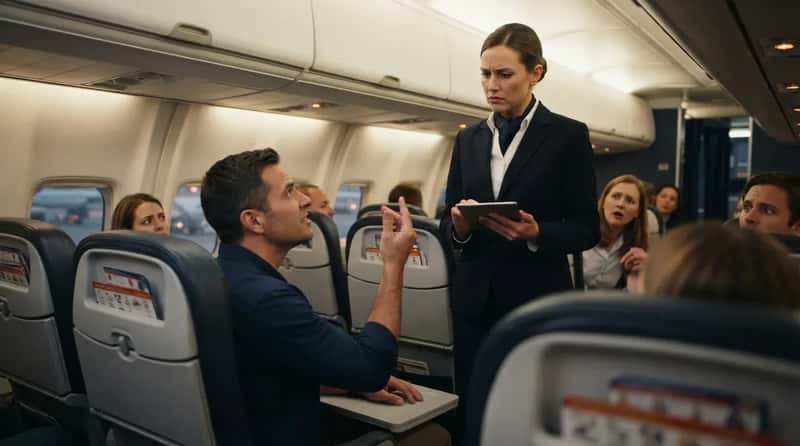
Nobody likes to admit they’ve done this, but etiquette experts say it happens more than people realize, especially when travelers are stressed, delayed, or running on no sleep.
National etiquette expert Diane Gottsman, founder of The Protocol School of Texas, points out that snapping fingers at a flight attendant crosses the same line as touching them without permission, both are treated as one of the most demoralizing behaviors a passenger can display. It’s a tiny gesture, but crew members remember exactly who did it, and it quietly colors how the rest of the flight goes for everyone in that section.
#2 – Standing Up or Opening the Overhead Bin Before the Seatbelt Sign Turns Off
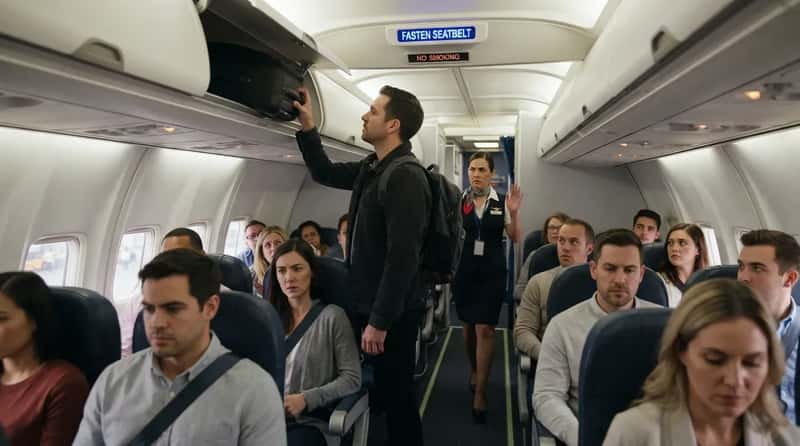
This isn’t just an etiquette issue, it’s a federal one, and most passengers genuinely have no idea. The instinct to grab a bag or stretch your legs the moment the plane stops moving can technically break the law.
Federal rules require every person on a U.S.-registered aircraft to stay buckled into an approved seat during surface movement, takeoff, and landing, which means popping up before the plane has even left the ground violates the rule outright. Standing early or cracking open an overhead bin before the seatbelt sign is off has led to real fines, and ignoring repeated crew warnings can be treated as interfering with a crew member’s duties. Most flyers assume this one is just a suggestion. It isn’t.
Fast Facts
- Real range:
- In one FAA enforcement batch,
#1 – Touching or Poking a Flight Attendant to Get Their Attention
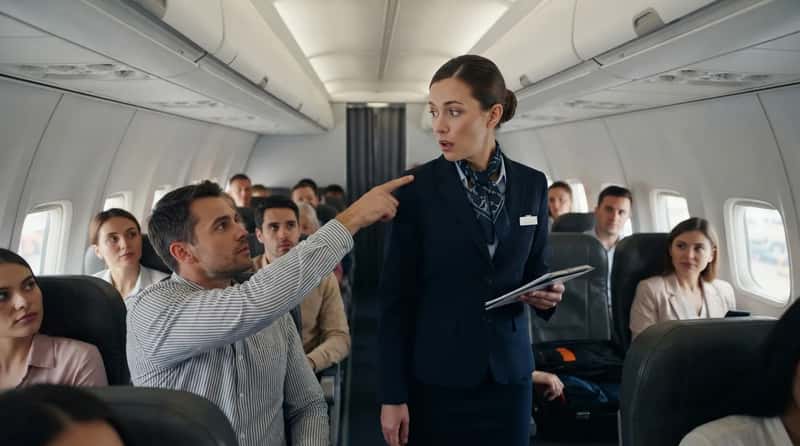
Of everything cabin crews complain about, this is the one they bring up first, almost every single time. It feels minor to the passenger doing it. To the crew, it’s crossed a line entirely.
Flight attendants consistently rank this as one of the most common pet peeves in the industry, and they’d much rather you speak up, wave, or hit the call button instead. The timing makes it worse than people think, since crews are often mid-way through mandatory safety checks when it happens. Union reps say incidents spike during busy travel seasons and on hot, stuffy planes waiting for takeoff, and in rare cases, passengers who keep touching or grabbing crew members for service requests have actually been removed from the flight before it ever left the gate.
Why It Stands Out
- Ranks as the single most frequently mentioned pet peeve in flight attendant industry commentary.
- Often lands exactly when crews are mid-way through mandatory safety checks, adding real risk to a small annoyance.
- Union reps say incidents noticeably spike during peak travel seasons and on hot, stuffy cabins still waiting for pushback.
- In rare cases, repeated physical contact with a crew member has gotten passengers removed before the flight ever left the gate.
None of these seven habits make anyone a bad person. Most flyers doing them think they’re being efficient, polite, or just thirsty after a long walk through the terminal. But cabin crews see the same patterns on nearly every flight, and they’re the ones left absorbing the delays, the safety risks, and the awkward moments that follow.
A little awareness before the doors close goes a long way, both for the crew working the aisle and for everyone else quietly stuck waiting behind you.