Most travelers assume gate agents are just glorified ticket scanners with zero real power. The truth is almost the opposite – they control seating inventory, standby lists, upgrades, and even whether a plane waits an extra few minutes for someone sprinting through the terminal.
That power comes with a pattern. Ask the right way, at the right moment, and requests most people assume are impossible get approved constantly. Here’s what actually earns a yes at the podium, straight from the people standing behind it.
#24 – Asking for an Earlier Standby Seat
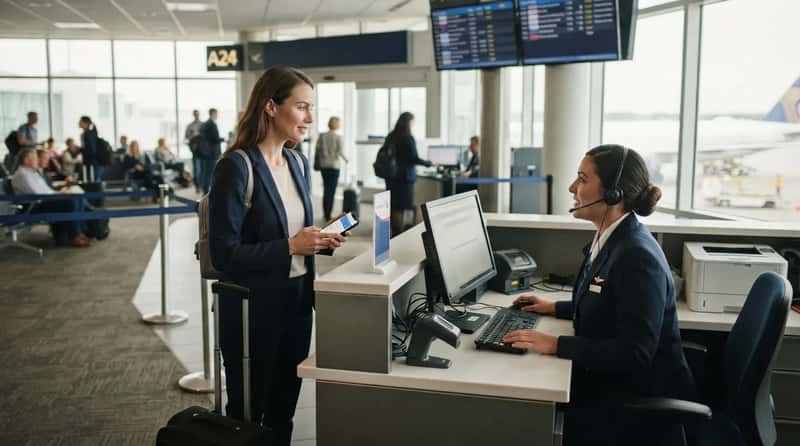
Passengers who show up hoping to catch a flight two hours earlier than their booked departure are rarely turned away outright. Gate agents are already working the standby list, trying to clear open seats before boarding closes. An early, hopeful arrival isn’t a nuisance to them – it’s actually solving a problem they already have. Showing up calm and asking early puts a traveler near the front of an invisible line most people never notice.
The catch most people never realize is that fare class often decides who gets bumped up first, not the order passengers arrived at the gate. Asking well before boarding, instead of at the last second, dramatically improves the odds. Agents say this is one of the easiest “yes” requests they field all day. It costs nothing to try, and the upside is a free flight two hours sooner.
#23 – Splitting an Aisle Seat for an Open Middle
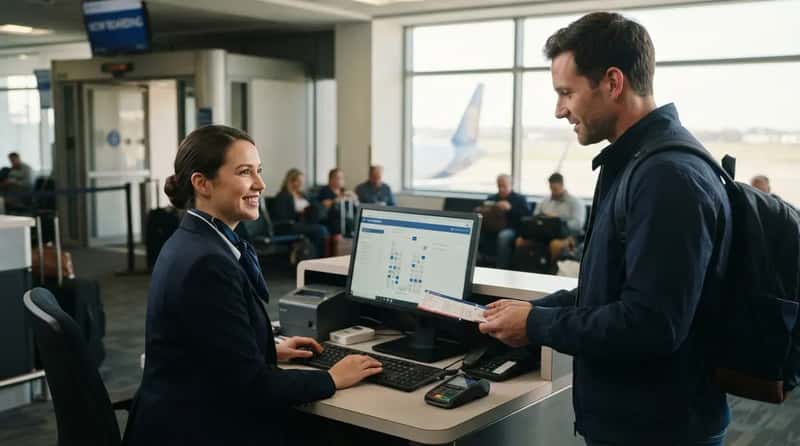
Nobody wants a middle seat, and agents know it better than anyone. Once boarding is nearly finished and no-shows are confirmed, agents can freely reassign the empty seats they were forced to hold onto. That’s the exact moment a polite request pays off.
A request made about 20 minutes before boarding often gets an instant upgrade to an aisle or window, simply because the agent no longer needs to protect that seat for a late elite flyer. Ask too early, though, and the seat is still locked. This is one of the most reliably approved “small” requests in the entire airport, and it costs nothing but good timing.
#22 – Reuniting Separated Family Members
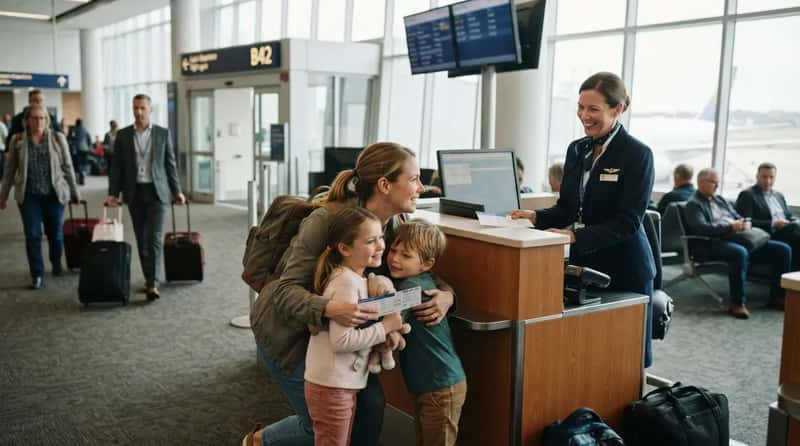
Family seating mix-ups happen more than airlines like to admit. Seats sometimes get blocked for elite members or held for sale, leaving parents and kids scattered across the plane by accident. Agents notice this fast, and it bothers them almost as much as it bothers the parents.
Reuniting parents with young children is treated as close to automatic, especially with kids under 13. It isn’t officially guaranteed on every airline, but in practice agents prioritize it heavily to avoid conflict once the plane is in the air. Adults traveling together get less urgency than parents with minors. A calm, early ask at the podium beats trying to sort it out mid-flight every time.
#21 – Requesting a Free Gate-Check for an Oversized Bag
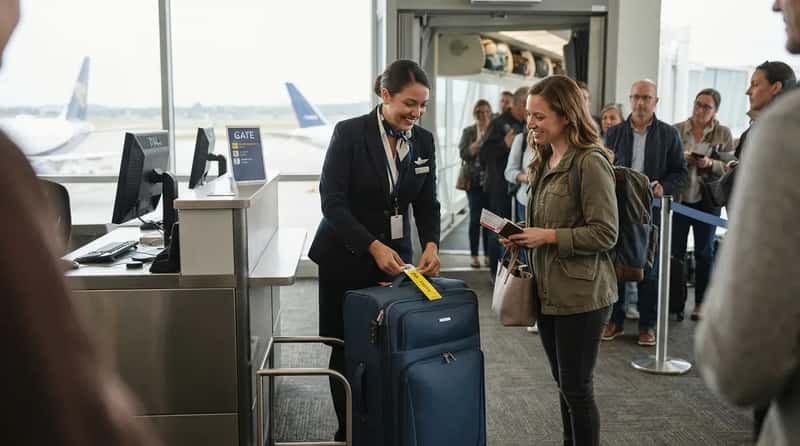
Overhead bins fill up fast, and agents would rather solve the problem before boarding than during it. When a carry-on clearly won’t fit, most travelers brace for a fee and an argument. Neither usually happens.
Most travelers don’t realize that gate-checking is usually free, even when the bag technically should have been checked at the counter for a charge. Agents would rather tag it in seconds than hold up a jet bridge full of annoyed passengers. Asking nicely gets the bag tagged instantly; fighting it just slows down the whole line.
#20 – Holding the Gate for a Late Connecting Group
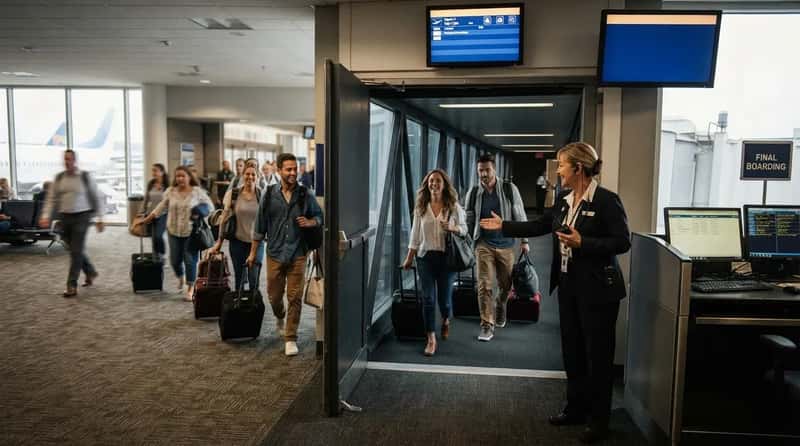
Missing a connection because of an airline’s own delay is one of the most common airport nightmares. When it happens to a whole group of passengers at once, agents lean toward holding the plane. When it’s one solo traveler who lingered too long at the bar, the odds drop fast.
The decision is rarely about sympathy – it’s a math problem involving federal crew rest rules. Agents have to weigh whether the crew will “time out” before they can even consider holding the door. This is one of the more debated gray areas travelers argue about online, precisely because it can feel random from the outside even when it isn’t.
#19 – Asking to Deplane First for a Tight Connection
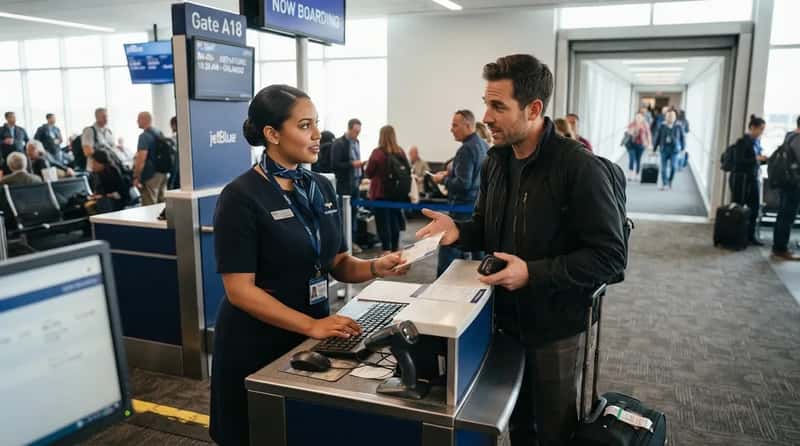
Tight connections create quiet panic, but agents can often fix the problem before the plane even lands. The key is timing the request correctly. Waiting until touchdown is almost always too late.
Most travelers never realize this request has to start at the gate before departure, not mid-flight. Agents who know a connection is tight will sometimes reseat that passenger closer to the front proactively, then flag it so the crew announces a priority deplane. It’s a small act of foresight that can save an entire itinerary. Fliers who mention the risk early get noticeably more help than those who stay silent and hope.
#18 – Volunteering to Give Up a Seat for Compensation
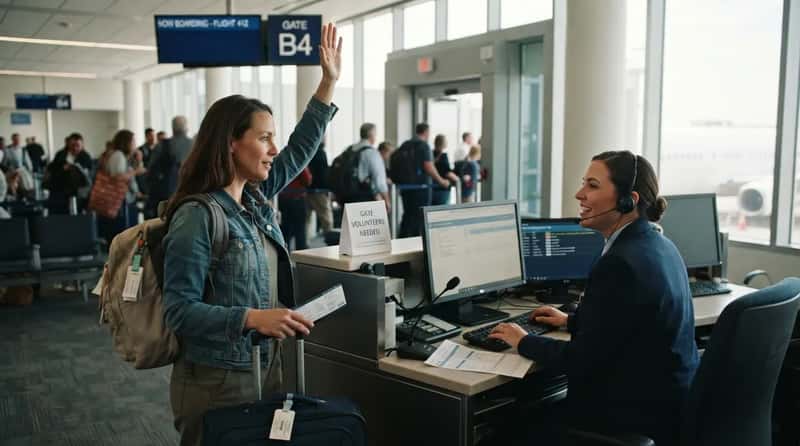
Overbooking sounds like a nightmare, but for some travelers it’s a jackpot. On oversold flights, agents need volunteers before they’re forced into involuntary bumps, and they need them fast. That urgency works in the passenger’s favor.
Passengers who raise their hand first almost always get approved instantly, since solving the overbooking problem is the agent’s top priority in that moment. The earlier someone volunteers, the more leverage they have to negotiate the payout. Frequent flyers with flexible schedules treat oversold flights like a small side hustle, and airlines would rather pay a willing volunteer than force a stranger off the plane.
#17 – Requesting Denied Boarding Paperwork and Compensation
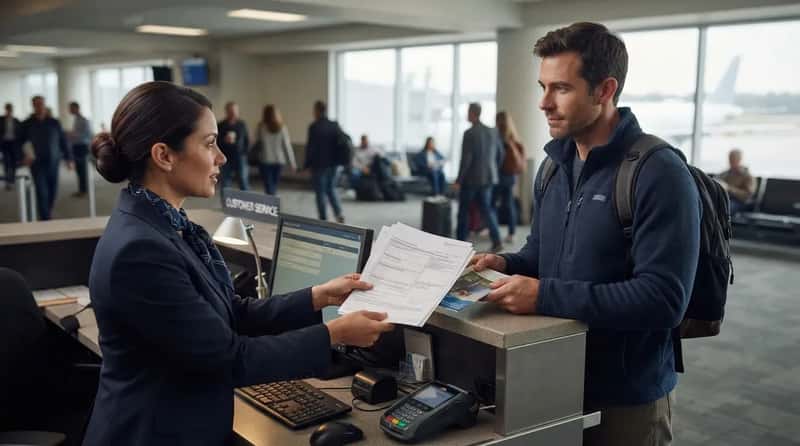
When a flight is involuntarily oversold, most passengers have no idea they have real rights. Federal rules govern exactly how airlines must compensate travelers who get bumped against their will. Almost nobody asks for it, because almost nobody knows to ask.
Most fliers never request the compensation they’re legally owed, assuming it’s optional generosity instead of a regulation. Agents are required to hand over this paperwork when it applies, so a direct ask is rarely refused. It’s one of the least “controversial” approvals on this list, simply because the rule leaves no room for mood or favoritism.
Fast Facts
- Federal rule 14 CFR Part 250 spells out exactly how airlines must pay passengers bumped against their will.
- A domestic delay of 1-2 hours requires at least 200% of the one-way fare, up to $1,075.
- A domestic delay of more than 2 hours requires at least 400% of the one-way fare, up to $2,150.
- Payment is owed in cash or check on the spot – not just a travel voucher – unless the passenger agrees to take one instead.
#16 – Rebooking on the Next Available Flight After a Delay
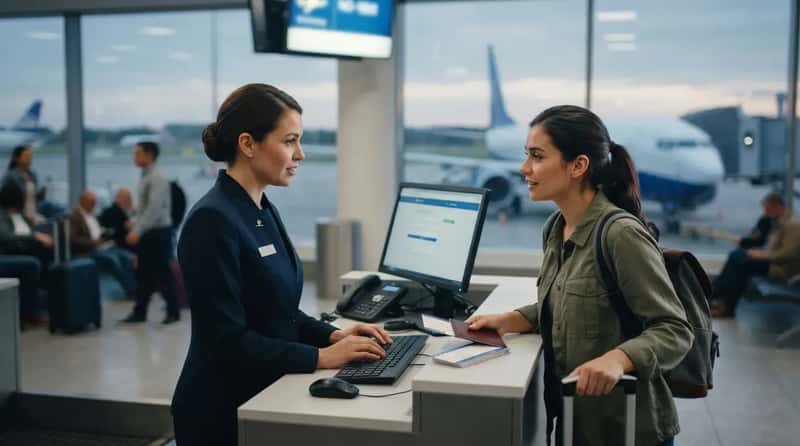
When an airline’s own delay causes a missed connection, agents lean toward fixing it fast and quietly. Most travelers assume this means a long line back at the ticket counter. It usually doesn’t.
Most travelers don’t realize this can often be handled right at the gate, without a phone hold or a trip anywhere else. This gets approved constantly, especially when the disruption was clearly the airline’s fault to begin with. Passengers who simply ask “what’s my best rebooking option” get faster results than those who demand one specific flight by name.
#15 – Asking for Priority Boarding With a Stroller or Car Seat
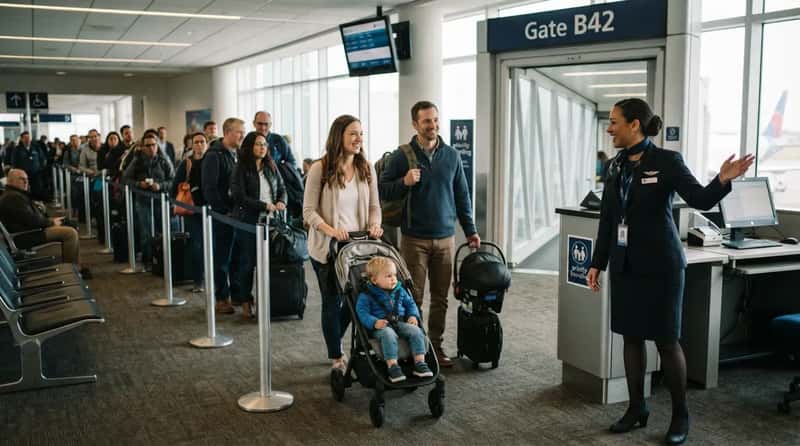
Parents traveling with young kids get more leeway than almost any other passenger group. Agents routinely wave families with strollers to the front of the line, even without an official family boarding zone printed on the ticket. Nobody wants a stroller creating gridlock in the jet bridge mid-rush.
This is one of the most consistently approved courtesy requests in the entire industry, and it usually happens without a passenger needing to say a word. Agents see the stroller and act on instinct. Parents who don’t know this rule miss out on a stress-free boarding experience they were entitled to the whole time.
#14 – Requesting a Seat Near a Disability or Medical Need
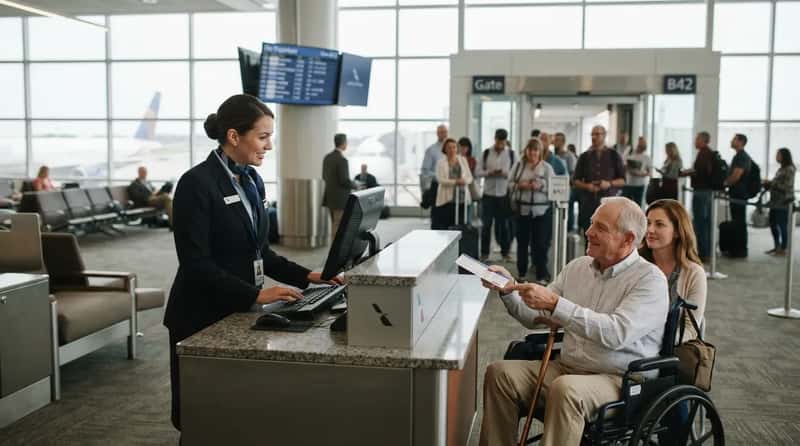
Passengers with mobility issues or medical concerns get quiet priority most fliers never even notice happening around them. Airlines want to avoid an in-flight medical situation far more than they want to enforce a rigid seat chart. That alone shifts the odds heavily in the passenger’s favor.
Most travelers don’t realize agents can reassign seats for medical reasons even without formal documentation, based on nothing more than a short conversation at the podium. A bad knee, a service animal, or trouble walking long distances is usually enough. Explaining the situation clearly and briefly gets results fastest, and it’s one of the more genuinely compassionate approvals built into daily airport life.
#13 – Sneaking a Peek at First Class Seating Charts
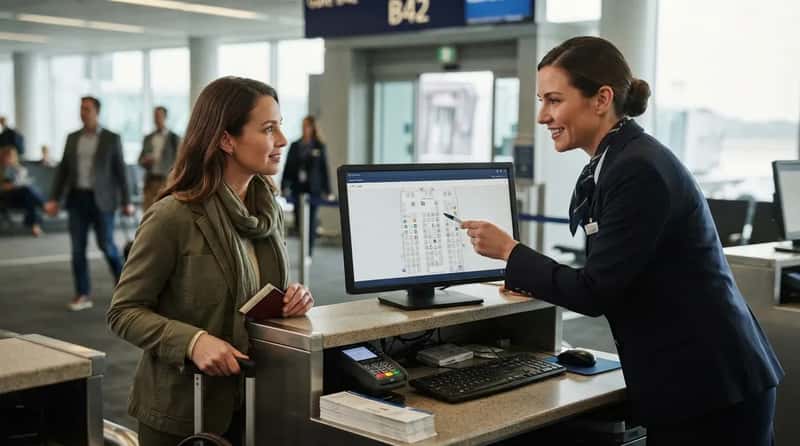
Passengers ask constantly whether they can just “sit up front” if it’s empty. Officially, the answer is no – it isn’t allowed and would be frowned upon by other paying passengers. Unofficially, agents admit personality sometimes bends the rule anyway.
The controversial truth is that this occasionally works, purely based on personality, not policy. It has to be asked at the right moment, never when the agent is already swamped. This is a genuine friction point travelers argue about online – some call it favoritism, others call it good customer service – but agents insist it’s rare, situational, and never a guaranteed hack.
#12 – Requesting Clarity Instead of Complaining About Delays
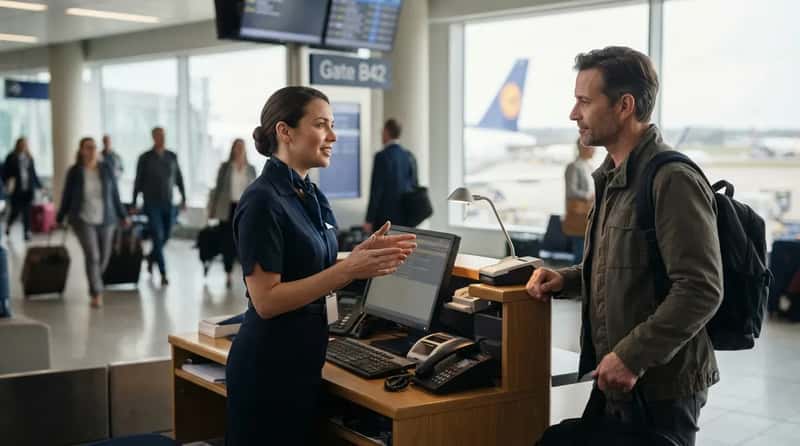
Nobody loves a delay, but how a passenger reacts changes everything that follows. Agents take their cues from pilots and the control tower, and they’re often simply messengers with limited information themselves. The assumption that they’re hiding something is usually unfair.
Most fliers don’t realize the agent often knows just as little as they do in the first ten minutes of a delay. Passengers who calmly ask “what do you know so far” get faster, more honest answers than those demanding certainty nobody has yet. Agents remember faces, and kindness during chaos tends to pay off later in the very same interaction.
Worth Knowing
- Agents often get delay updates from pilots and air traffic control in the same slow trickle passengers do.
- Asking “what do you know so far” tends to get a more honest answer than demanding a firm time.
- A calm, patient tone during a stressful delay is something agents remember for the rest of the interaction.
- That goodwill can matter later if a seat, upgrade, or rebooking request comes up down the line.
#11 – Asking About Crew Timeout Rules During Long Delays
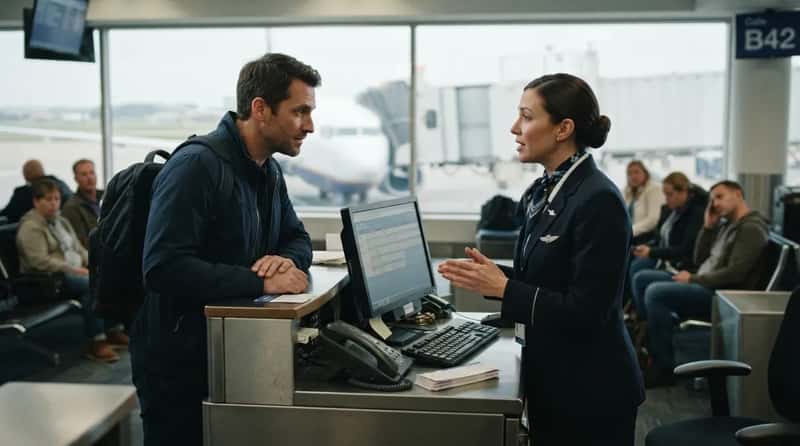
Few travelers know that pilots and flight attendants have hard legal limits on how long they can work in a single stretch. Once a crew is close to that limit, agents have to factor it into every single delay decision they make. It isn’t optional, and it isn’t personal.
This single rule explains almost every confusing decision passengers argue about during long ground delays. Asking an agent directly about crew timing, instead of assuming favoritism or incompetence, usually gets a straight answer. Agents appreciate a passenger who understands the constraint isn’t about them at all.
#10 – Requesting an Upgrade Based on Status, Not Charm
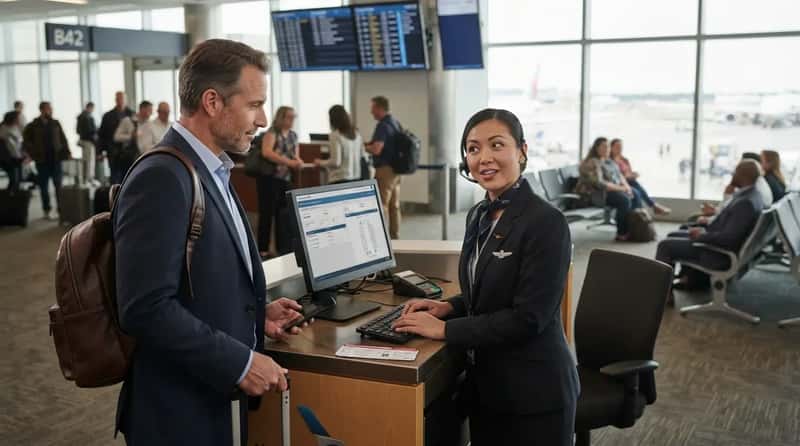
Charm alone rarely moves a passenger into a better cabin anymore, no matter what old travel stories claim. Upgrades go out through a strict, computer-ranked list tied to fare class and loyalty tier. There are almost always more requests than seats available.
The uncomfortable truth many travelers refuse to accept is that flirting, dressing up, or mentioning a honeymoon almost never works, no matter how often the story circulates online. Status is what actually gets approved, not personality. Being polite still helps at the margins, but it’s a tiebreaker, not a strategy.
#9 – Asking to Board Together as a Group Despite Split Zones
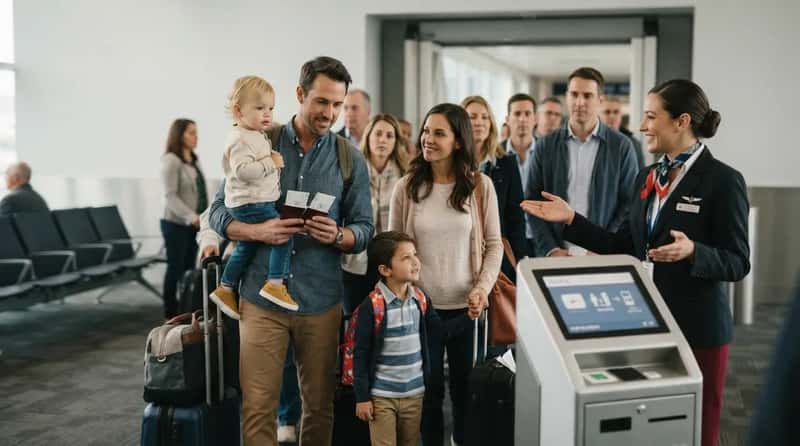
Split boarding groups on the same reservation create needless anxiety for families and couples standing in separate lines. Agents frequently allow companions to walk up together anyway, especially if one person has a disability, a young child, or heavy bags needing help. It keeps the line moving instead of creating a mid-boarding standoff.
This is one of those quiet approvals nobody advertises but almost everyone gets when they simply ask. Framing it as a logistics issue, not an entitlement, works best. Passengers who explain the need briefly, rather than arguing loudly about fairness, get waved through almost every time.
#8 – Requesting a Corrected Boarding Pass for a Name Typo
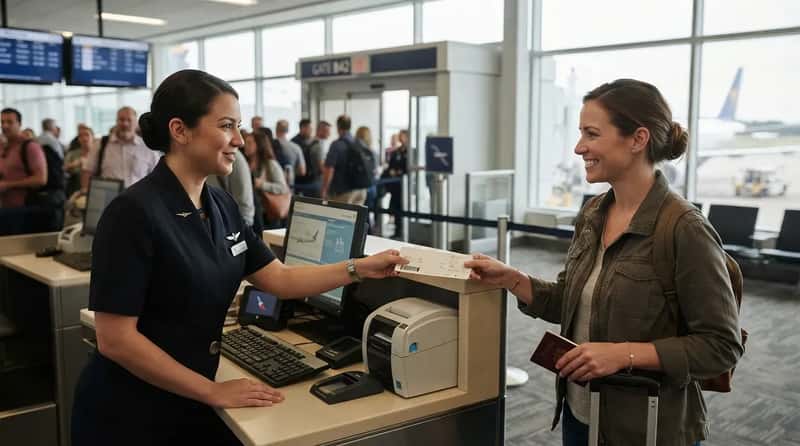
A single misspelled letter on a boarding pass can trigger unnecessary panic right before security. Most travelers assume it requires a supervisor, a form, and a long wait. In reality, it’s usually solved in under a minute.
Agents can typically reprint a corrected pass on the spot, as long as the error doesn’t meaningfully affect the passport match. It’s one of the most mundane yet consistently approved fixes in daily operations. Catching the typo early, rather than at the TSA checkpoint, saves real stress and possibly a missed flight.
#7 – Asking for Extra Boarding Time for Elderly Passengers
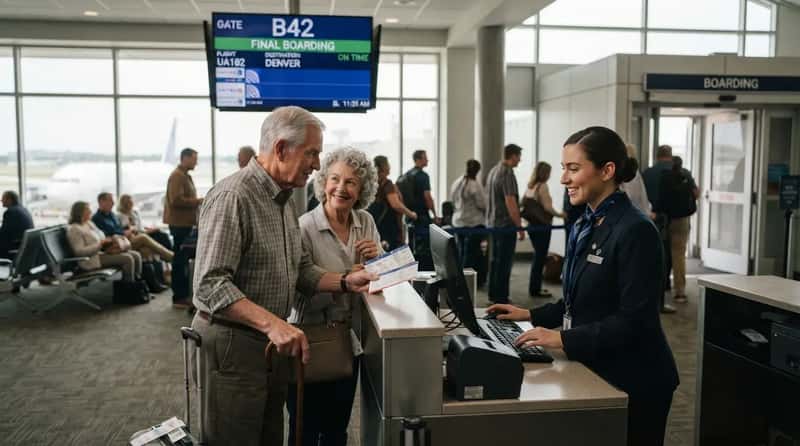
Older travelers moving slowly through the airport get more patience than most people expect. Agents routinely extend boarding windows quietly, especially when the passenger or a companion flags the situation in advance. Waiting until the last second, though, leaves far less room for flexibility.
The controversial part is that this flexibility isn’t official policy – it’s discretion, meaning it varies from agent to agent and airline to airline. Still, it’s approved far more often than it’s denied. A brief heads-up call ahead, or a quiet note at the podium, dramatically increases the odds of a held door.
#6 – Requesting to Chase a Just-Missed Flight
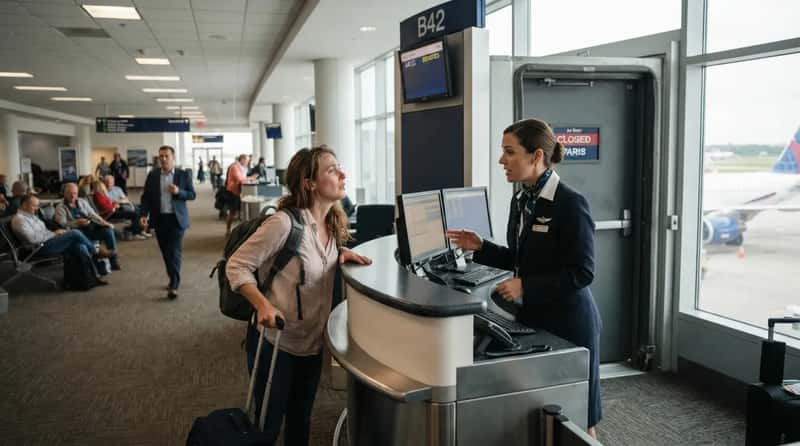
The dreaded sprint to the gate doesn’t always end the way travelers fear. Airline computer systems flag passengers who might miss a connection, and agents monitor those records before the passenger even arrives. There’s even slang for it – agents call late passengers “runners.”
Most travelers have no idea agents are quietly tracking their connection status before they show up at the gate. If the system shows someone is close, agents often hold the seat a few extra minutes. If it’s clear they won’t make it, the seat goes to standby immediately, which isn’t cruelty – it’s protecting everyone else’s schedule too.
At a Glance
- Airline computer systems flag tight connections before the connecting passenger ever reaches the gate.
- Agents use insider slang, calling a passenger racing to make a flight a “runner.”
- If the system shows someone is close, agents often hold the seat a few extra minutes.
- Once a no-show looks certain, that seat gets released to standby almost immediately.
#5 – Asking Why Boarding Closed “So Early”
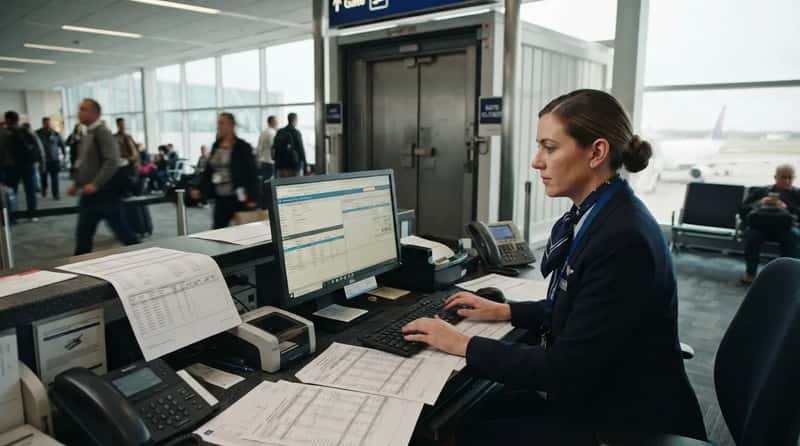
Passengers arriving breathless right after doors close often assume it’s an arbitrary rule someone made up. It isn’t. Once boarding finishes, there’s a good chance that seat has already been given away because the paperwork changed.
Most fliers never realize a single late passenger can force an entire fuel and weight recalculation for the plane. Agents must file paperwork listing every passenger plus weight and balance details for the pilots, and redoing that for one late arrival delays everyone else even more. It isn’t personal – it’s physics and federal paperwork, and understanding that makes the rejection sting a lot less.
#4 – Requesting a Fresh Start After a Rough Past Interaction
Travelers sometimes worry a past outburst will haunt every future flight they book. There’s some truth to that fear – airline systems can carry notes forward, and a meltdown at one gate can quietly follow a traveler to the next. But that’s not the whole story.
The uncomfortable truth is that airline systems can flag repeat behavior, yet agents almost always give new interactions a clean slate when the passenger behaves reasonably in the moment. Agents watch real-time behavior far more closely than they consult history. A calm, respectful approach resets the tone instantly, no matter what happened last time.
#3 – Asking for Compensation During Extended Delays
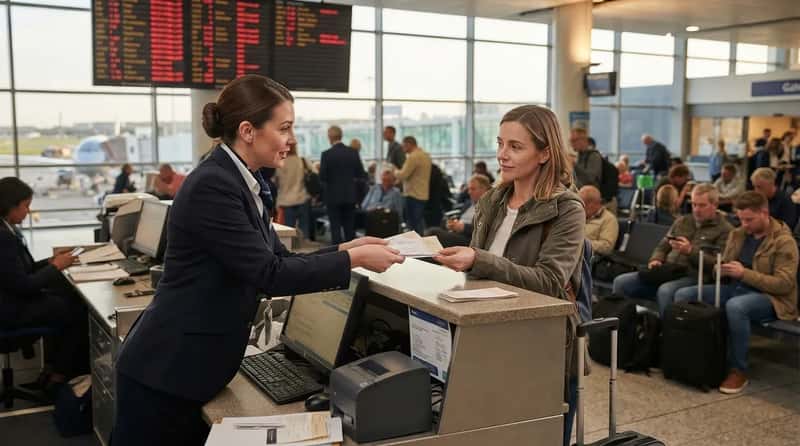
Long ground delays test everyone’s patience, but there’s often more flexibility than travelers assume. It’s common for passengers to ask for meal vouchers, rebooking perks, or minor rule exceptions during these stretches. Most people just never think to ask directly.
Most travelers underestimate how often agents approve these perks simply because they were asked, rather than assuming the airline will offer them unprompted. Calm, patient passengers consistently get more help, faster, than confrontational ones. It’s one of the most repeated pieces of advice agents give anywhere online, for good reason.
Passengers who are calm, respectful, and patient often get more assistance more quickly.
Common refrain among airline gate agents
#2 – Timing Every Request Around the 30-Minute Window
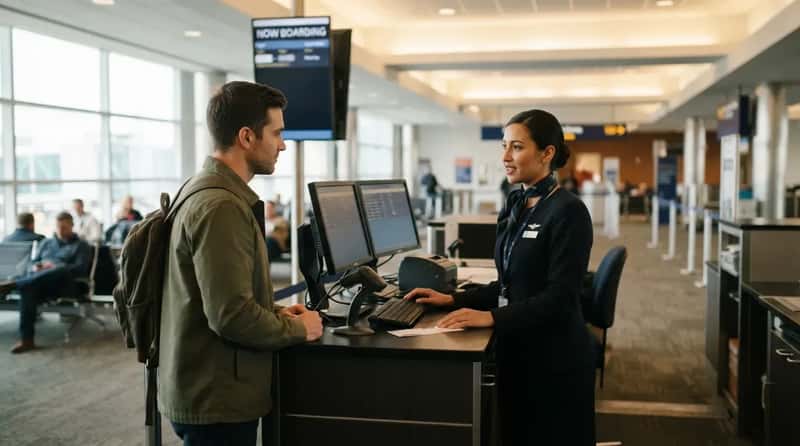
Almost every “yes” on this list depends on one overlooked detail: timing. Approaching the podium up to 30 minutes before boarding is scheduled to start gives an agent the bandwidth to actually focus on a request. Right as boarding begins, that same request lands in the worst possible moment.
Most travelers make requests exactly when agents are the most overwhelmed and least able to help. Shifting that timing raises approval odds across every category on this list, from seat changes to upgrades to family reseating. Agents aren’t ignoring anyone out of spite – they’re triaging chaos in real time, and early askers simply get more of their attention.
Quick Compare
- Early ask (30+ minutes before boarding): agent has time to check standby lists, seat charts, and rebooking options.
- Last-minute ask (right as boarding starts): agent is managing a rush of confused passengers with seconds to spare.
- Early, polite request: better odds on upgrades, family reseating, or a free gate-check.
- Last-second request: usually limited to whatever’s fastest, like a quick boarding pass fix.
#1 – Simply Asking Nicely for Anything at All
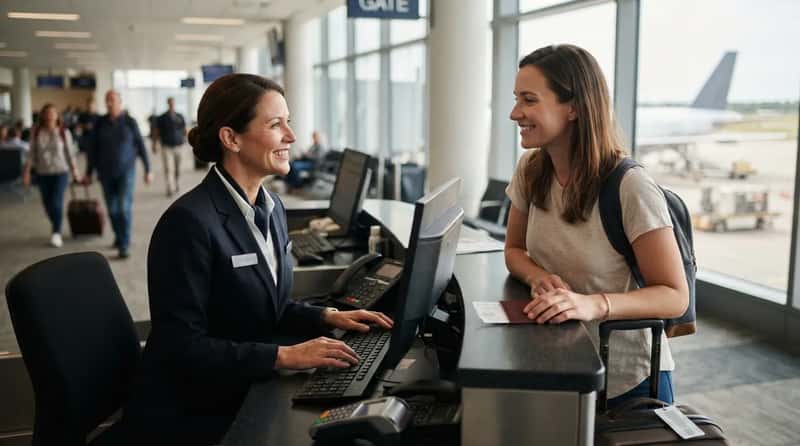
After everything else, the single most approved request in the entire airport isn’t a specific policy trick – it’s tone. Agents control how much effort they put into helping any given passenger, and that effort scales directly with how they’re treated. Calm and respectful people consistently get more.
Most travelers never realize that kindness alone outperforms almost every “insider hack” people share online. This is the real secret behind every approved seat swap, upgrade, and rebooking on this list. Agents are humans juggling dozens of small crises at once, and a genuine “thank you” changes how much they’re willing to do next.
None of these requests are guaranteed, and every airline, agent, and flight is a little different. But the pattern is unmistakable: patience, good timing, and a specific, polite ask consistently outperform demands, entitlement, or last-second panic.
The passengers who get the “yes” aren’t lucky. They simply understood the system a little better than the person standing next to them at the podium.