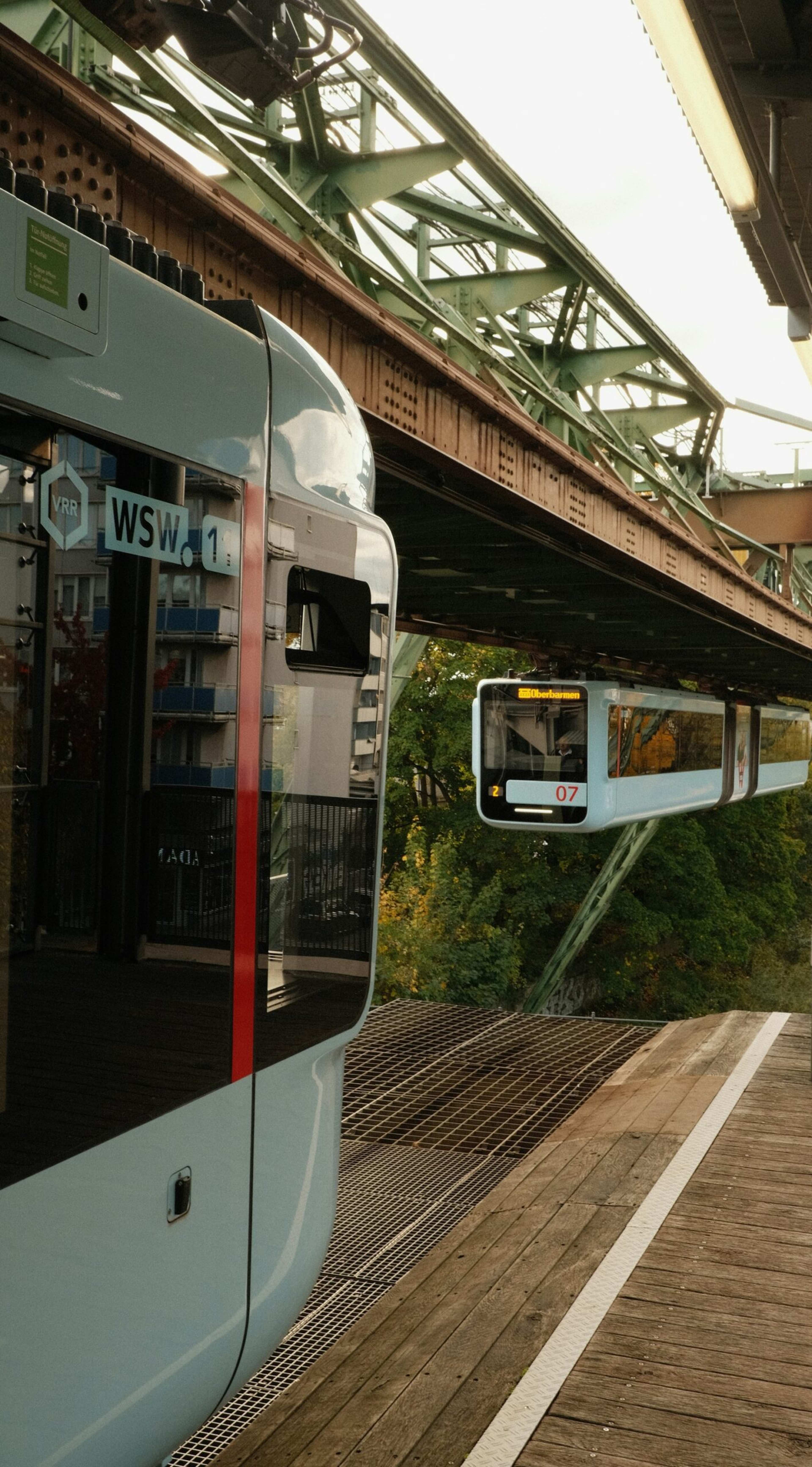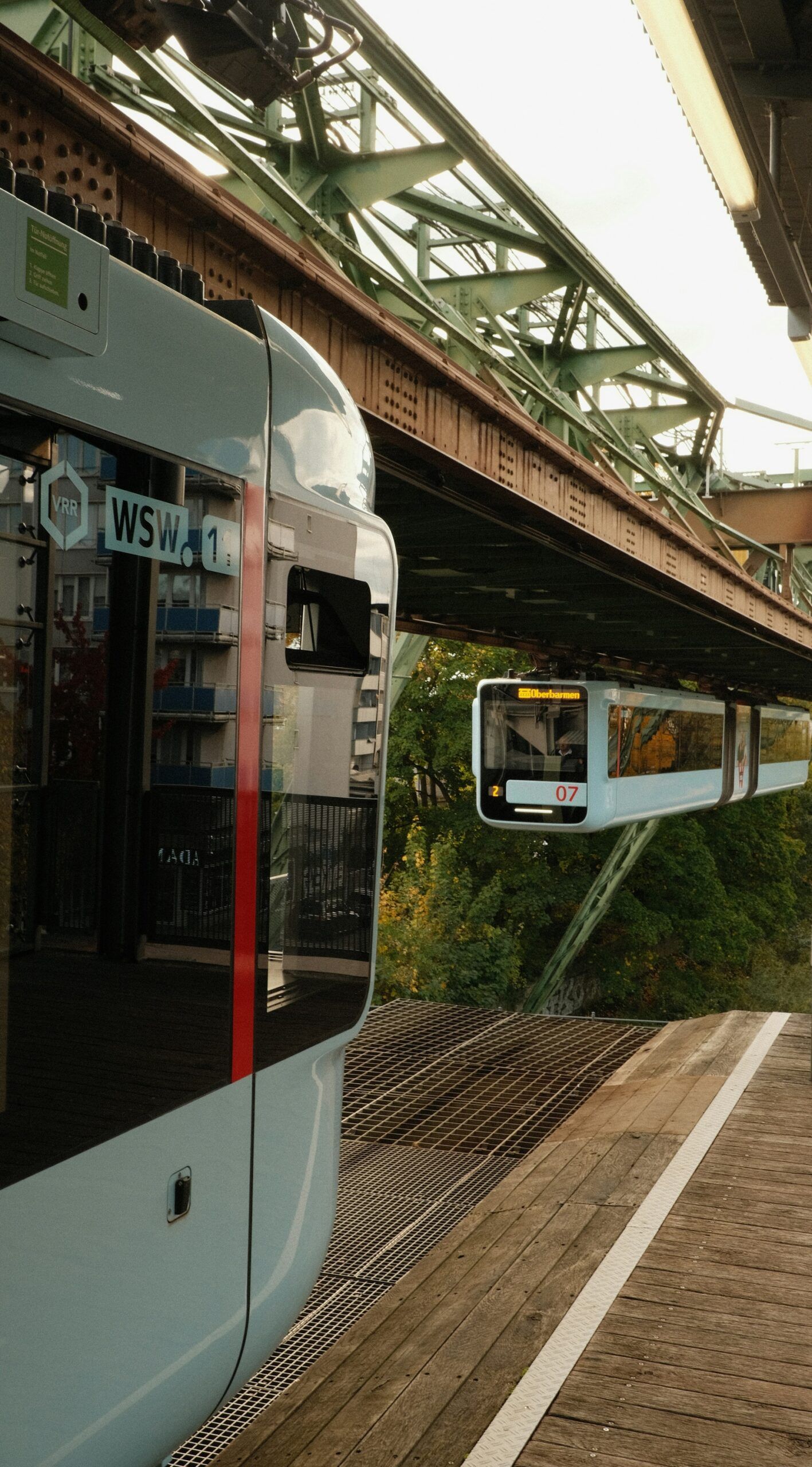
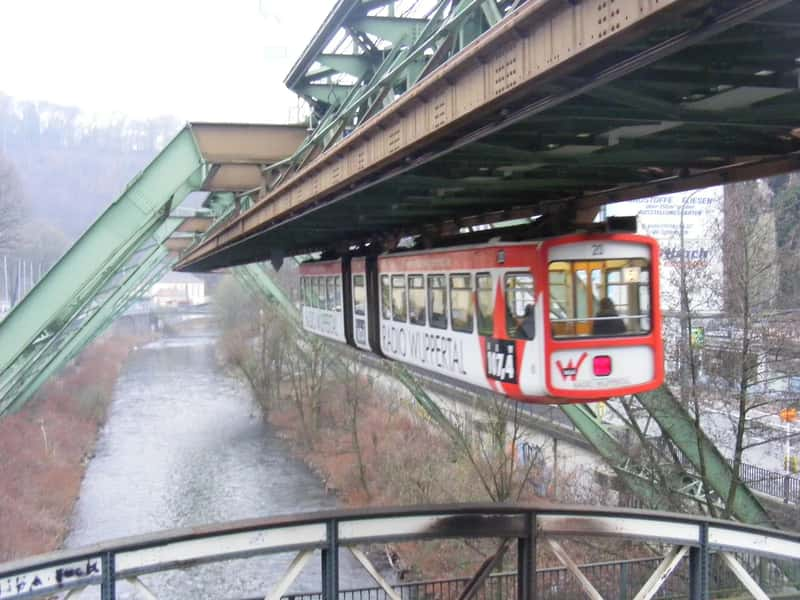
Picture a train that doesn’t run on the ground. It hangs from a steel frame above a river and glides past rooftops and traffic. This isn’t a theme park ride or a concept render. It’s the Wuppertal Schwebebahn in western Germany, and locals use it to get to work and school.
The name translates roughly as “floating railway,” which is why it’s often called Germany’s flying train. It’s a quiet piece of transport history that still works today, and it was on 1 March 2026 that it completed 125 years of uninterrupted operation[1], according to one transit guide. Plenty of Americans have visited Germany without ever hearing about it.
Why a “Flying Train” Is Really a Suspension Railway
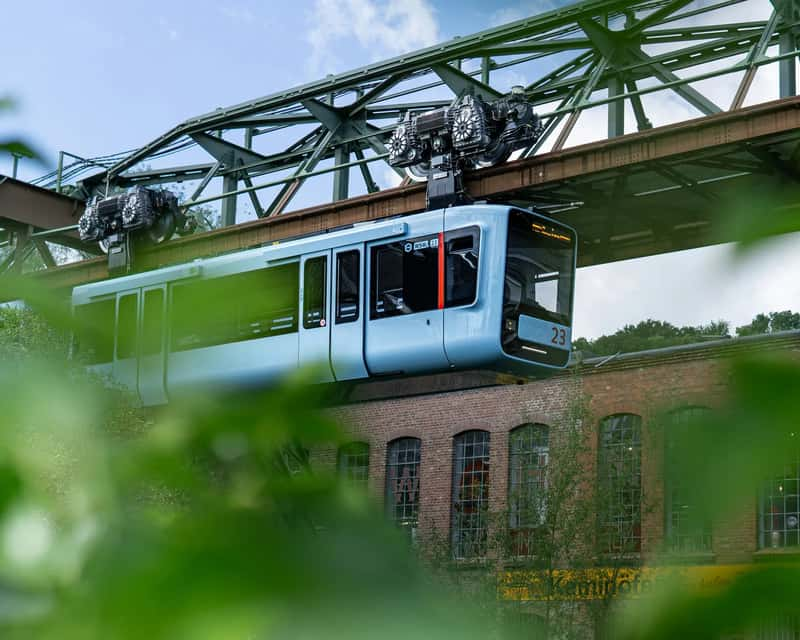
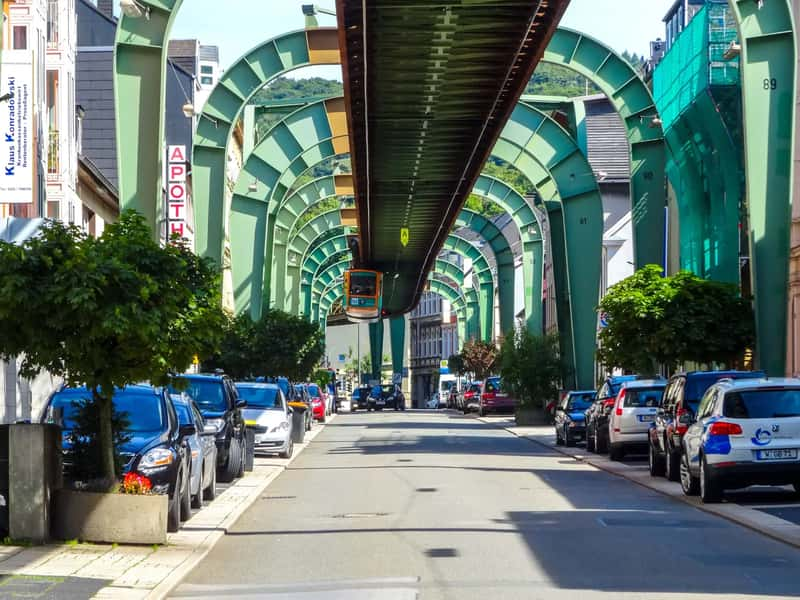
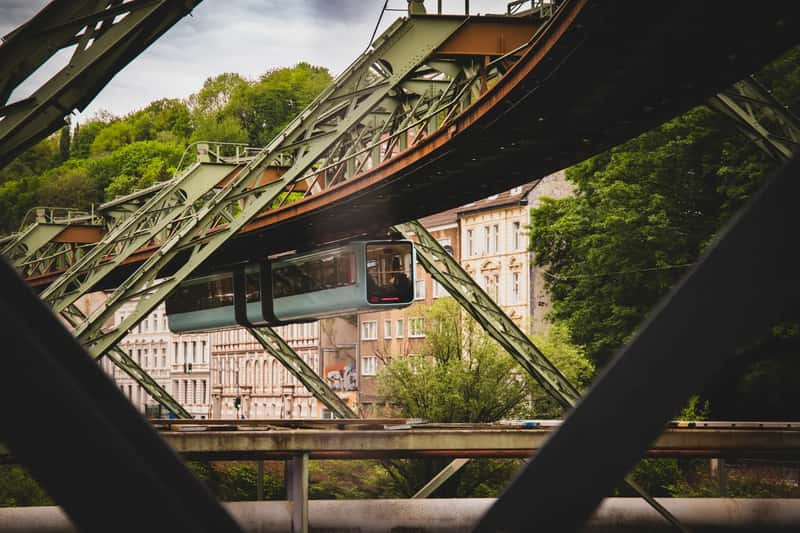
The Schwebebahn is a suspension railway in Wuppertal, Germany[2]. The cars don’t sit on rails below them. They hang from a single overhead track, so the whole vehicle swings slightly beneath the steel structure. That’s where the “flying” impression comes from.
It’s also not a cable car or a tourist monorail. The operator, Wuppertaler Stadtwerke (WSW), runs it as ordinary city transit. It’s line 60 of the VRR network[1], so riders treat it like any other line, and the DeutschlandTicket is valid[1] on it.
Following the River Wupper
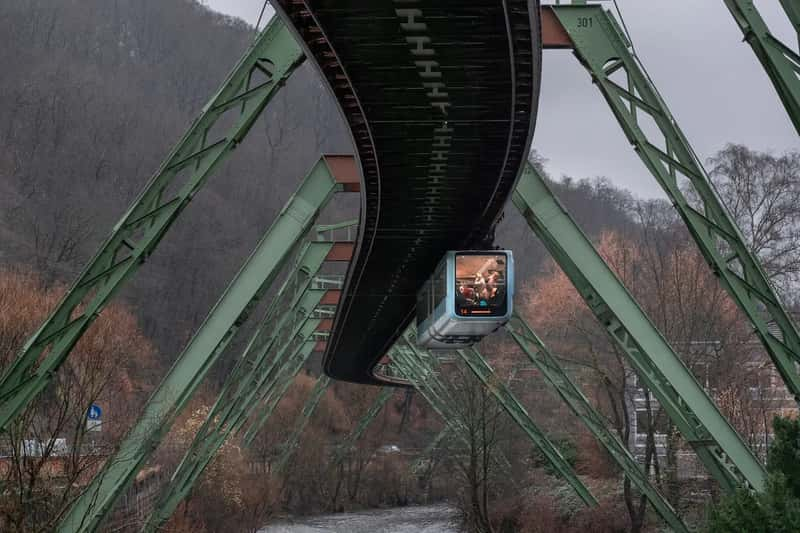
The route covers 13.3 km between Vohwinkel and Oberbarmen, with 20 stations[1]. About 10 km of it runs over the River Wupper and 3.3 km over streets[1]. The designers used the river because it gave them a corridor with no buildings in the way.
Along the river section, the cars travel at around 12 metres above the water[1]. In the street sections, ordinary traffic passes underneath. One local guide to the system says the trip from the first stop to the last takes about 30 minutes[3], which makes it a practical way to see the whole valley.
Born in 1901 When Berlin Said No
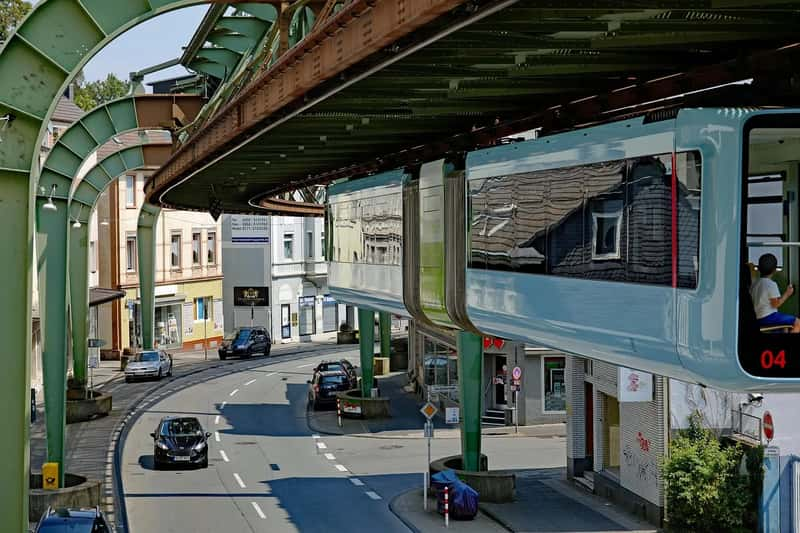
The system was designed by engineer Eugen Langen, and the line was originally called Einschienige Hängebahn System Eugen Langen[2]. Berlin didn’t take up the idea. As one travel account puts it, Wuppertal showed interest where Berlin did not[4]. The towns of Barmen, Elberfeld and Vohwinkel were drawn to how well it could link their communities.
Construction ran between 1897 and 1903, and the first track opened in 1901[2]. The railway is also credited with the growth of the original cities and their eventual merger into Wuppertal[2]. In that sense it worked as city planning as much as transport.
Still a Workhorse Carrying Tens of Thousands Daily
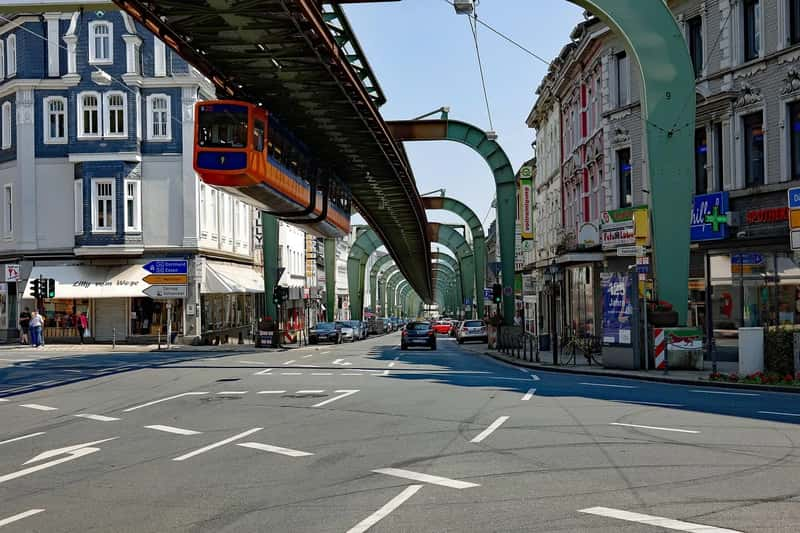
Nothing about this is only for show. Estimates of daily ridership sit at around 82,000[2]. One source puts the yearly total at 24.8 million passengers[3], which fits that daily figure. For a mid-sized German city, those numbers are significant.
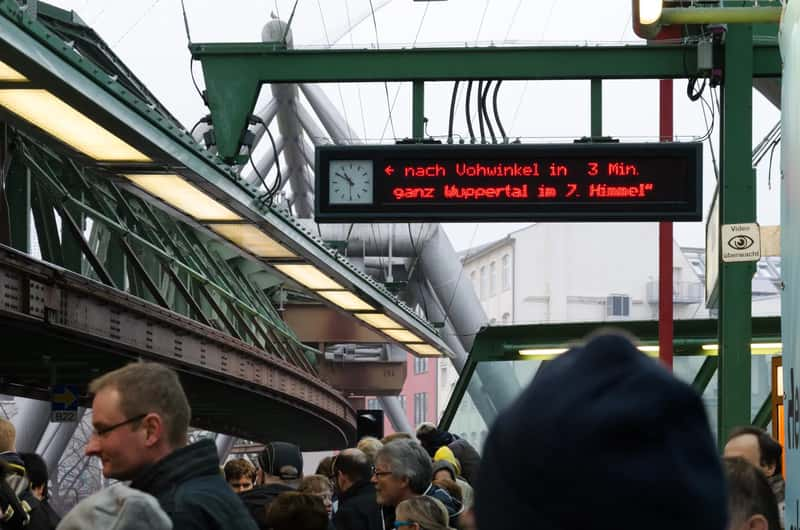
Service is frequent too. In 2025, WSW said that the peak-time interval of 3 minutes 40 seconds was running stably[5]. The local newspaper Westdeutsche Zeitung reported that a ten-second tightening was planned by mid-2026[5]. I couldn’t find confirmation that this target has been met, so treat it as a goal.
From the Orange-and-Blue GTW 72 to Today’s Generation 15
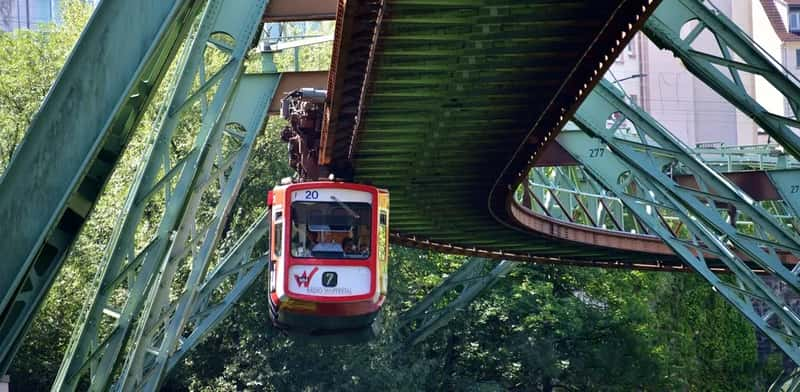
For decades, the signature vehicle was the GTW 72. It was built by MAN, and 28 sets were constructed between 1972 and 1975[6]. They stayed in service until 2018, and many Wuppertal residents still remember the orange-and-blue paint scheme fondly.
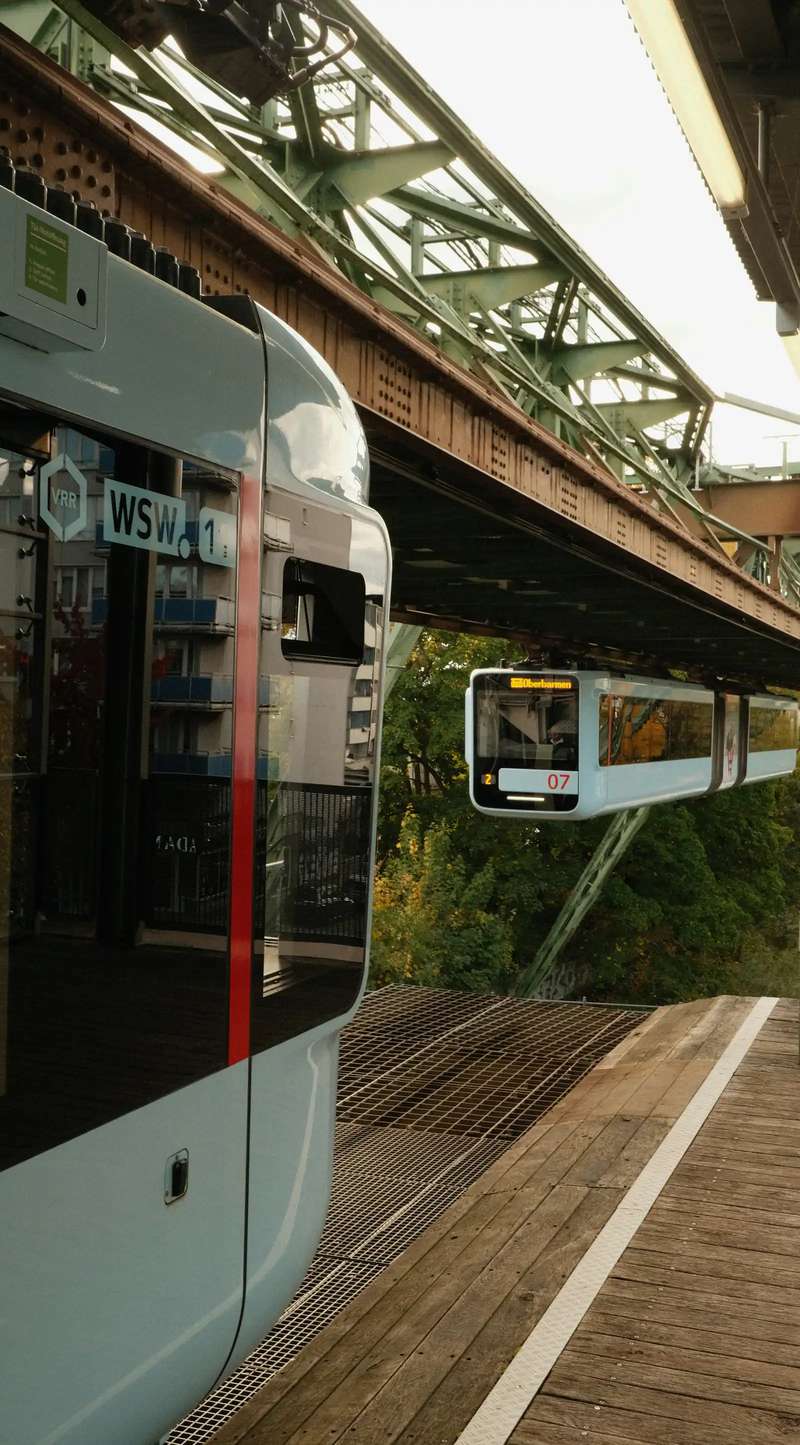
The replacements are the Generation 15 trains. Each has capacity for 45 seated passengers plus standing room, and is equipped with a wheelchair ramp and air conditioning[7]. WSW ordered 31 vehicles from Vossloh Kiepe, and deliveries started in 2016 and ended in 2019[8]. Total capacity is quoted at roughly 130 to 140 passengers depending on the source, so check with WSW if you need an exact number.
The 256 Days the Flying Train Stopped
The line hasn’t had a trouble-free history. Regular GTW 72 operations ended in November 2018 after problems with the power supply[6]. The shutdown lasted a long time. Since 1 August 2019 the suspension railway has been operating again[8], and by then the old fleet had been fully replaced.
The 1999 accident, when a train fell into the Wupper, remains a reminder of what can go wrong. According to the accident report summary, the train struck a steel component temporarily attached to the running rail[9]. That’s part of why modernization has stayed such a priority for the operator. More recently, the Schwebebahn has been running at 60 km/h again on some sections since 2023[5].
A 125th Birthday Party in 2026
This year, the city made a big deal of the anniversary. WSW offered free rides for all passengers on 28 February and 1 March 2026[10]. The free fare applied to the Schwebebahn only, not to buses.
There were other highlights too. A modern car was painted in the orange-blue GTW 72 design, and it runs in regular service all year[11]. The historic Kaiserwagen returned to the valley on 1 June 2026[11], and it can be booked for special trips or coffee rides. A family festival was also scheduled at Wuppertal’s main station on 19 September 2026[11].
Renewal Work and What Comes Next
An old structure needs constant upkeep. WSW has a renewal program for the line, and the schedule for the whole program runs until the end of 2031[12]. Work includes renewing the Alter Markt station from June 2026[12], and that job is expected to take about 18 months. Elevator replacements are also under way at stations such as Varresbecker Straße and Ohligsmühle.
The railway will also play a role in a future event. For the 2031 Federal Horticultural Show, the Schwebebahn will provide visitor transport between the Tesche and Zoo areas[13]. It’s a good sign that planners still count on a 125-year-old system to move crowds.
Why It Deserves More Attention Abroad
Wuppertal isn’t the only German city with this kind of transit. Dresden has a short hill Schwebebahn, and Düsseldorf airport has a sky train to the main railway station[3]. Still, the Wuppertal line is the original, and it’s the only one that works as a full urban route.
For travelers, it’s an easy day trip from Düsseldorf or Cologne, and a ticket costs about the same as a regular city ride. Many visitors to Germany stick to Berlin, Munich and the Rhine castles, so a trip here can feel like a real discovery. The ride doesn’t need hype. It’s a working commuter line from the early 1900s that happens to look like the future.
Conclusion
The Wuppertal Schwebebahn shows that a bold transport idea can last well beyond its first decade. It has survived wars, a long shutdown and an aging structure, and it now carries tens of thousands of people every day. The 2026 anniversary and the renewal program through 2031 suggest it will keep running for a long time yet.
If you ever find yourself in western Germany, look up from the river. A train might be gliding past above your head.